

Ogden, Halifax. Circa 1750. A very rare spherical moon longcase clock, figured walnut case.


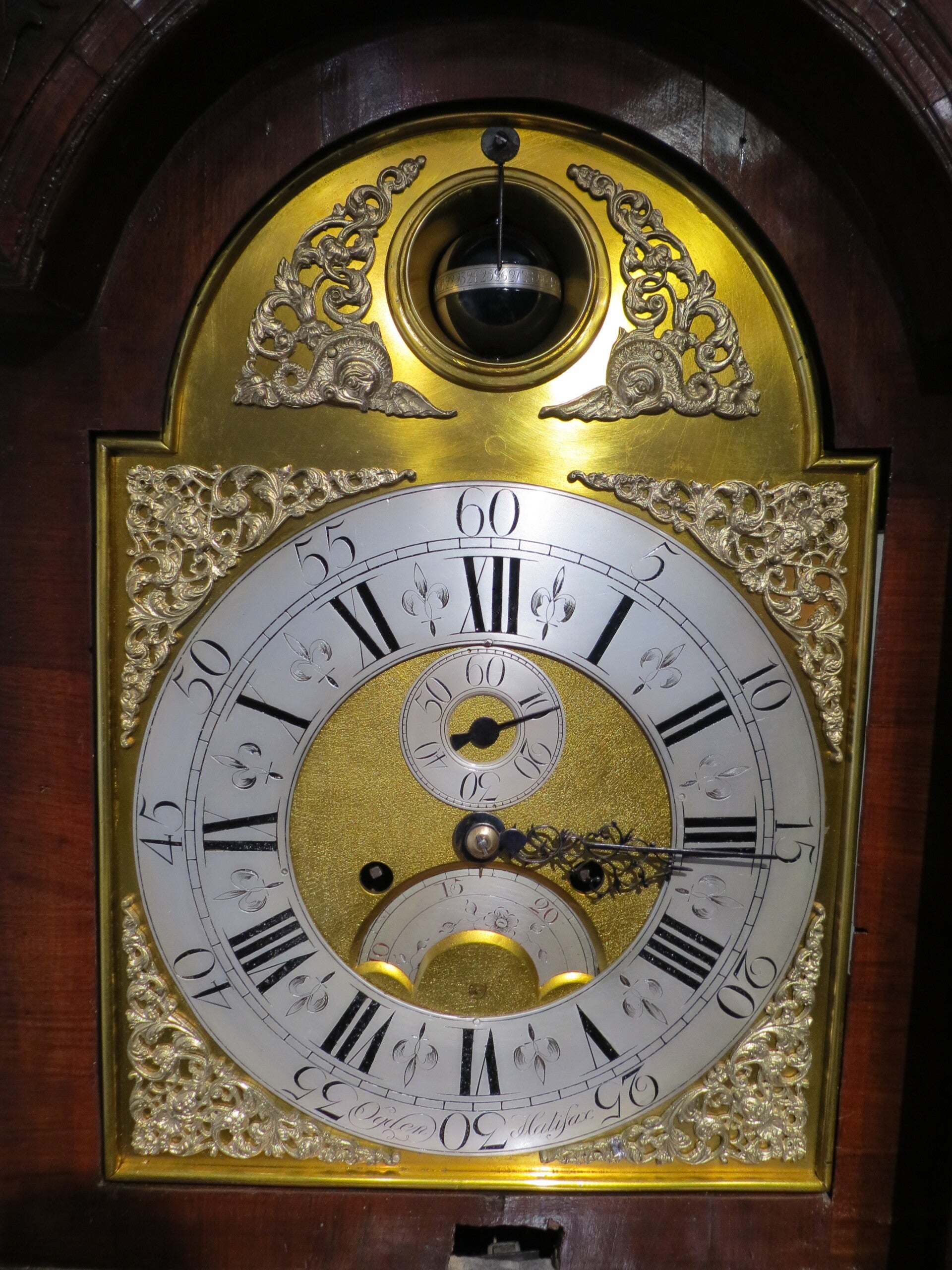


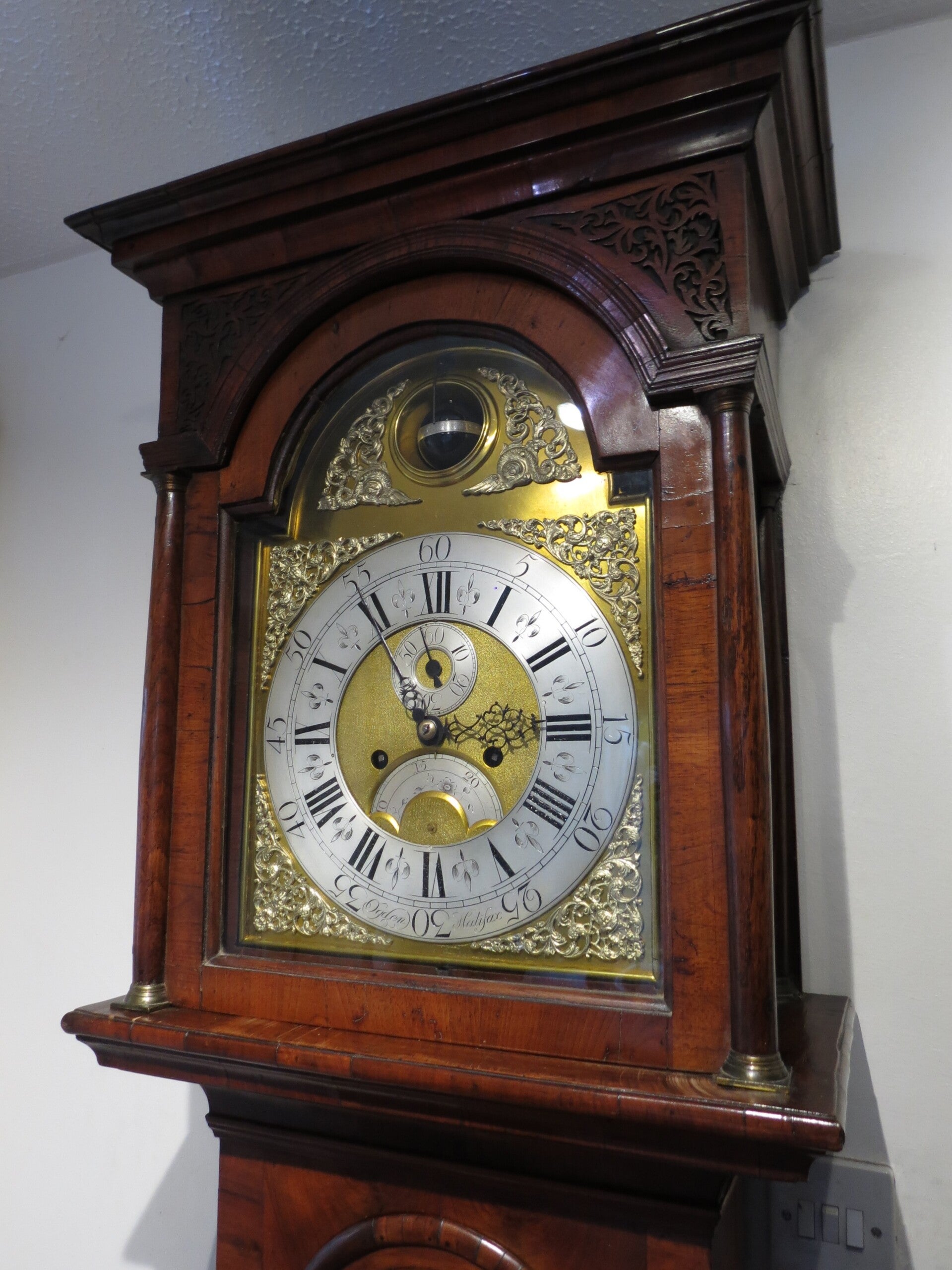


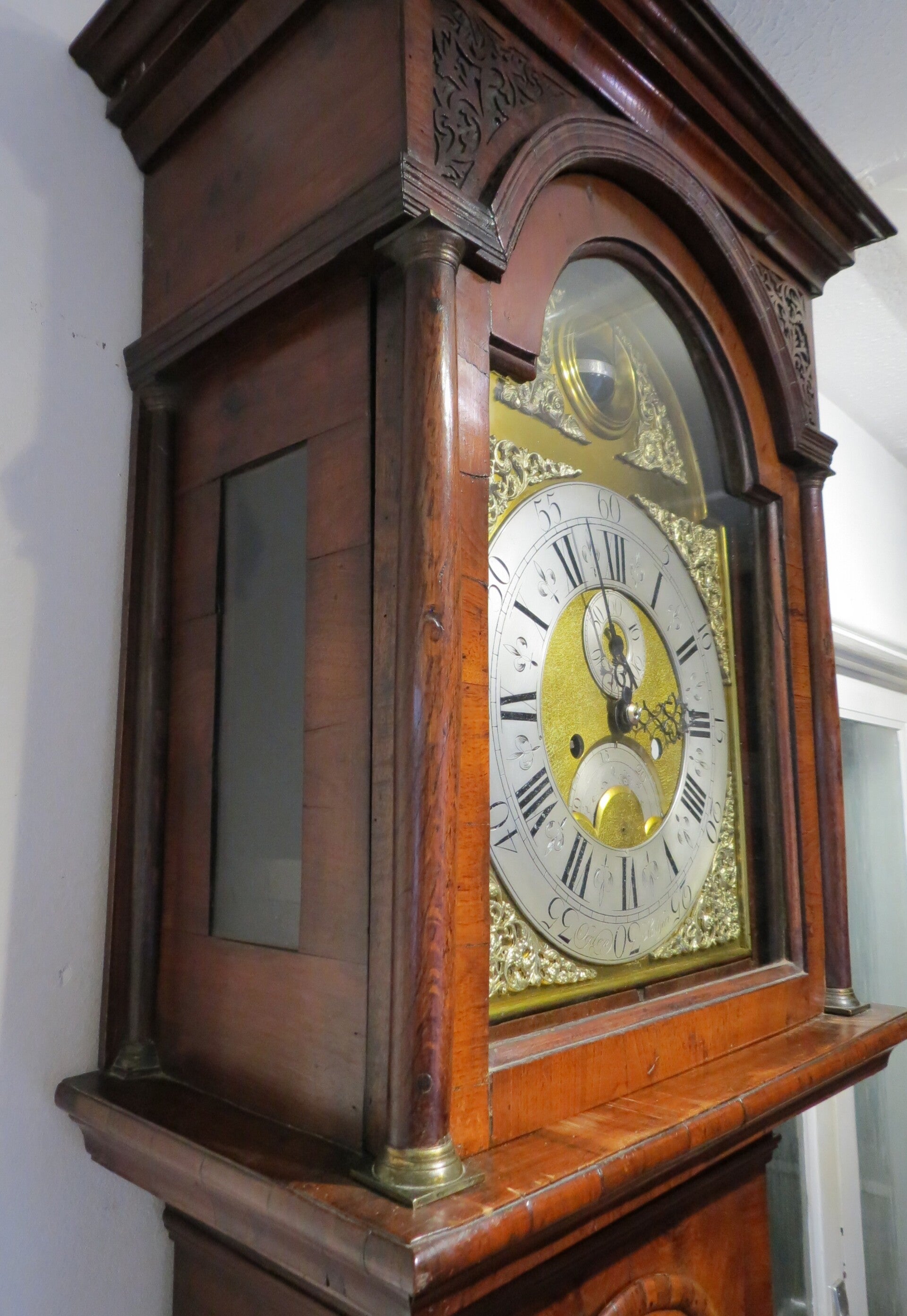


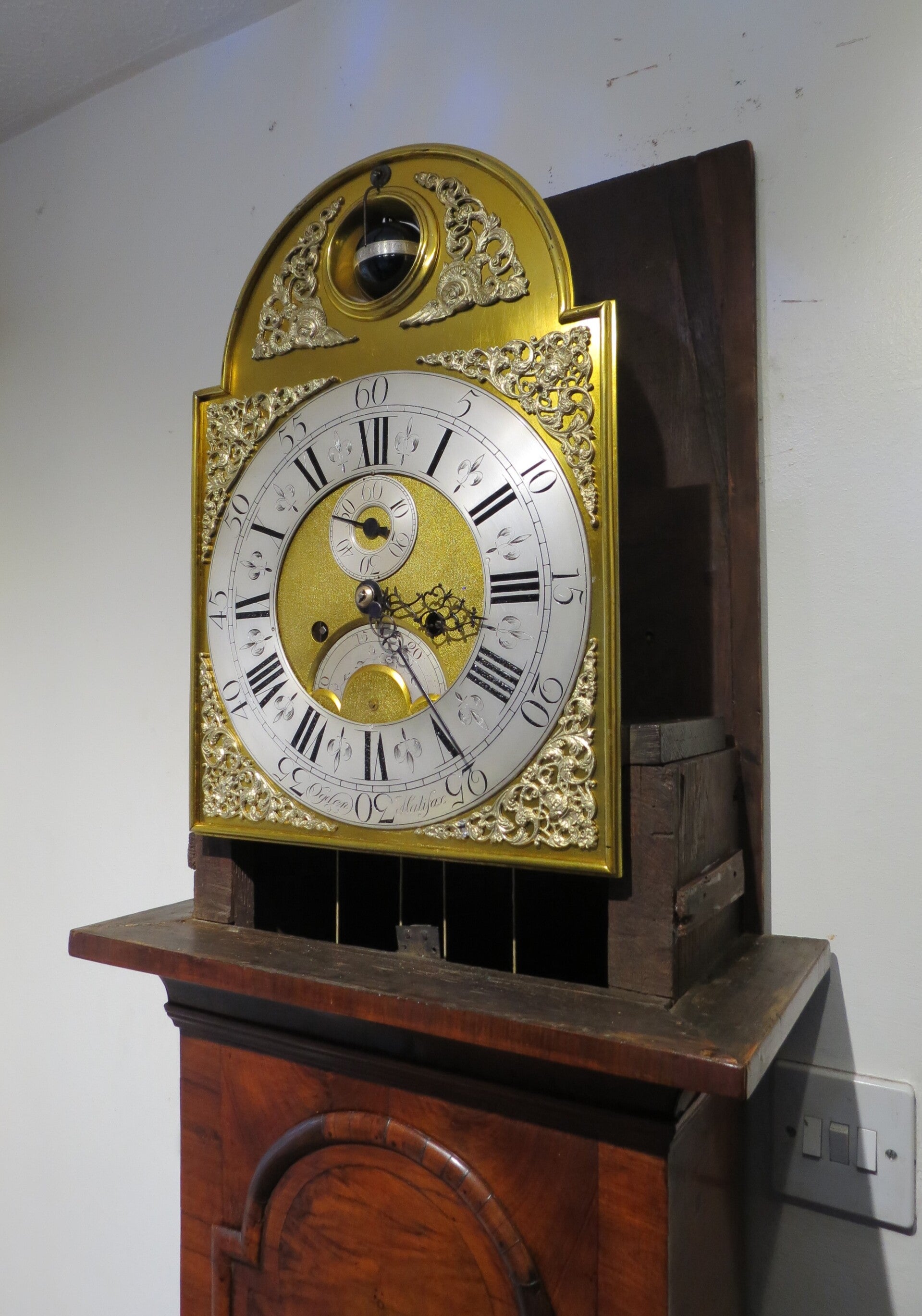
A very rare ‘globe moon’ longcase clock by Ogden, Halifax. Almost certainly Thomas Ogden, a maker of great repute who specialised in this rare type of moon-phase clock. The brass dial with finely matted centre, silvered chapter ring and brass ‘frame’ around the edge (again a Thomas Ogden trademark), finely pierced steel hands. The well figured walnut case with flat top pediment and excellent proportions.
The clock is complete and fully working. The movement has been properly cleaned and serviced. The case is in very good condition having excellent colour, usual minor signs of age.
Further notes
Thomas Ogden was a Quaker, born in 1693, son of Samuel Ogden of Ripponden. He worked initially in Ripponden and then in Halifax until his death in 1769. He is a very highly regarded maker, his work often compared to the best London makers of the period. His clocks often show distinctive and quirky features.
The ‘globe’ moon is a very rare form of moon-phase indication used by a handful of makers. Such clocks are always rare in the marketplace. Thomas Ogden is probably the most famous maker of this type of clock, it is one of his signature features. The moon is represented by a sphere which rotates in the arch to show the current phases and visual appearance of the moon. One side of the sphere is darkened to represent the night sky while the other is silvered to show the brighter moon. As it rotates the visual distinction of the different moon phases is clear. There is also a band of numbers around the sphere to show the exact lunar age.
Another trademark feature of Thomas Ogden is the use of a frame surrounding, and attached to, the dial. This then fits within the mask of the clock case.
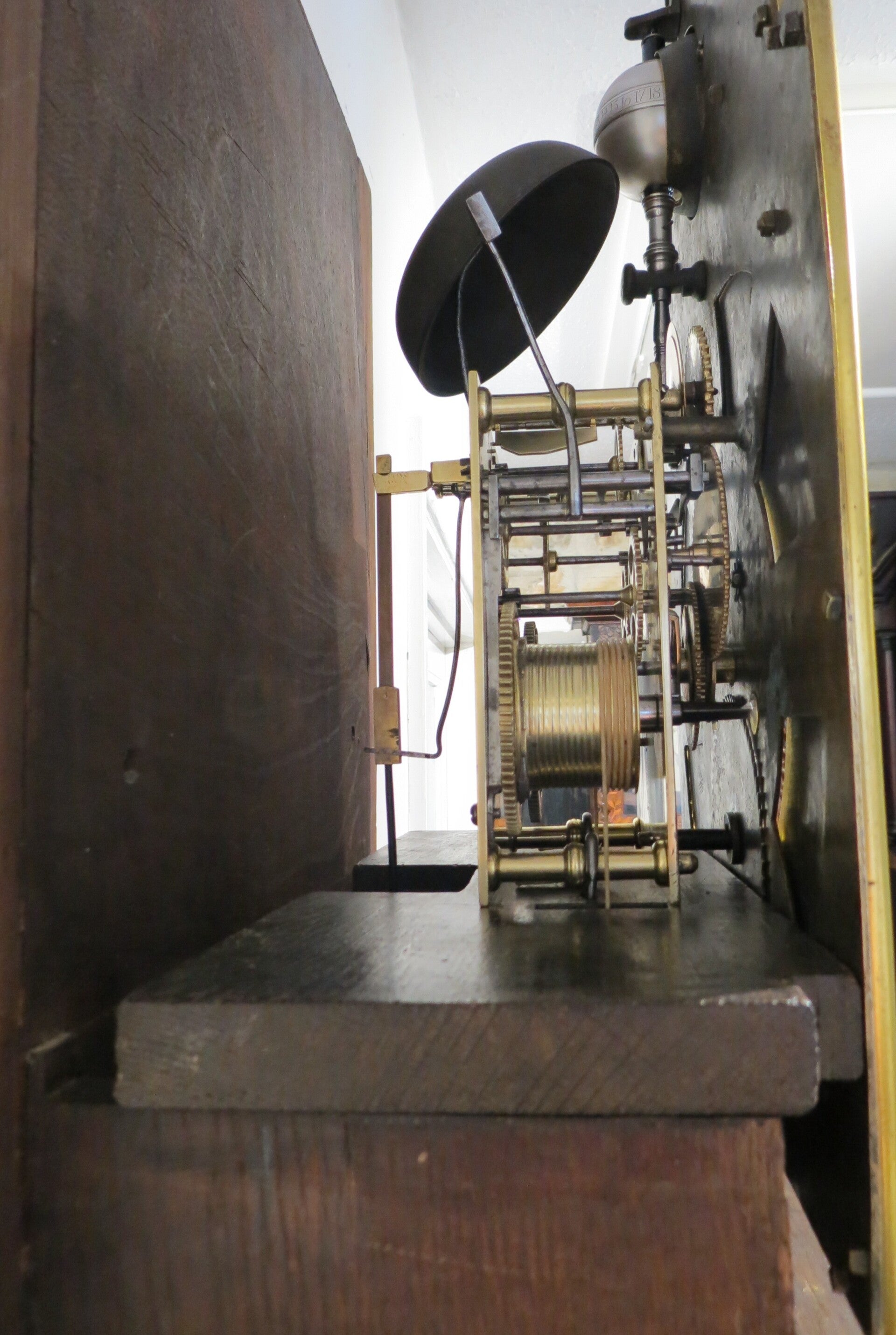
The movement of this clock is typically quirky! The strike is governed by a very unusual rack, basically a large looped lever of steel which runs from the right hand side, then up to near the top of the front plate and finally the toothed section descending further to the left. I have looked at this and tried to work out why it would be done this way but perhaps just to be different from the normal arrangement? The globe moon also requires a different drive, in this case a series of wheels culminating in a ‘continuous screw’ which translated the drive through 90 degrees. The vertical shaft which holds the moon sphere is very finely made, strange really as you would never see this normally.
The case is a particularly fine example with beautiful walnut figuring to the front panels and excellent proportions. The hood has fretwork above the arch which is always a nice/ classy feature.