

Henry Thornton, London. Circa 1725. A very fine antique musical longcase clock.


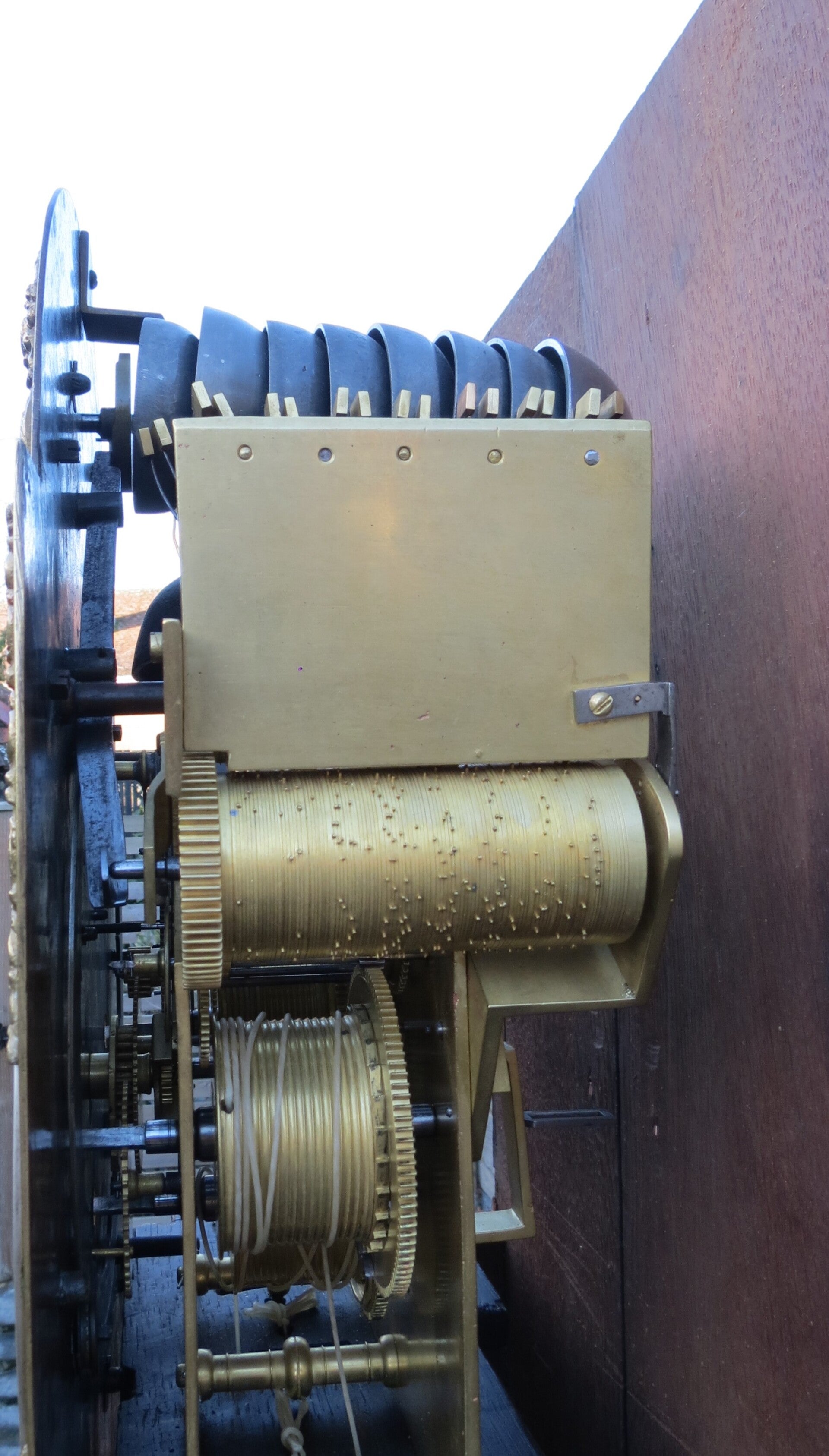
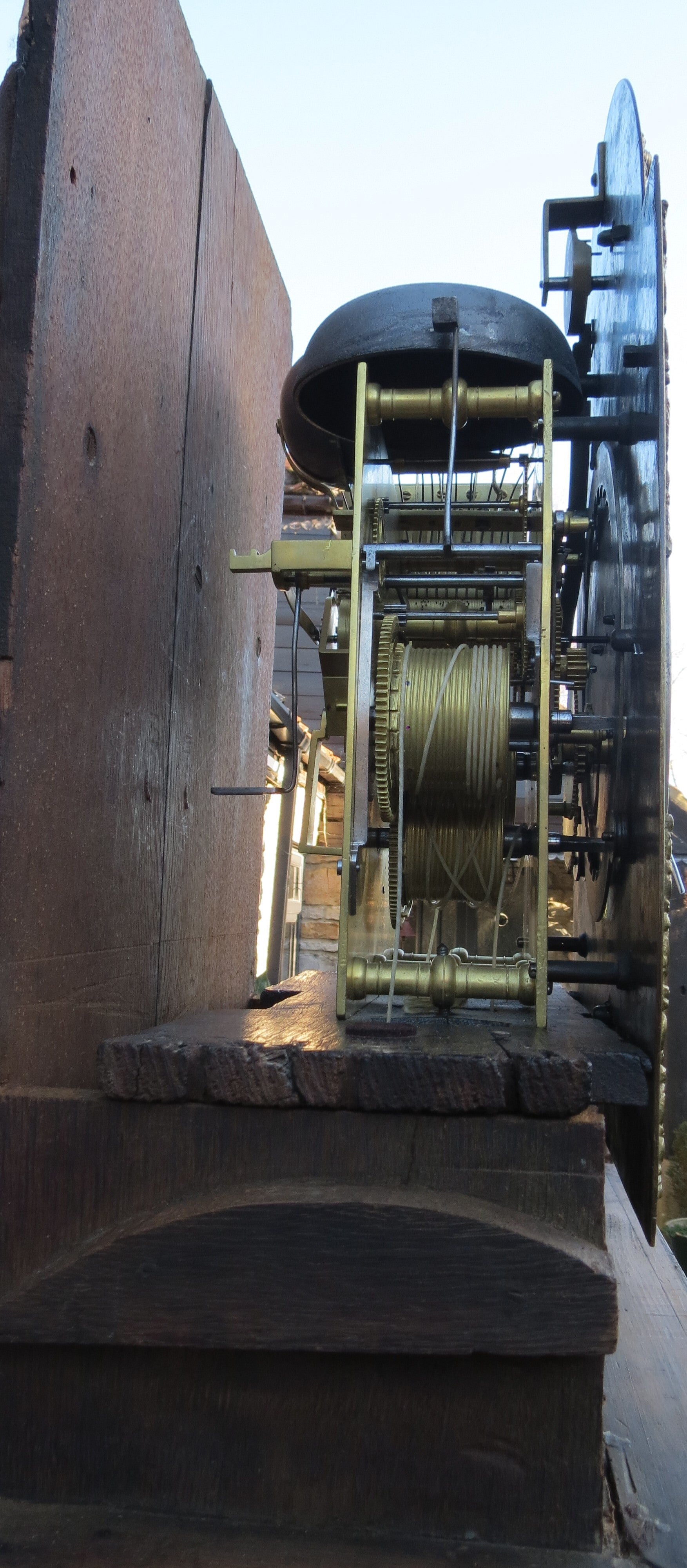

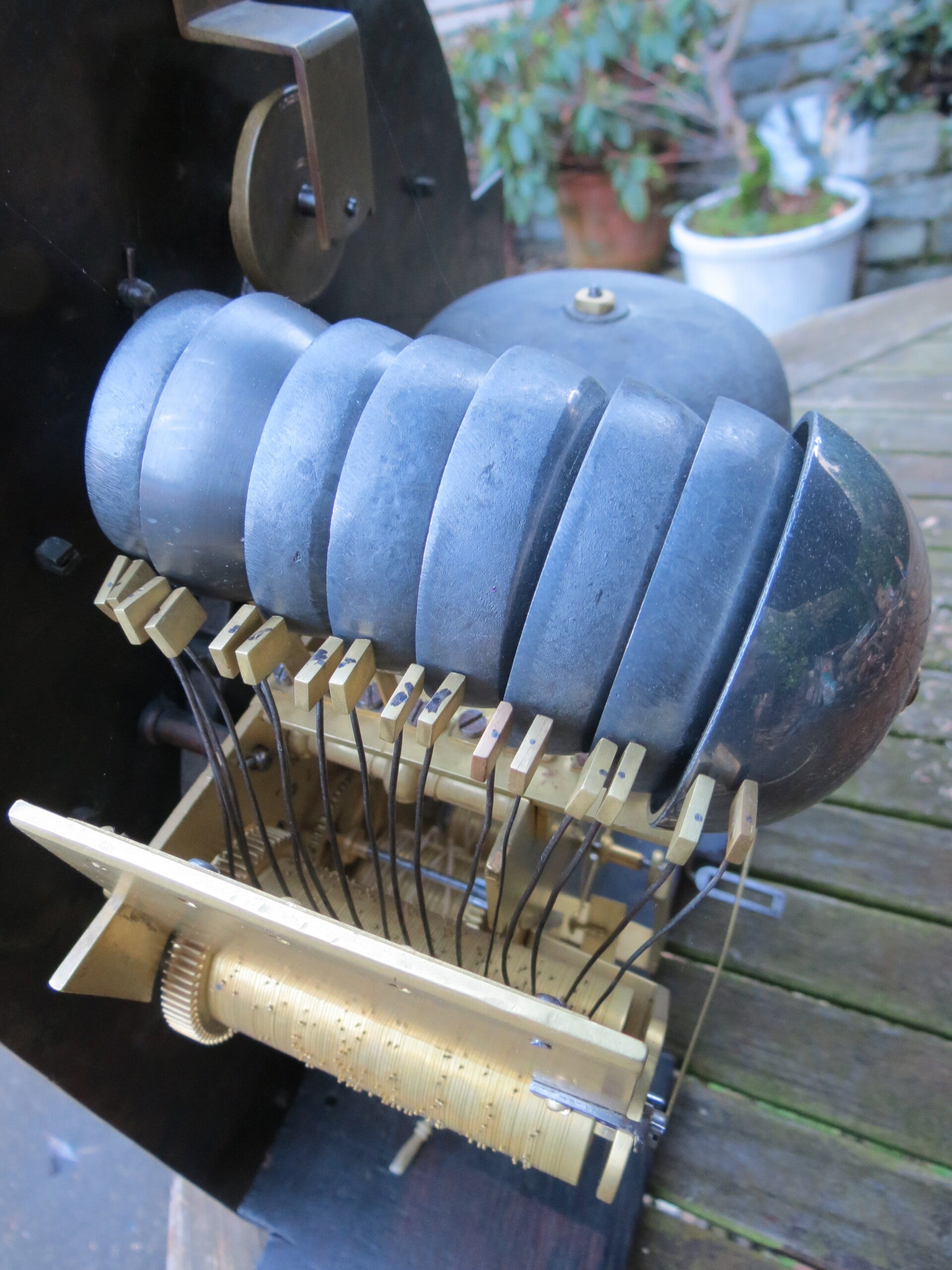
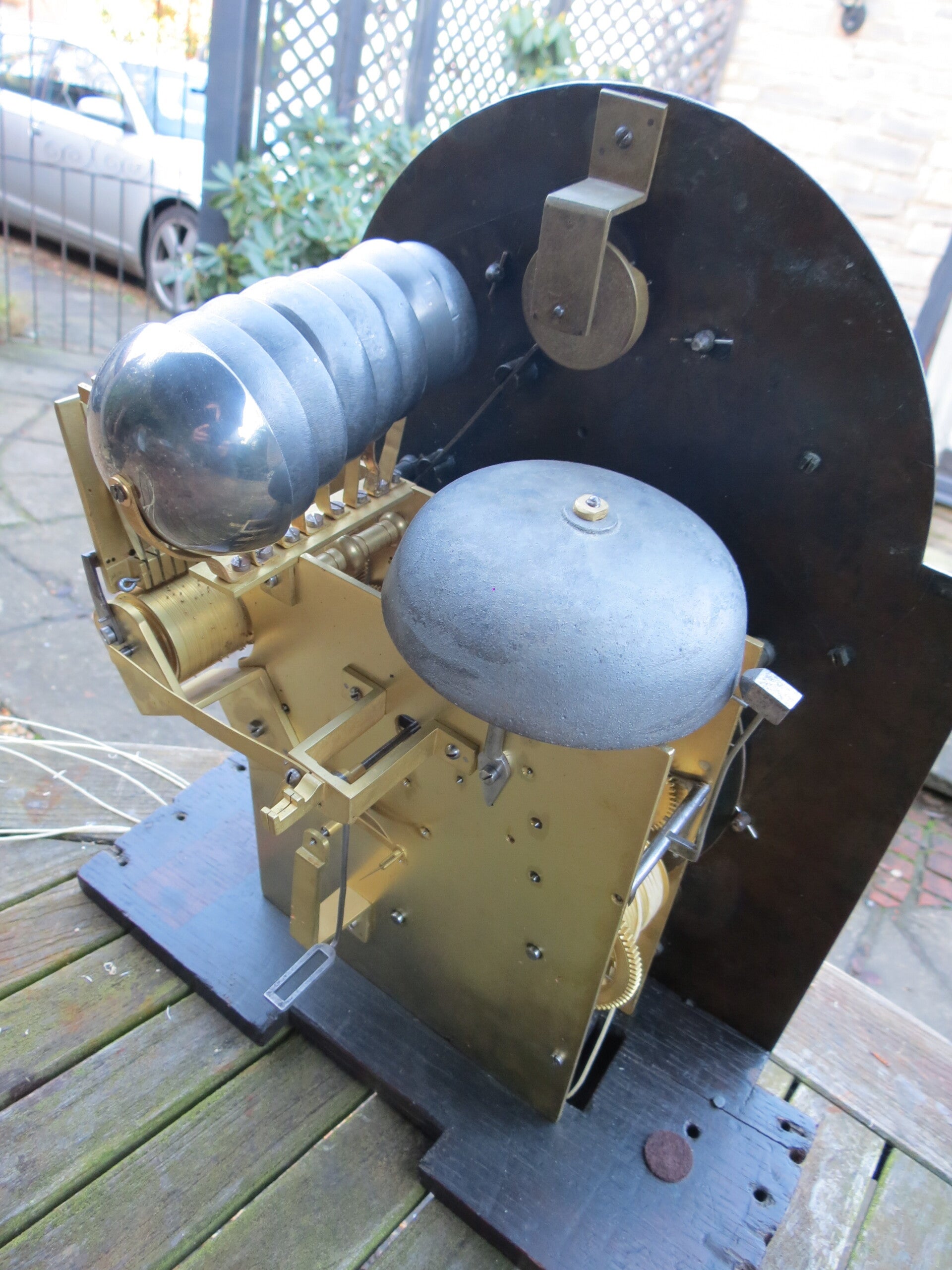
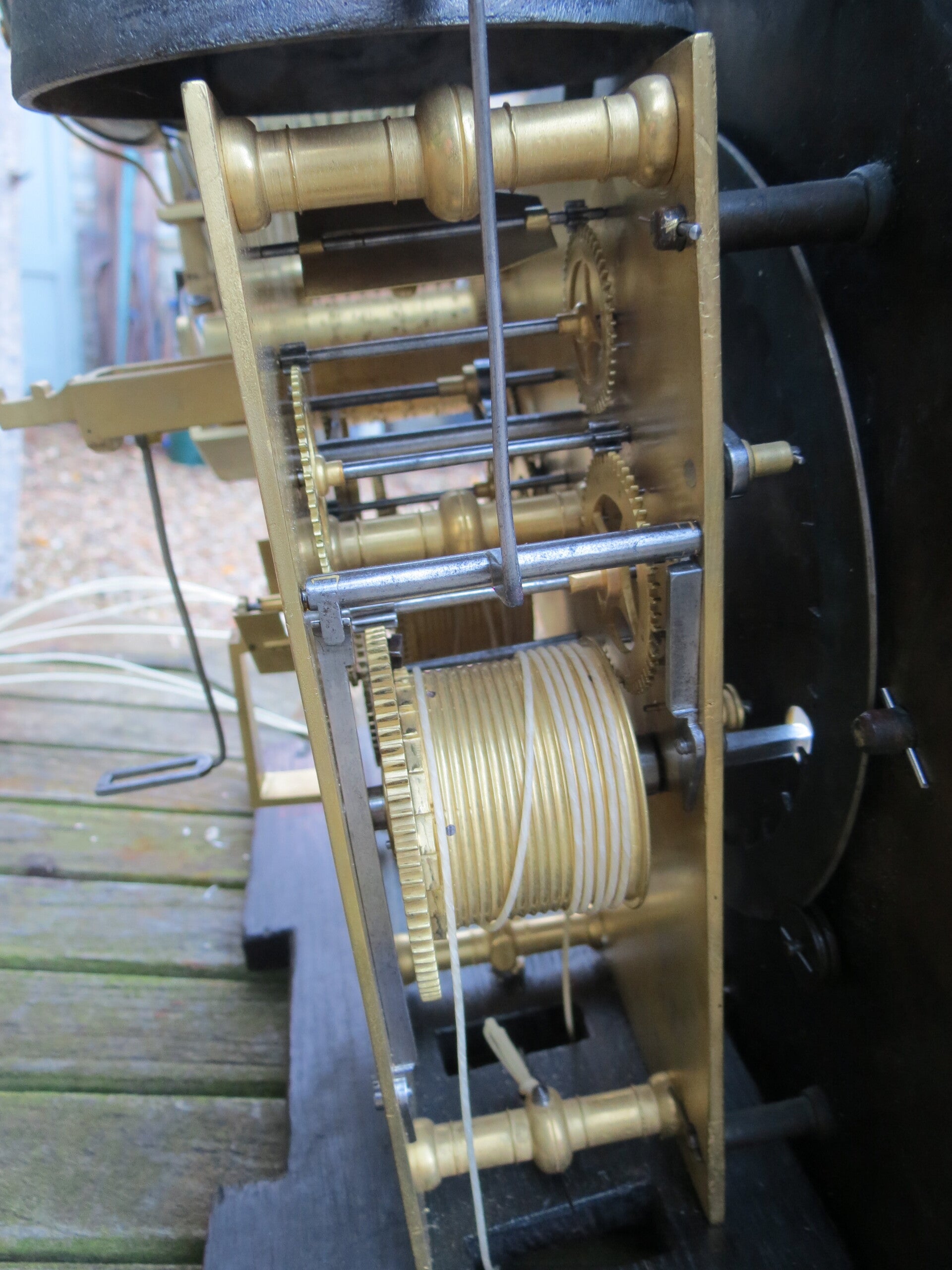
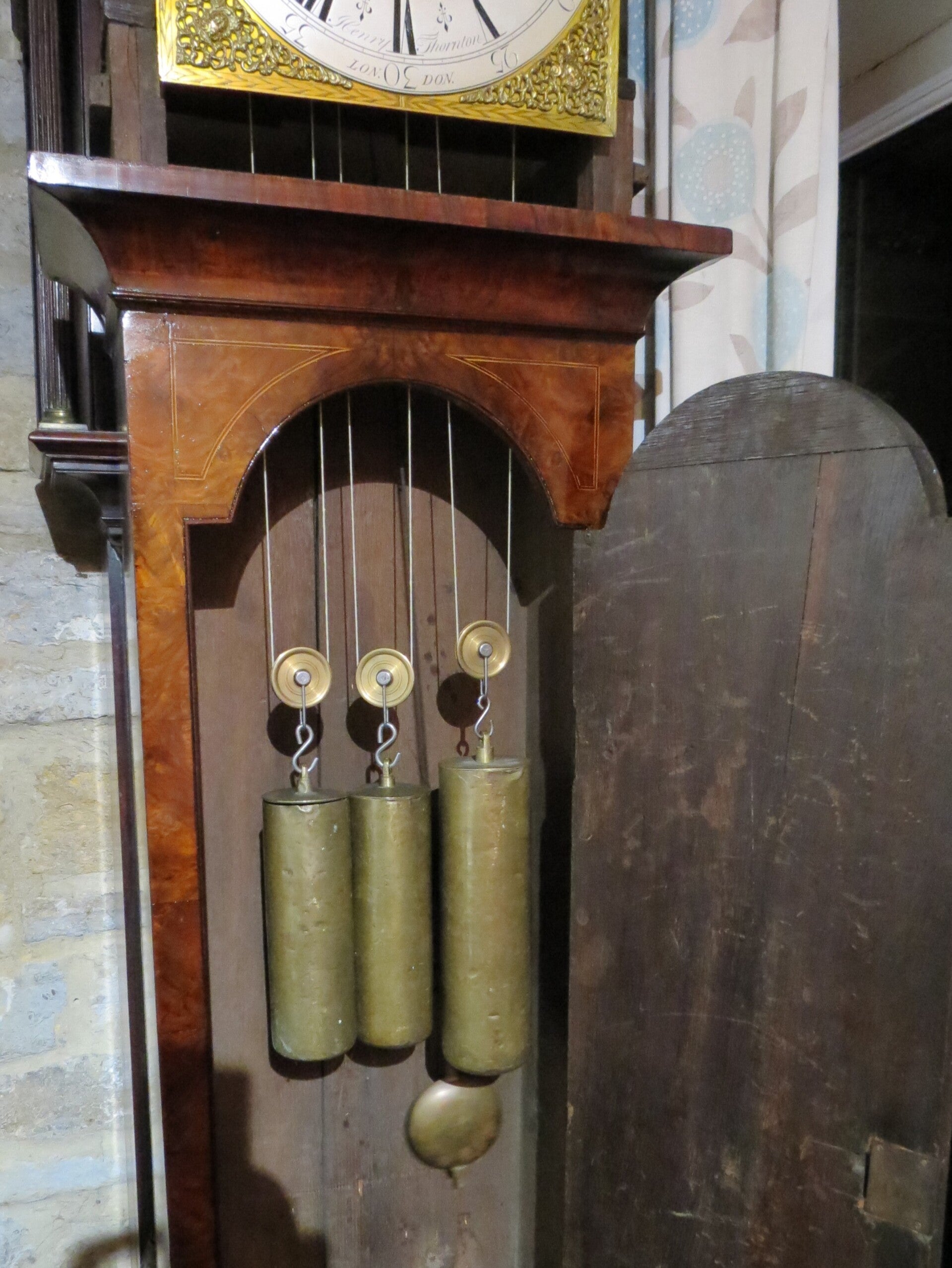
A very fine antique musical longcase clock by Henry Thornton, London. The 3-train, 6-pillar movement playing 6 selectable tunes on 8 bells with 16 hammers. The arched dial with finely matted centre, silvered chapter ring and detailed pierced steel hands. The finely figured burr walnut case with long trunk door, stringing detail, the hood with silk backed sound frets to the front and sides, surmounted by crest and ball and spire finials.
Fully working/ serviced. Complete with brass-cased weights, double sided brass pendulum, winder and keys for trunk and hood locks (both working).
Henry Thornton was an enigmatic maker of very fine clocks, several musical examples are known to exist. He was apprenticed to Samuel Steevens in 1692 and freed of the clockmaker’s company in 1699, he died in 1732.
This clock is generally in very good condition. The case has some age-related defects and wood movement as you would expect for the age.
Overall height with centre finial is 100 inches.
Further notes
Musical clocks
The historical perspective of musical clocks can be a little confusing. This is because the majority of antique clocks marketed as “musical” are Victorian, either re-issues of earlier styles or sometimes original Georgian clocks with later movements. While there is nothing wrong with Victorian examples, indeed they can be very nice clocks, they are essentially mass-produced and much more common than those made during the 18th century.
It is also worth making the distinction between “musical” and “quarter-chiming”. 18th century clocks can have multi-bells and sound the quarters but are not really musical because they do not play a tune. Instead they repeat a downward peal in a similar way to church bells. With clocks of this era a musical function is where a defined tune (or tunes) is played every hour or sometimes after longer intervals. A Georgian clock can sometimes be both quarter-chiming and musical. Genuine early Georgian musical clocks are often defined by the use of 2 hammers for each bell, this enables faster passages which give the melodies a more ornate/ baroque quality.
The tunes
The six tunes here are: Whitehall, The happy clown, Don’t you tickle me, Hannover march, Lillibulero and Bright Aurelia. The happy clown and Bright Aurelia are popular choices for musical clocks of this era, I have seen them on Windmills and Robert Markham musical clocks. Lillibulero is an interesting choice, a march attributed to Henry Purcell but probably adapted from an earlier Irish jig. The others are harder to find any documentation for, my favourite is Don’t you tickle me, probably a popular tune of the day.
Styling
By the 1720s the fashion had moved away from the earlier marquetry styles for fine clocks. Figured walnut remained popular as well as lacquer/ Chinoiserie types. Ceilings had become higher in London so the finer longcase clocks were normally quite tall, as this one. Clearly designed to impress with elaborate pediments and detailed fretwork.
Musical clock makers
Musical clock were very expensive items made for wealthy patrons, royalty etc. There were only a few clockmakers that made any significant numbers of musical clocks, Henry Thornton was one of these. Although having a reputation for being ‘enigmatic’ he seems to have had an astute business brain, his clocks finding their way around the world and into many important collections.