

John Wright London. Circa 1725. Impressive walnut longcase clock, 8 day movement.
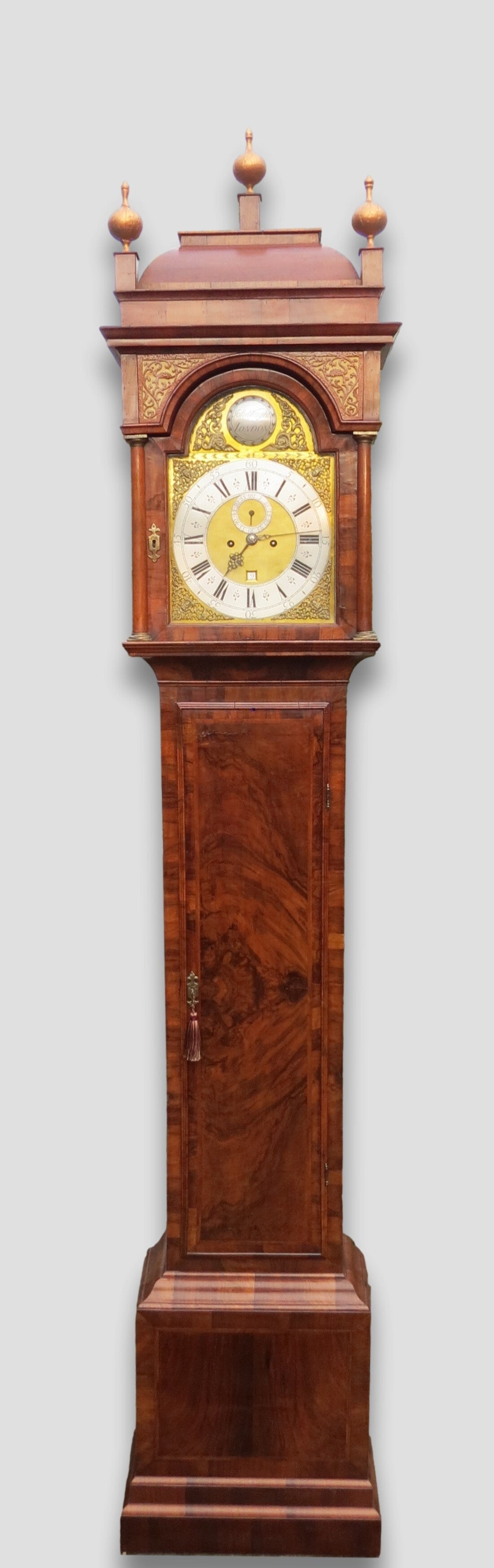
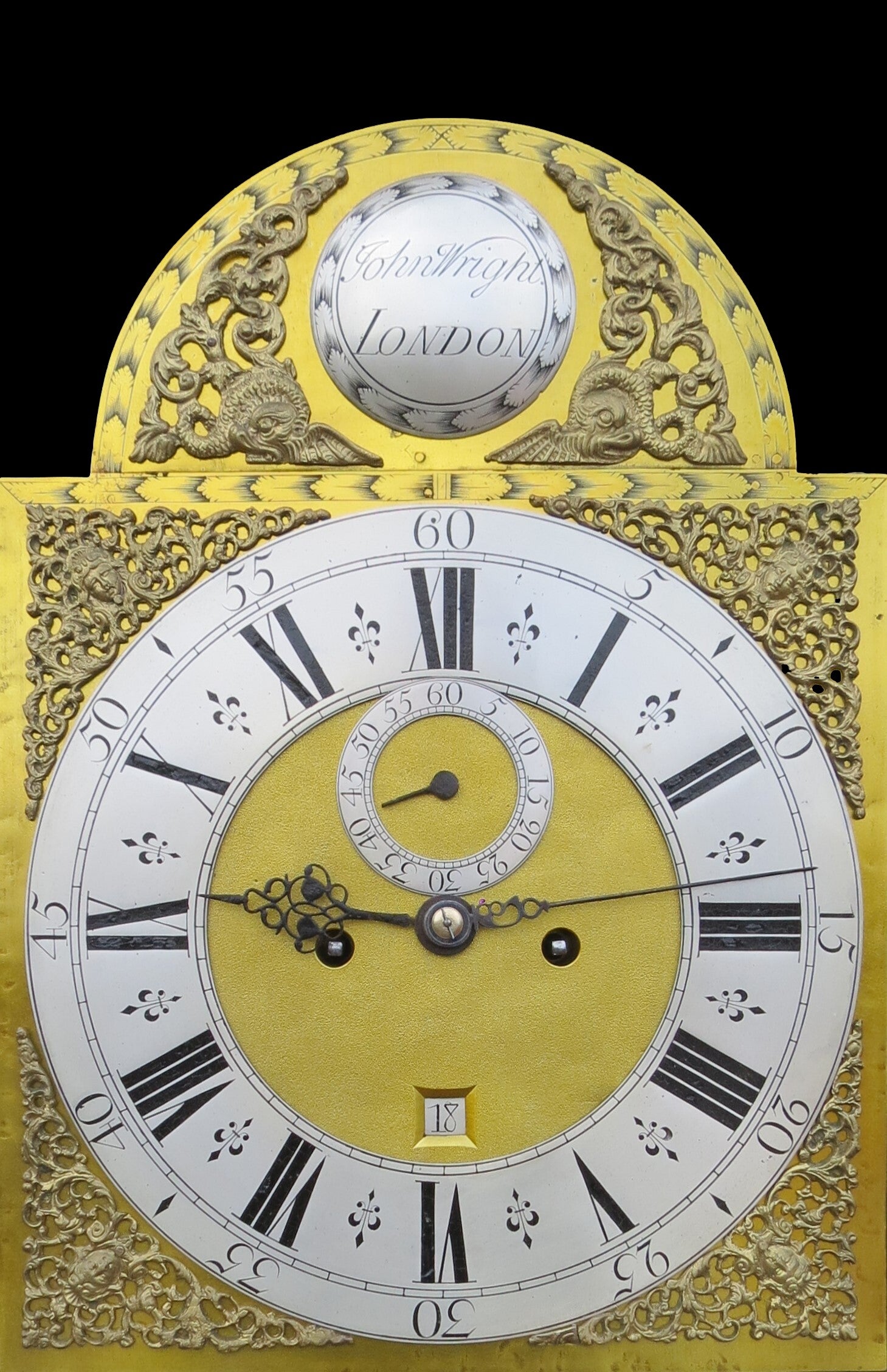
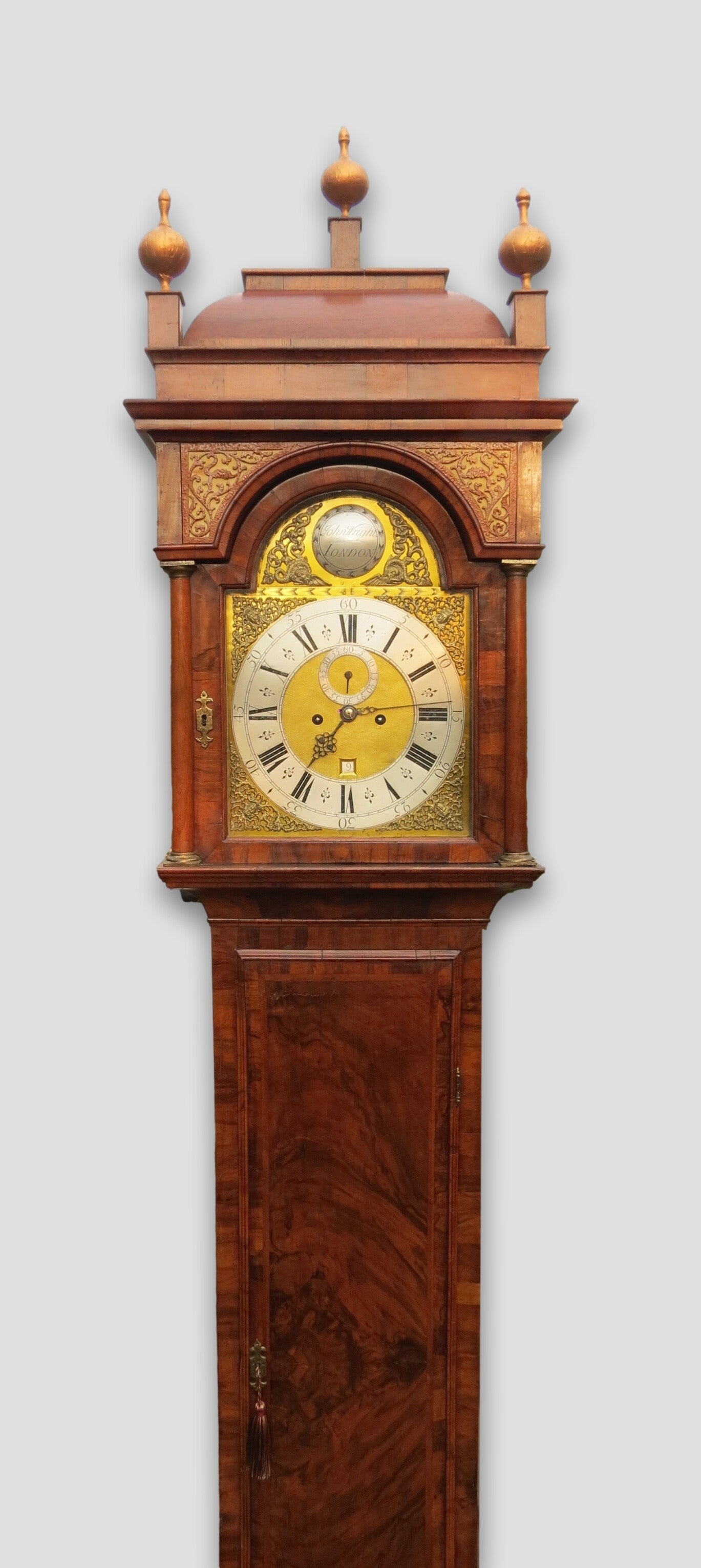
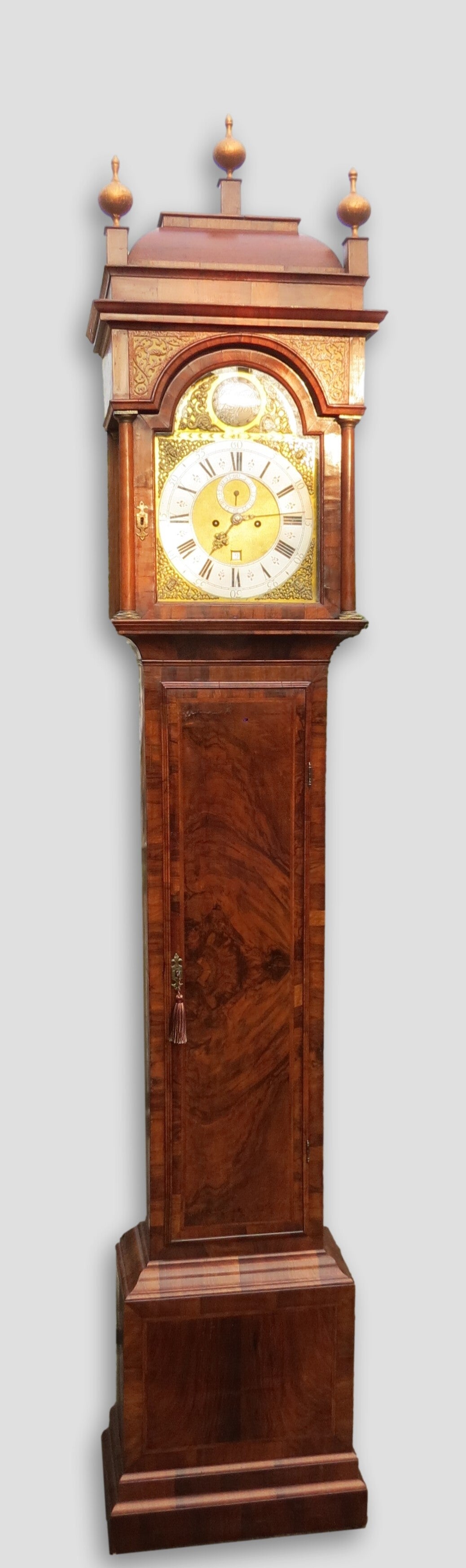
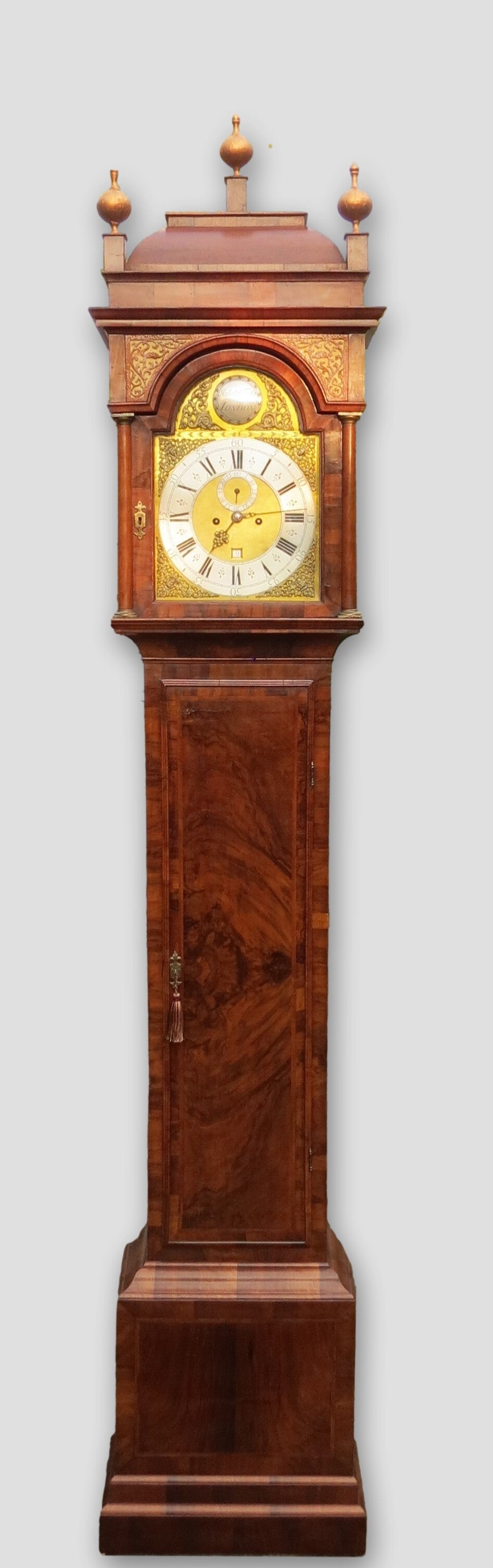
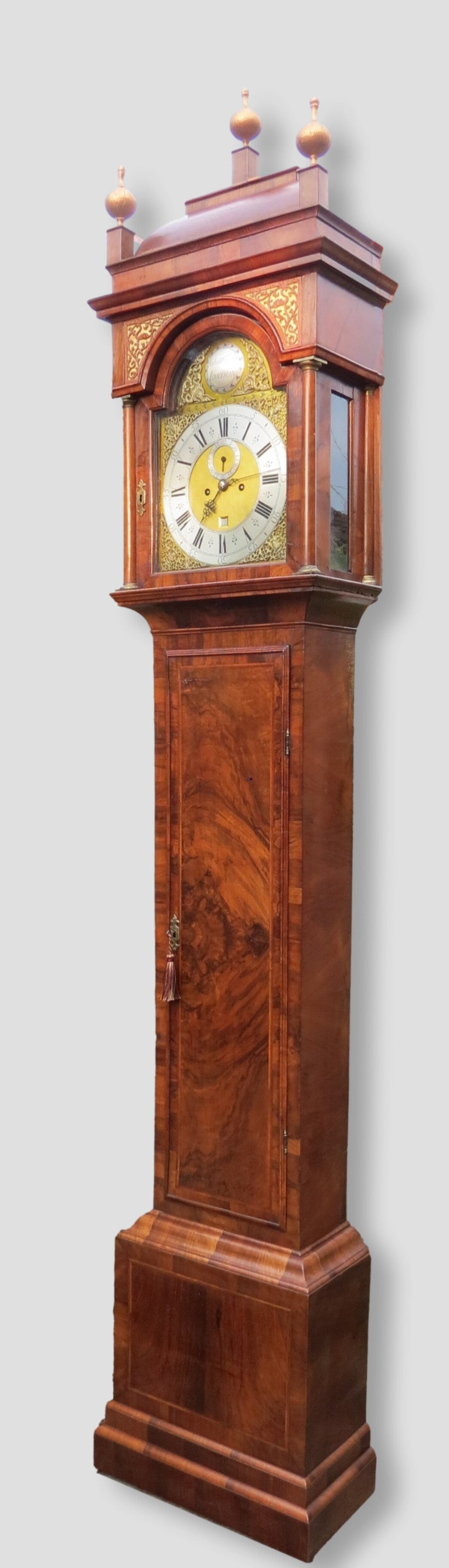
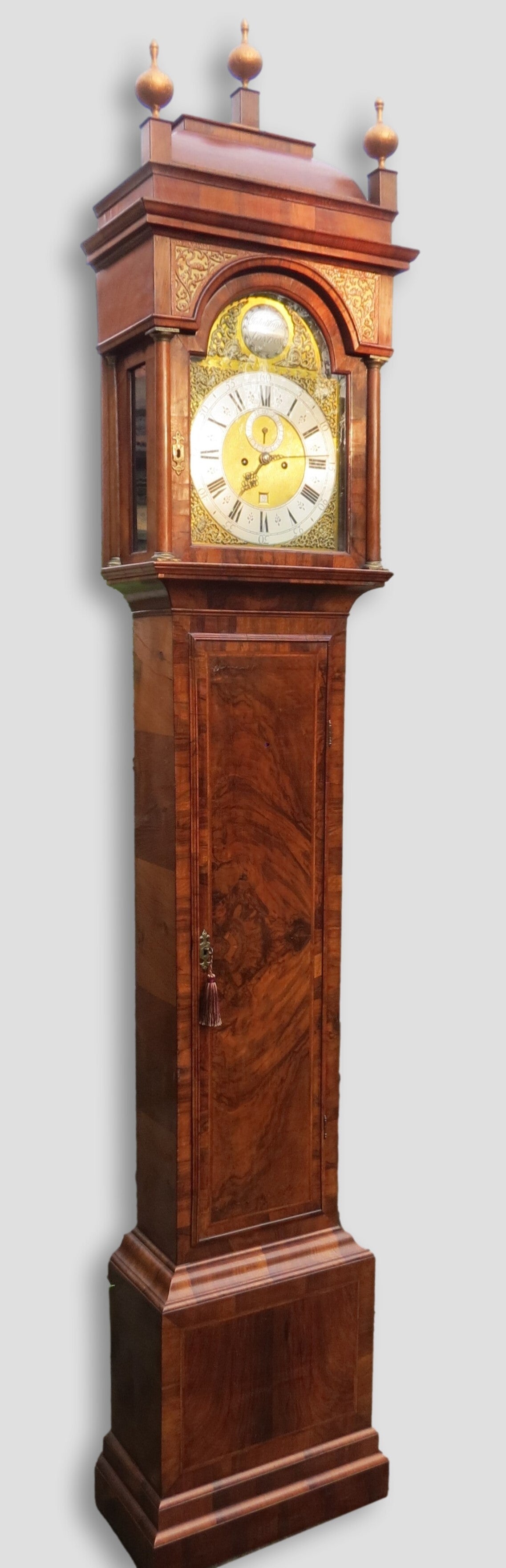
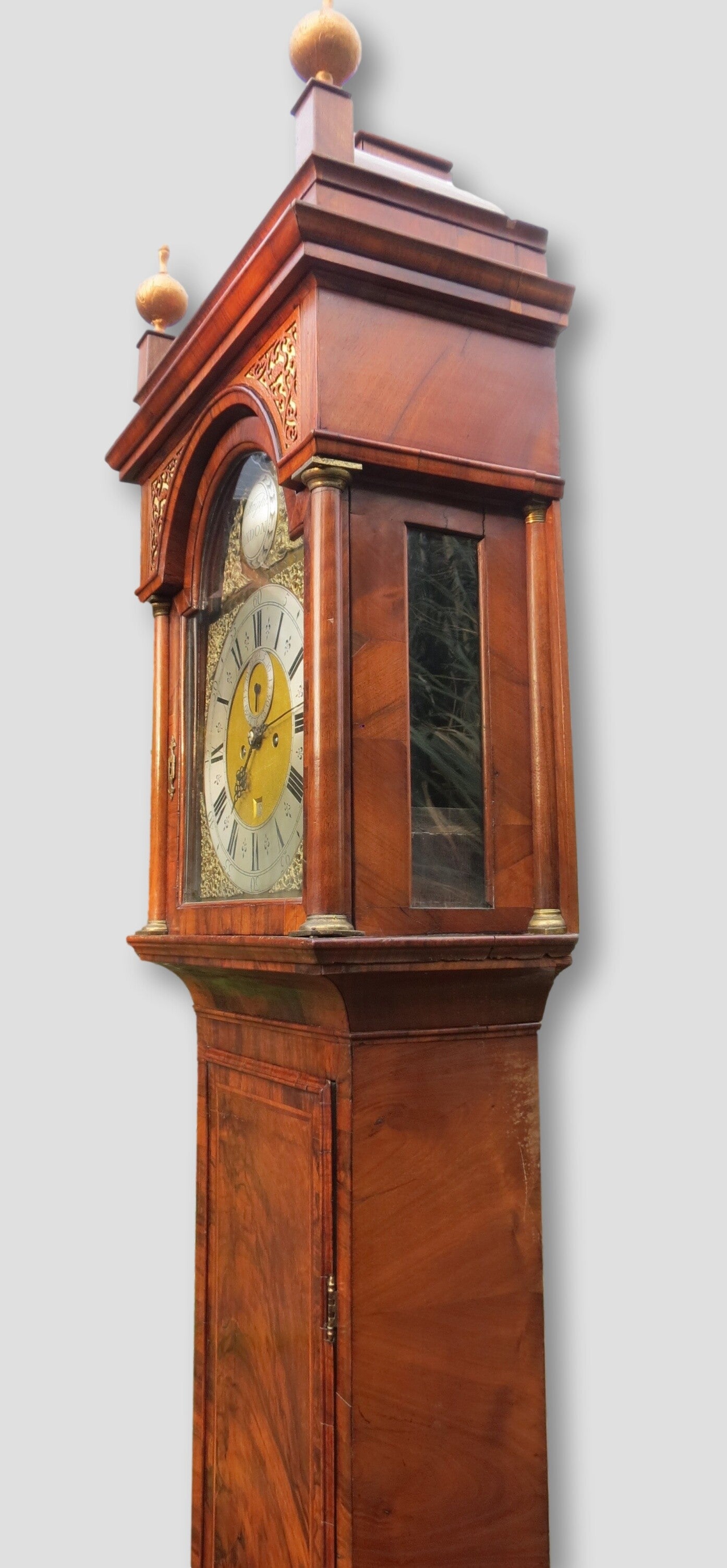
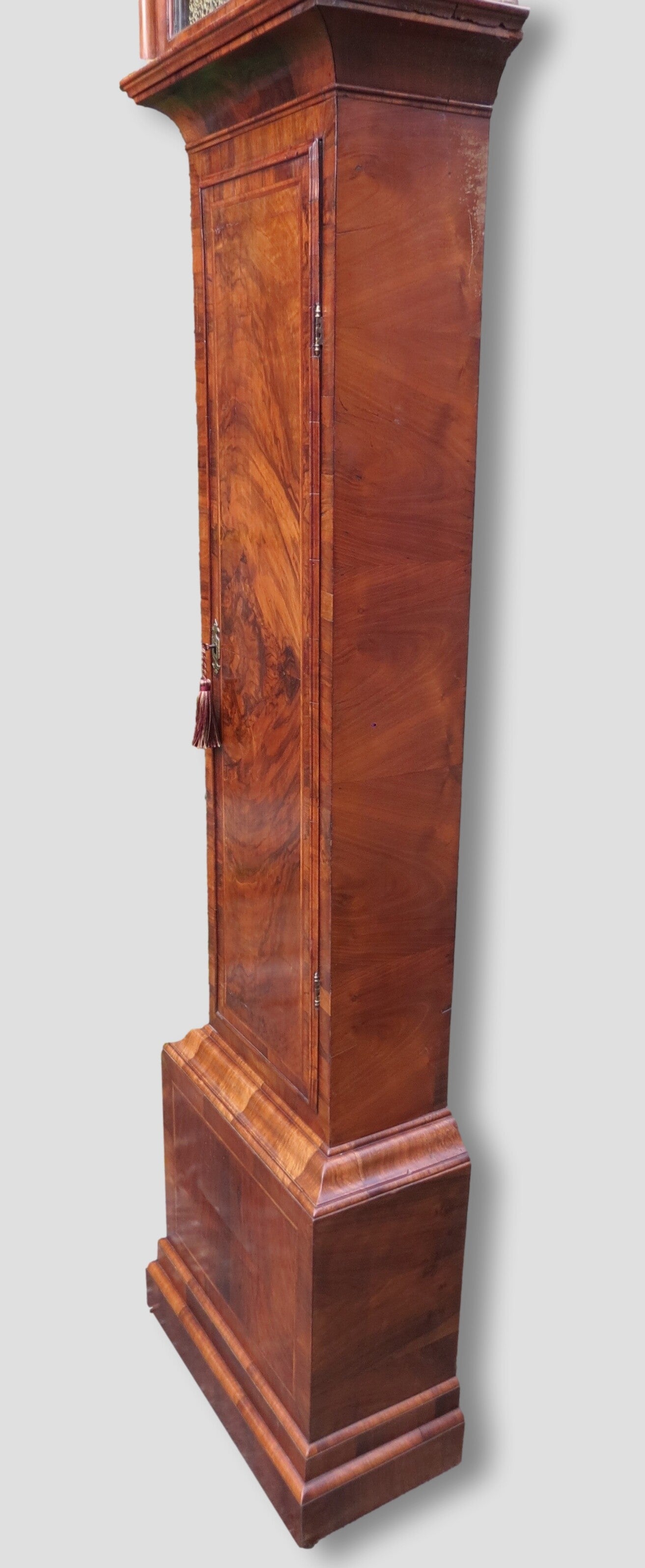
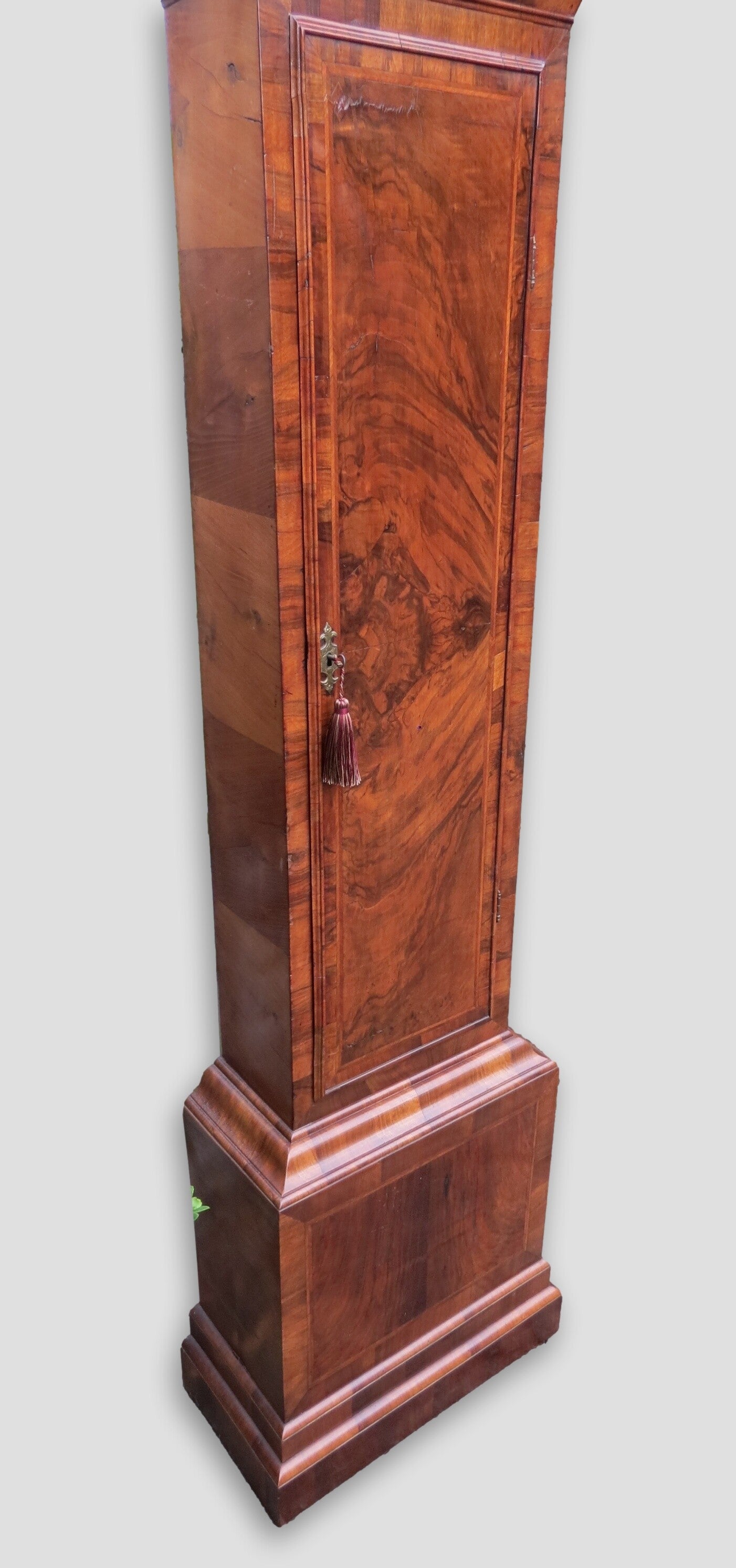
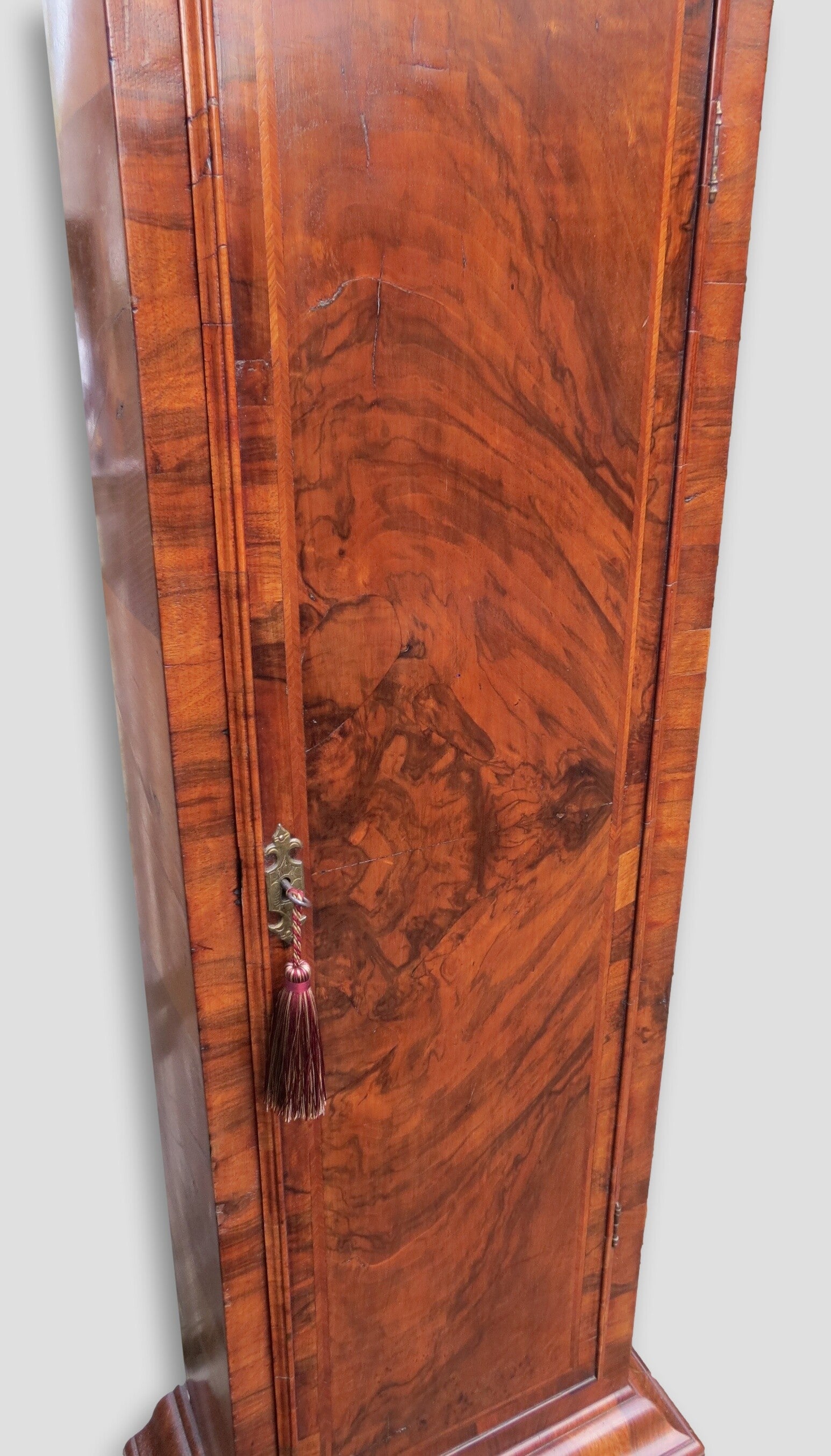
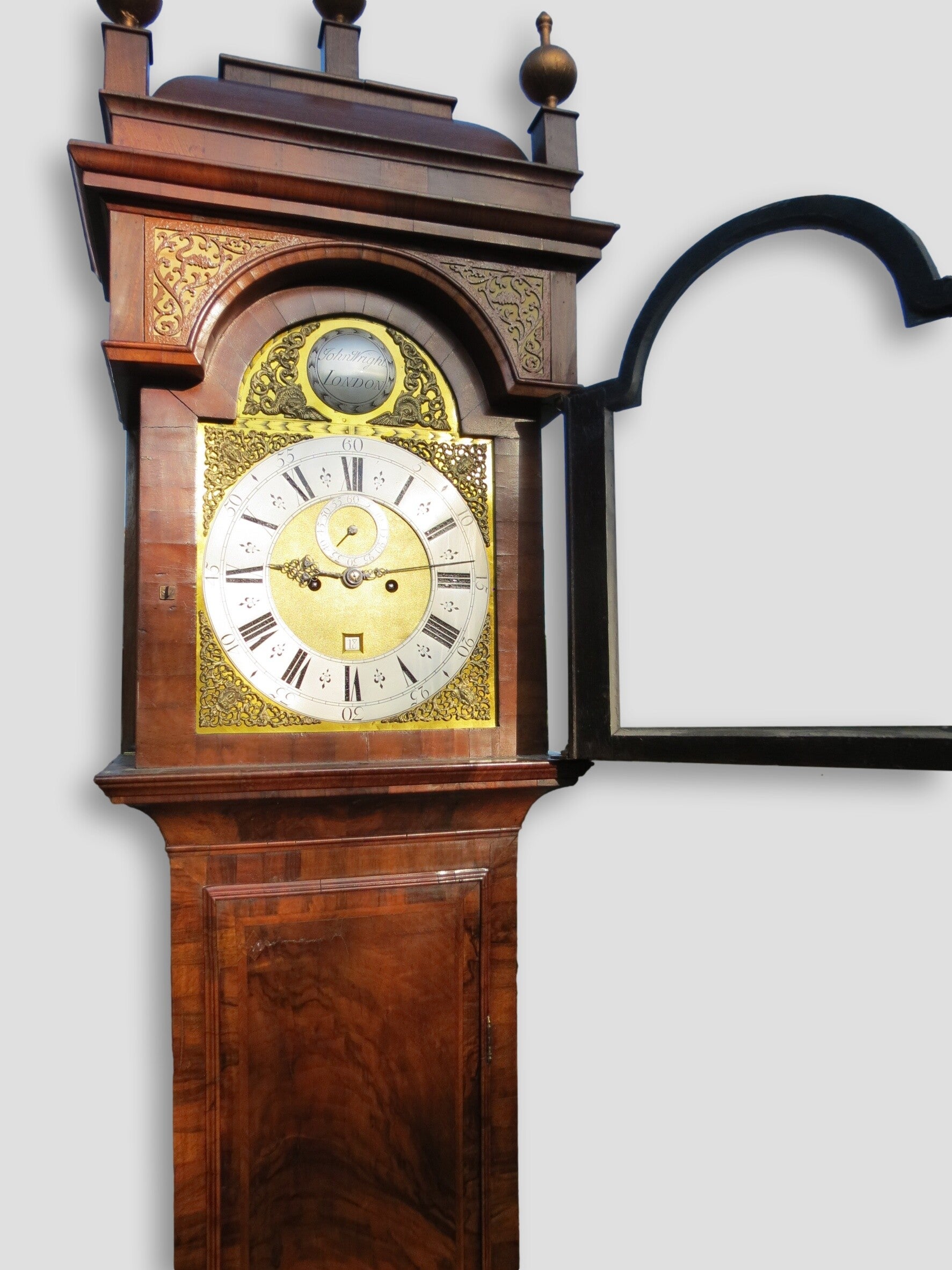
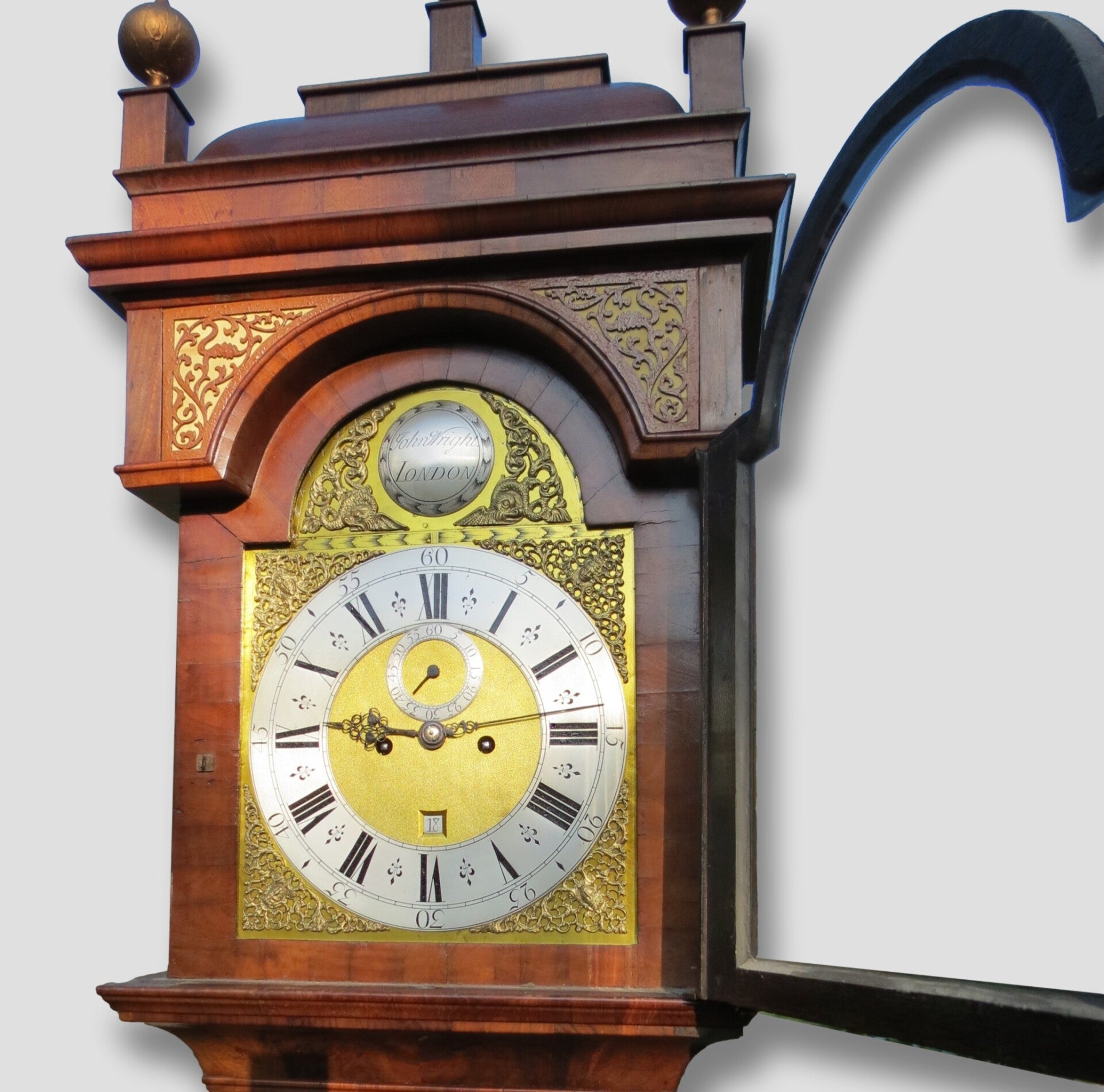
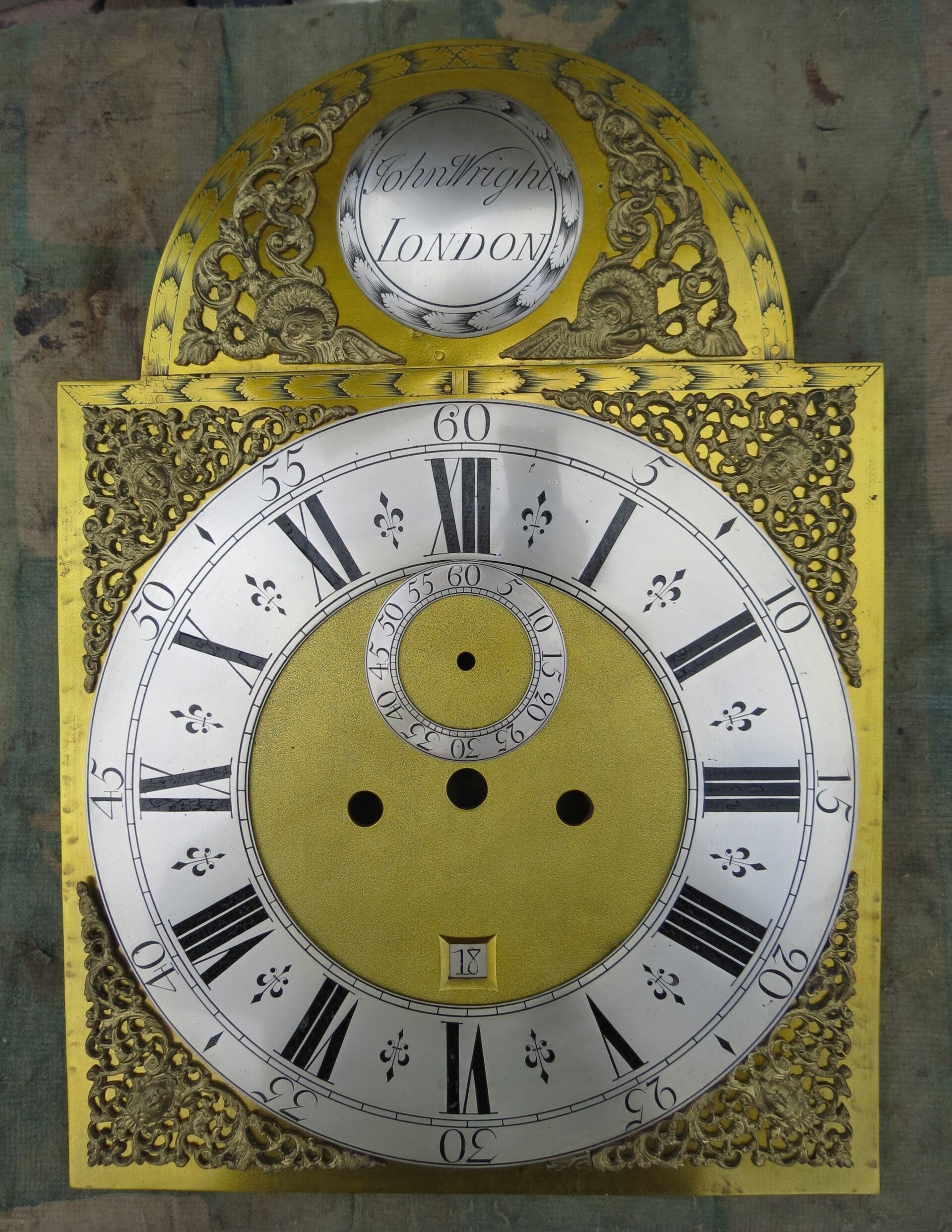
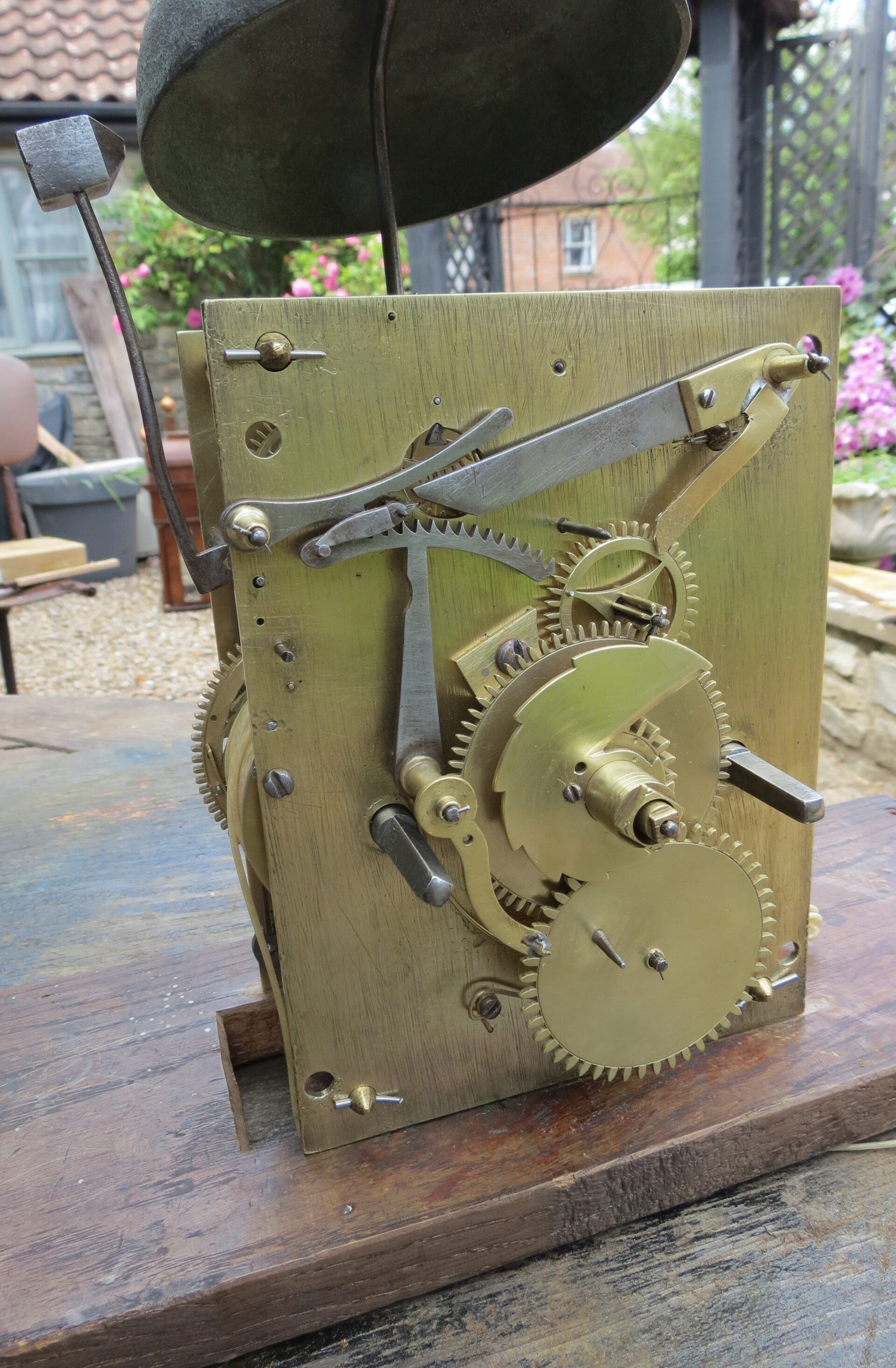
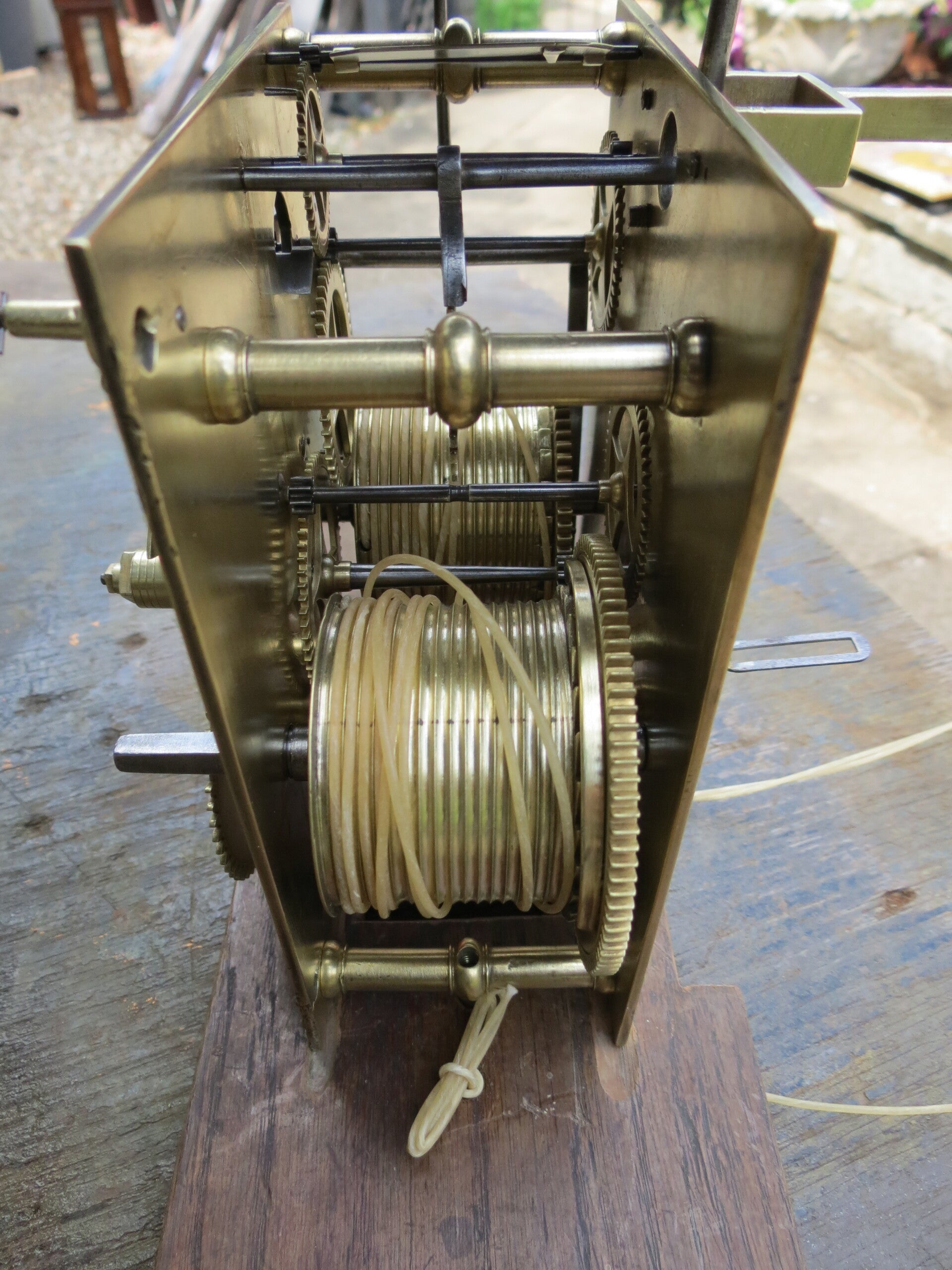
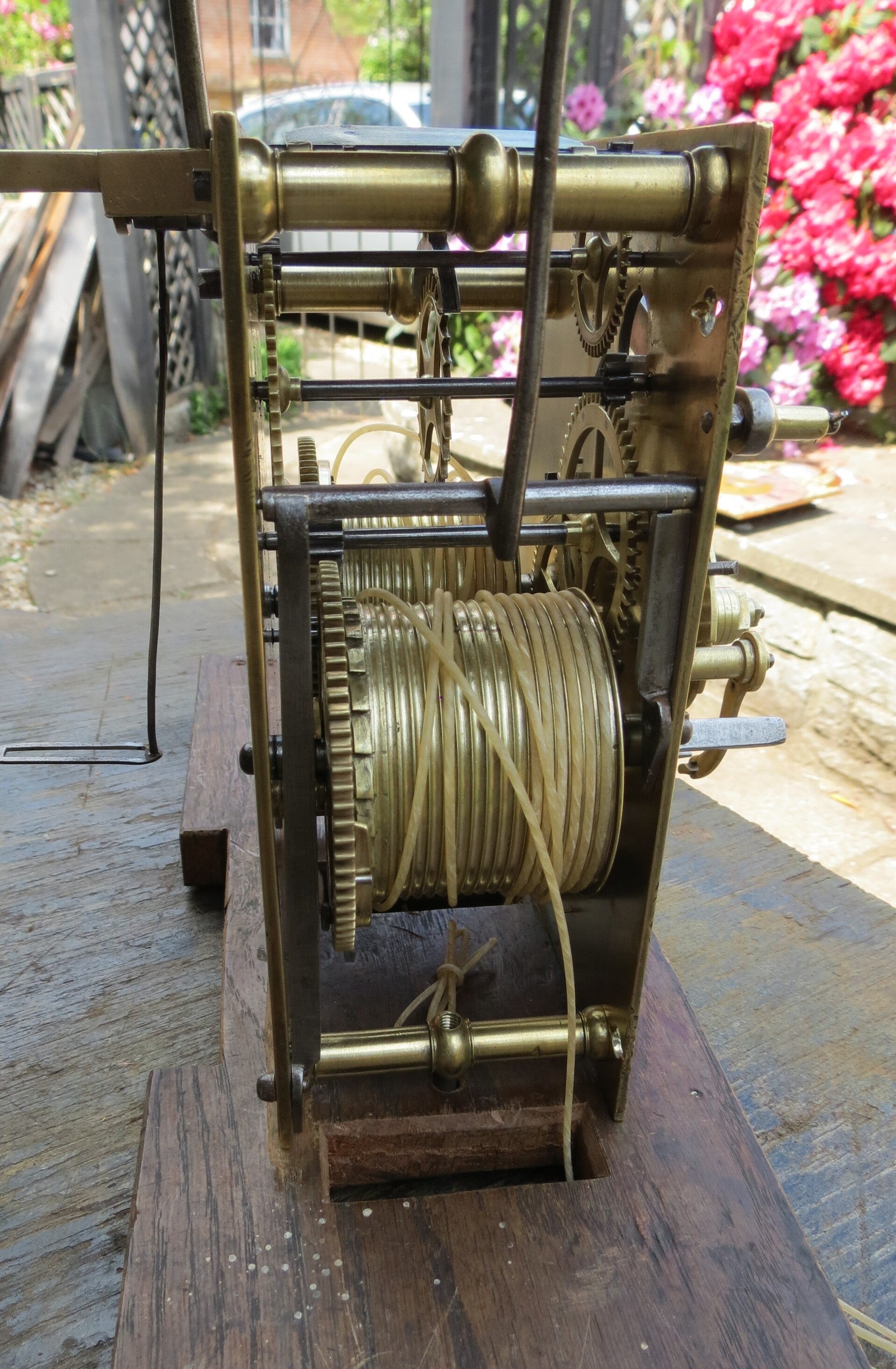
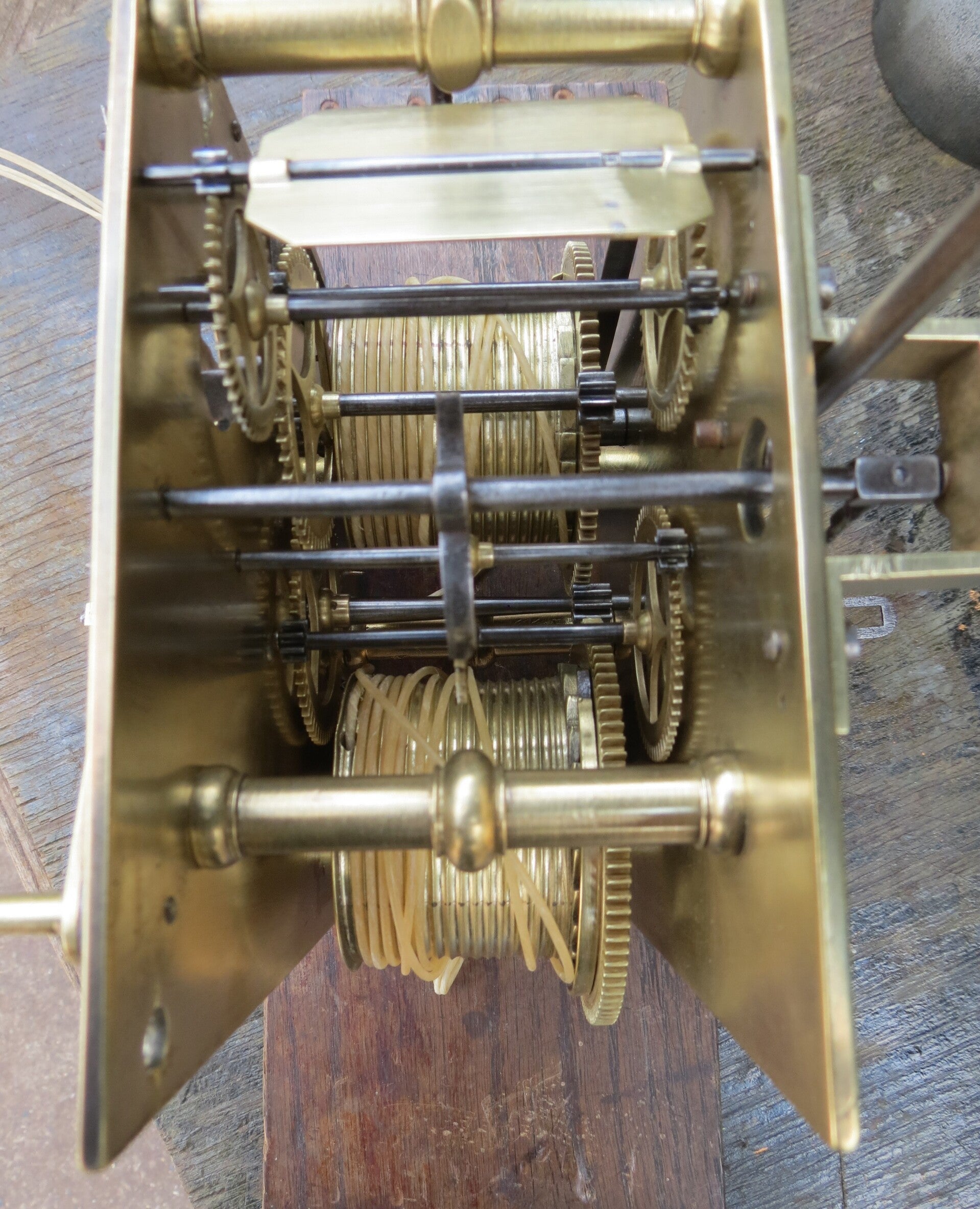
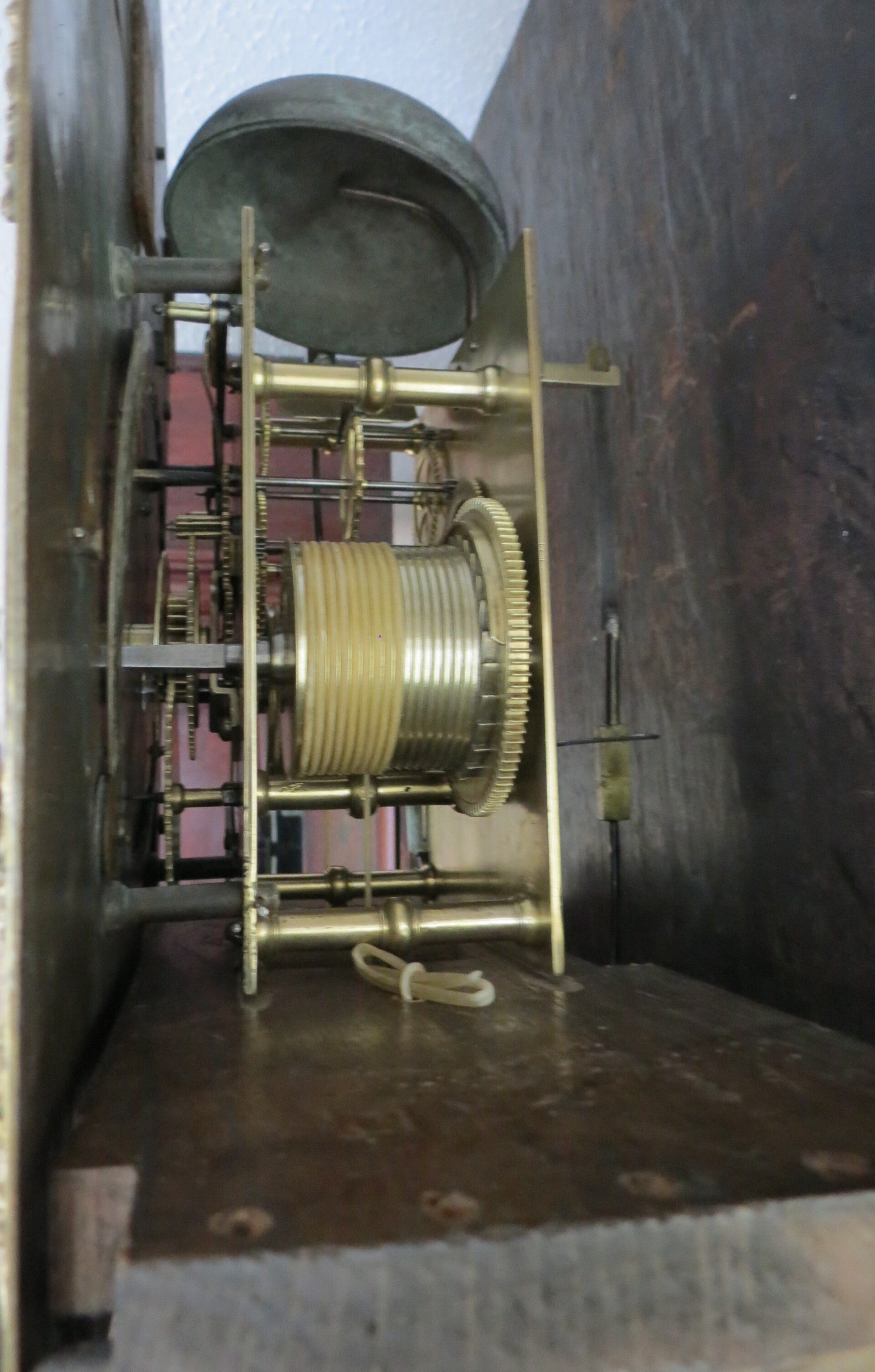
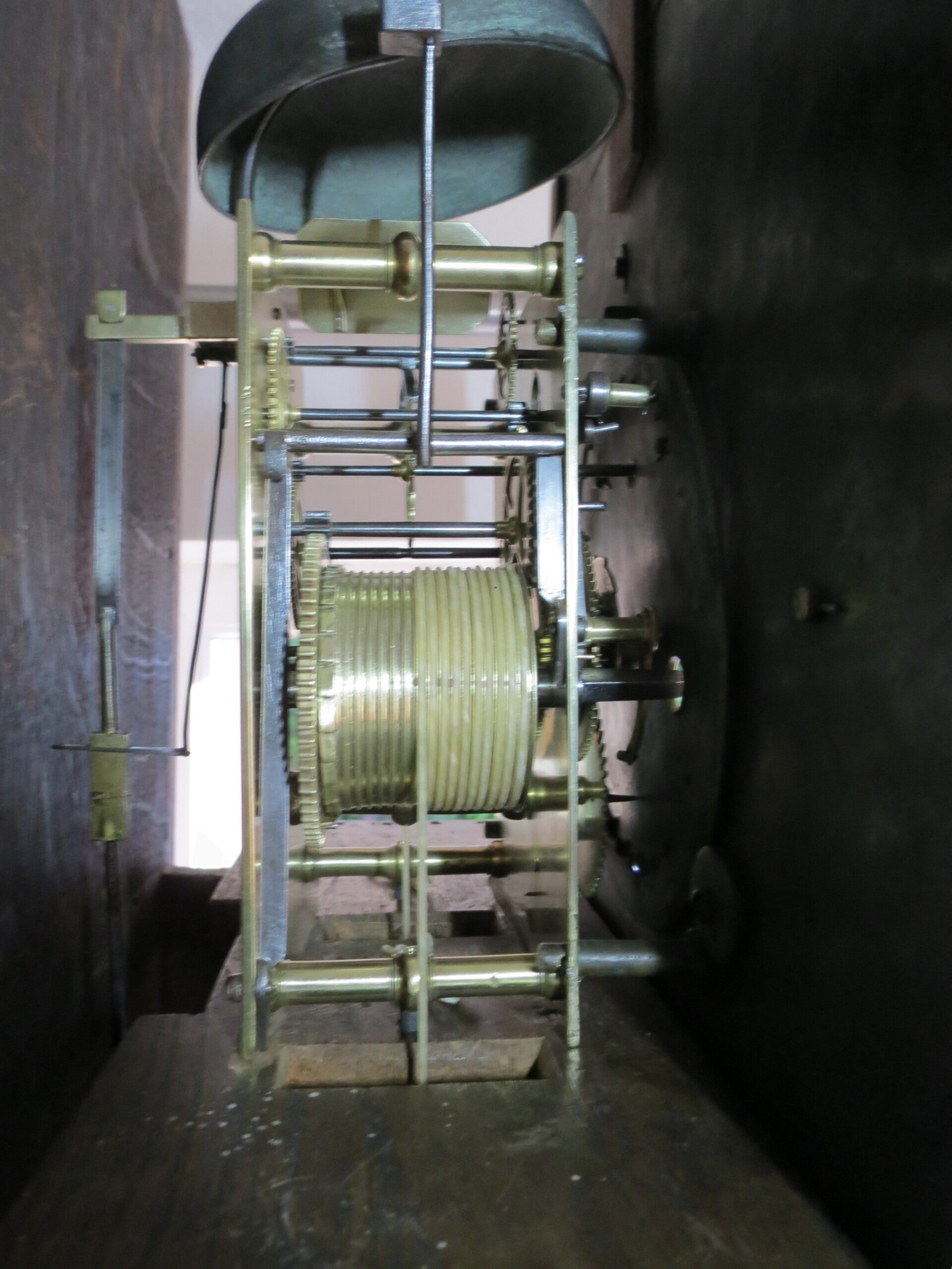
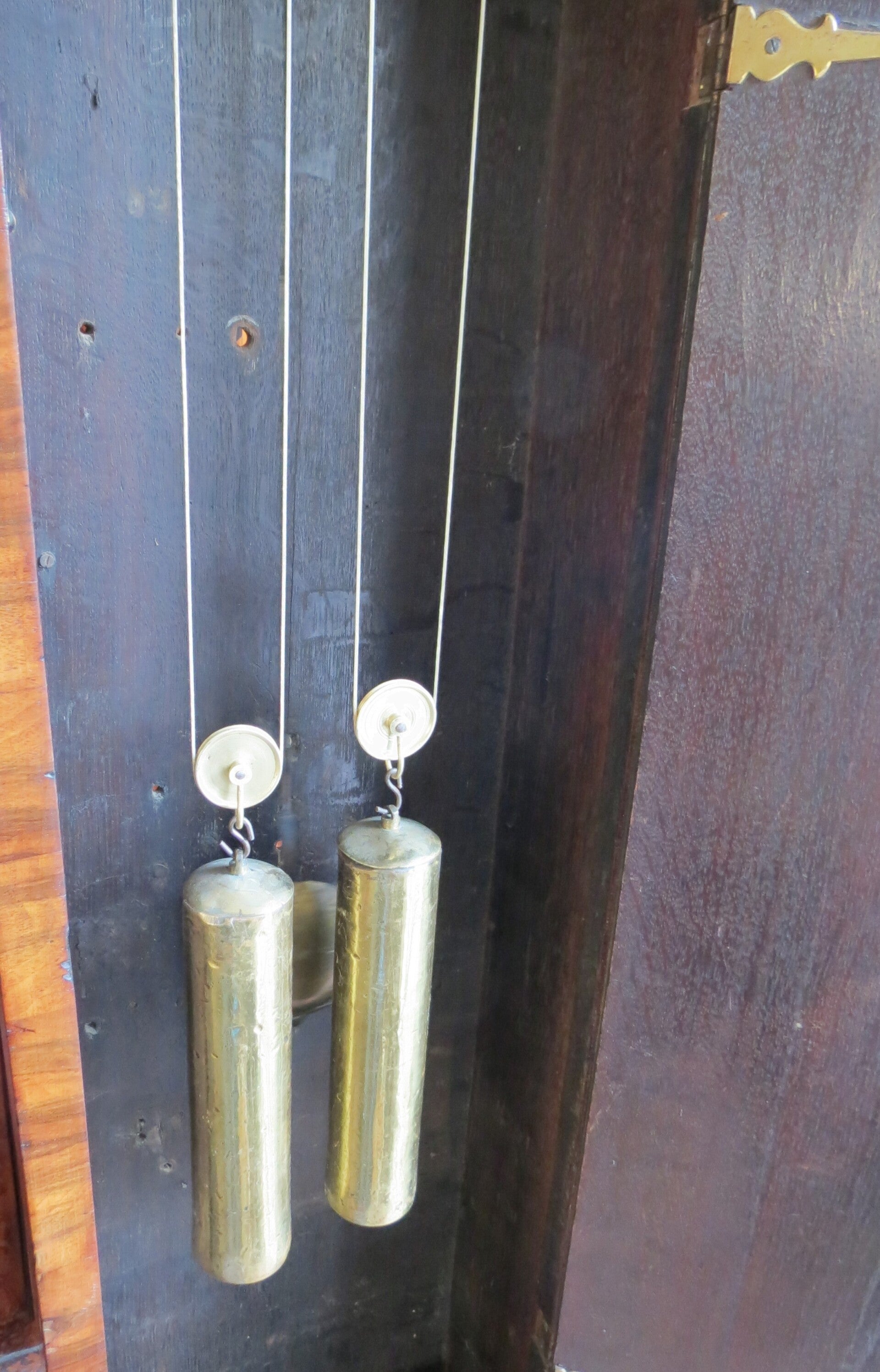
A fabulous London walnut cased longcase clock dating to the 1720s. Brass/ silvered dial with subsidiary seconds and date aperture, maker's name boss in the arch. 5-pillar movement running for 8 days and striking the hours on a sweet sounding bell. Top quality figured walnut case, long door, double plinth base, impressive caddy top surmounted by finial posts and gilt finials. With very good brass-cased weights, winder and key which operates both trunk and hood locks.
It's a big clock as you would expect for London clocks of this era, overall height including centre finial is 105 inches, the centre finial and post can be removed in which case total height is 98 inches.
The clock is fully working, the movement has been properly cleaned and serviced with new gut lines etc. Overall condition is very good, some marks and wood movement to the case are inevitable for items of this age but nothing that detracts.
Historical perspective
The 1720s were at the end of the 'golden age' of English/ London clockmaking. The most famous makers had died or were coming to the end of their working careers, Tompion, Windmills, Quare to name a few. However the standard of London clockmaking remained very high governed by the strict standards of the clockmaker's company. By this time fashions had changed from the fairly small early longcase clocks to much larger examples. This is partly because dial sizes increased from the early 10 inch (or less) to 12 inches. The style for the highest quality clocks clocks was to have tall and complex 'caddy' pediments above the dial, this added significantly to the height and grandeur. Arch dials became the dominant fashion from around 1720, perhaps a bit earlier for some makers, again this added to the complexity of appearance. Case materials moved on from marquetry by this time, figured walnut was still commonly used, also lacquer/ Chinoiserie. Mahogany was not generally used this early although it would dominate from about 1750.
The maker, John Wright
There are several entries in Baillie for this name, possibly picking up different dates for the maker. It seems most likely to be John Wright listed as a member of the CC in 1700 then again in 1714. There is another listing for 1661 but that may be too early considering the normal working career length. There is also a later maker working during the second half of the 18th century with the same name but the style of this clock would not be correct for that period.
The Dial
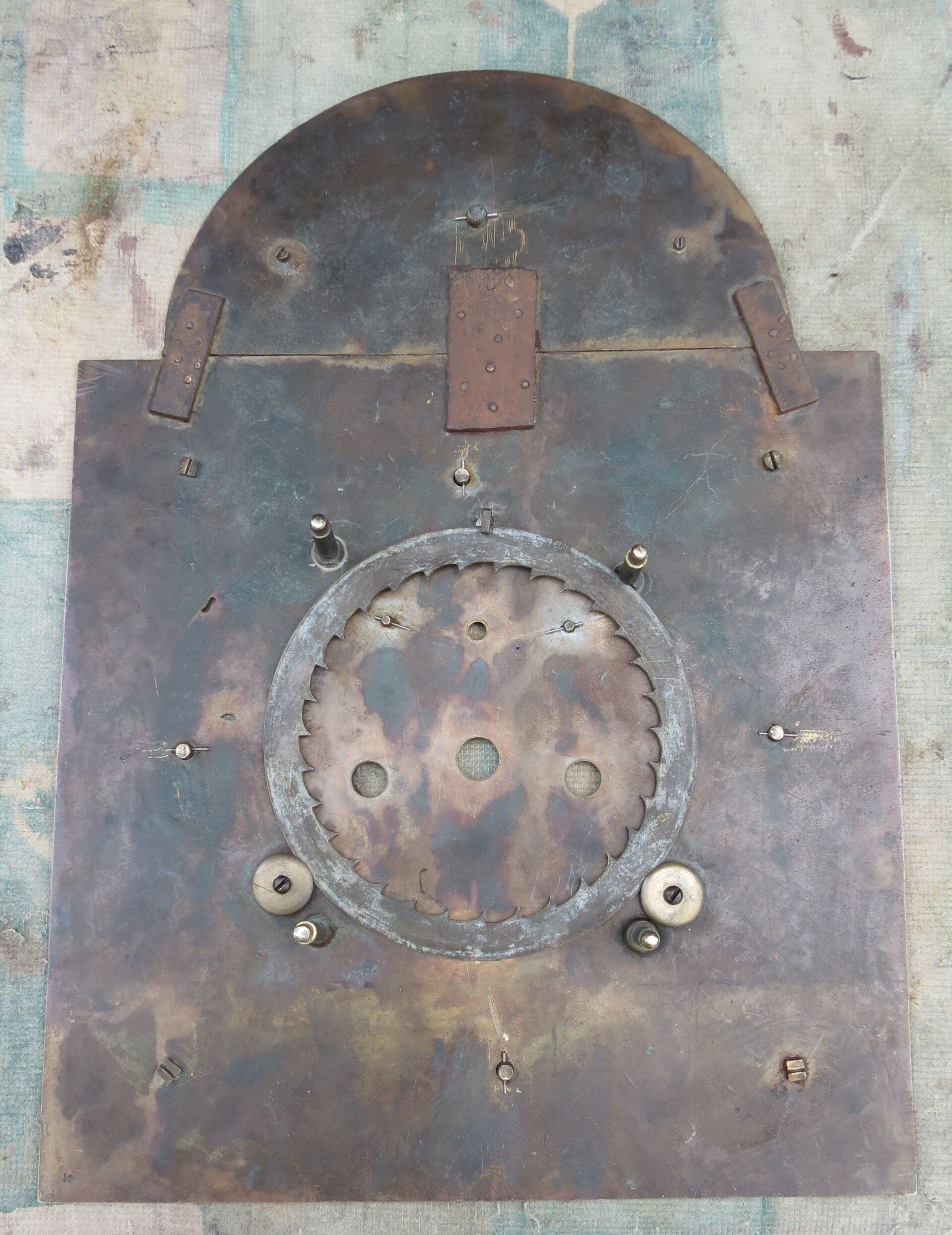
During the early arch-dial period makers seemed to approach the construction of the dial in different ways. This one has a square main dial with the arch then added to the top and secured by substantial rivetted plates. The maker's name boss is then attached to this arch. The engraving to the top of dial, arch and name boss use an identical pattern which shows that they were contemporary and the dial was made this way from scratch. There are many instances where arches have been added to square dials several years (or centuries!) later to update the appearance but not here.
The main chapter ring has the full complement of inner hour calibration, half-hour markers, 'half-quarters' and then the normal minutes/ hours. These are all typical for the period, they would gradually disappear from dials as the century progressed.
The dial has been cleaned and re-silvered. When I first had it the silvering was looking dull, now it looks nice and bright again and will age gracefully over the next few decades.
The steel hands are very finely made and in typical style for the period.
The movement
Most London movements had 5-pillar movements, you do occasionally see 4 but not often, some makers used 6, even for 2 train movements but that's rare. This one is a nice quality movement in typical London style. One thing you notice about the older movements is that they have significantly smaller wheel-work than later examples. The movement appears to be in very good condition, some older re-bushing as you would expect for movements of this age. The front plate has original cast marks remaining, again something you tend to find on older clocks.
When I first had it the movement was looking a bit dirty. It has now been carefully cleaned. Everything has been checked for correct operation, tolerance of bearings, security of clicks and springs, tensioning of hands etc. The gut lines have been replaced as a matter of course. The escapement is well-adjusted with good amplitude and even tick all around the escape wheel.
The case
A very impressive case, as already suggested in typical style for the London 1720s period. Very solidly built! The hood has some nice fretwork, almost obligatory for the best quality clocks, also particularly large side viewing windows. It's a nice touch that the key works for both locks, you don't often see this although many locks are not original anyway.
The figure of the walnut veneer is very distinctive, not wholly a burr but a combination of different patterns.
I'm not a fan of over-restored cases, luckily this one was in pretty good condition when I had it, just been given a polish to bring out the figure. There is some movement to the wood in places, notably at the top and bottom of the trunk door where the horizontal wood sections join the main structure. As the wood moves it can fracture the veneer over the join. You see this mostly on marquetry clocks, sometimes a way of distinguishing between a genuine old one and repro. Because this case has similar construction to a marquetry clock the same thing has happened. Not particularly bad though you can see it if you look a bit closer but doesn't detract from the beauty of the case.