

James Clowes Londini Fecit. Circa 1680. Early 10 inch dial, 8-day marquetry longcase clock.
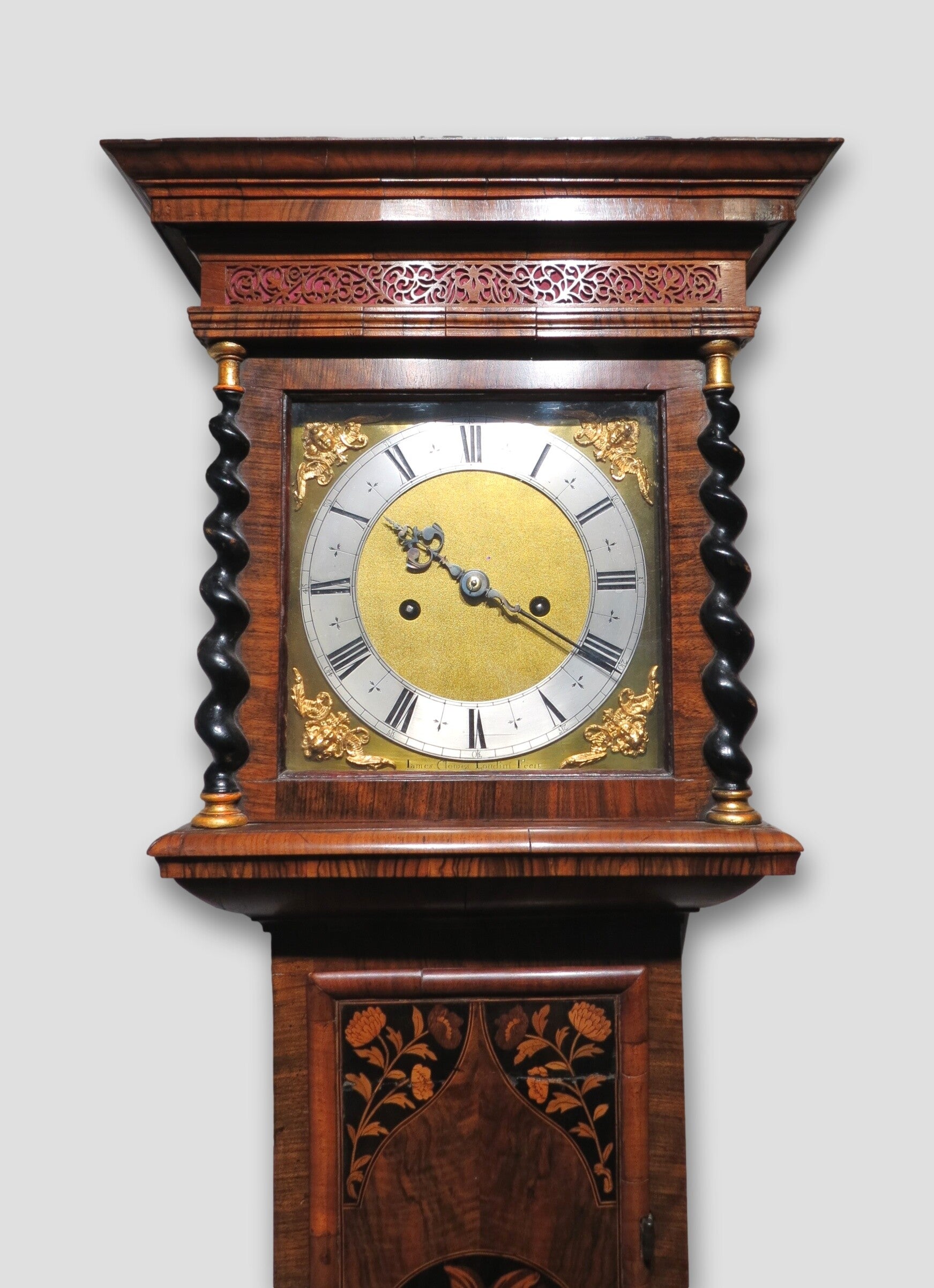
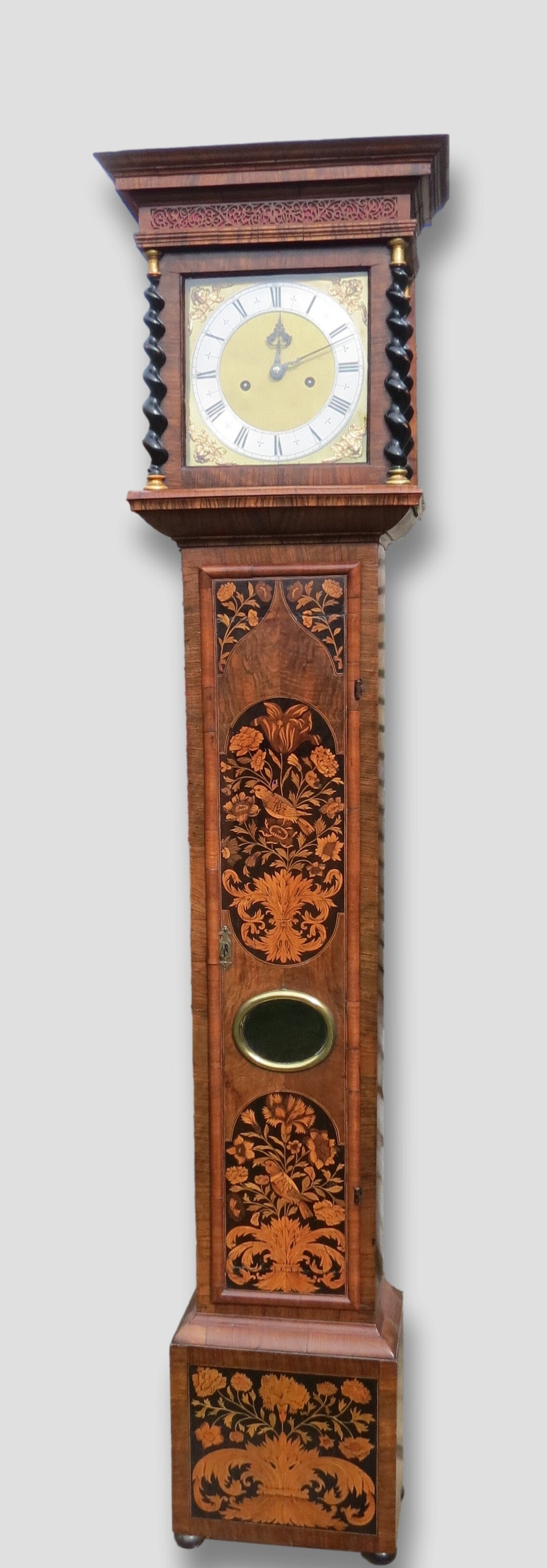
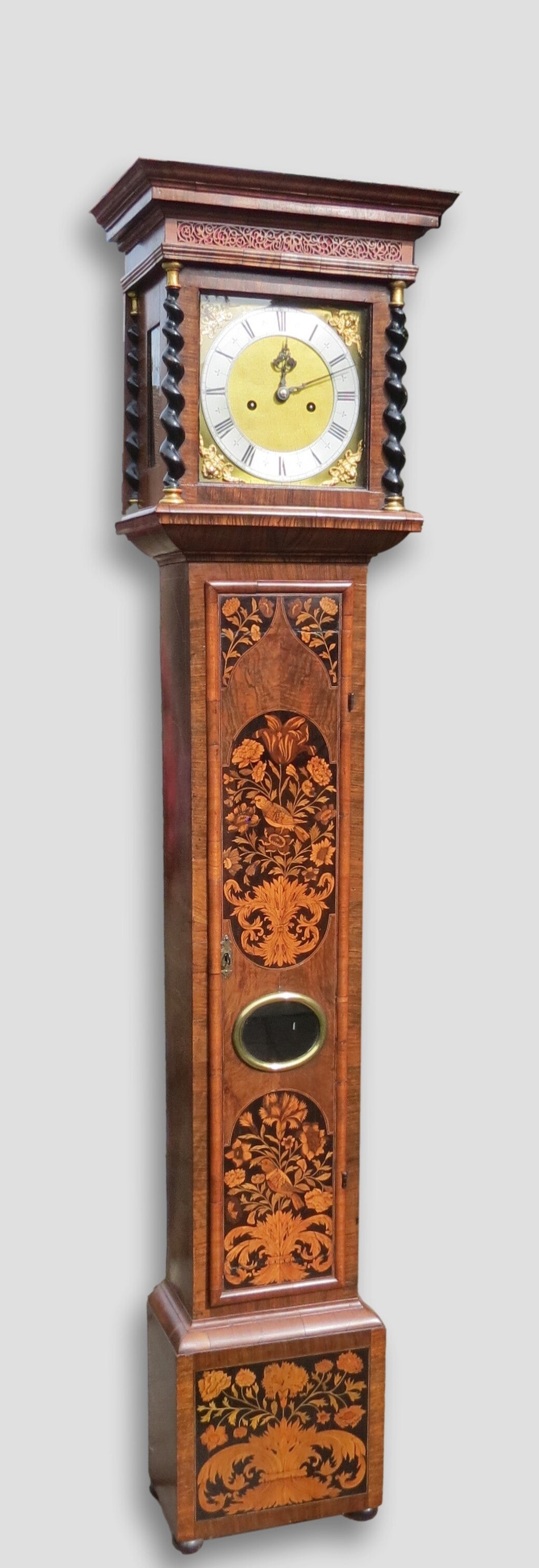
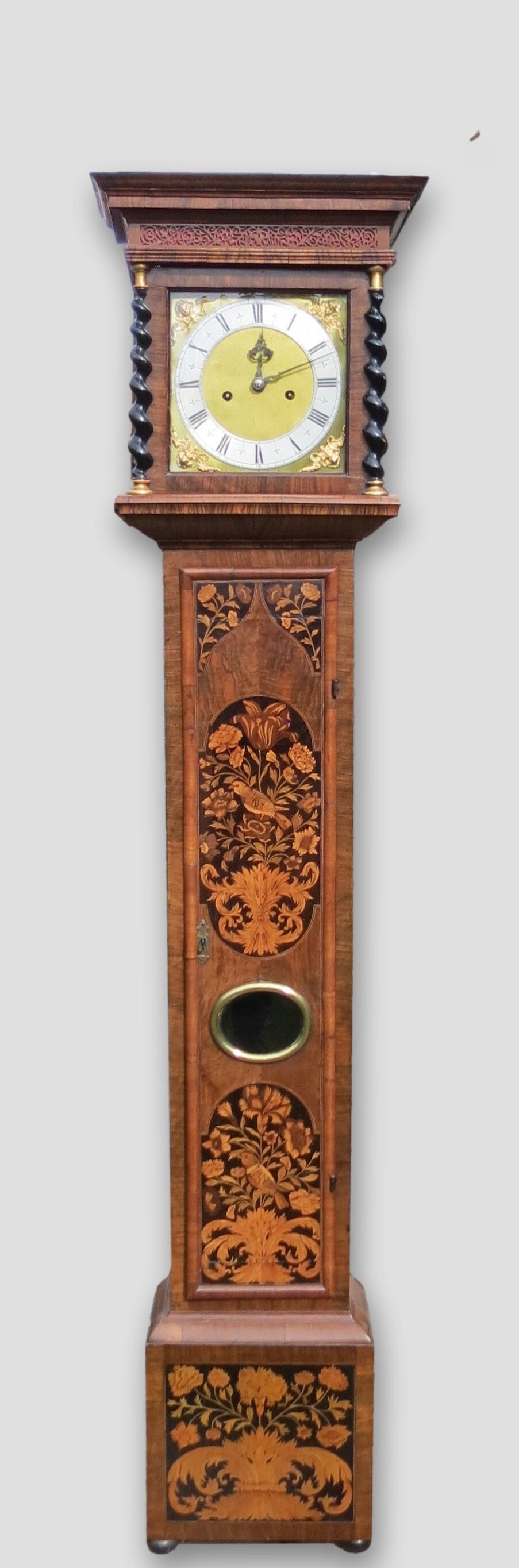
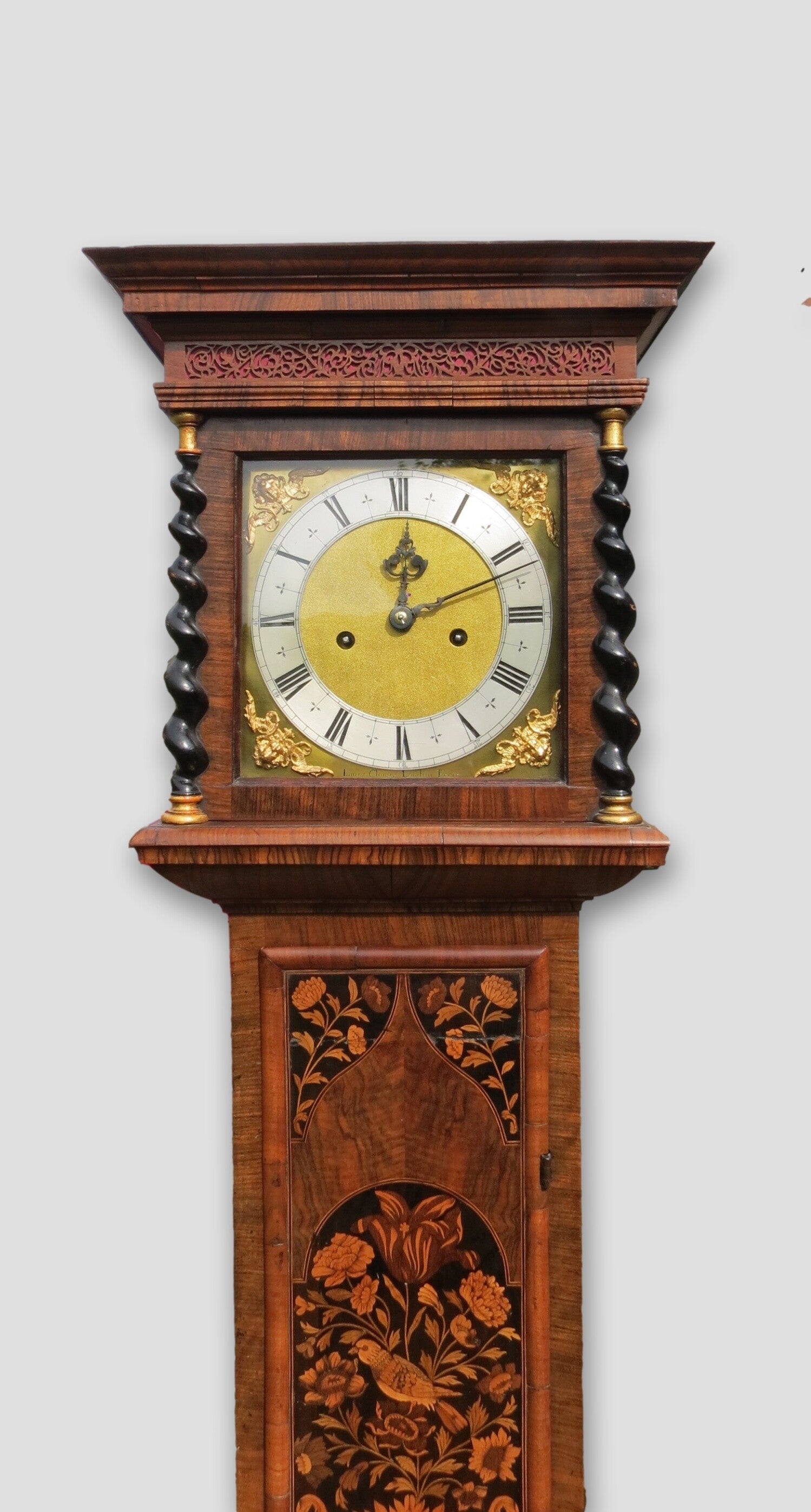
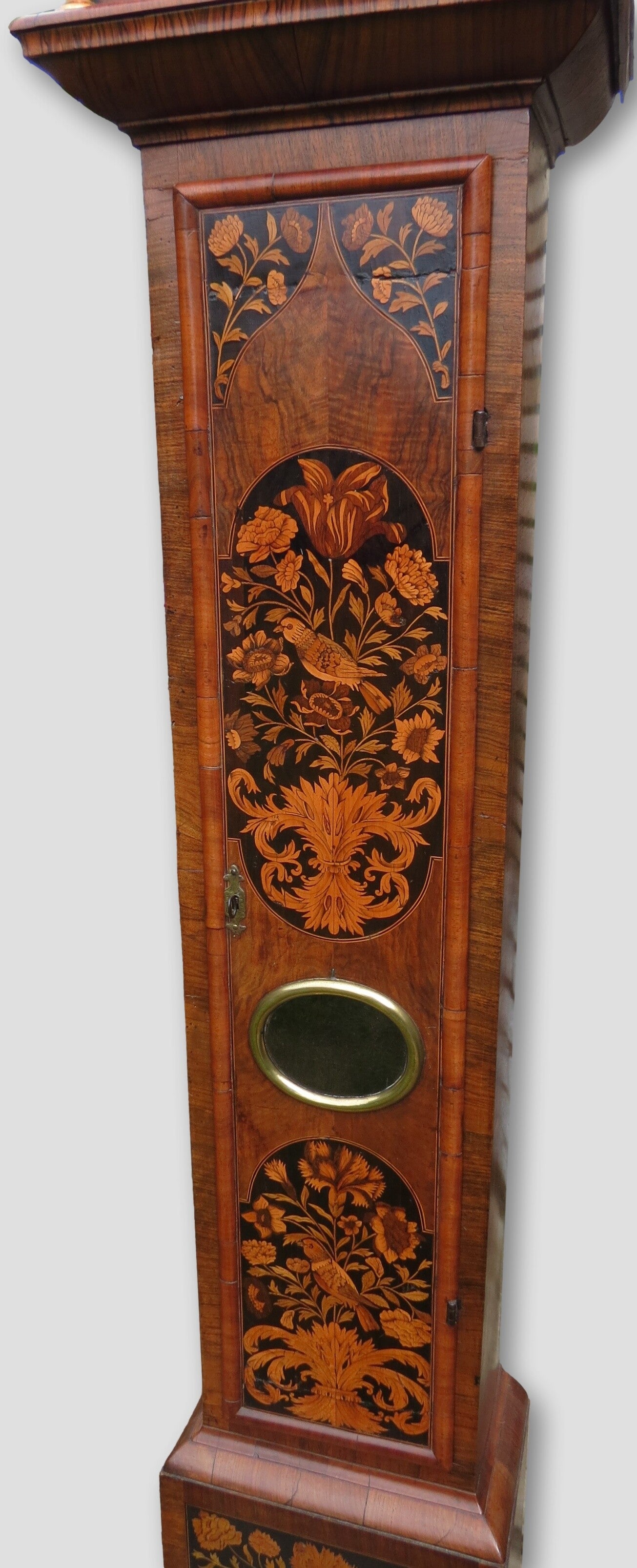
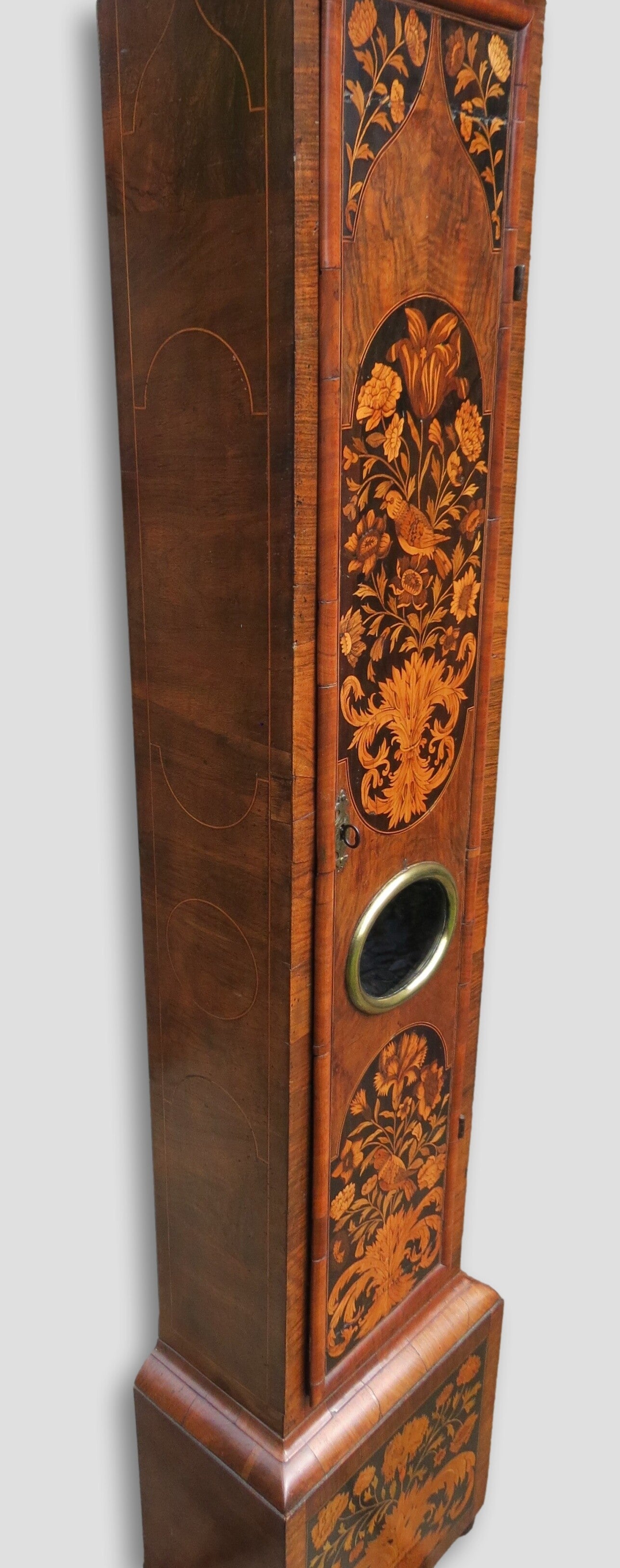
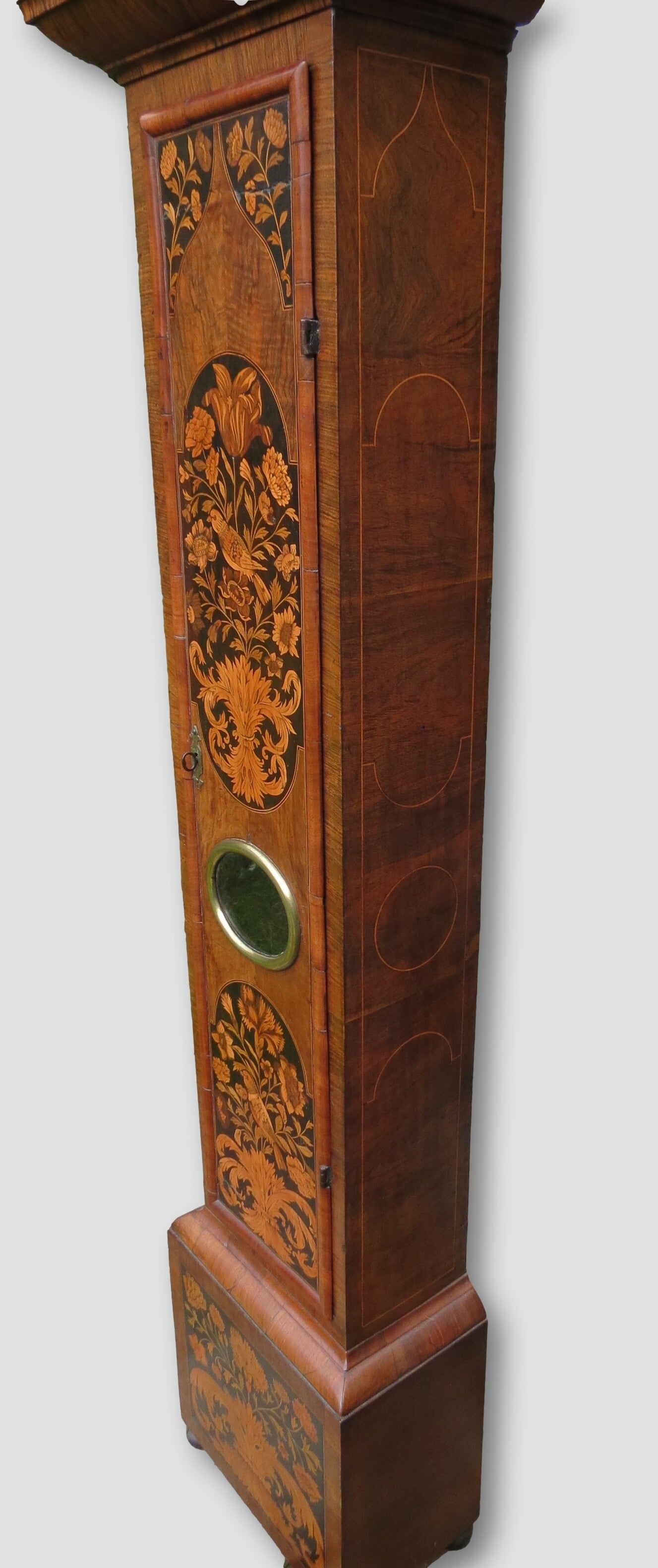
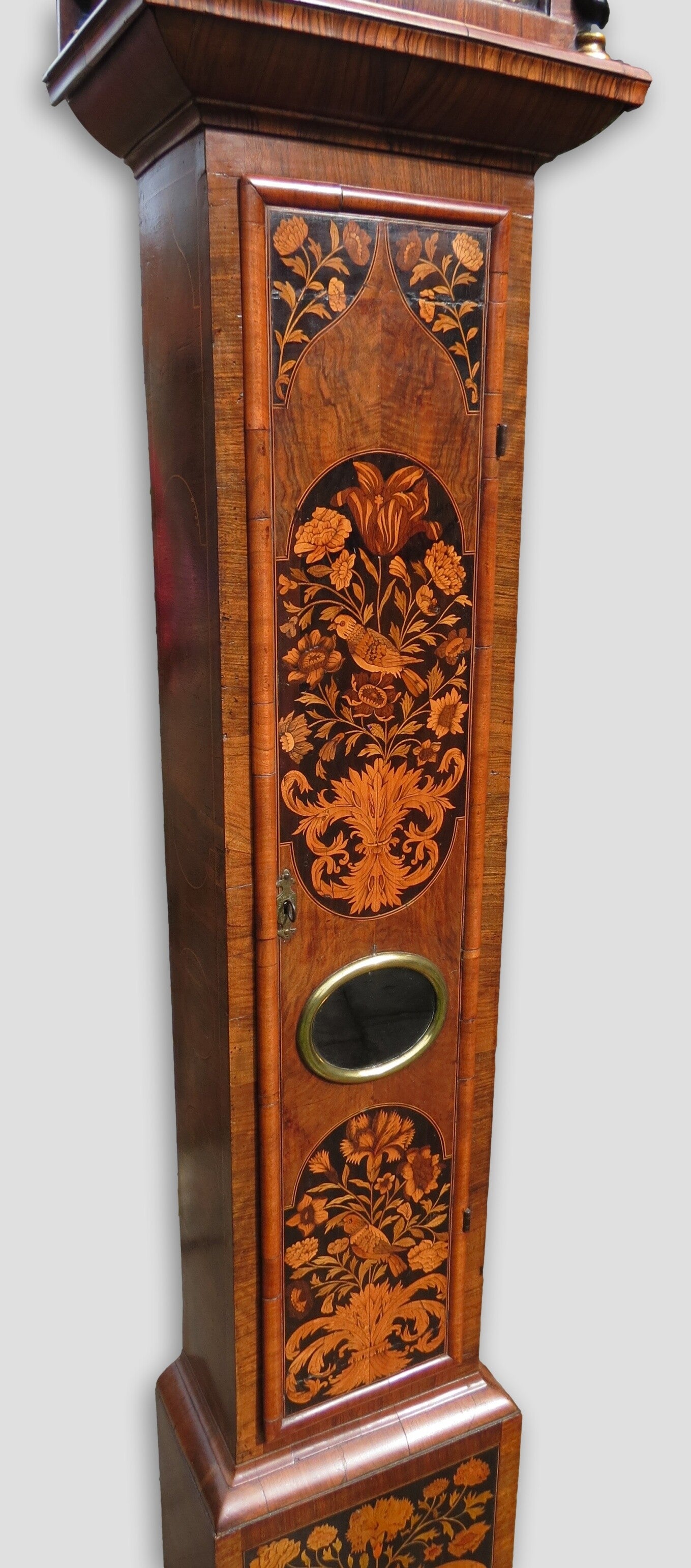
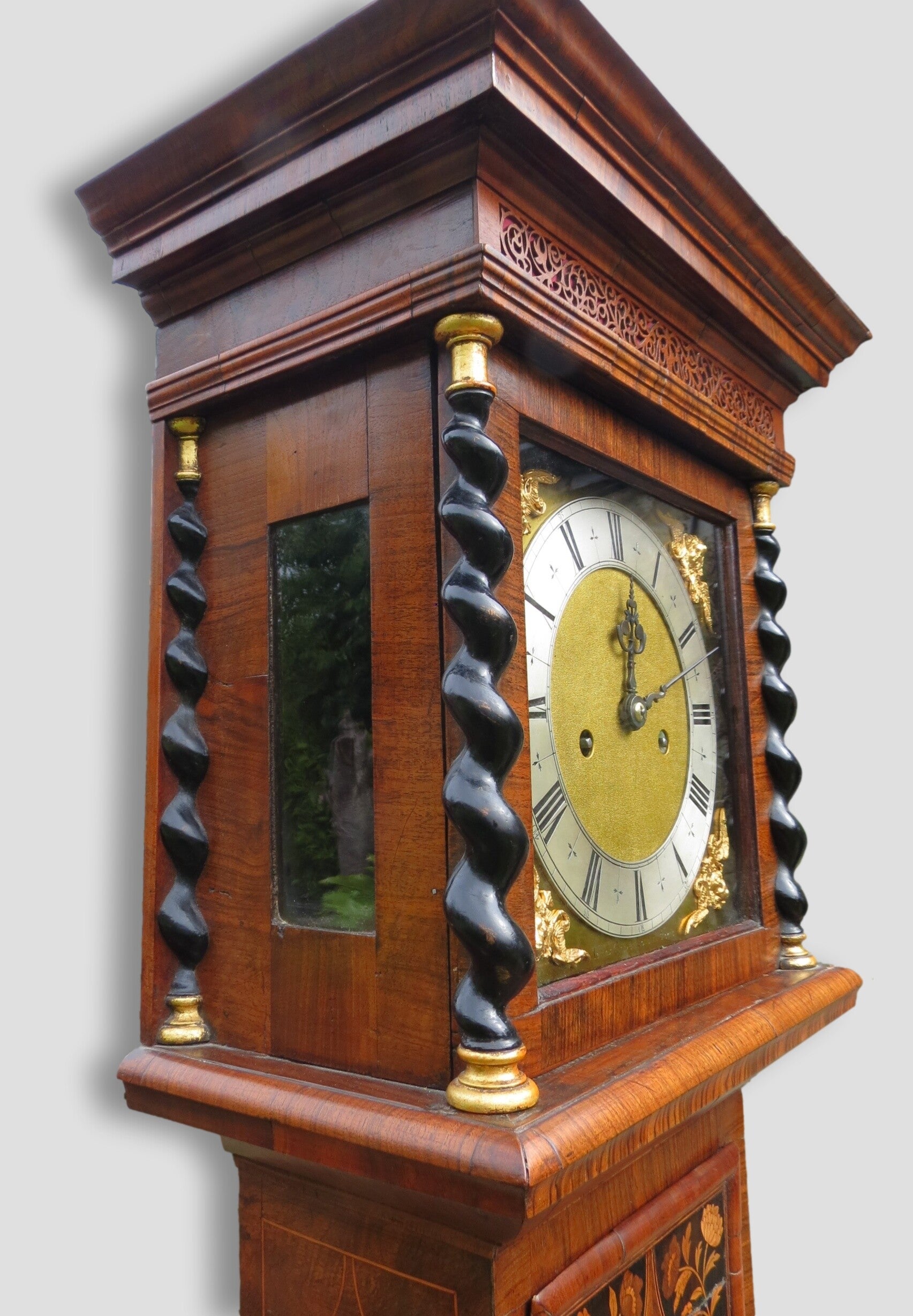
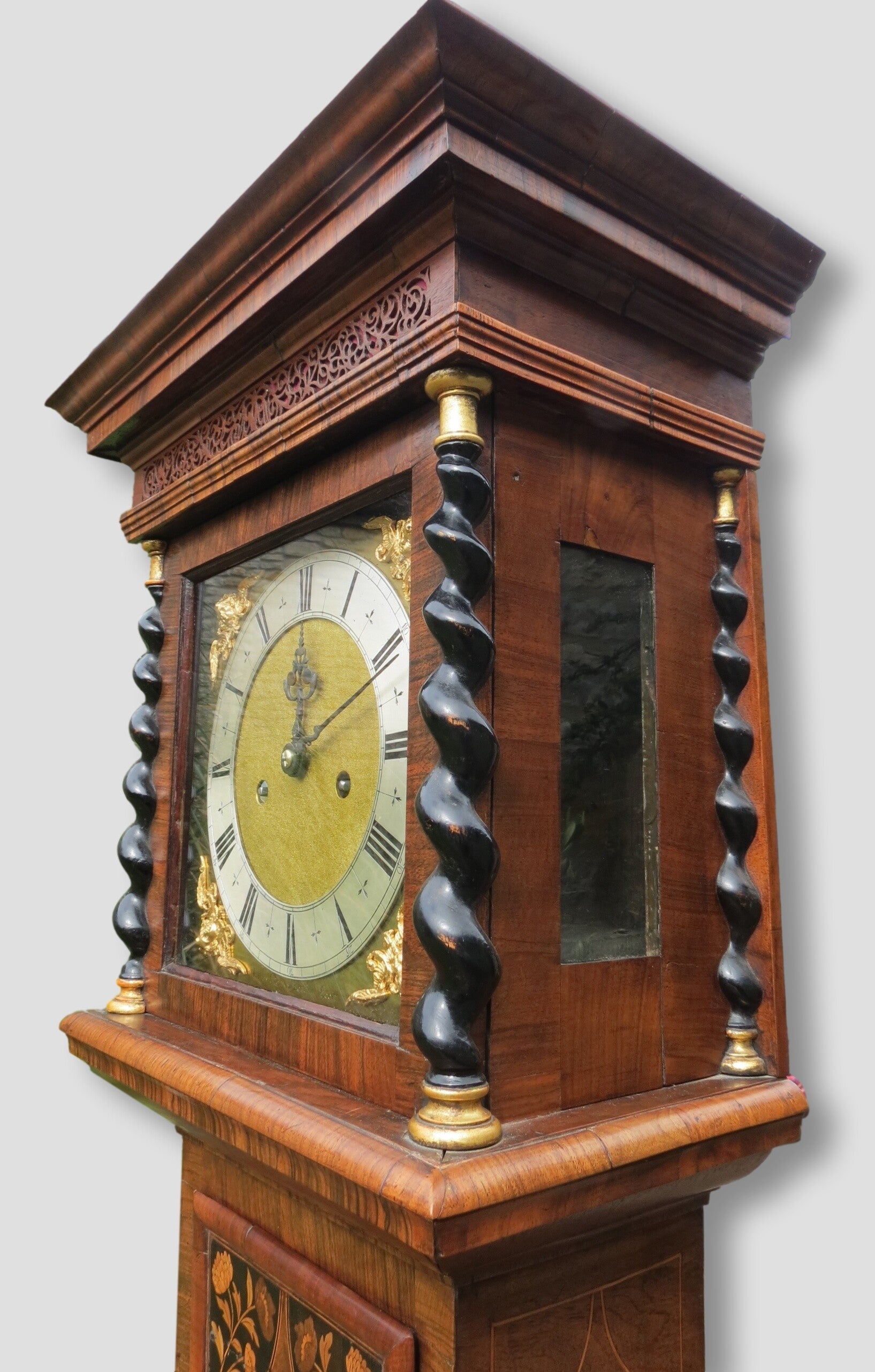
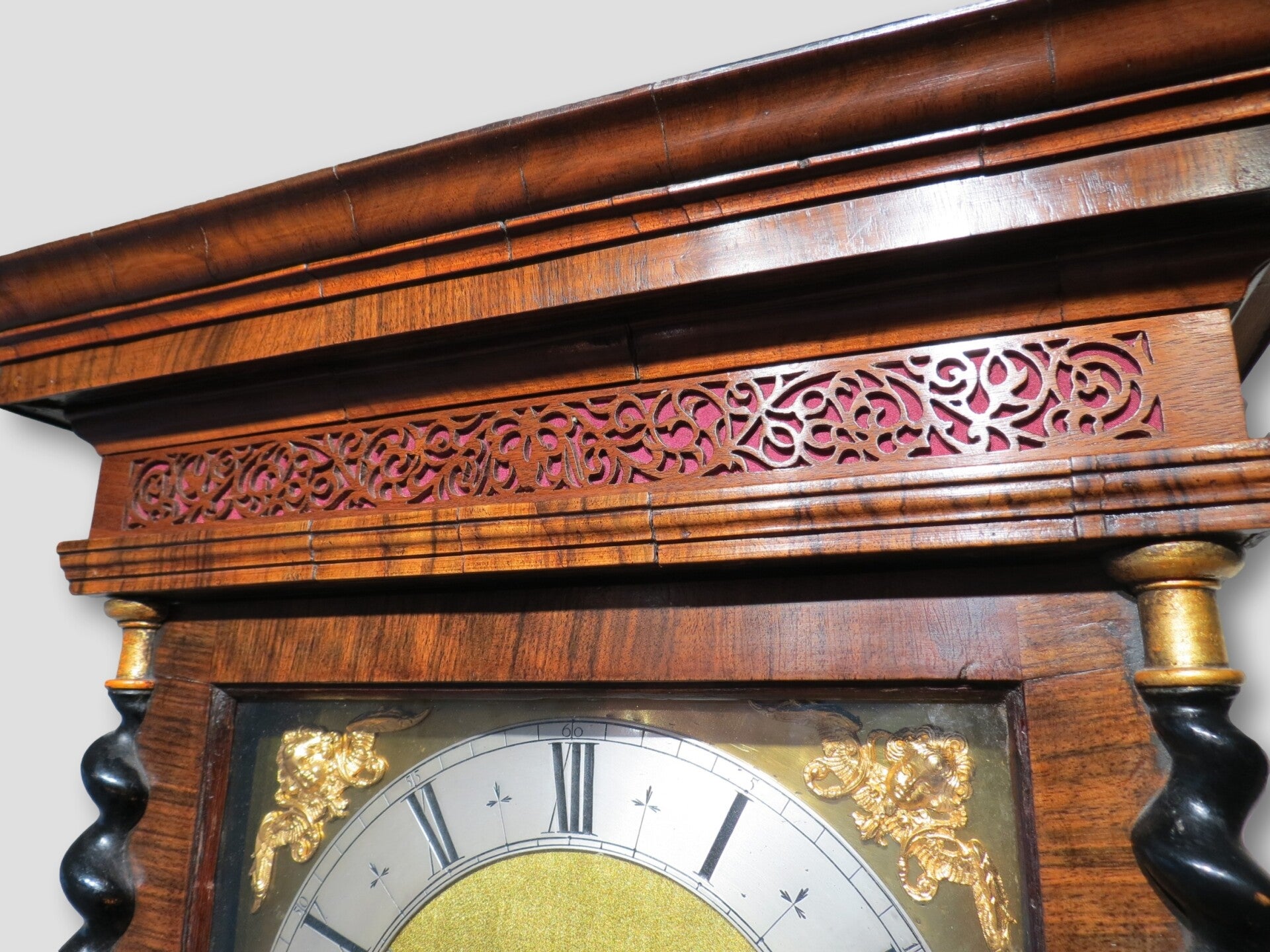
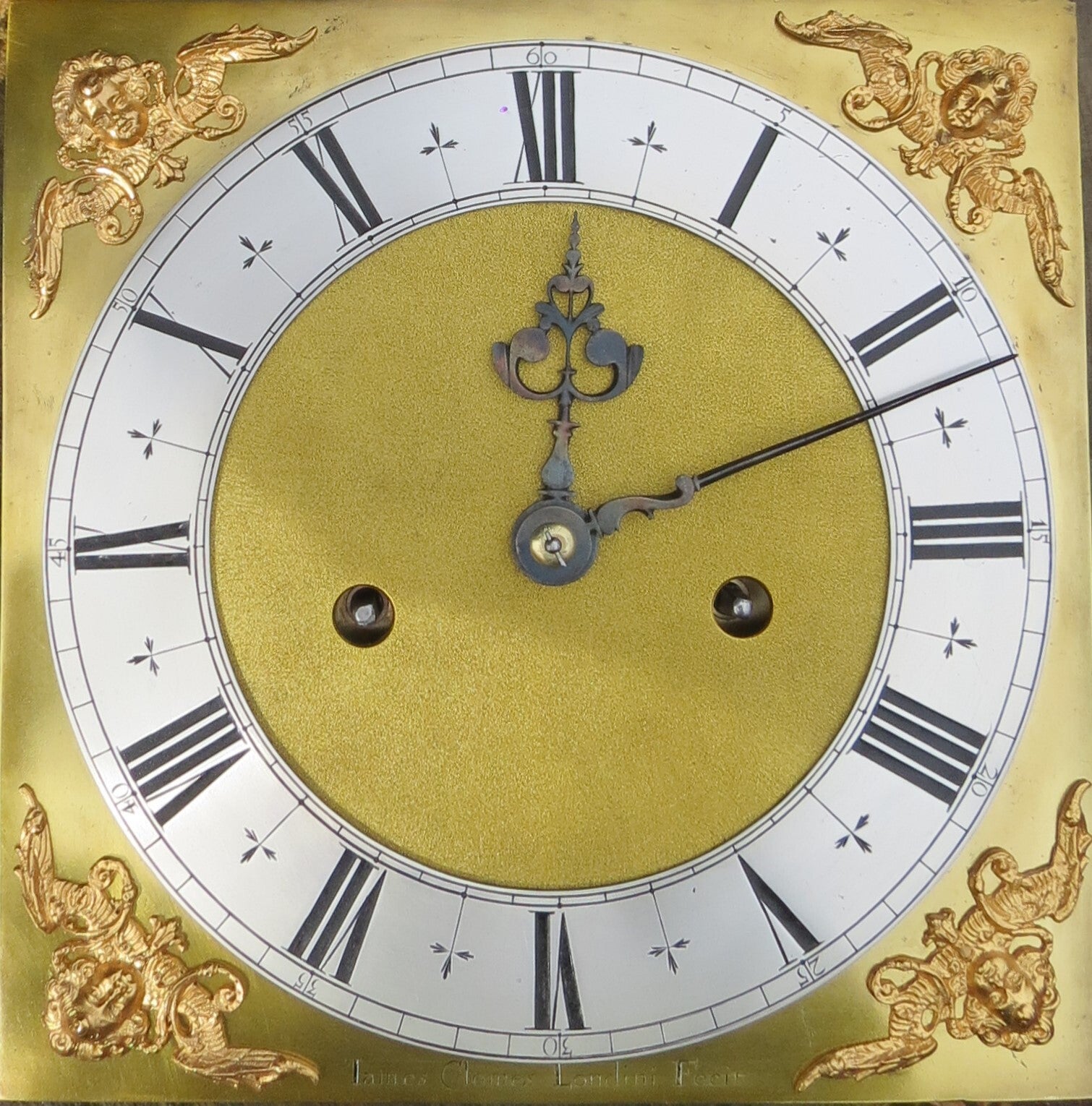
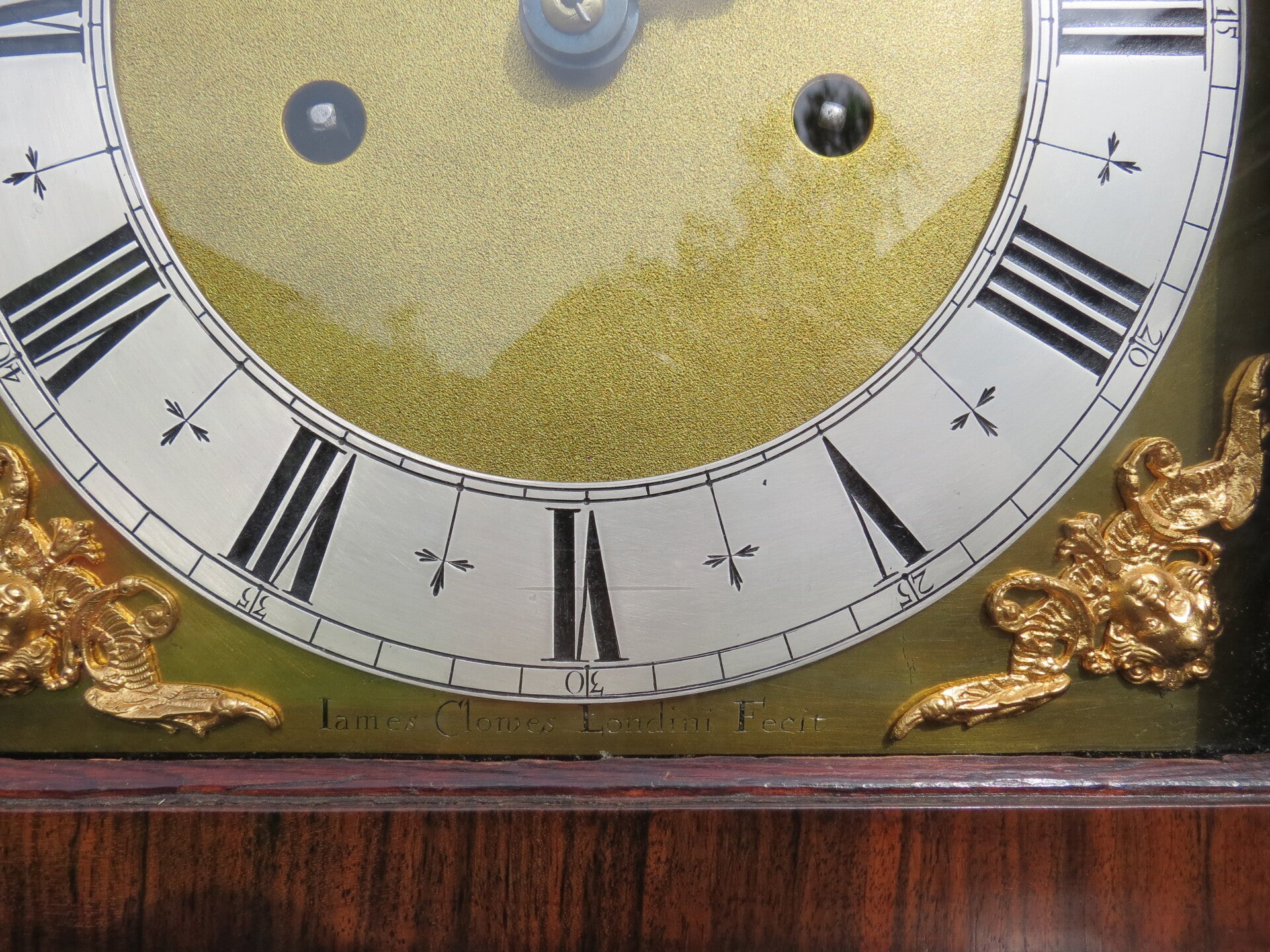
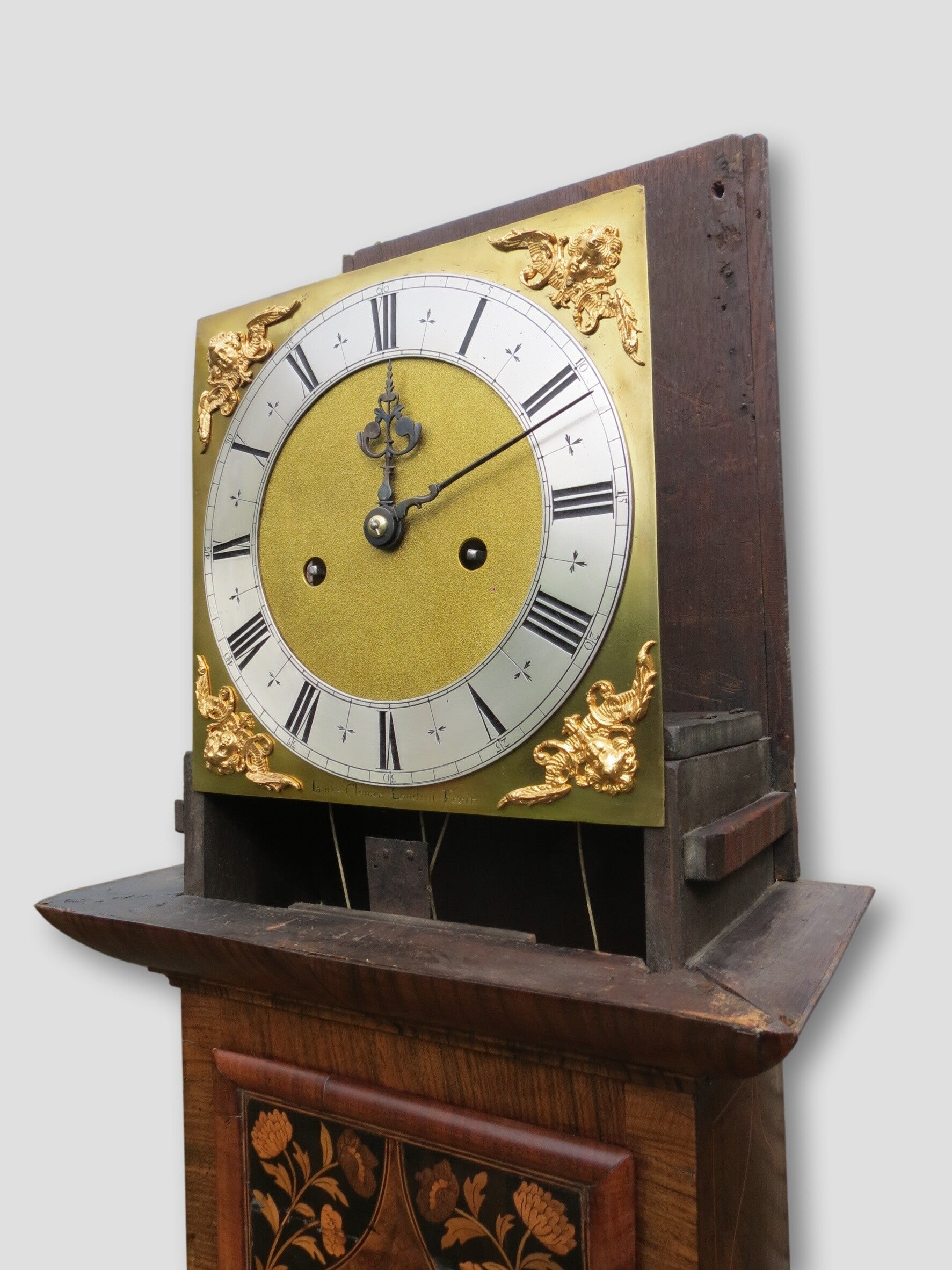
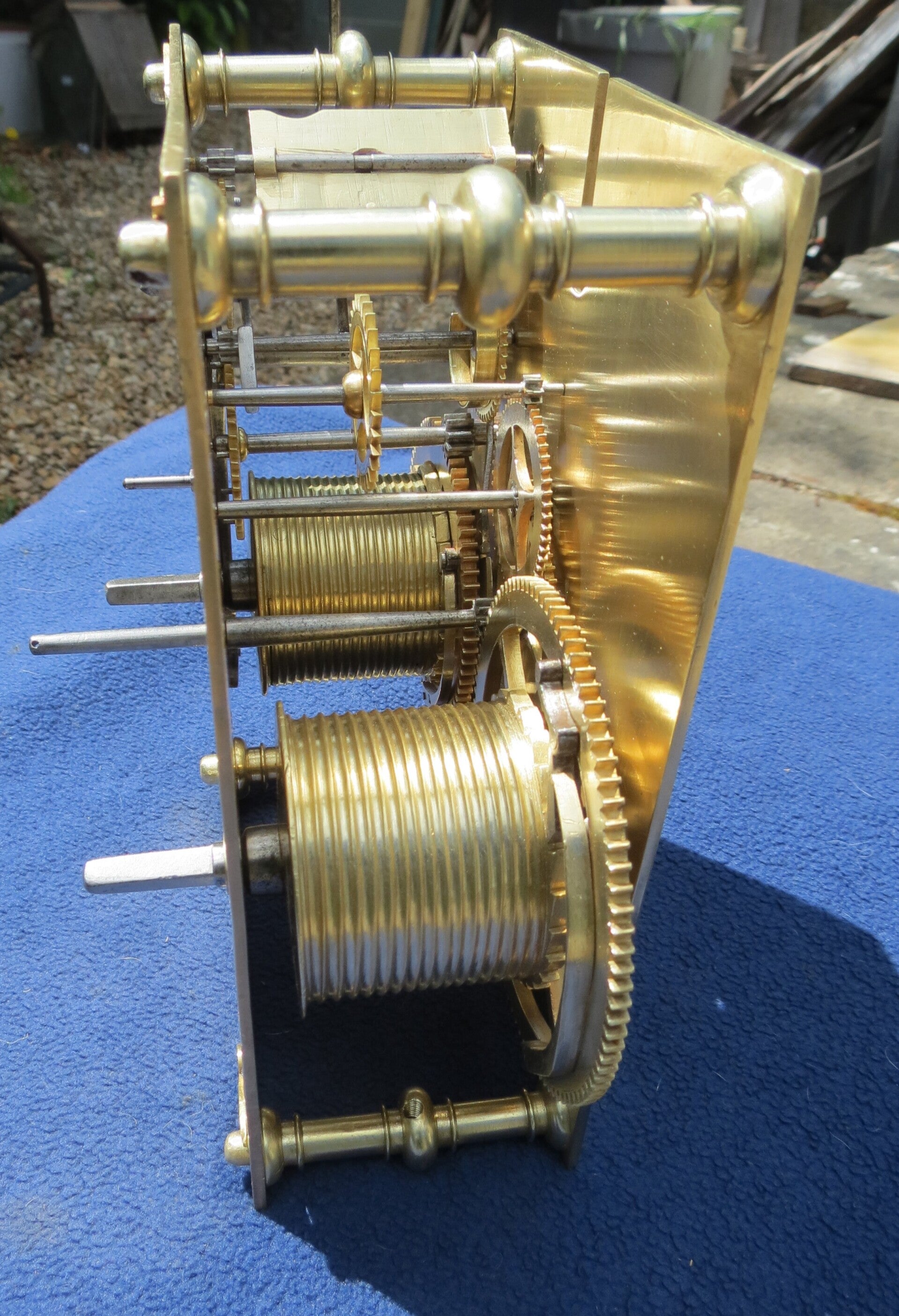
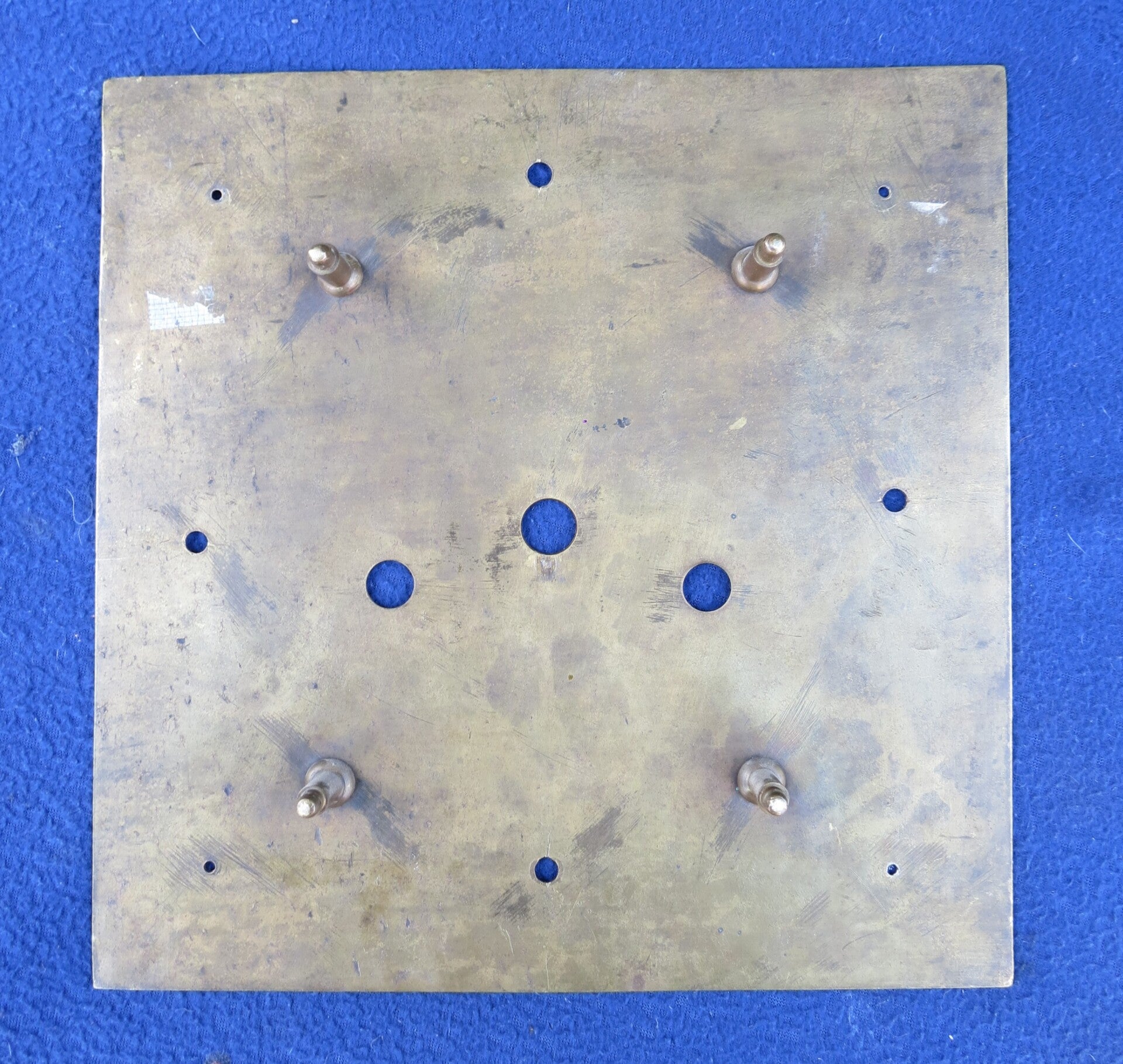
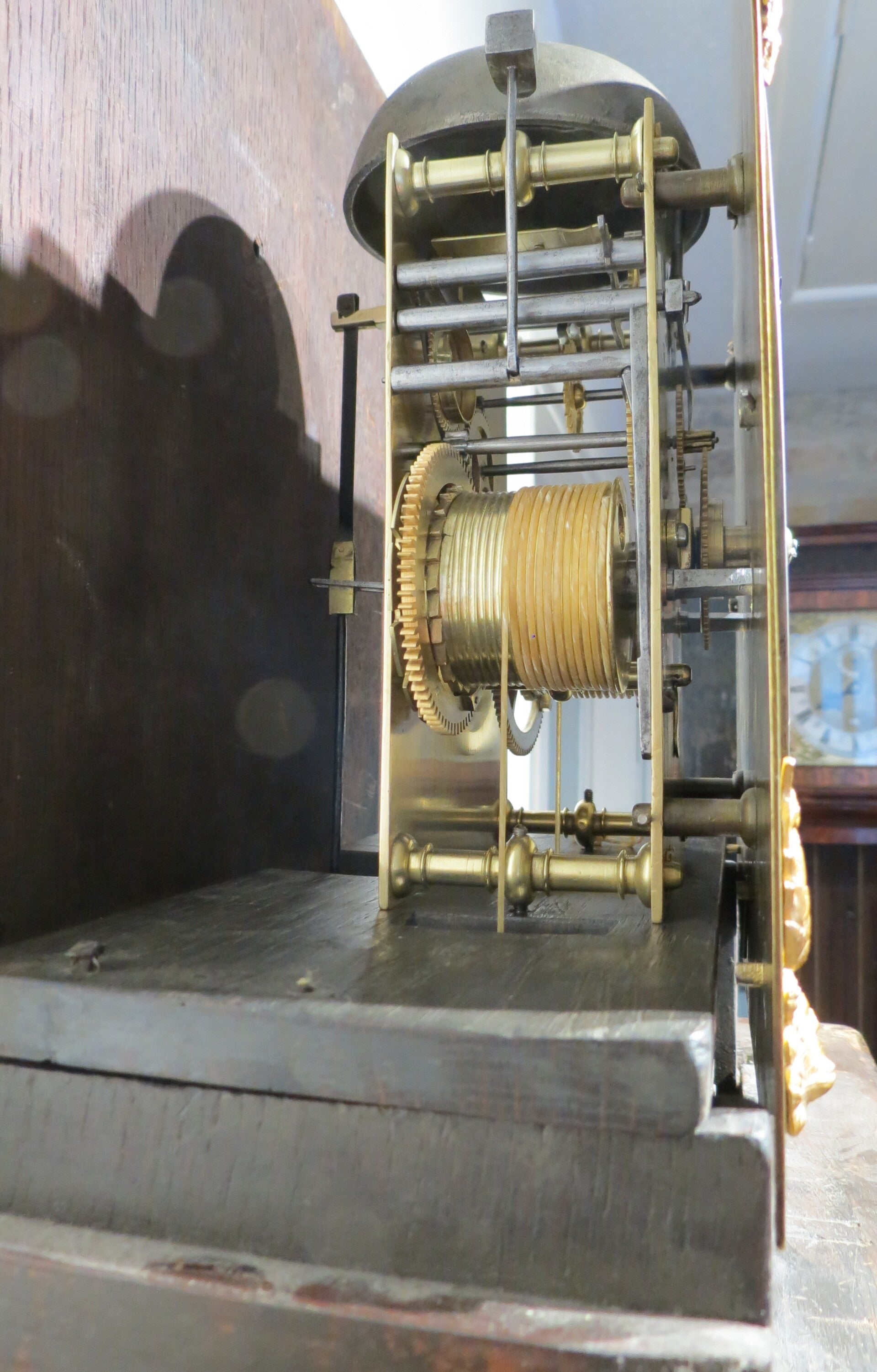
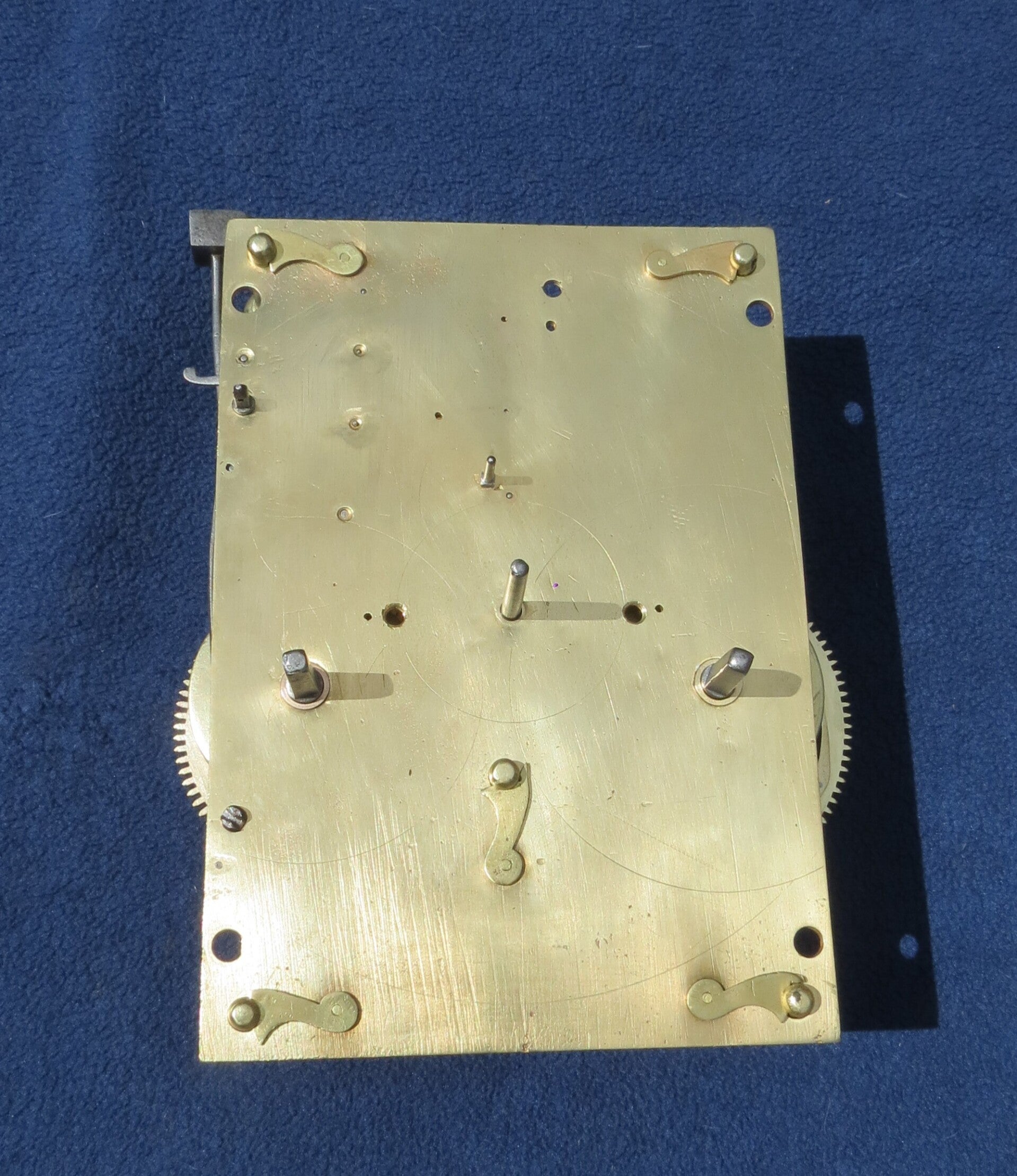
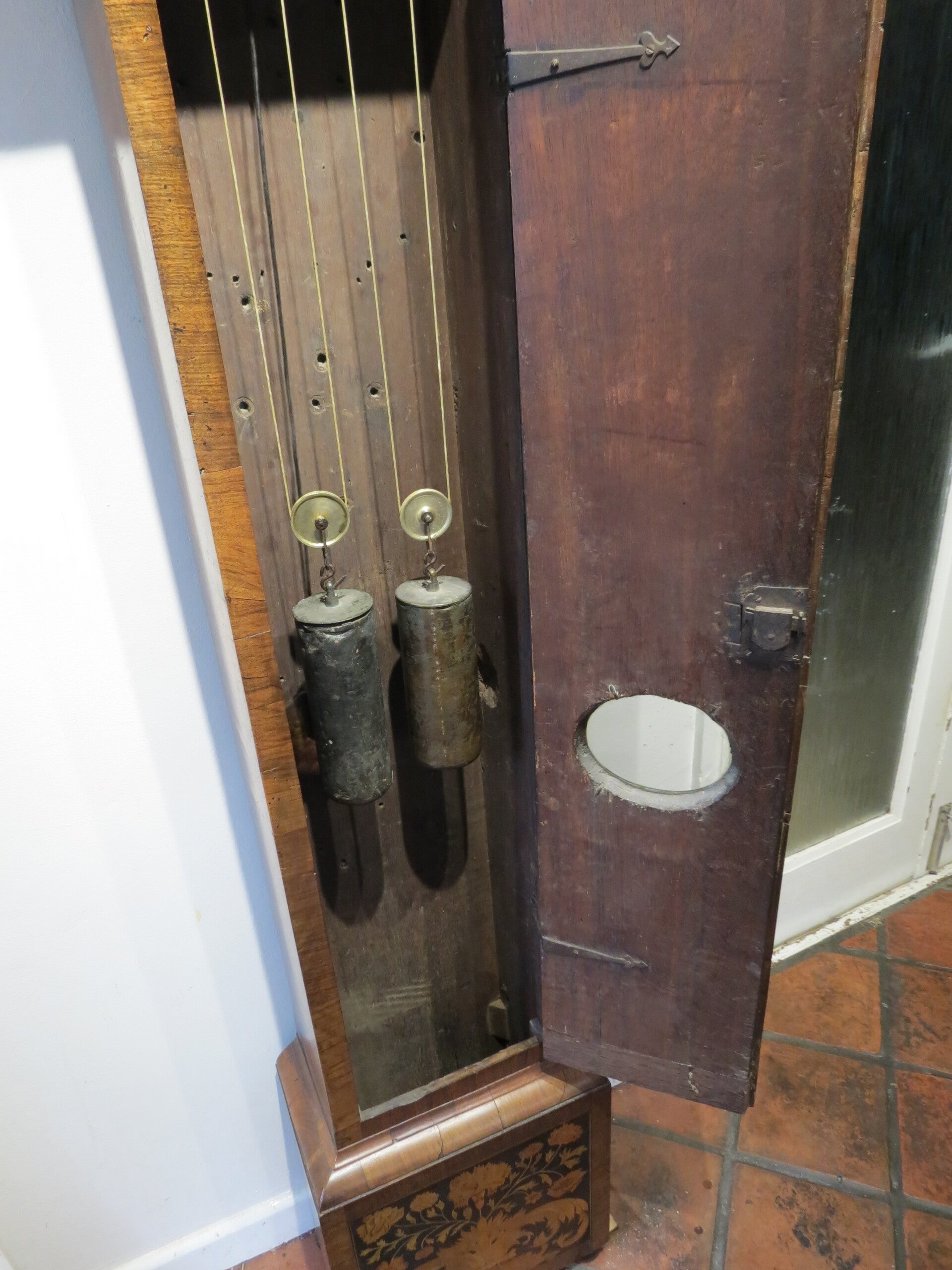
James Clowes Londini Fecit. An early longcase clock dating to around 1680. 8-day movement, 10 inch dial plate, 5 latched pillars, maker's name on dial plate below 6. Walnut and floral marquetry case, earlier panelled marquetry design, fretted, silk-backed panel above dial, convex mouldings to base and hood shoulders, lenticle to trunk door, bun feet.
Provenance: previously part of an important collection of early clocks, the owner a member of the Antiquarian Horological Society.
The movement has been fully/ properly cleaned and serviced, the dial carefully cleaned, the case has had some very minor attention.
Complete and fully working. Very good condition for a clock of this age, a fabulous and desirable clock.
Overall height is 78 inches.
Further notes...
Historical context
It is likely that this clock was made during the later reign of Charles II. Society at this time perhaps had more resemblance to 'Game of Thrones' than our modern civilised existence. For example In 1661, shortly after his coronation, the bodies of those responsible for the trial and execution of Charles I (Cromwell etc) were exhumed and posthumously hanged, drawn and quartered and then their heads were placed on spikes above Westminster Hall!
Charles II reigned until his death in 1685. This period saw the birth of the longcase clock, from very early 'prototype' examples during the 1660s to a more established consumer market by the 1680s, albeit highly expensive items only available to the very richest of society.
The final quarter of the 17th century (and a bit beyond) is now considered the 'golden age' of English clockmaking. Older makers such as Edward East were joined by a younger generation of very talented makers and made what must have seemed to be fabulous, luxurious items at the time.
From the later 1670s the fashion for longcase clocks briefly settled into a particular pleasing design, 10 inch square dials often with walnut or floral marquetry cases. These clocks are often now seen as the holy grail for collectors, particularly those by the top makers. Towards the end of the century dials tended to get bigger, often 11 inches square. From around 1700 the trend was for 12 square dials.
The maker, James Clowes
Born around 1643, died 1705. Listed in Baillie as a famous maker, his older brother John also a top maker.
The early 1670s proved to be an important milestone for the Clockmaker's company, Tompion, Quare, Windmills and Clowes were all 'freed' at this time (permitted to work under their own name in London).
James Clowes made some superb clocks through the golden age period many of which still exist and are sought after.
The Dial
The dial plate measures exactly 10 inches square (25.4 cm). The outer diameter of the chapter ring is 9 1/8 inches (23.2 cm). The chapter ring remains fairly slender, typical for around 1680. Earlier examples were very narrow and they typically became proportionally wider towards the end of the century.
The chapter ring has inner hours, early half-hour markers, then outer minute track with the minute numbers inside the ring which is often considered to be an earlier style. Perhaps not always though, it possibly varied with individual maker's preference. The Roman numerals for hours are engraved and wax filled, the surface then being silvered to increase the contrast and visibility of the markings.
The dial plate has finely matted centre, then small, early gilt spandrels to the corners. The design is unusual in not having subsidiary seconds or date aperture, however inspection of the dial and movement shows that there are no changes/ alterations so this was always the case. The movement confirms this by not having any stub for seconds protruding through the plates and no sign that there was ever a post for date wheel. There are certainly instances of 8-day clocks from this era not having subsidiary seconds, not common though. To have no date is rarer, this was almost always present. Possibly a customer request that the dial was designed this way?
The movement
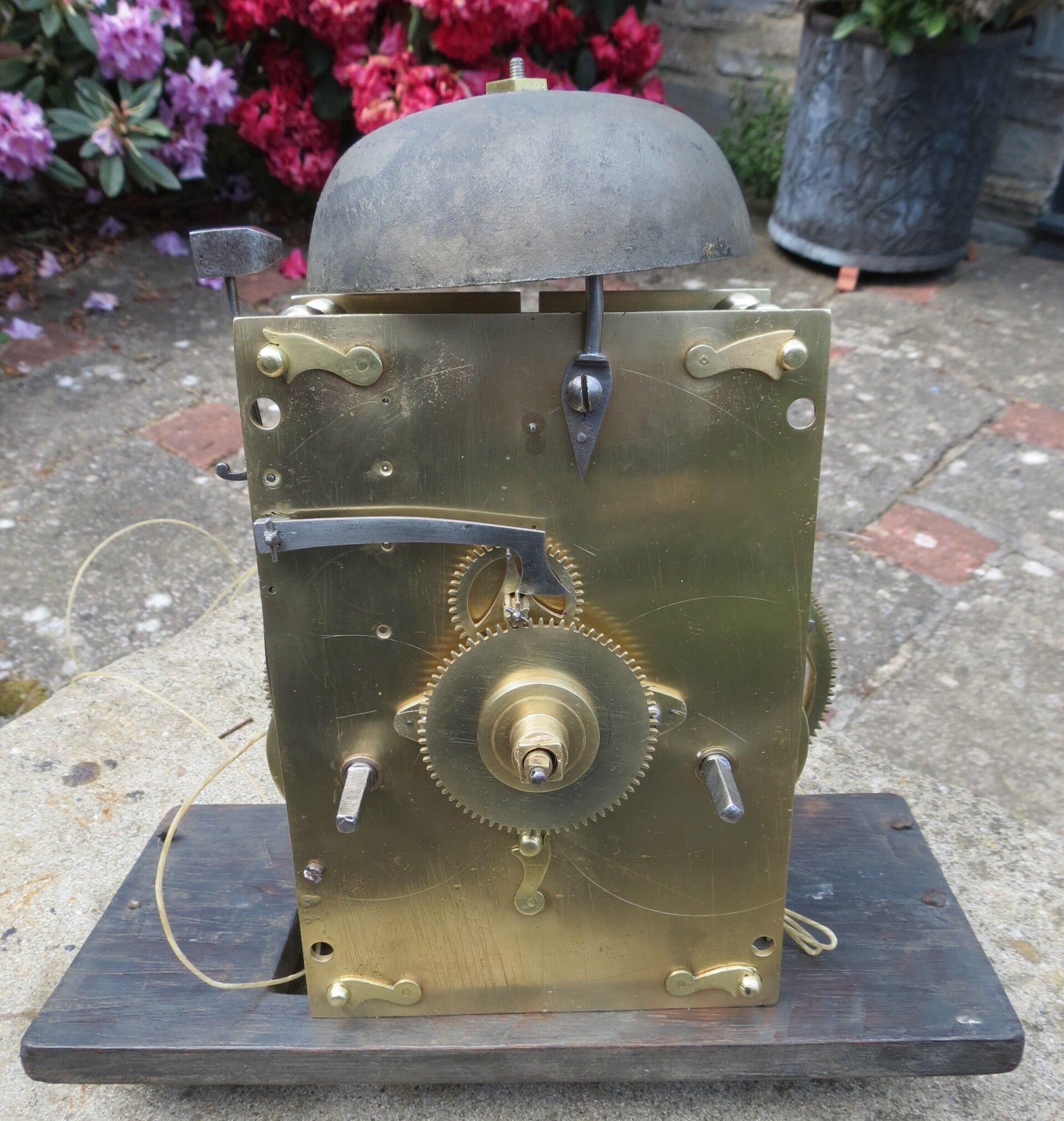
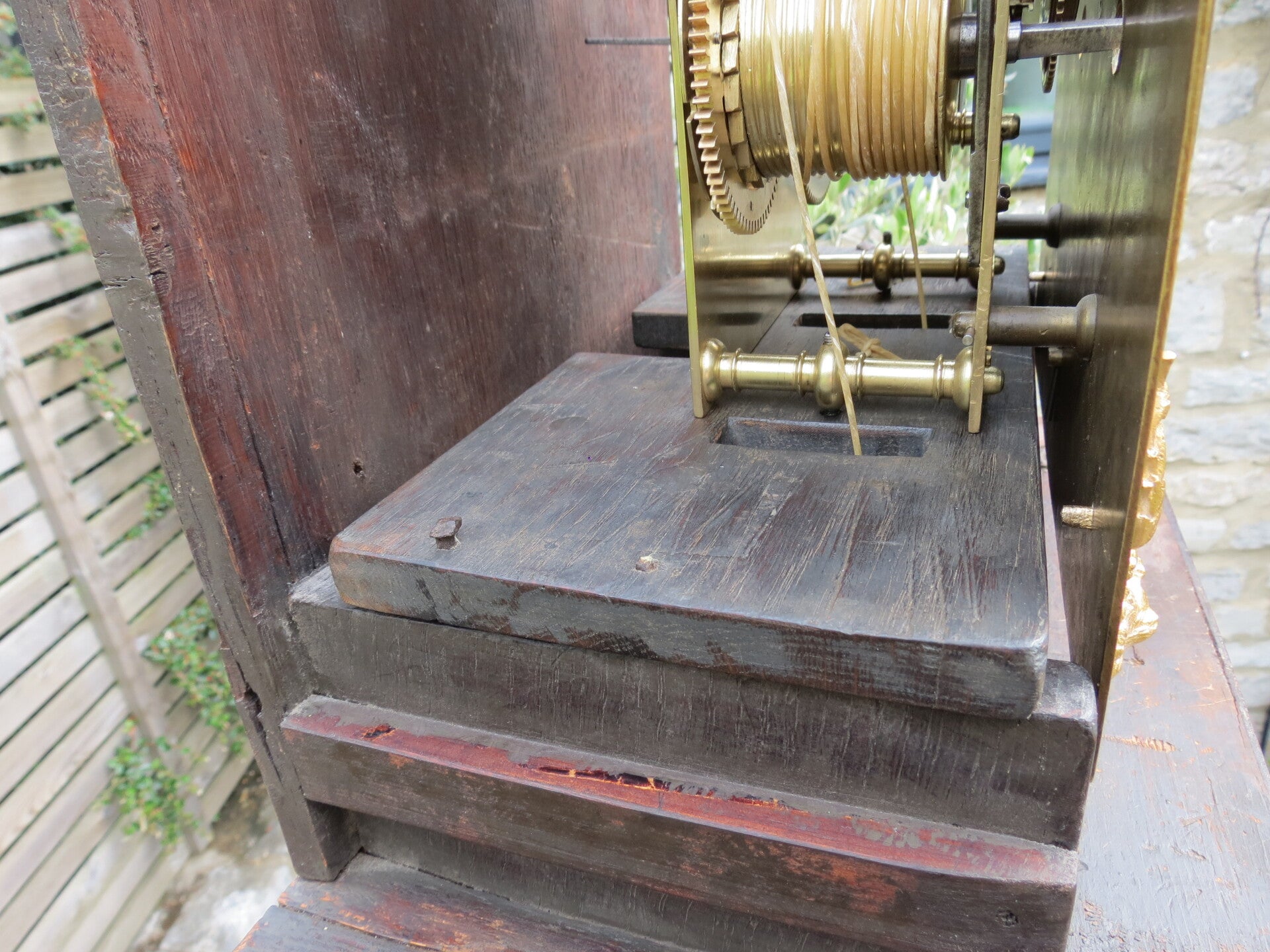
A well made movement as you would expect. The 5 pillars are fairly slender, knopped and finned. All are latched which is a nice touch.
The countwheel for the strike is inside the plates but outside the click teeth on the barrel. There is a hole in the back plate which seems to correspond to the position of the end of the locking arm as it engages with the countwheel, perhaps to make setting up a bit easier (this is often more difficult on early movements where everything is between the plates).
The wheelwork is small and finely made, much smaller than in later longcase clocks. This is typical for the early period. The holes for the arbours are very neatly arranged, the going train running vertically at the centre of the plates, the strike in a line but angling over slightly.
The case
An excellent example of an early floral marquetry case. The use of smaller marquetry panels is earlier. The trunk sides have stringing which imitates the shape of the marquetry panels and lenticle, an impressive and up-market feature. Slender proportions as you would expect for the 10 inch dial size, not cut down, the marquetry panels looking clear and bright. Both of the larger panels on the trunk door have birds nestling amongst the foliage. The usual marks to the marquetry on the trunk door caused by shrinkage/ wood movement from the cross-pieces at the top and bottom. This is almost desirable in these cases, if they don't have it you are suspicious that they are not original or over-restored.
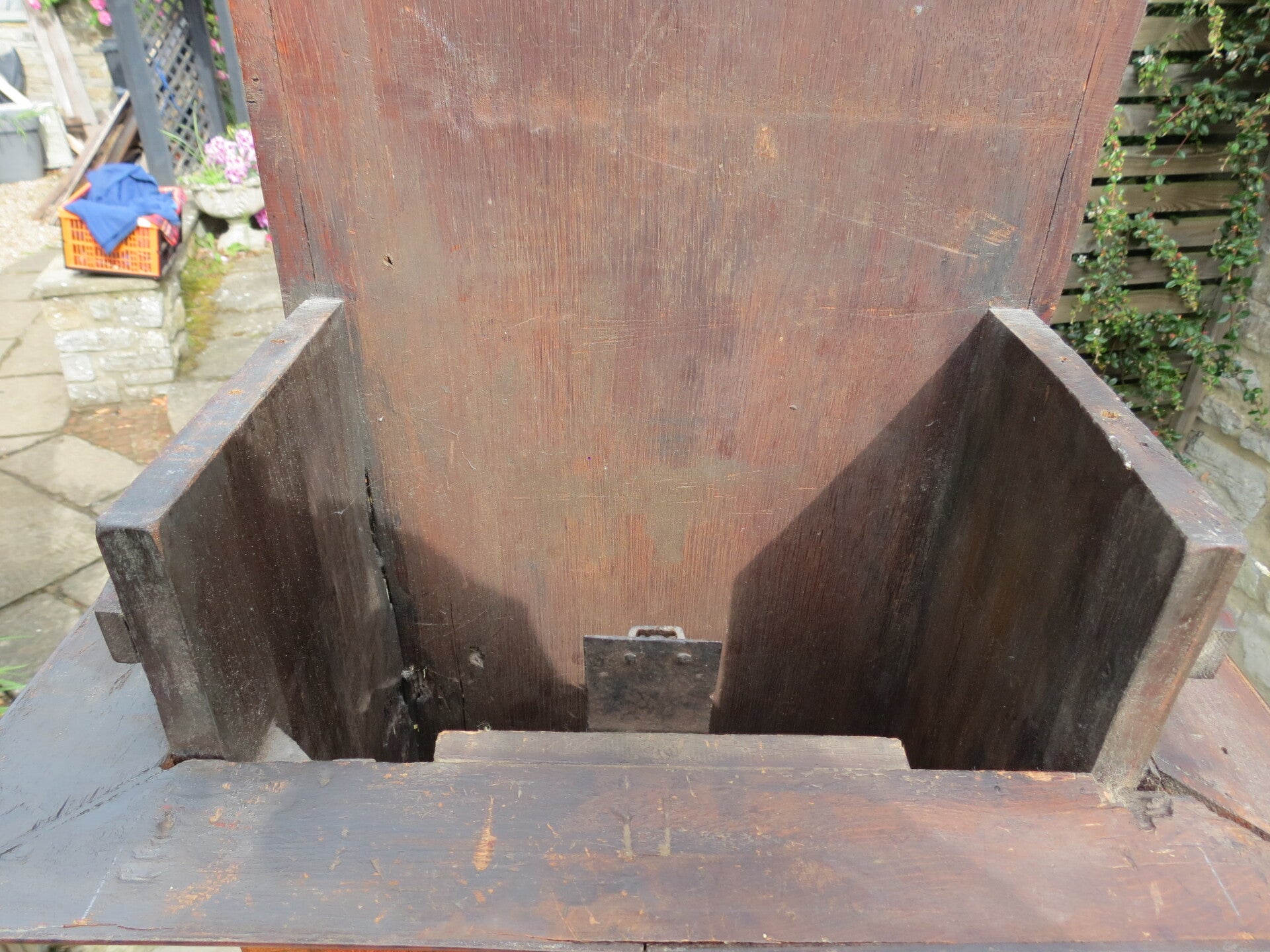
The hood was originally rising and has been converted, now forward sliding You can see the grooves at the back where it would have slid up and down. I think this conversion was done a long time ago. Hoods which slide forward are generally more practical, particularly where ceiling height is limited.
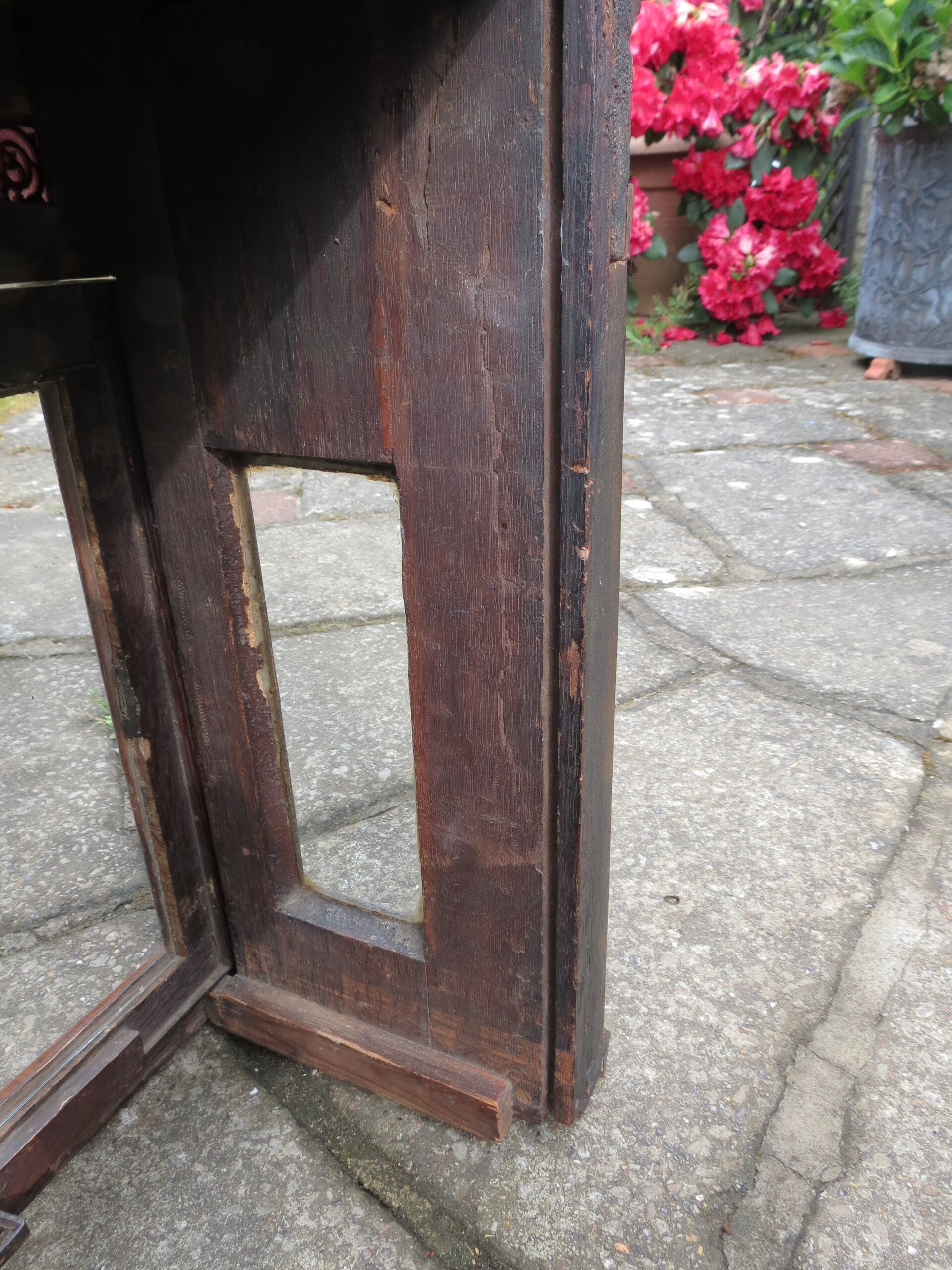
The case cheeks have not been cut. Some of the old nails in the seatboard are still present and these correspond exactly to the holes in the cheeks/ sides.
Values
These early 10 inch marquetry clocks have long represented the pinnacle of the market, particularly those by top makers. They come to market fairly rarely. Longcase clock prices have been unpredictable for a couple of years now... I had a quick look online before listing this and the only comparable 10" marquetry I could find, actually by the same maker, is well over twice my price. That seems a bit expensive for the current market? I think this one is priced competitively but I will consider sensible offers, don't mind if I keep for a while as it' a wonderful thing!