

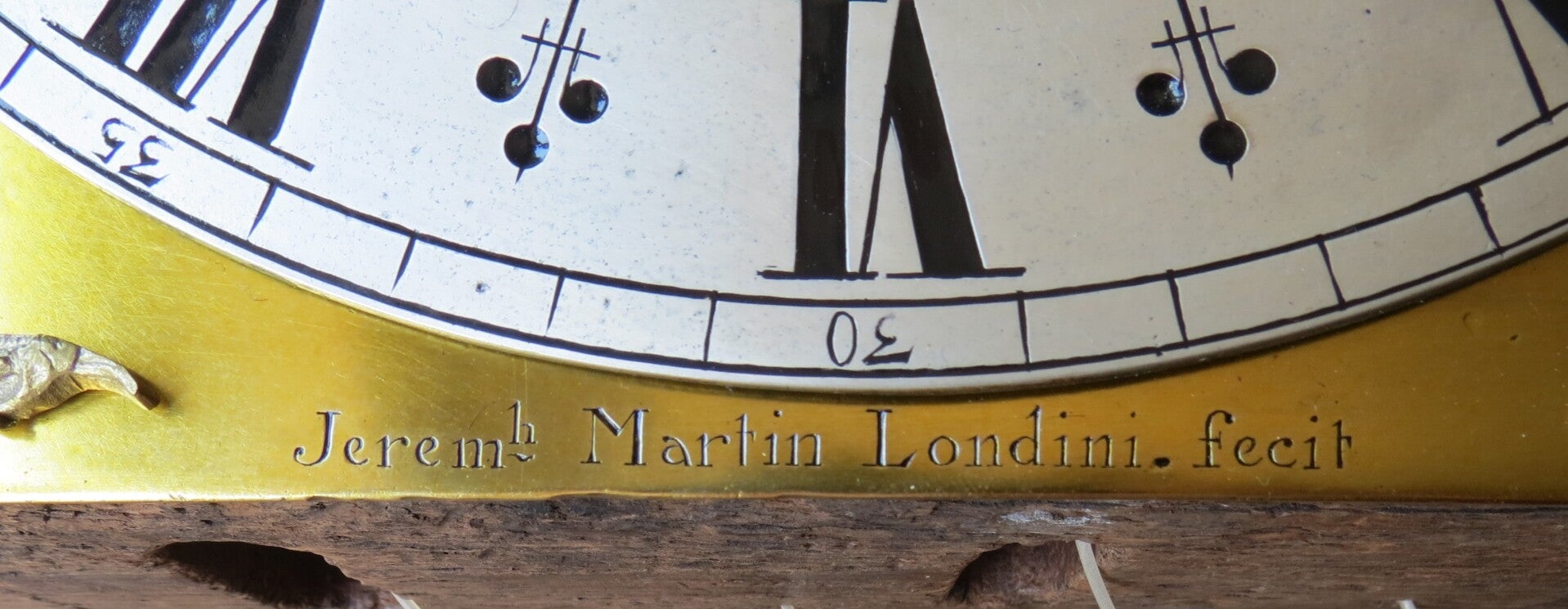
Jeremiah Martin Londini fecit (Tompion apprentice) Circa 1690. Early longcase clock with 1 1/4 second pendulum and 10 inch dial, walnut case with rising hood.
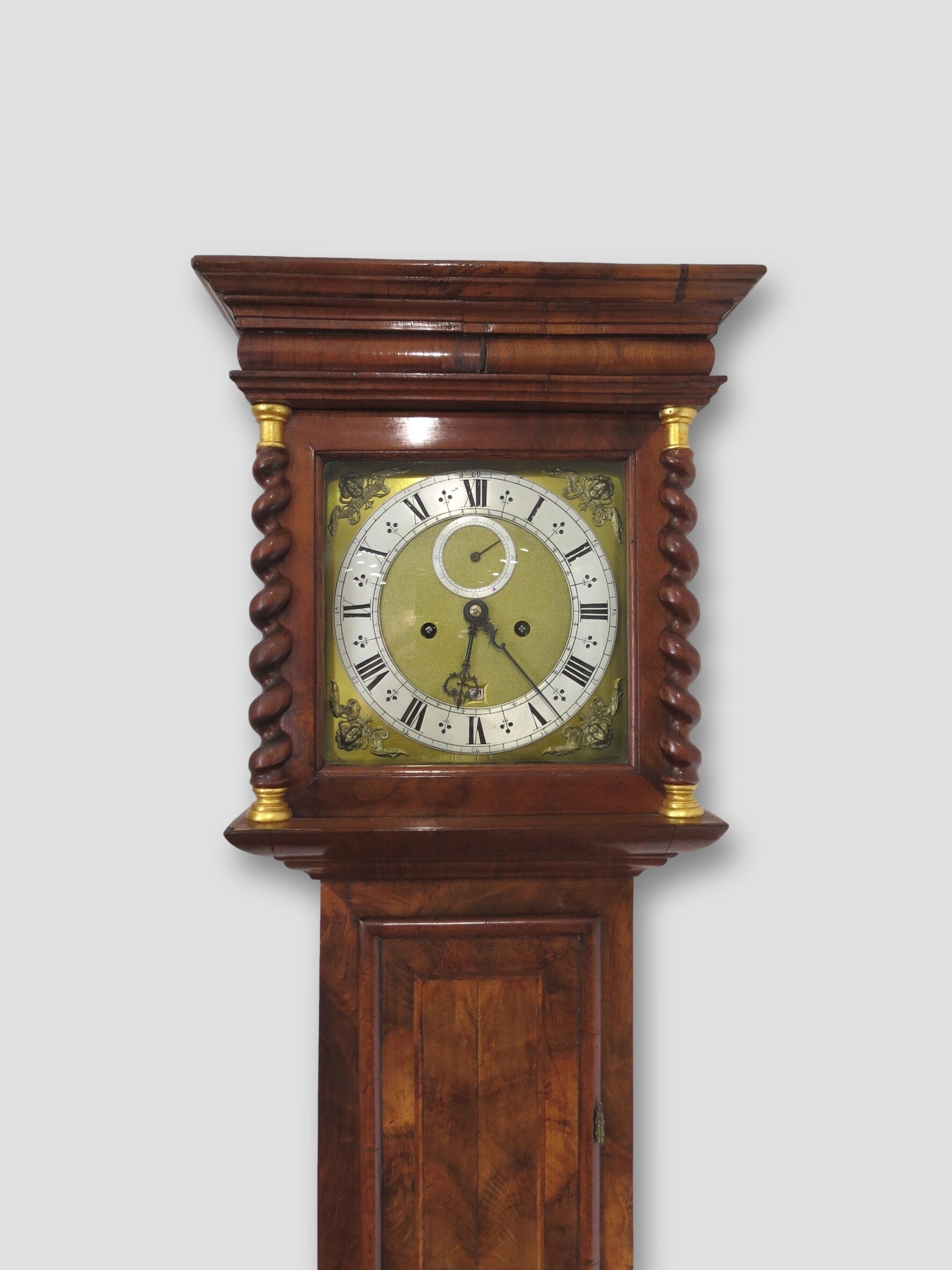
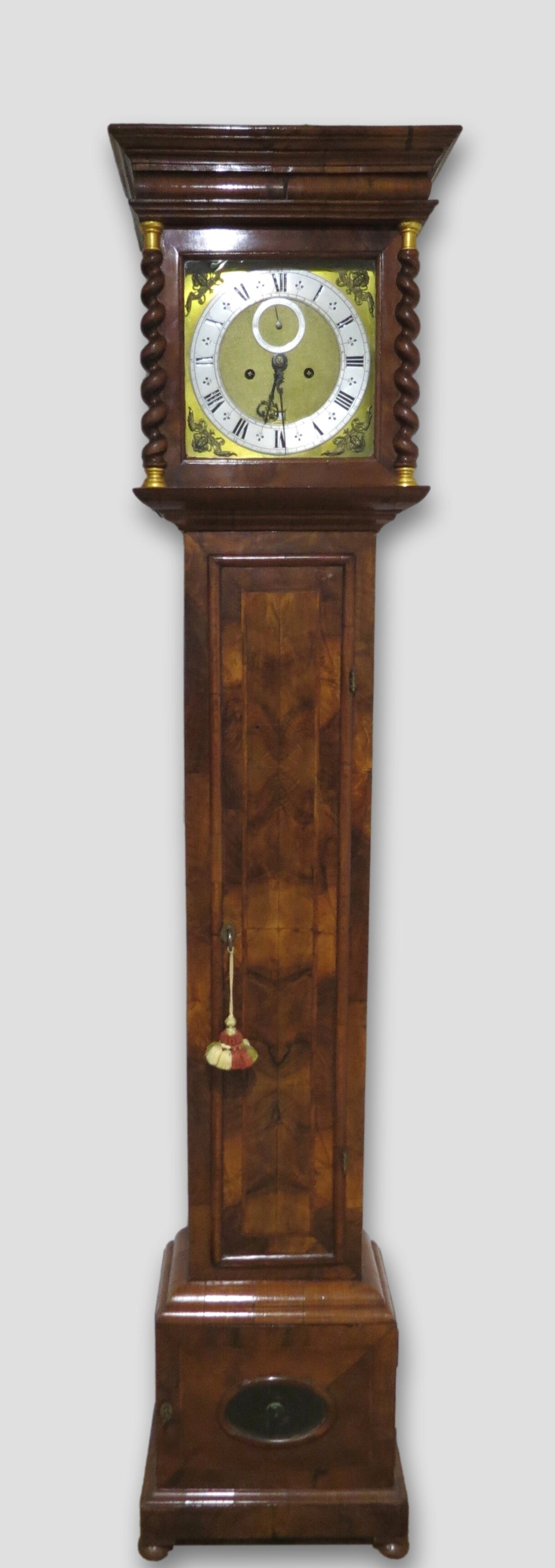
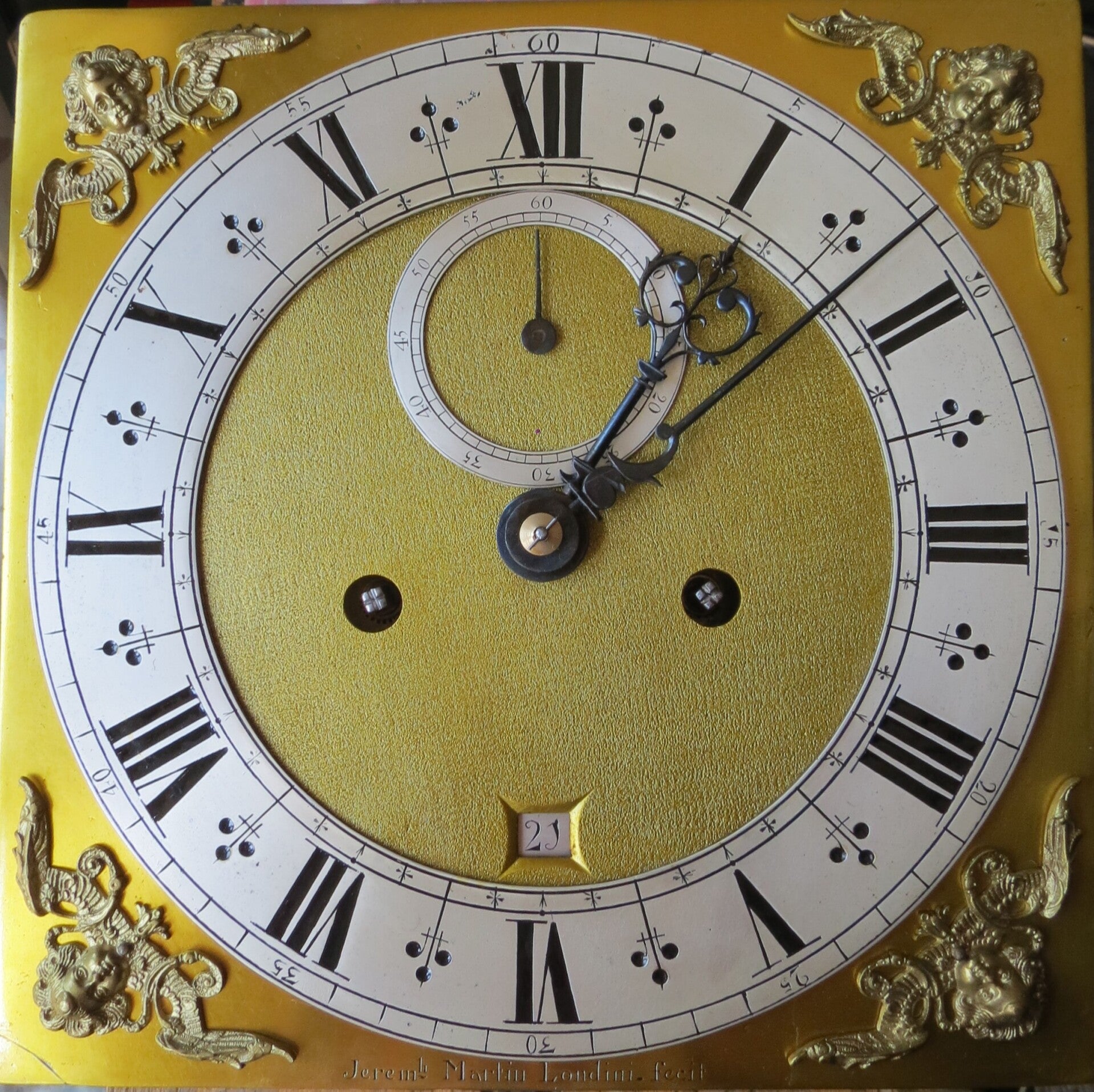
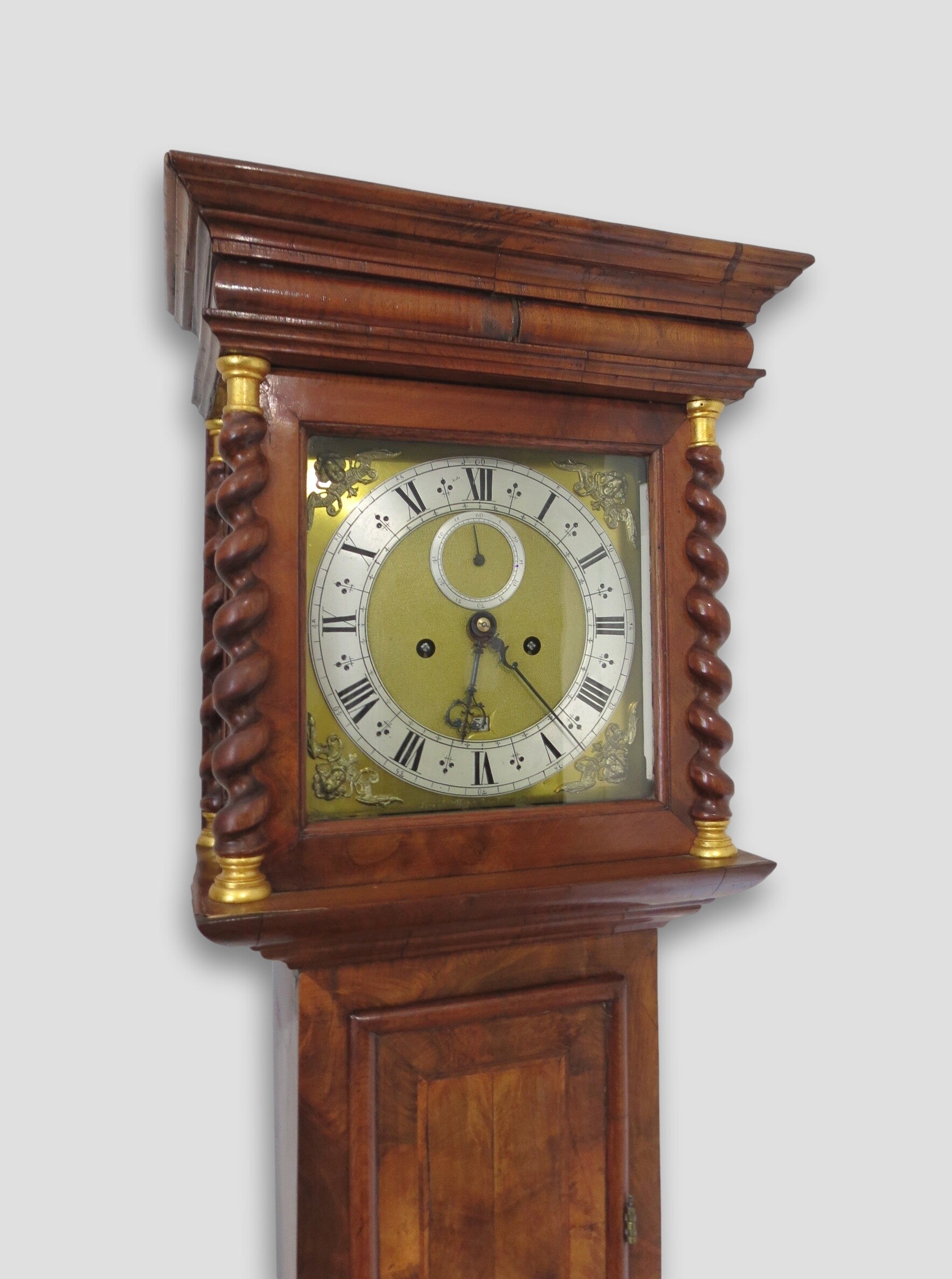
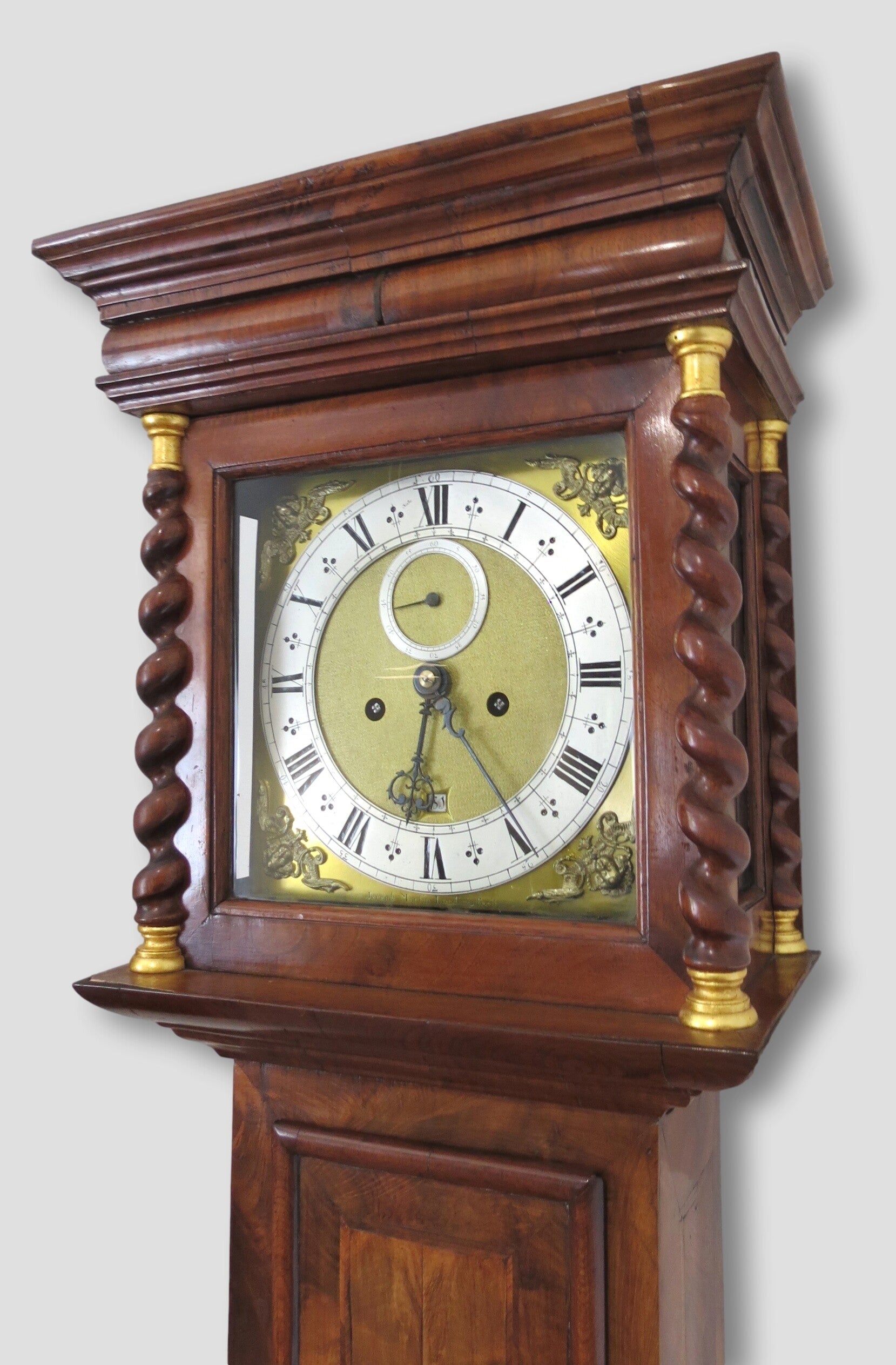
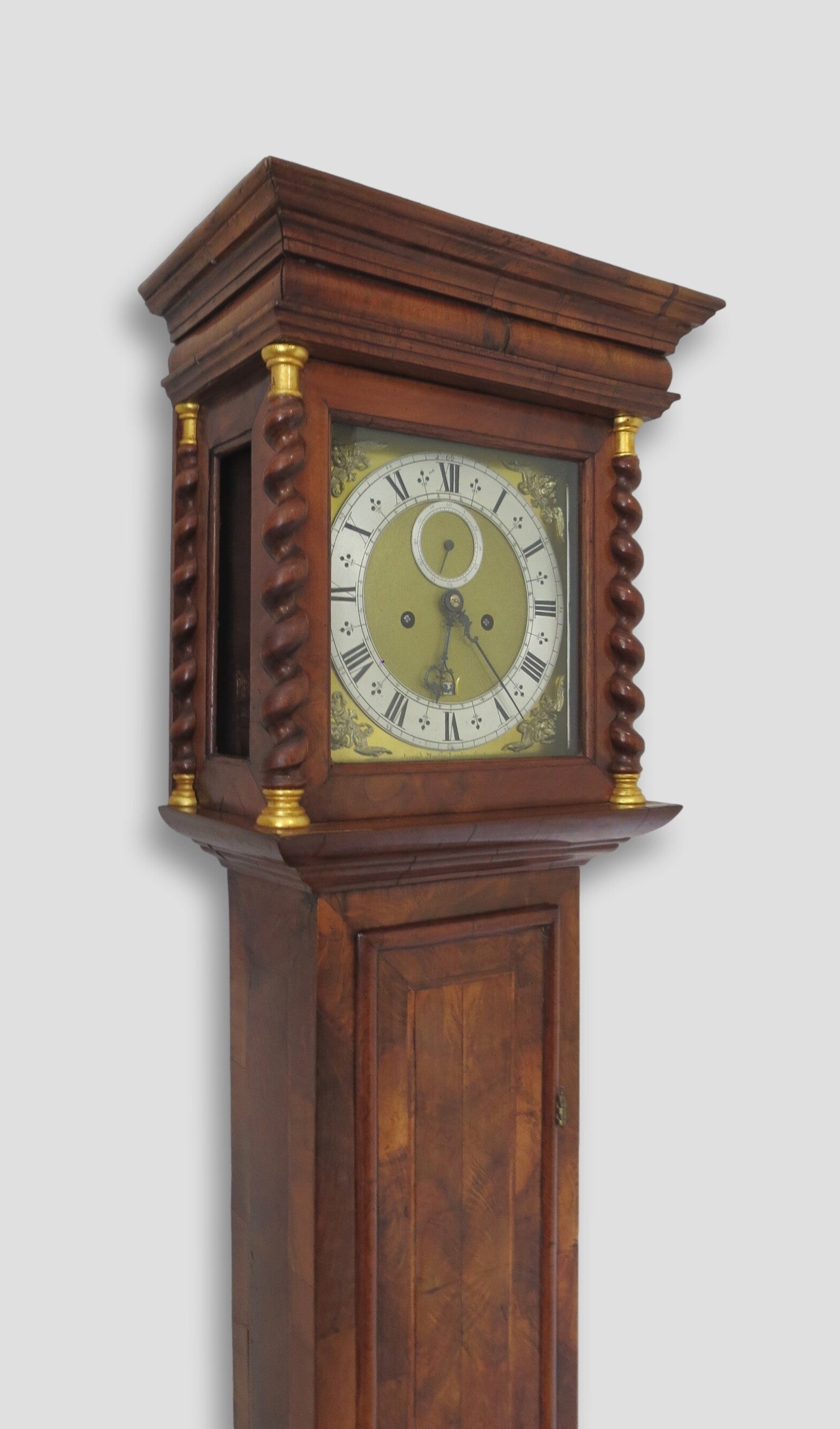
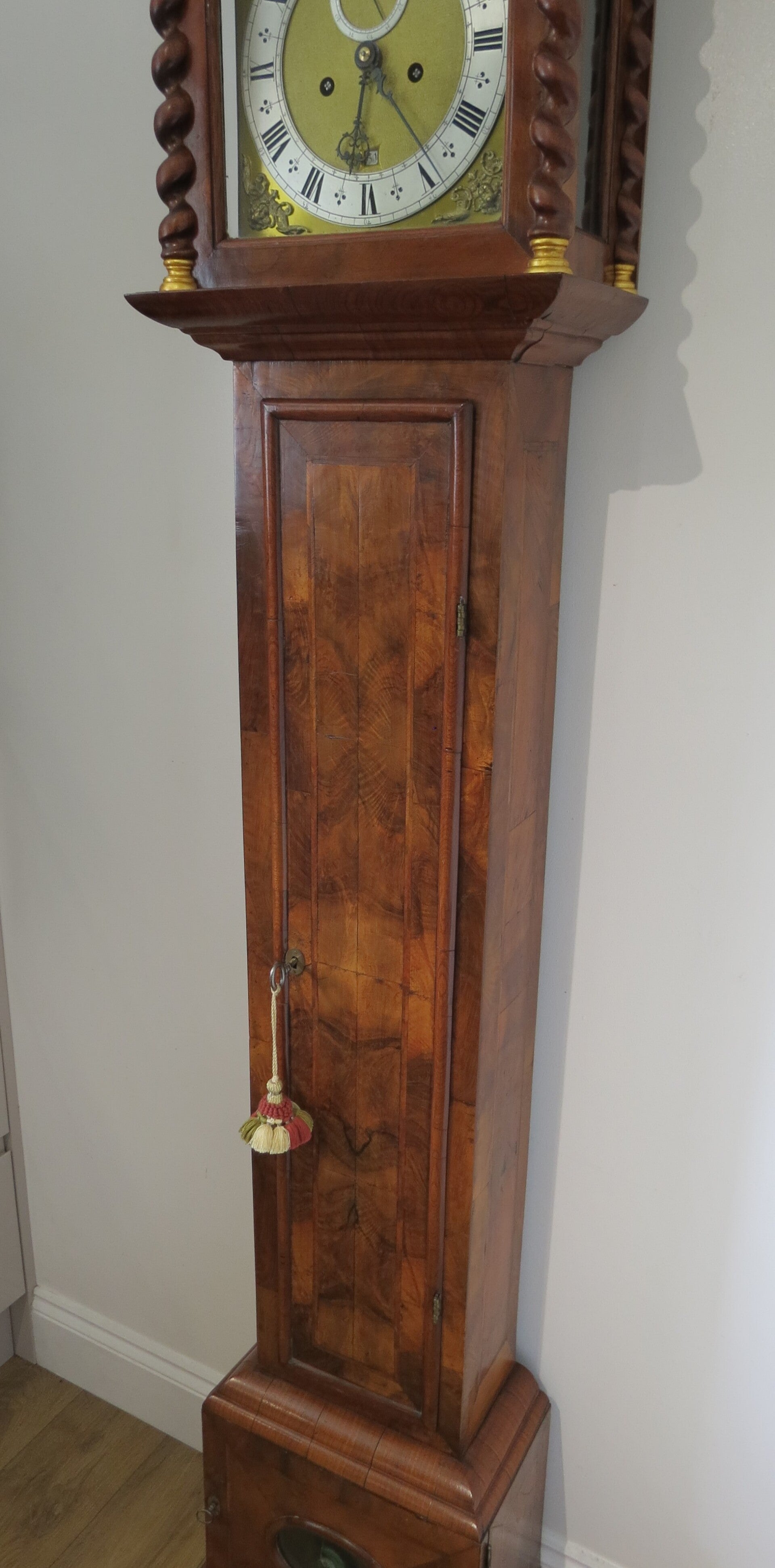
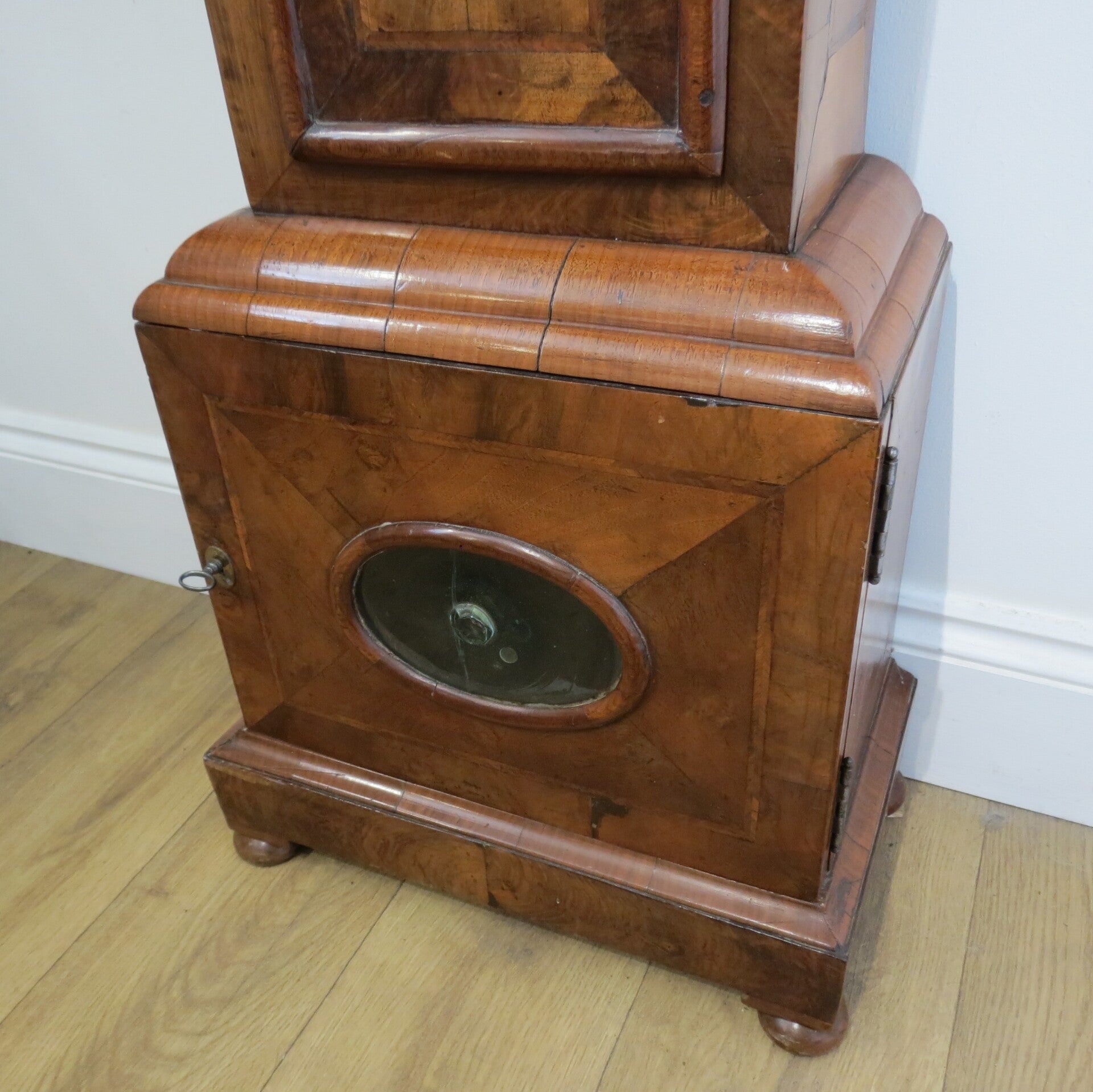
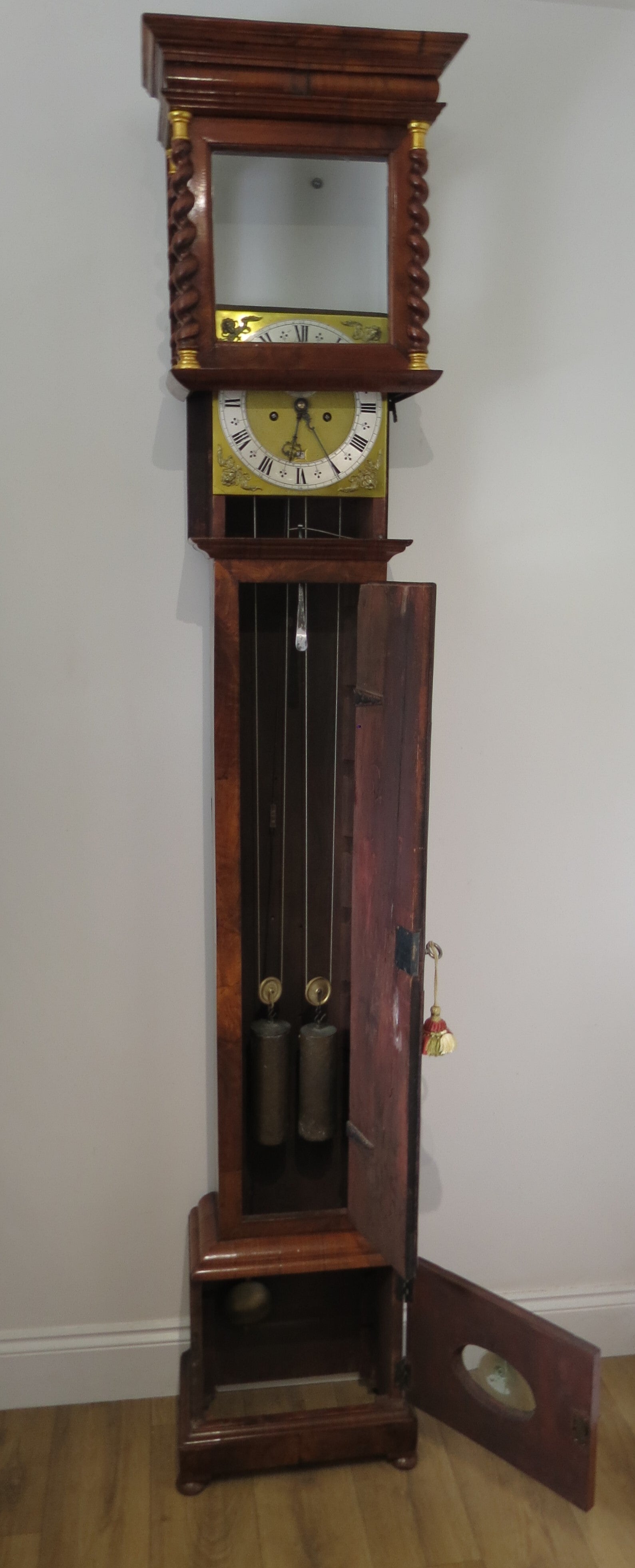
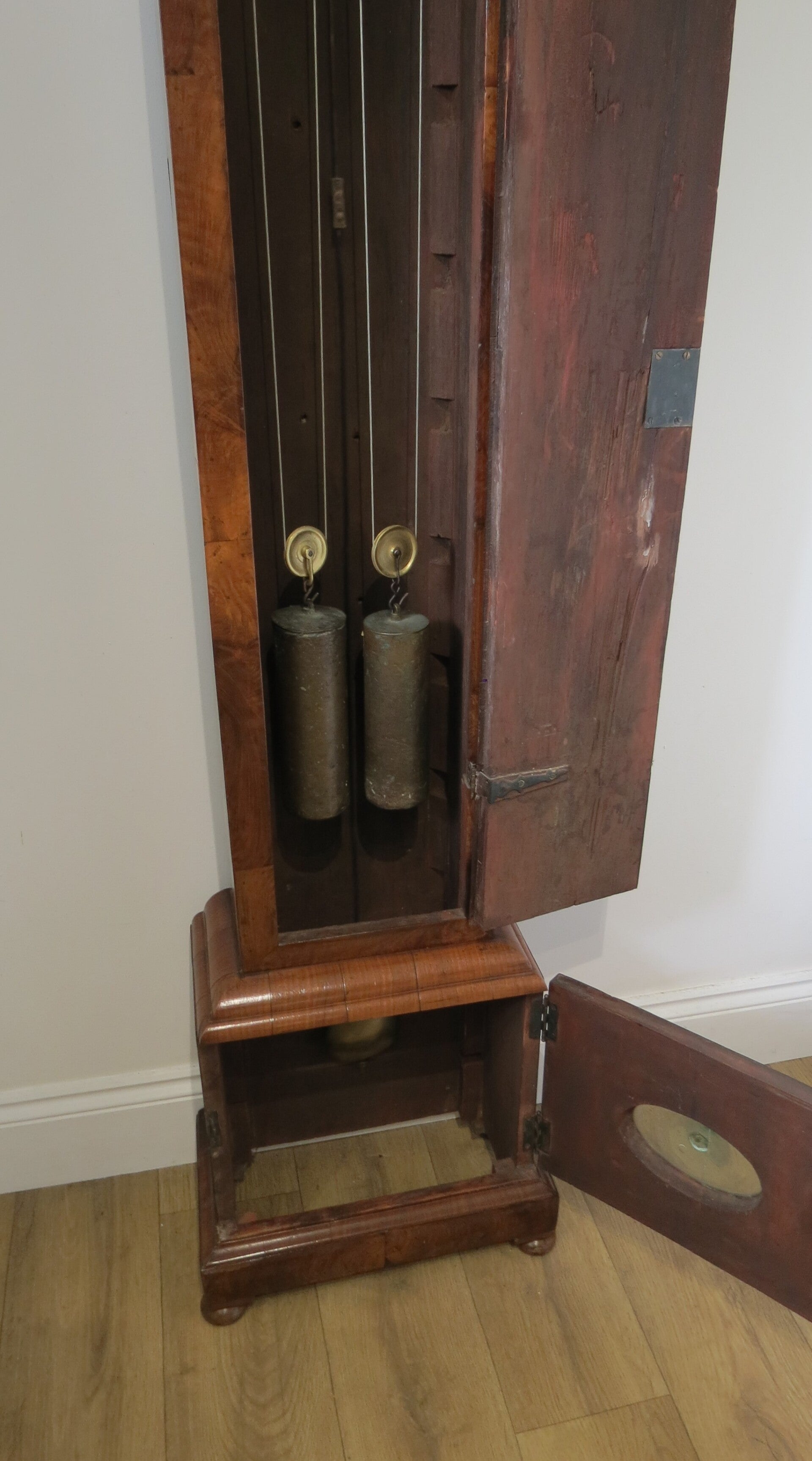
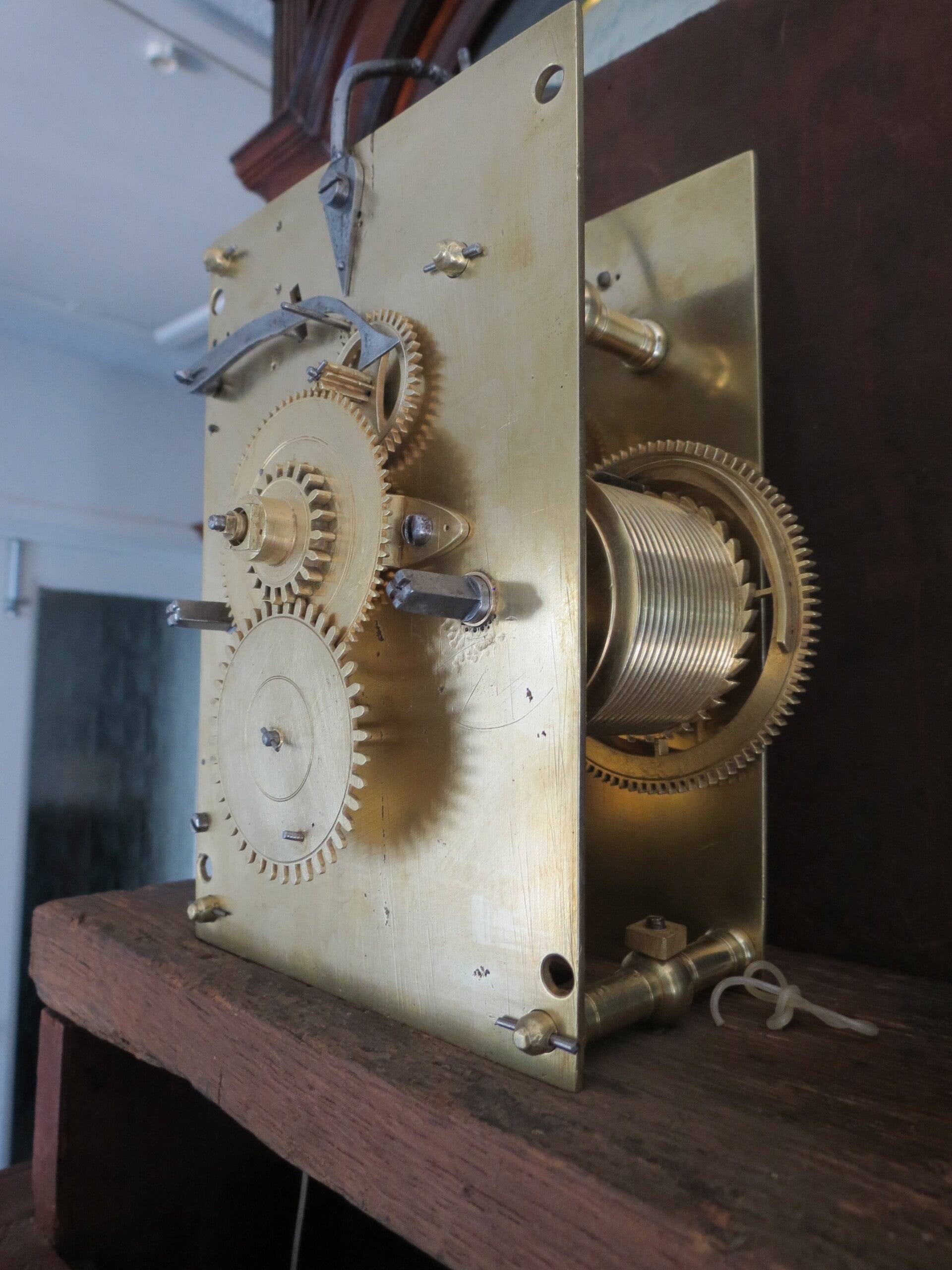
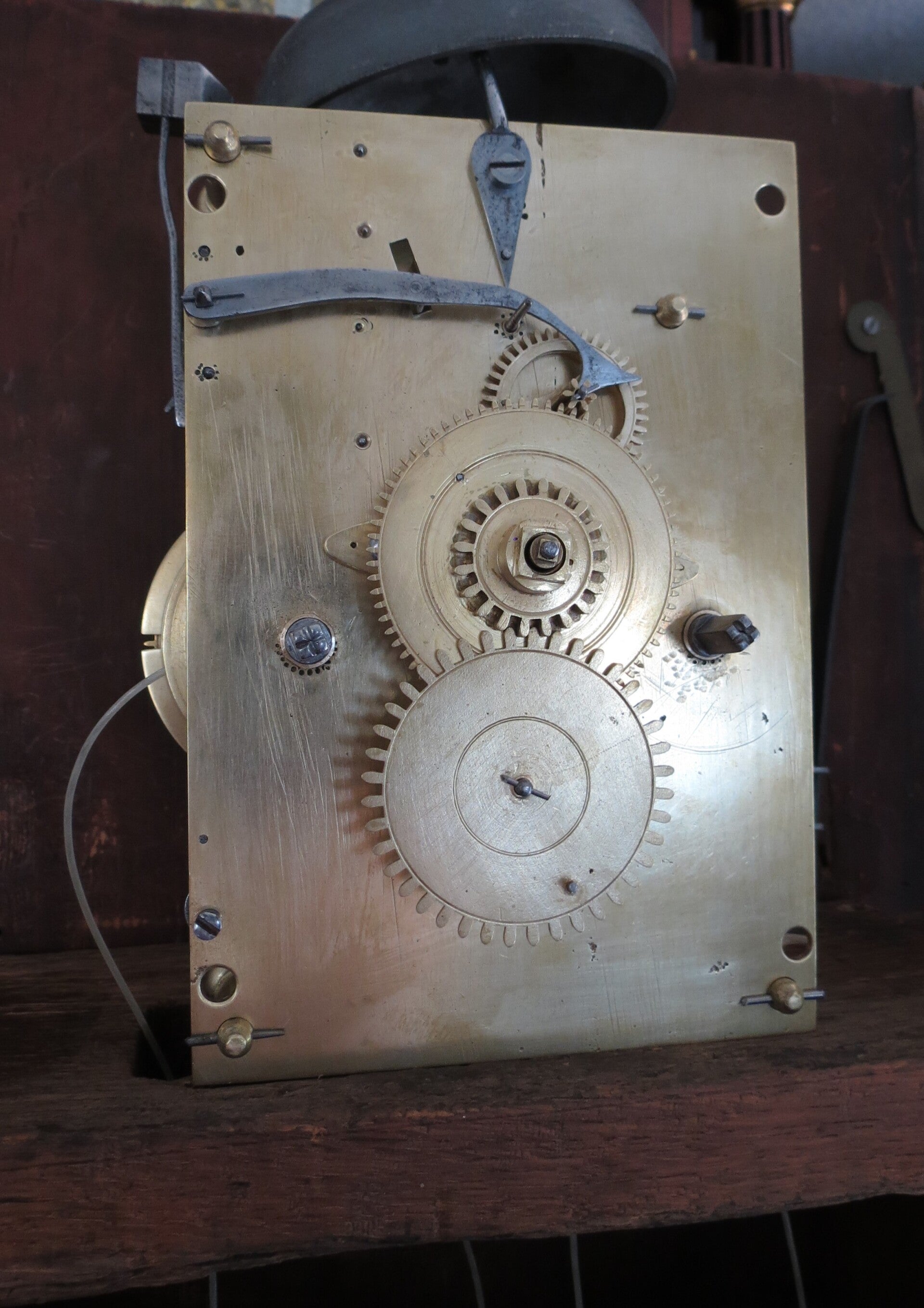
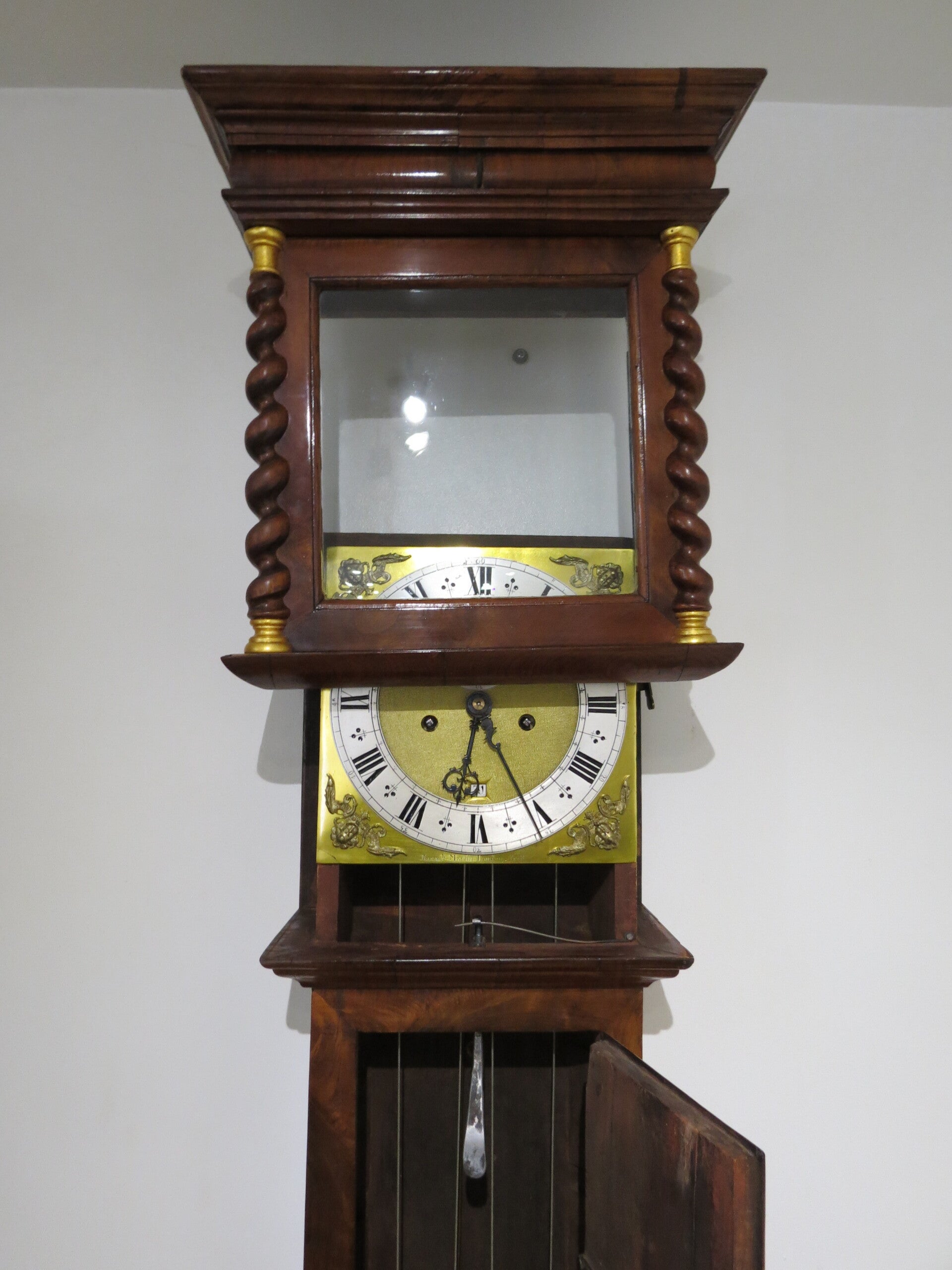
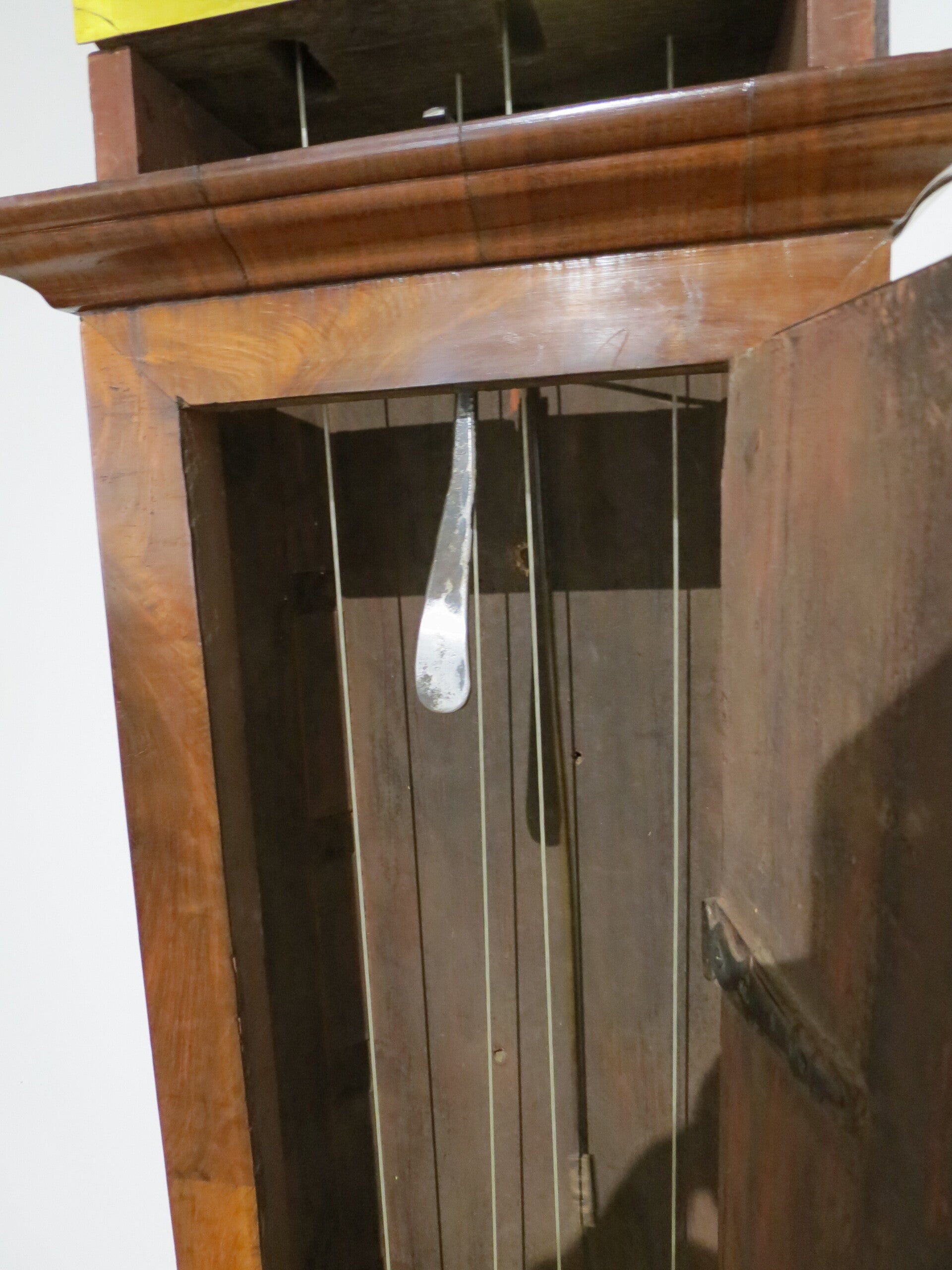
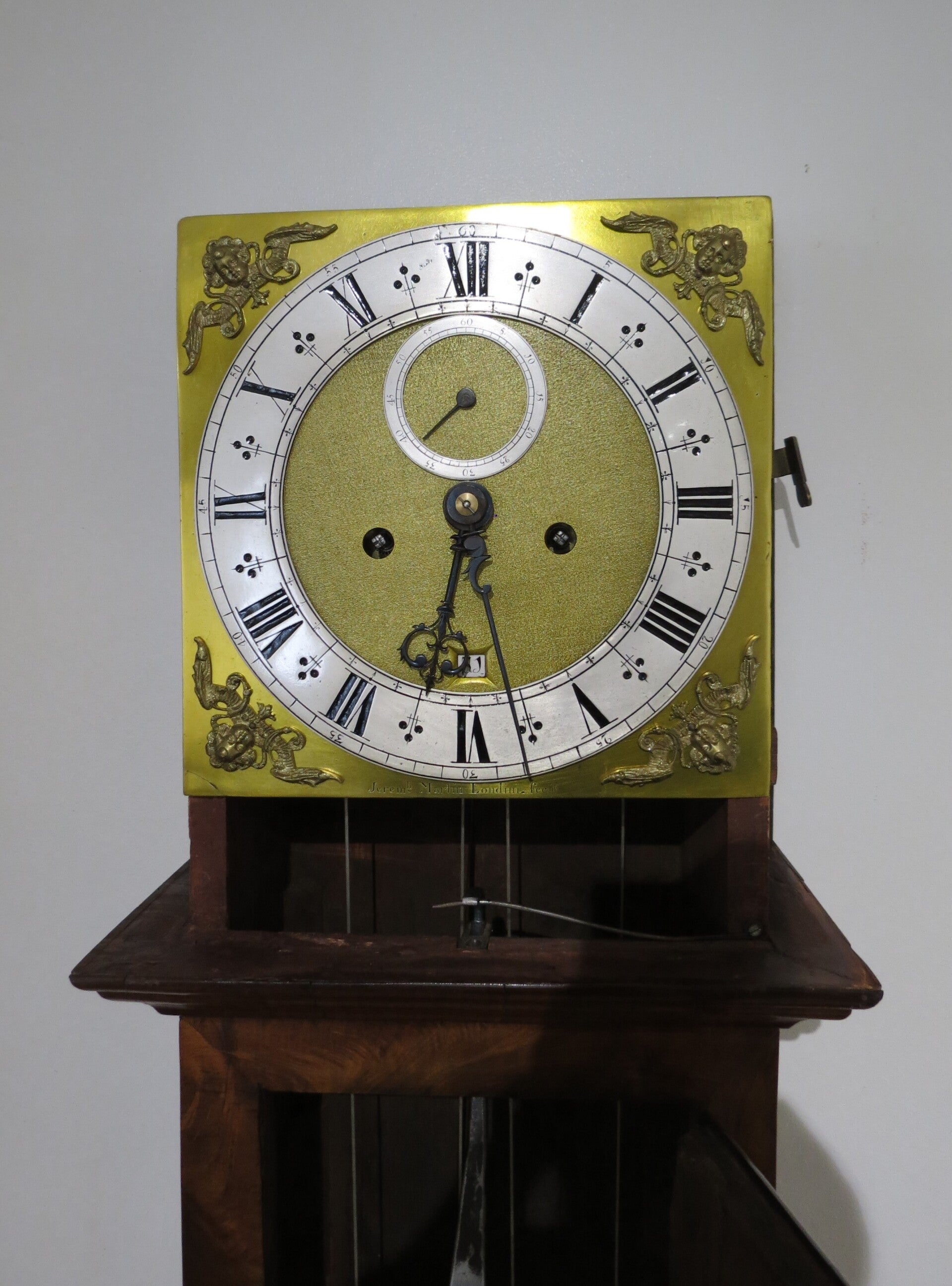
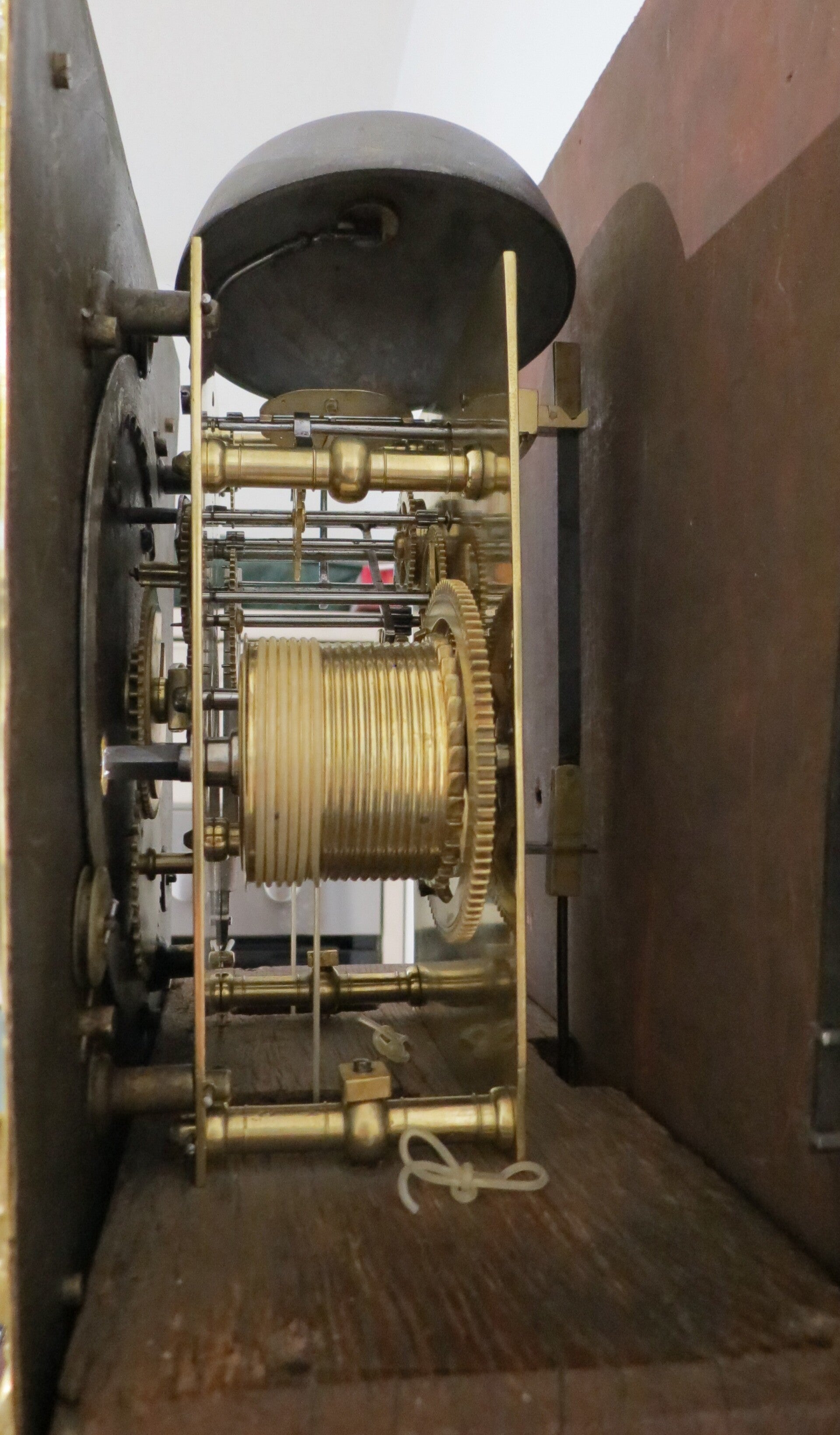
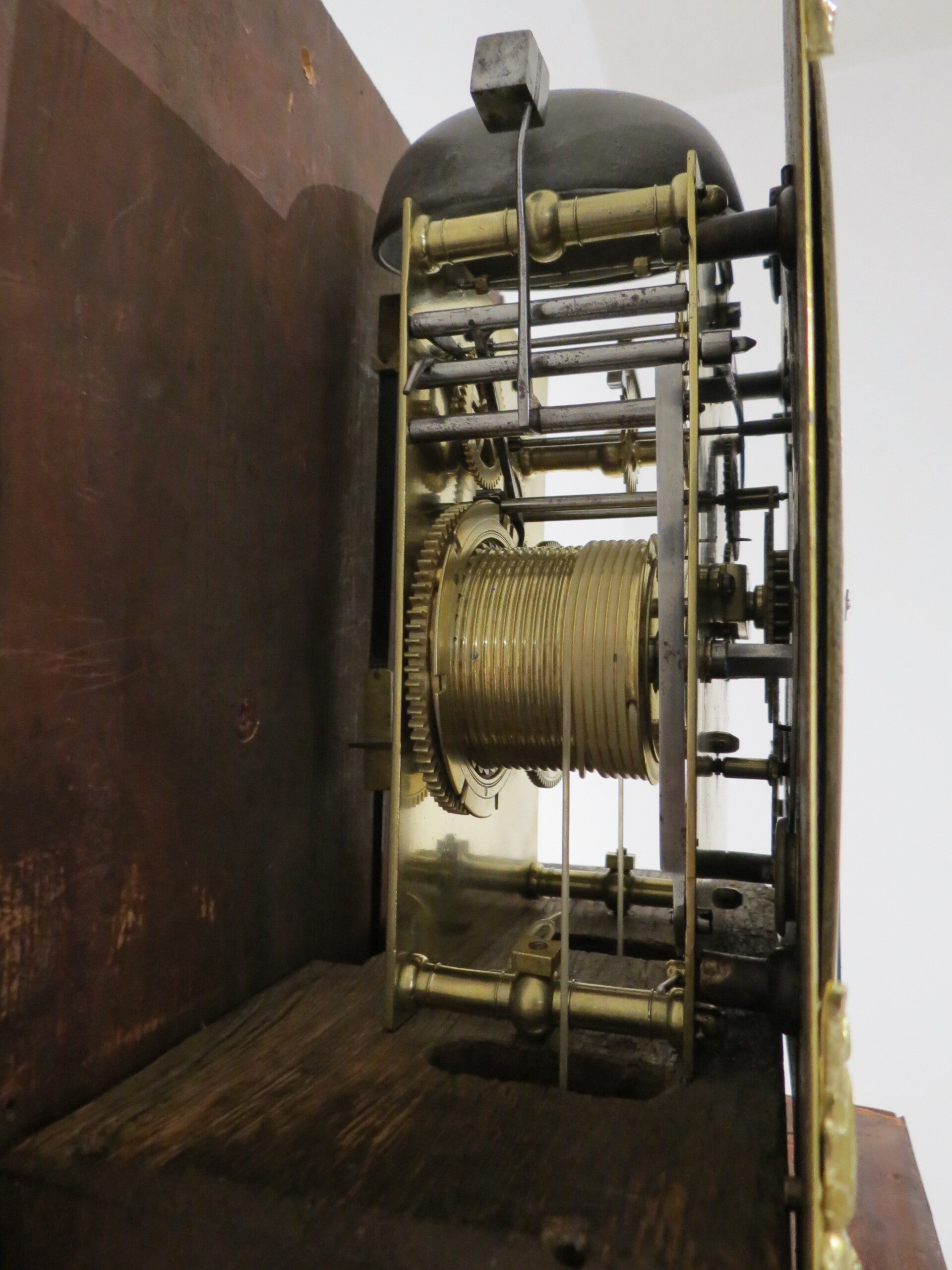
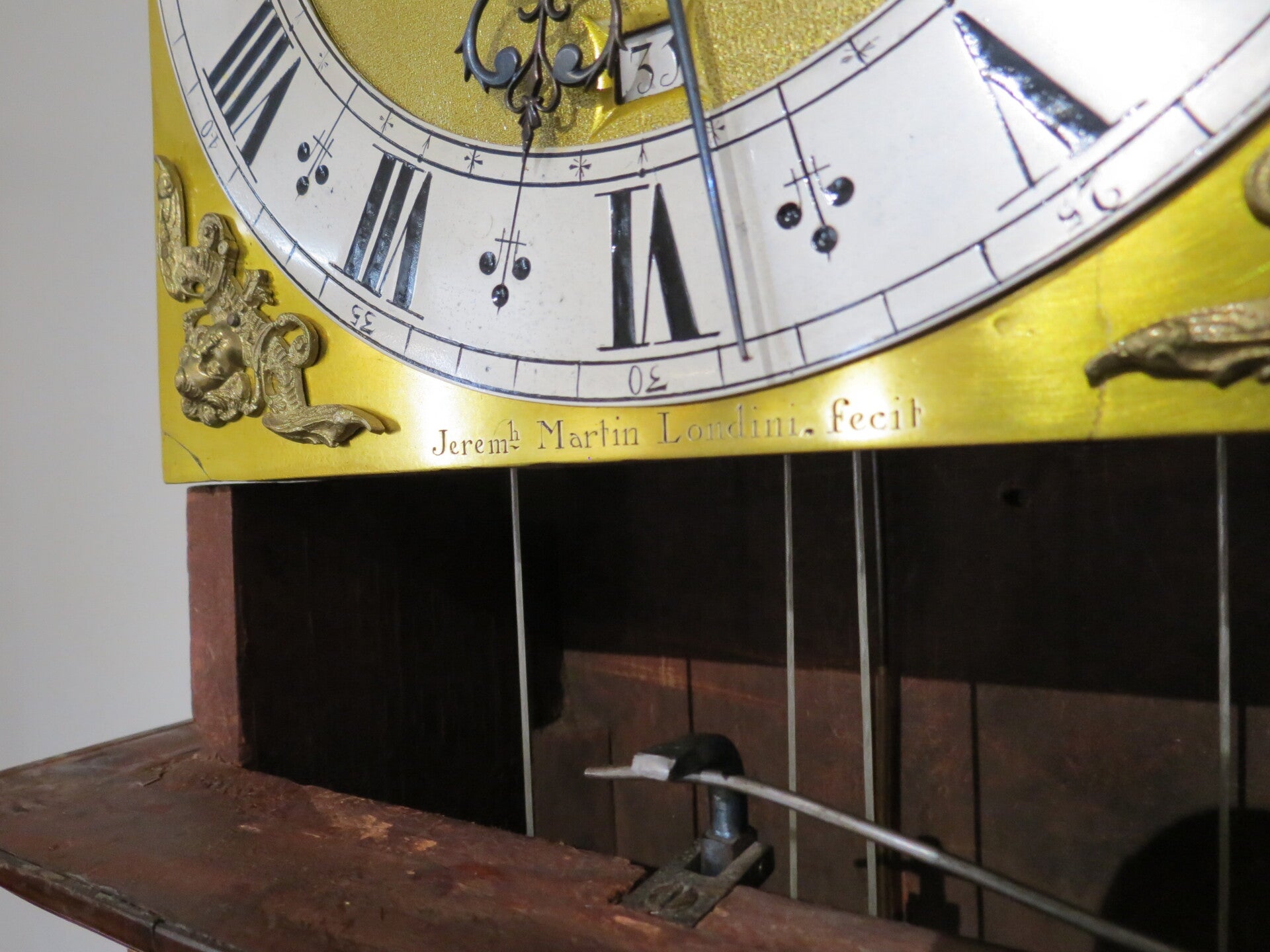
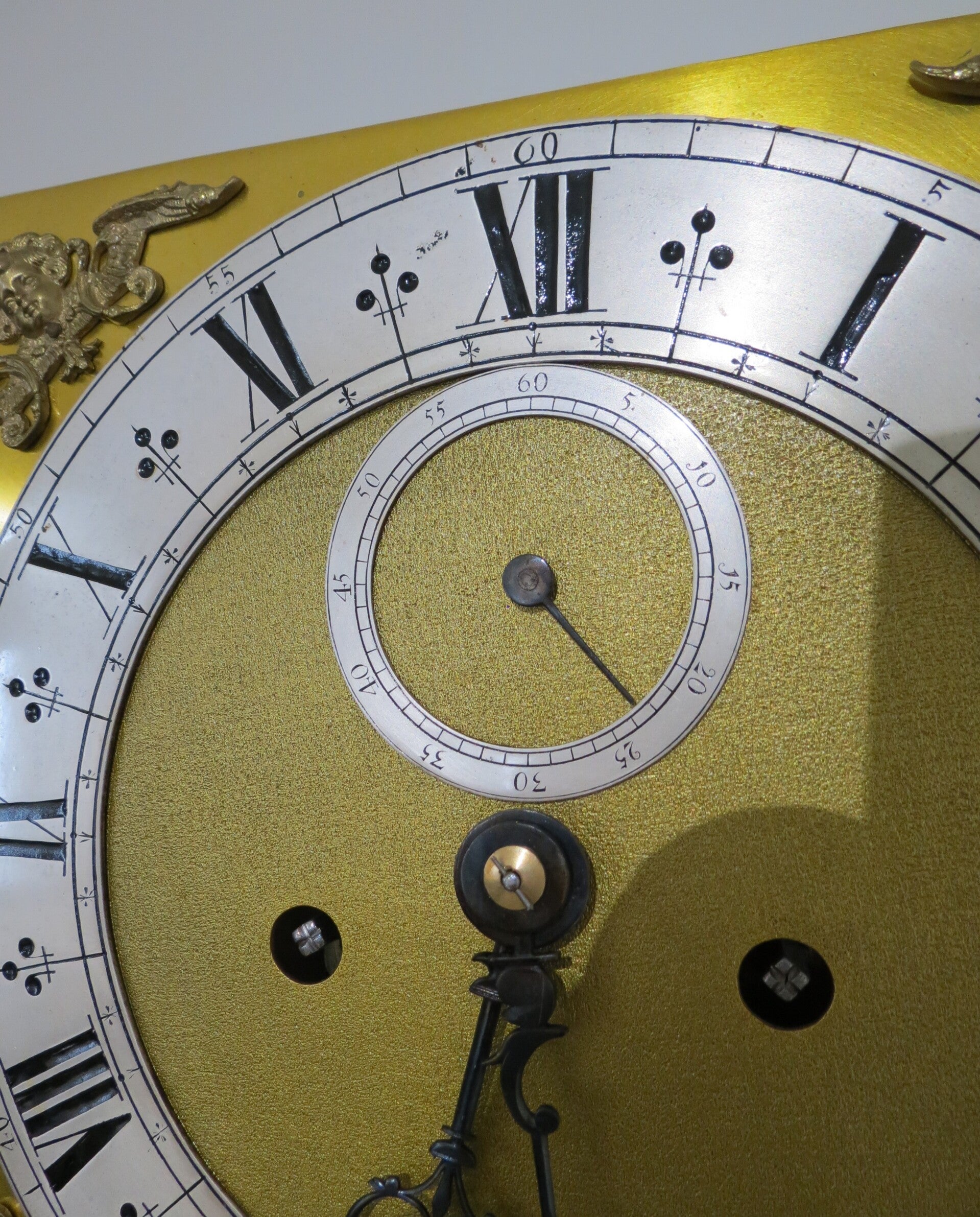
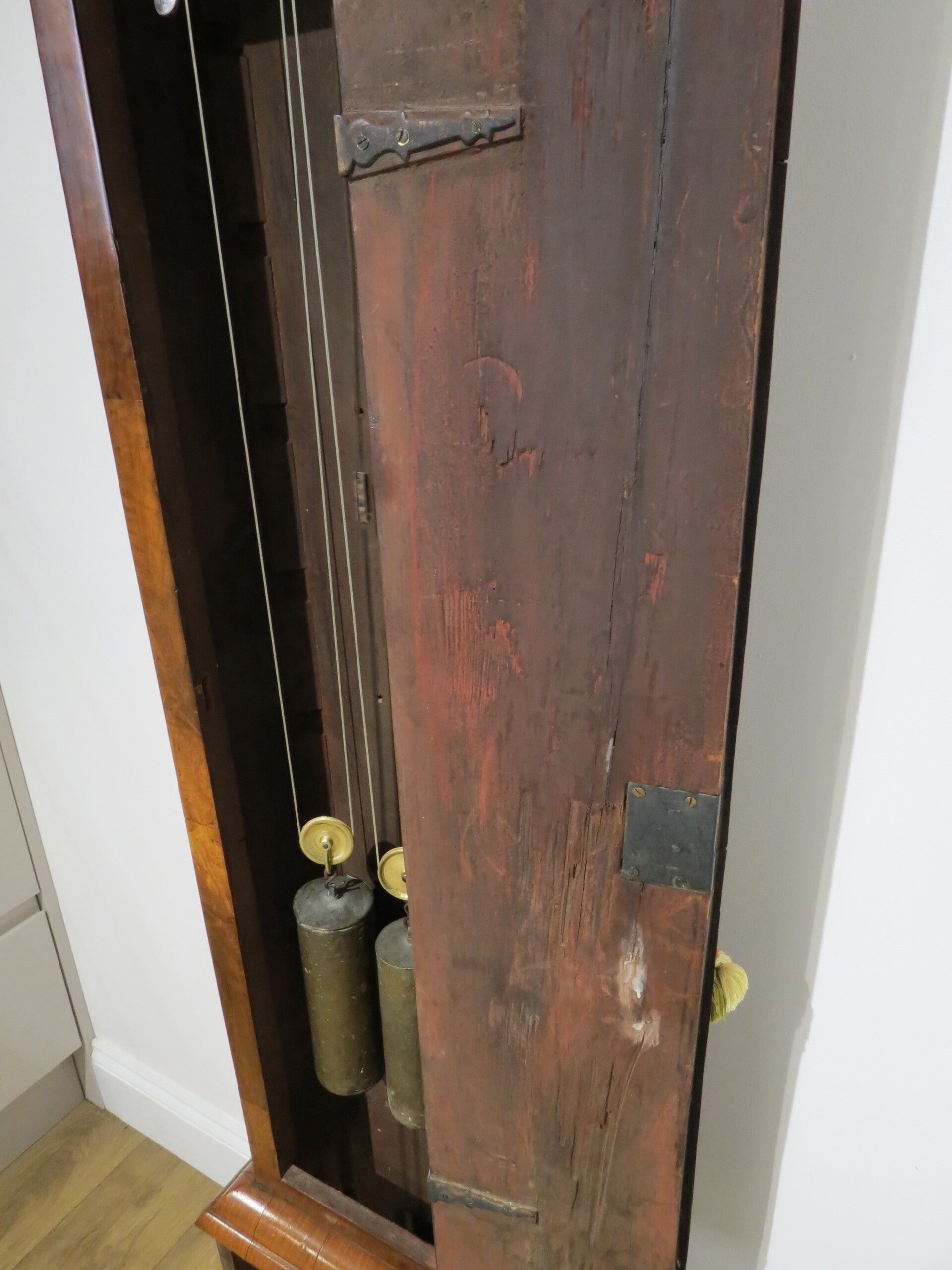
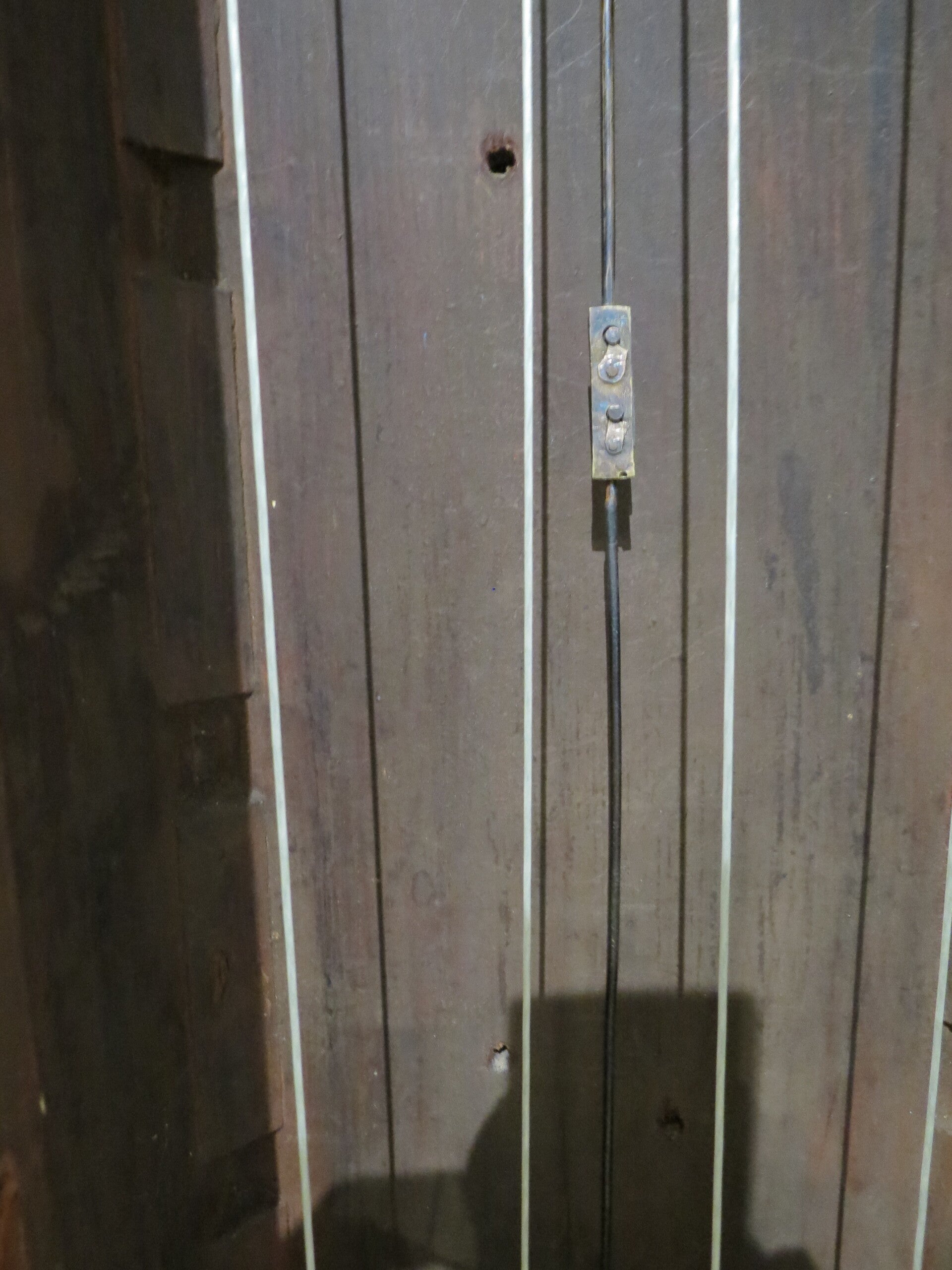
An early longcase clock by Tompion apprentice Jeremiah Martin. 1 1/4 seconds pendulum with bob in the base. 10 inch dial with fairly slender chapter rings, seconds ring calibrated with 48 divisions (instead of normal 60). 5-pillar movement of 8-day duration with inside countwheel strike. Slender walnut case with rising hood, spoon lock, opening base panel with lenticle. The pendulum measures approx.61 inches and is in two parts joined by a latched connector. Brass cased weights and keys for both locks.
The clock is complete and fully working. The movement has been properly cleaned and serviced, the case has been substantially restored although still retains signs of age.
Jeremiah Martin is listed as being apprenticed in 1680 and working from 1687 to 1704. He was originally apprenticed to William Dent and then 'turned over' to Tompion. This was a ploy often used by Tompion to have more apprentices than normally permitted by the Clockmaker's Company.
I haven't included the word 'rare' in the description, to be honest it seems rather superfluous for a clock of this type. To most collectors longcase clocks with 1 1/4 seconds are simply unobtainable!. The 'golden age' of English clockmaking saw much experimentation to improve clocks. The use of seconds pendulums became the standard from around 1670 when the anchor escapement was first used. Some makers (generally the more famous ones) however made clocks with longer pendulums beating 1 1/4 seconds. This length was the practical limit to fit in a standard longcase clock of the period, the feeling was presumably that a longer pendulum would increase accuracy. A pendulum of around 61 inches cannot easily be inserted into the case so it is in two parts and joined by a latched connector. The pendulum bob swings in the base of the clock around 6 inches above the floor. It is therefore necessary to have a door in the base to adjust the pendulum for time-keeping. If you look closely at the seconds ring on the dial you will see that it has 48 divisions instead of the usual 60 so that the 1 1/4 second intervals are marked, for example only 4 divisions between 10 and 15 instead of the normal 5.
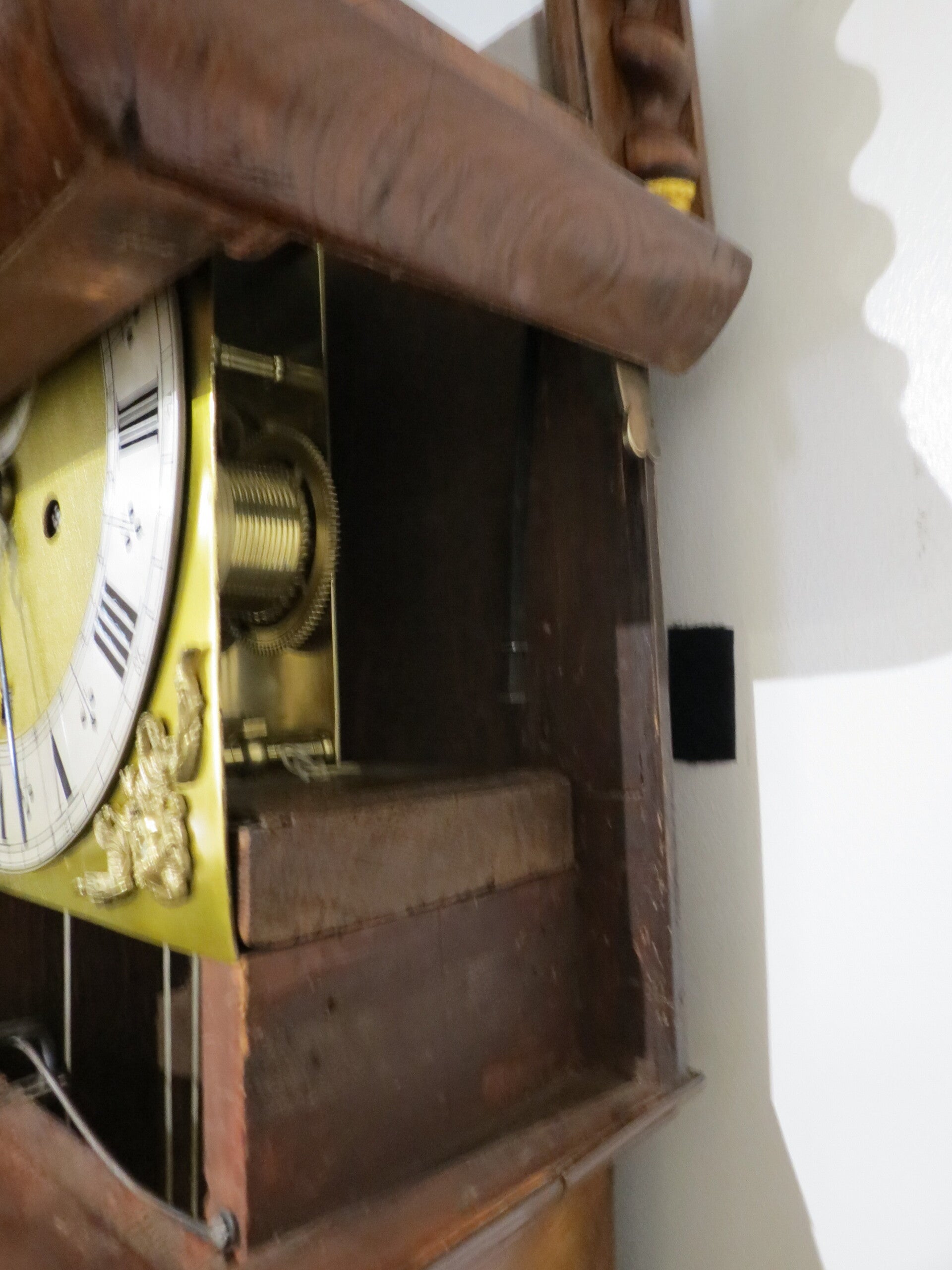
As with most early longcase clocks this case has a rising hood, frankly not the most practical arrangement which is why many have been converted to slide forward now. There is also a 'spoon' lock so when the trunk door is closed this automatically engages and prevents the hood from being lifted. There is no opening door on the hood so to wind the clock the hood is lifted to a point where it rests on a stay giving access the the winding holes. Although the height of the clock is fairly diminutive at 77.5 inches you would need space above for the hood to rise, I would suggest a ceiling height of around 90 inches at minimum. The left side glass to the hood is currently not installed, I am happy to put this back in but I will point out that it does actually make it easier to hold the hood when lifting to wind.
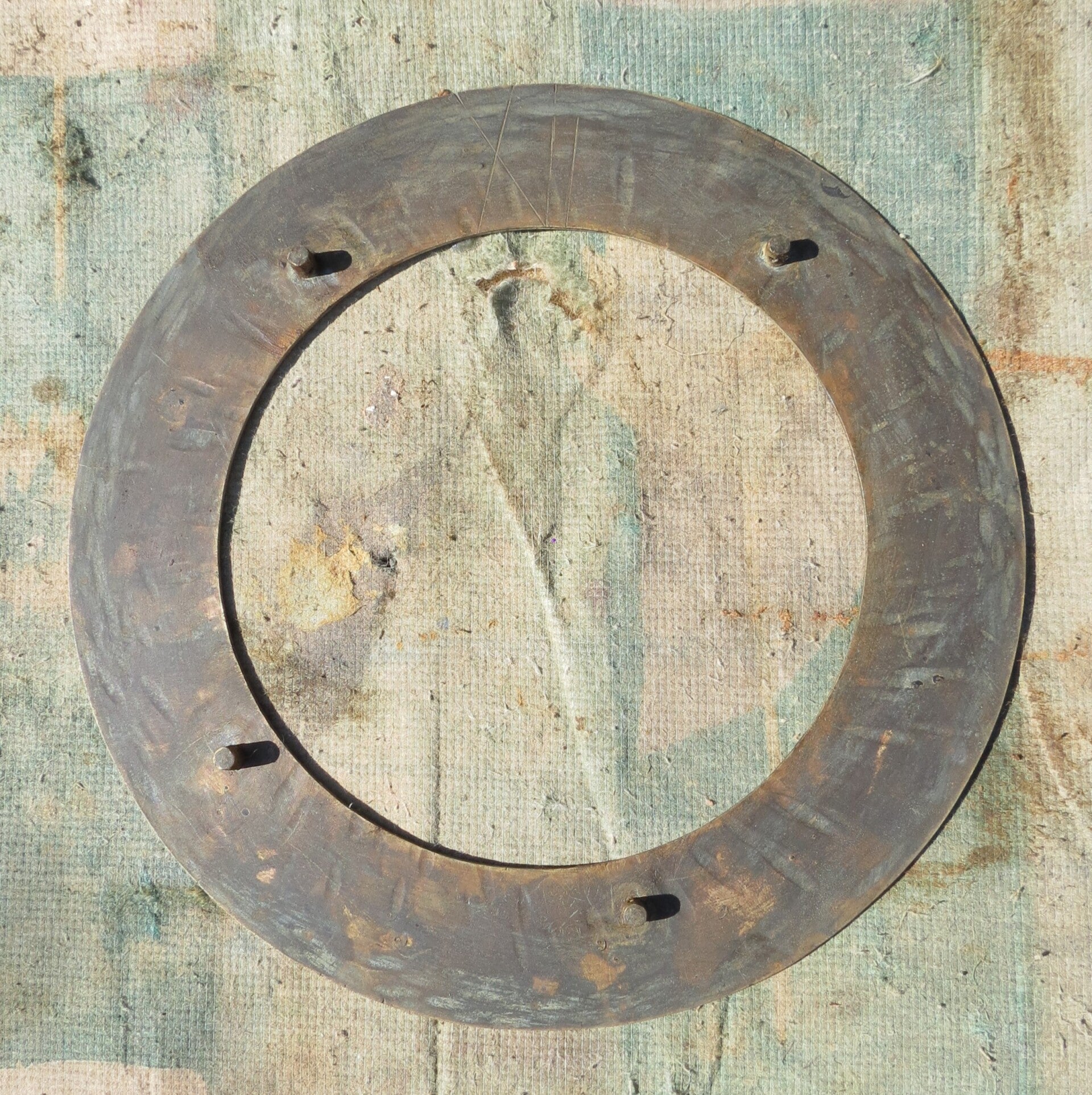
The dial measures exactly 10 inches. These early 10 inch clocks are generally the most prized by collectors, the dominant fashion would change to 11 inch dials as the 1690s progressed and then mostly 12 inches from 1700 onwards. The maker's name is engraved to the dial plate below the chapter ring. The chapter ring is fairly slender, 1.5 inches across. The minute numbers are small and shallowly engraved inside the minute ring calibration, this is typical of the earliest style of dials. The seconds ring is fairly large and slender, a typical Tompion style. The dial condition is good but does have some signs of age: there is a split to the dial plate below 5 and the left lower corner has had a repair, other corners show signs of scuffing and bending in a bit. Some of the smaller numbers on the chapter ring show some losses from previous re-silvering. The hands are in very good condition but are unlikely to be original.
The movement is typical of well made London movements of the period. 5 fairly slender knopped and finned pillars, inside countwheel strike etc. When I first had it, although complete, the condition was poor and it didn't work, has now been properly cleaned and re-furbished, now working correctly and reliably.
The case has clearly had major work over the years although there are signs of age to the wood inside the door/ backboard etc. It presents very well with good walnut colour and polish. When I had it the spoon lock was inoperative where the wood had worn away over the years, I remedied this by installing a small brass plate so that the lock can now engage properly. Part of the 'rail' at the back of the hood where it slides has broken but doesn't affect its operation, may be worth repairing at some time though. The lenticle has a crack to the bulls-eye glass.
The clock has obviously had some refurbishments over the years so please study the pictures and make up your own mind about the degree of originality.