

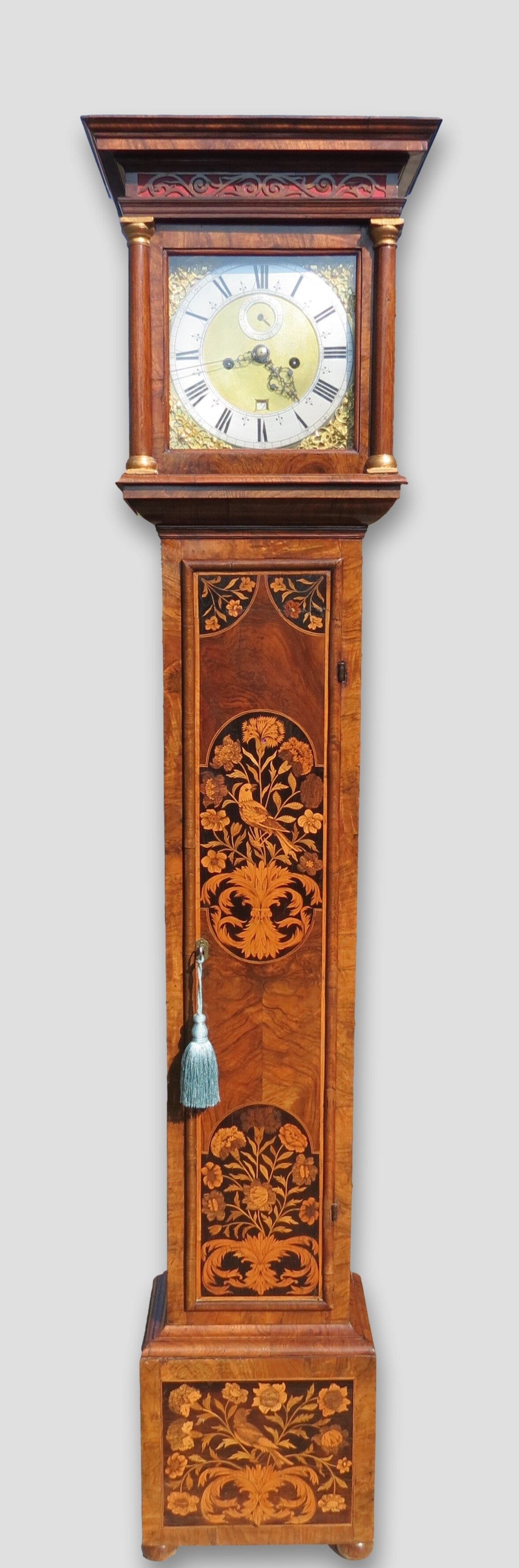
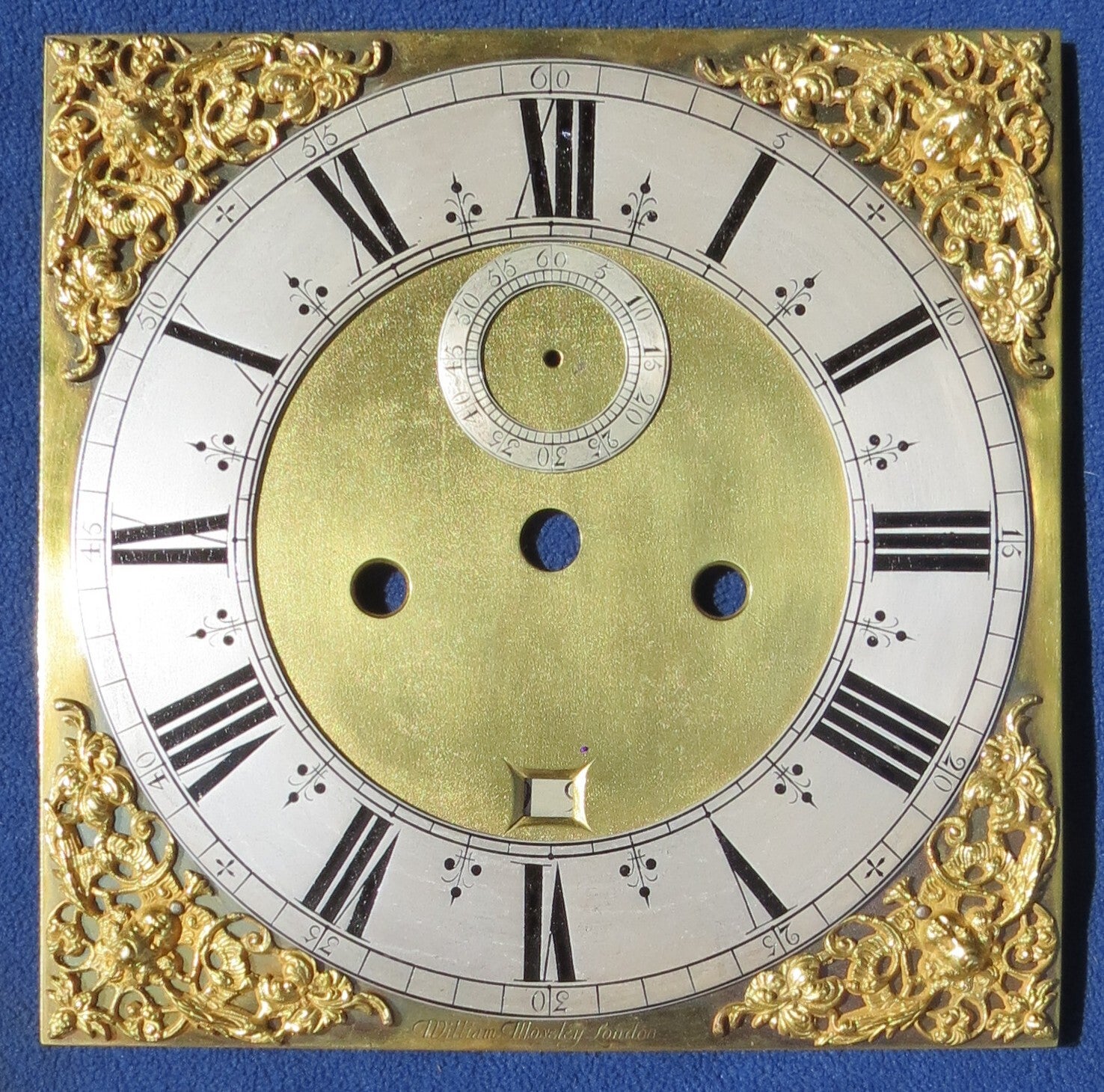
William Moseley London. Circa 1685. A fine early marquetry longcase clock with 10 inch dial.
Part of the Osborne Clocks fine marquetry collection, carefully selected original clocks from the golden age of English clockmaking.
Provenance, previously owned by a famous member of the armed forces.
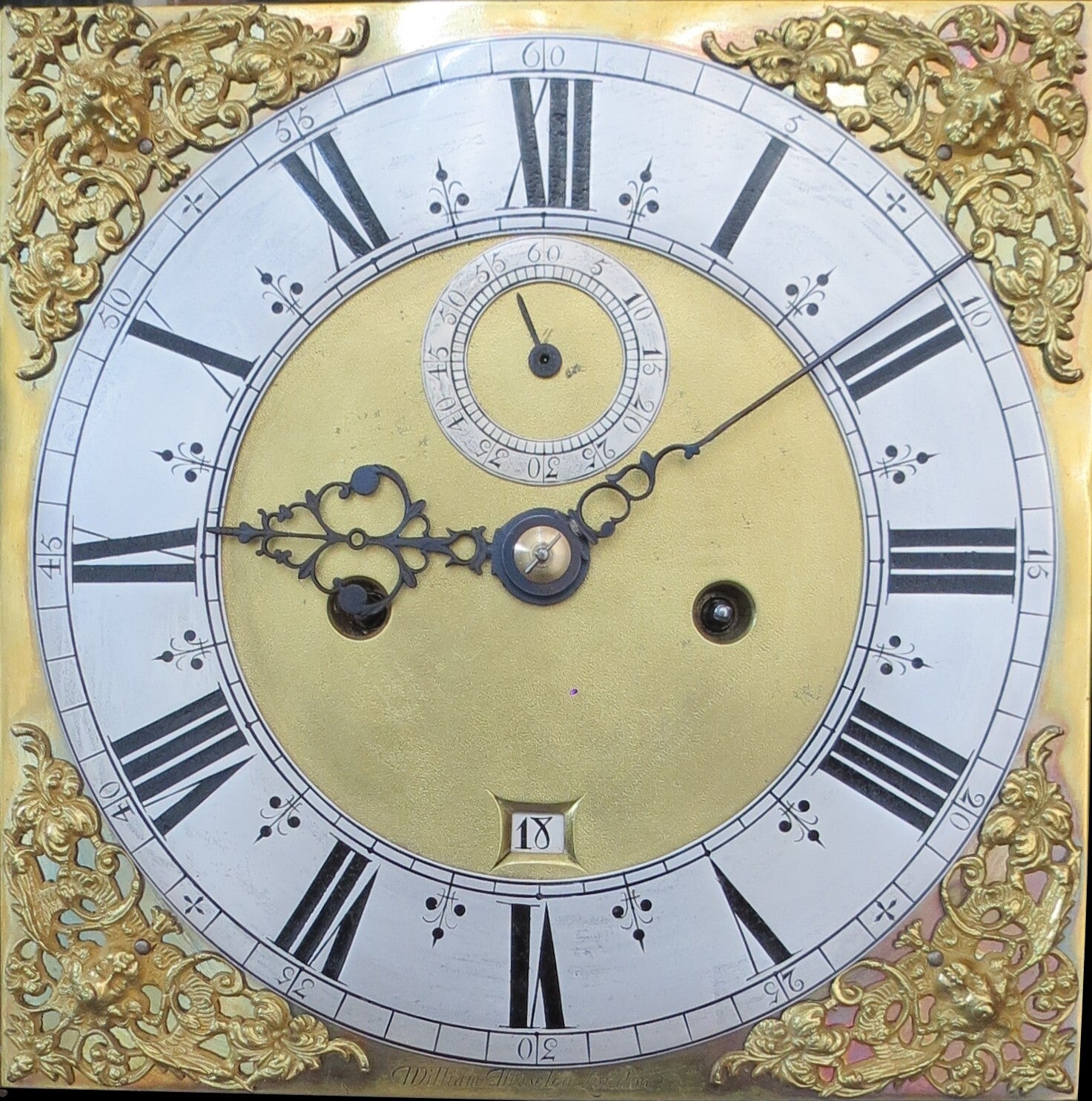
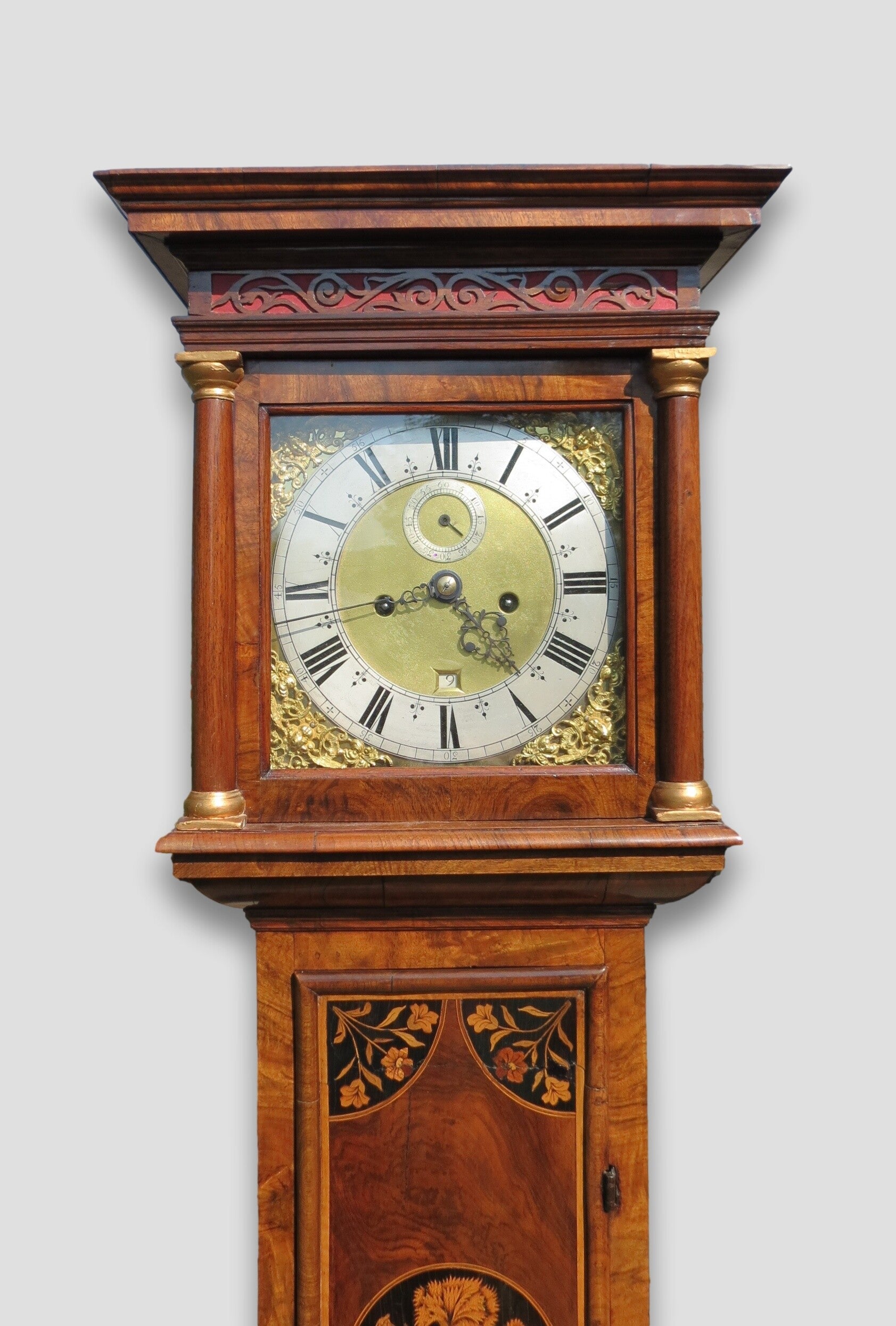
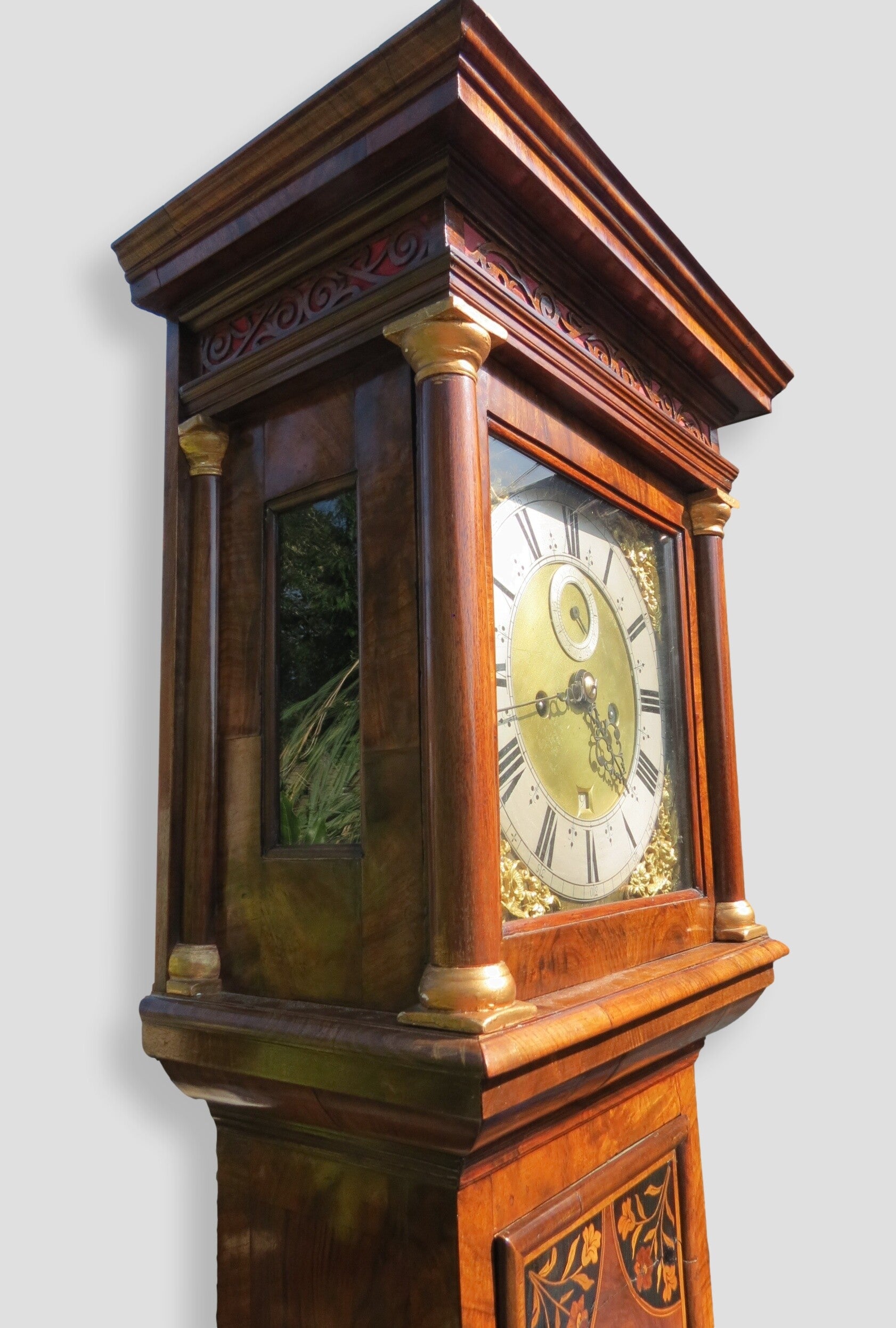
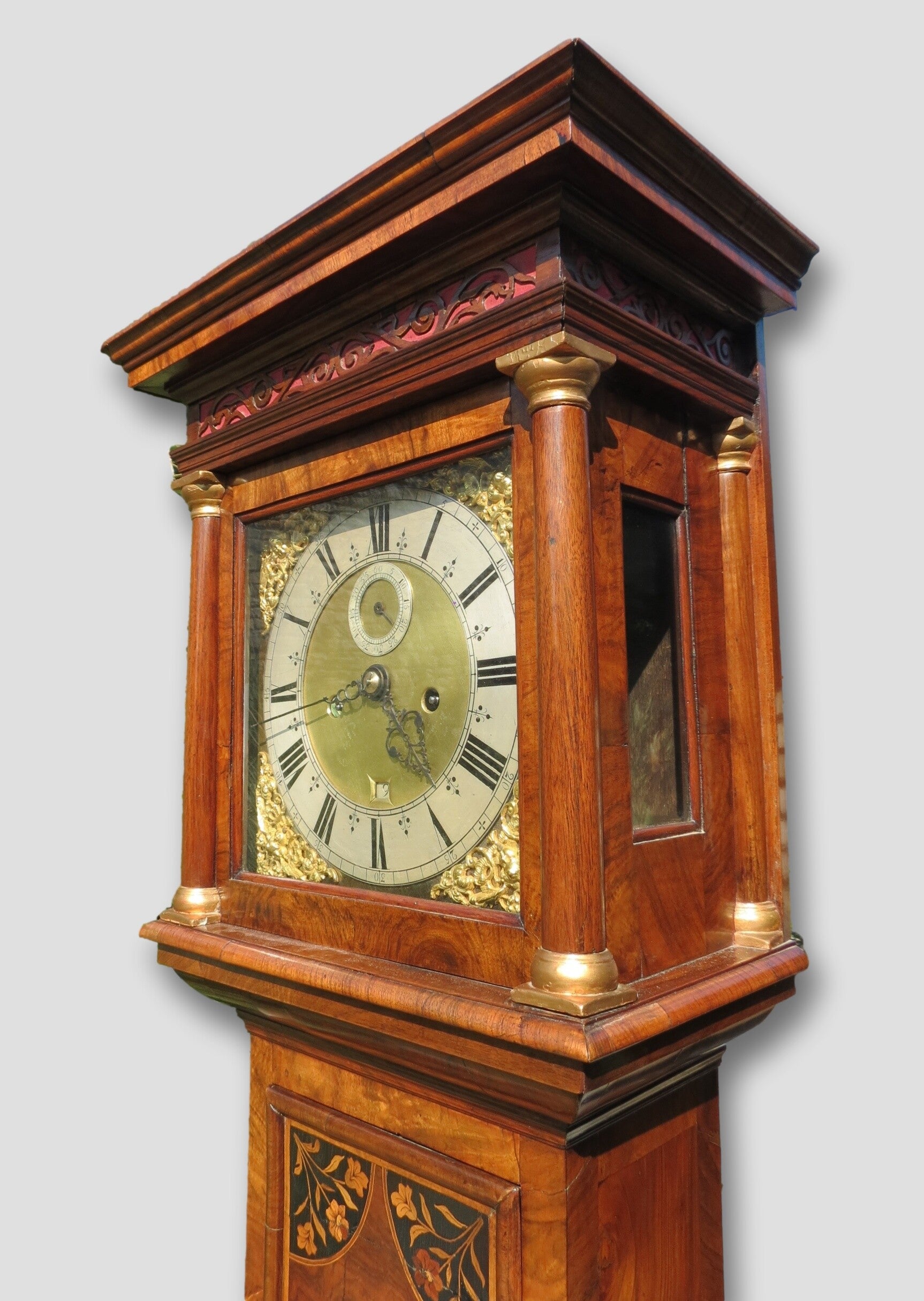
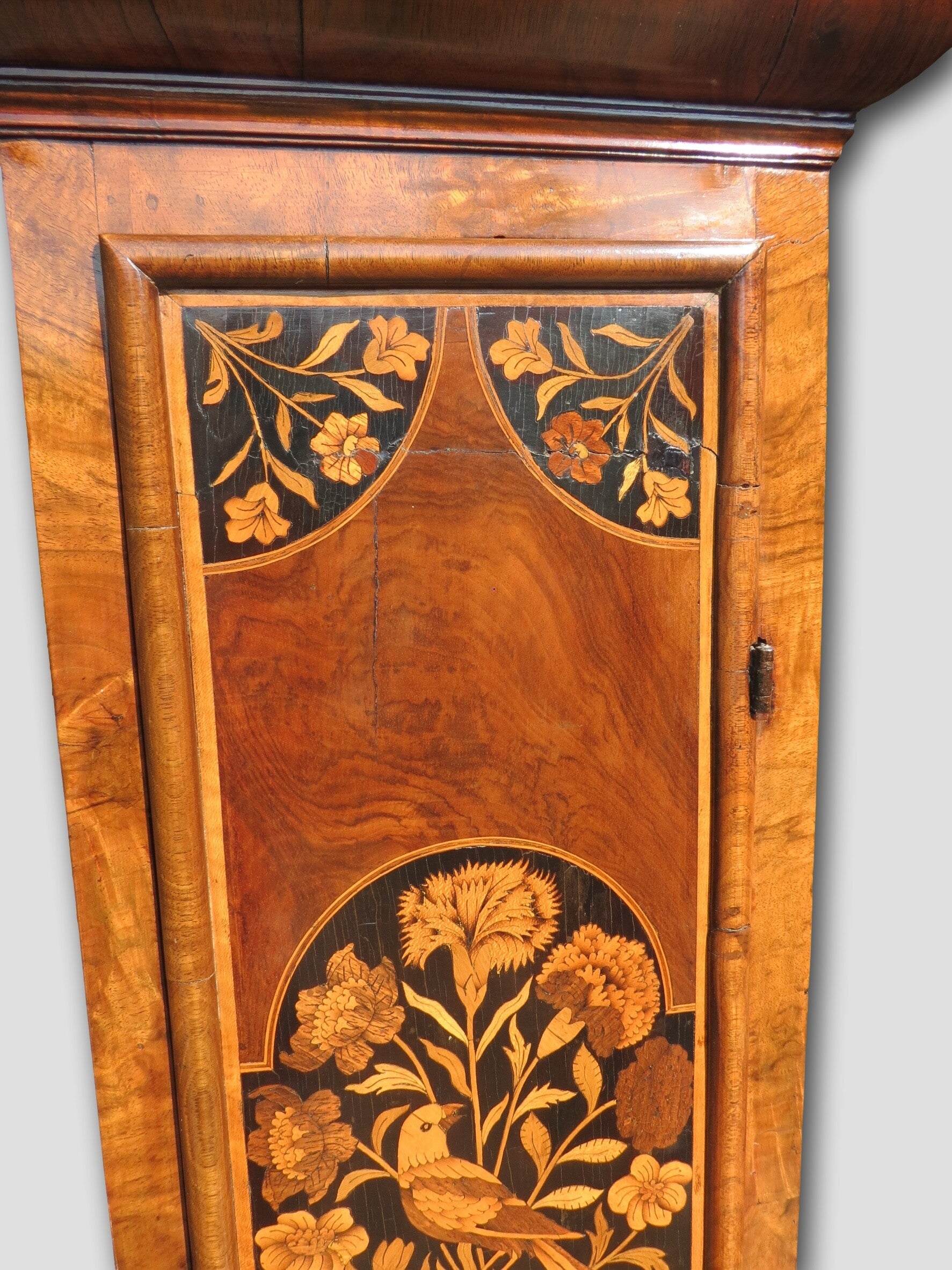
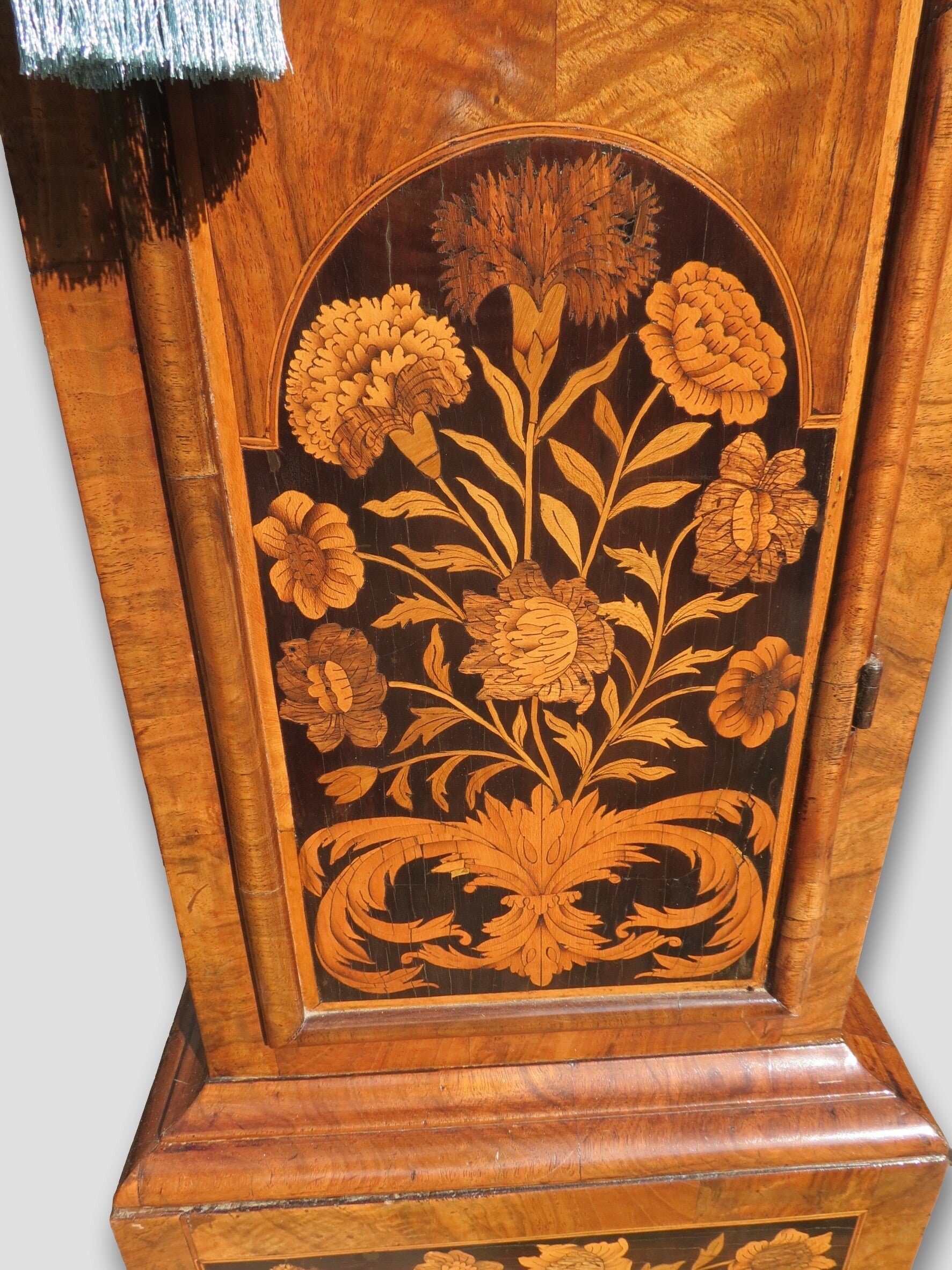
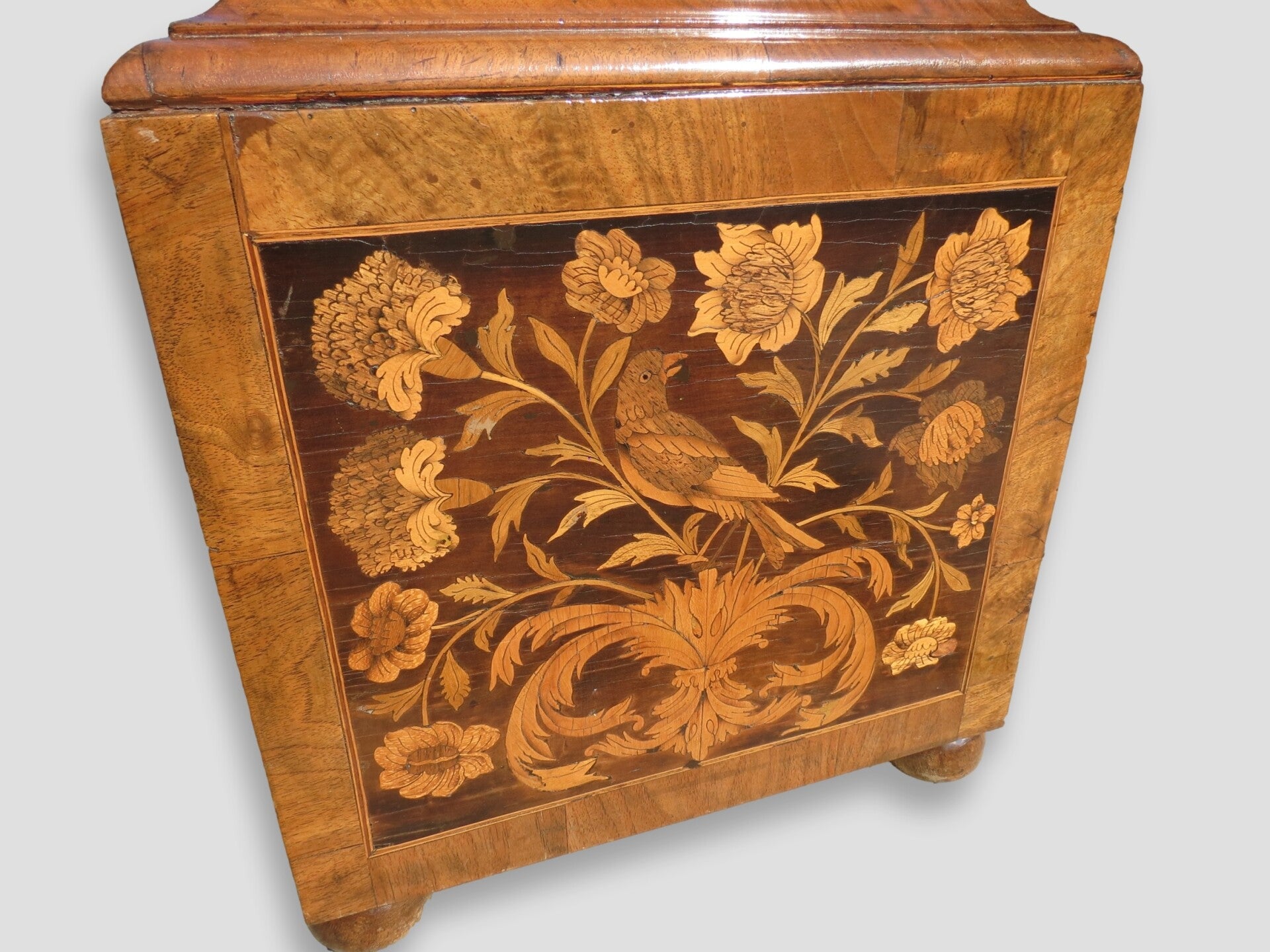
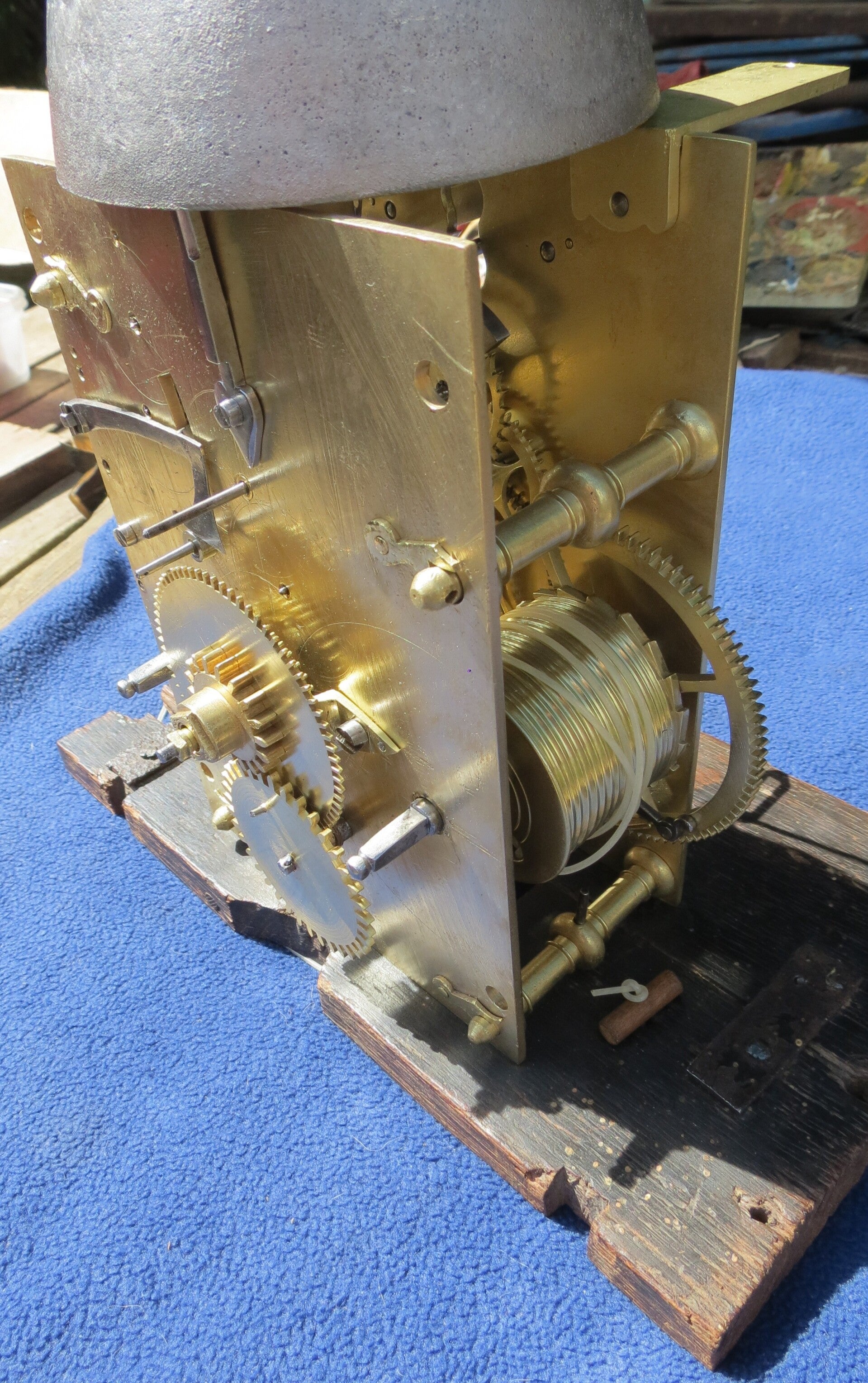
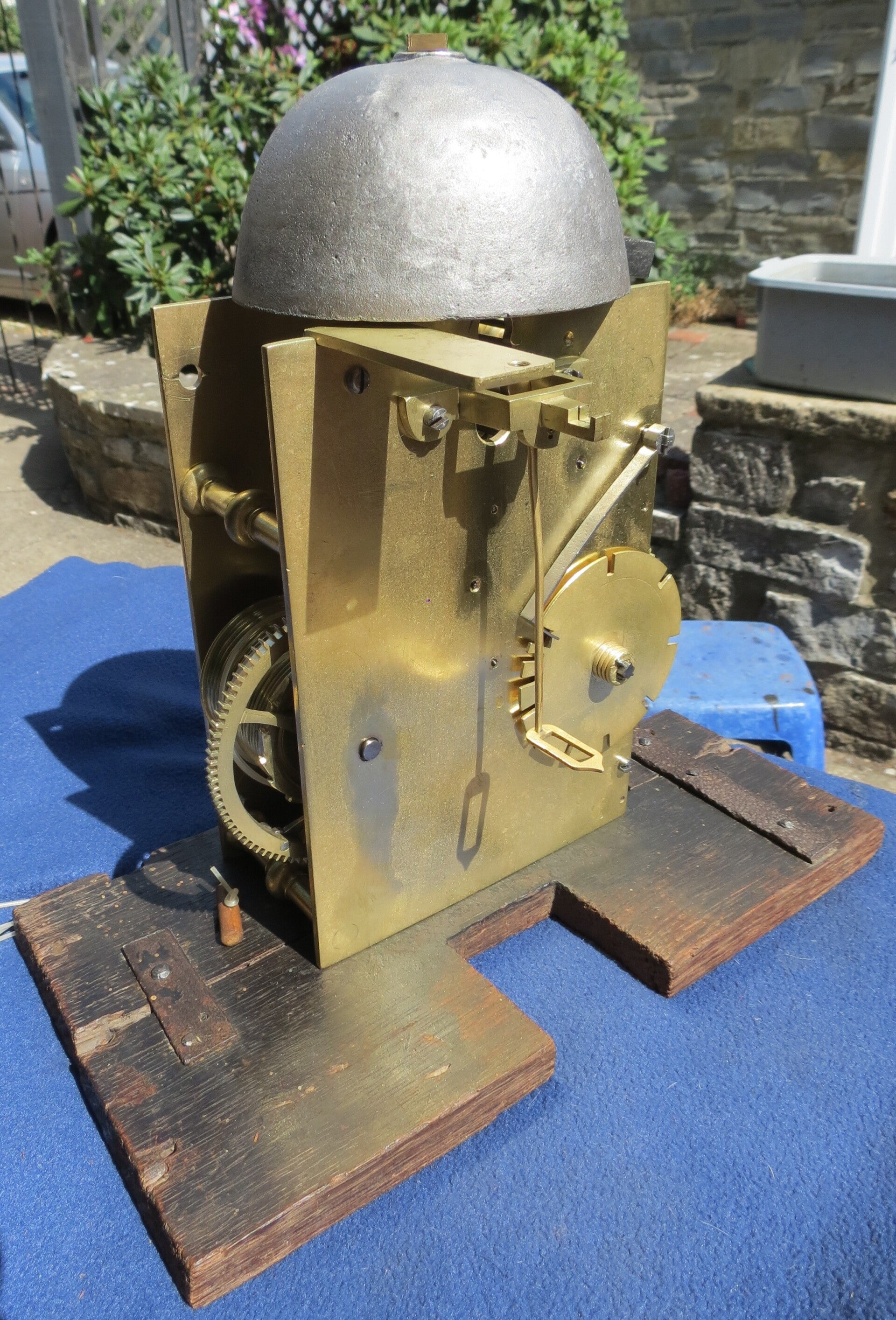
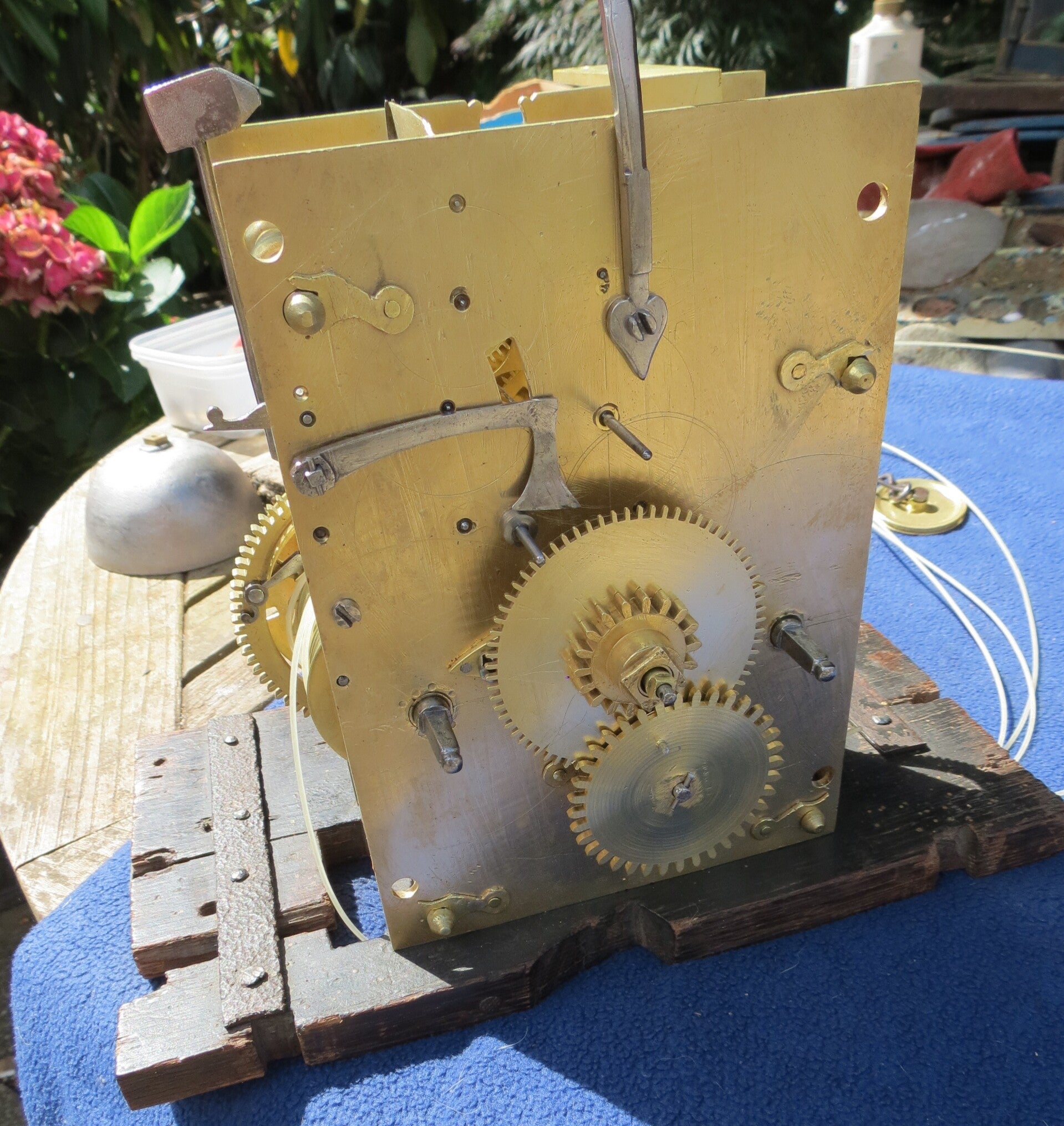
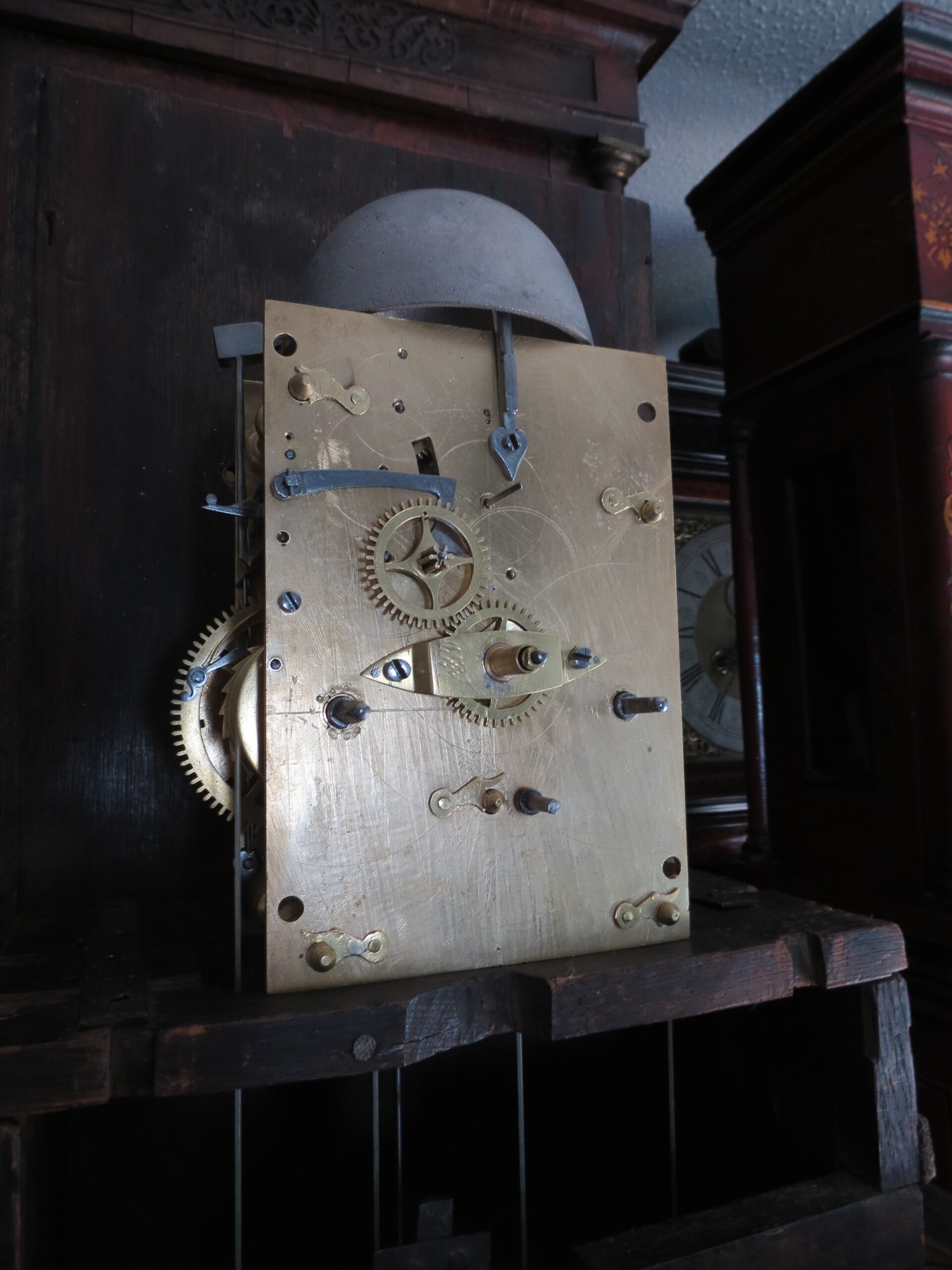
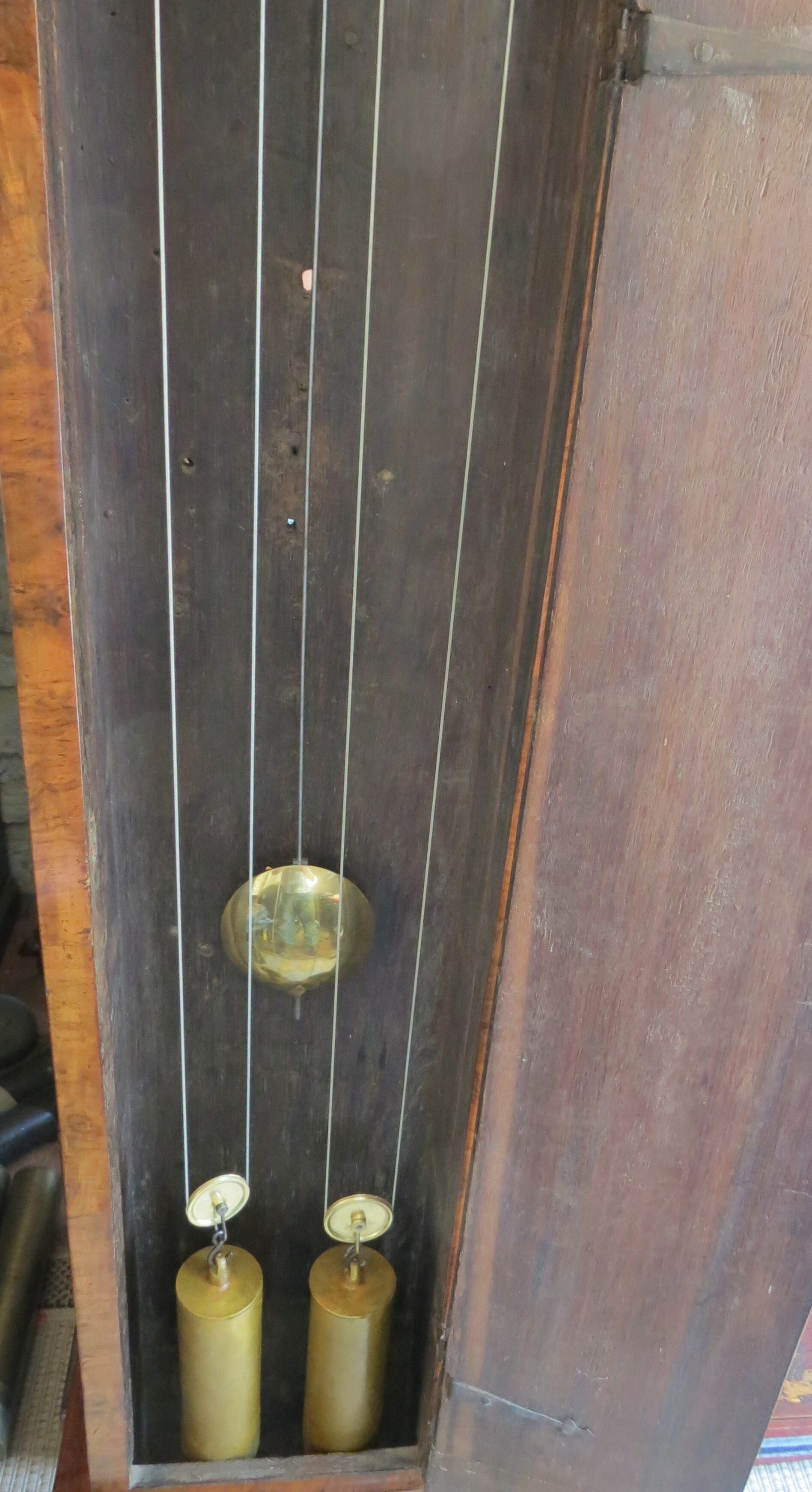
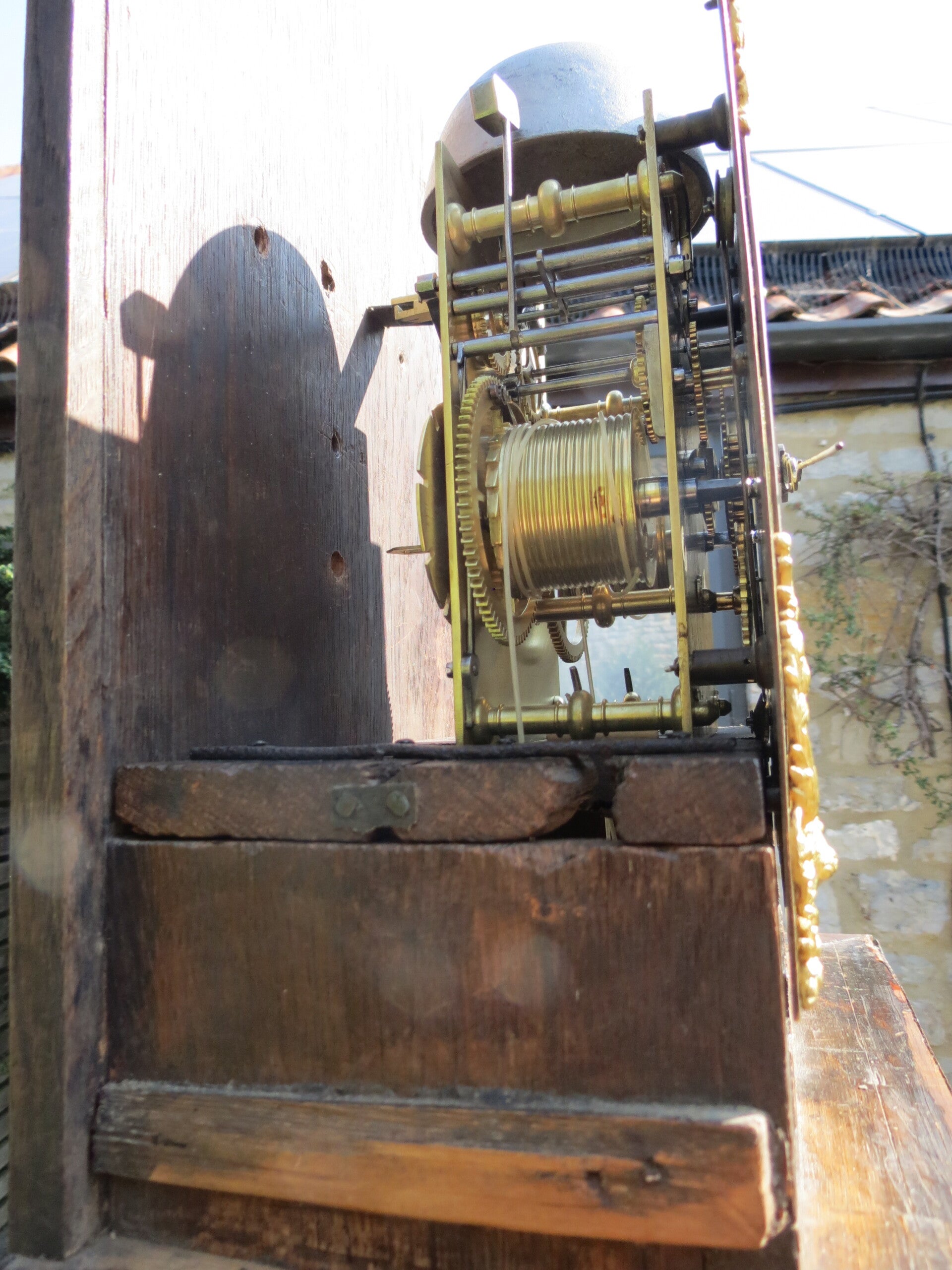
A fine early marquetry clock by William Moseley, London. 10 inch dial with early features, 8-day movement with 5 latched pillars, outside countwheel strike, small domed bell. Earlier style 'panelled' floral marquetry and walnut case. Brass-cased weights, double sided brass pendulum, winder, key.
The clock is in exceptional condition and fully working/ serviced.
Overall height 78 inches.
Further notes
Historical perspective
The 'golden age' of English clockmaking ran for about 50 years from 1670. During this period there were an extraordinary number of highly talented clockmakers working in London and producing fabulous clocks for the domestic market. Tompion is undoubtedly the most famous of these but there were many others working to extremely high standards.
The earliest longcase clocks were made from around 1670, almost prototypes really. By around 1680 the fashion had developed for fairly diminutive (by later standards) clocks with 10 inch dials. The cases were often walnut and marquetry on an oak ground. This fashion is often considered the most pleasing form of longcase clock ever built. Through the 1690s dials often became slightly larger at 11 inches and from 1700 12 inches became the dominant fashion. The cases became progressively larger.
Provenance
The previous owner purchased this clock in 1970 from Meyrick Nielson of Tetbury. He was a famous member of the armed forces and had frequent contact with the royal family. I think it is inappropriate to say more here but I will give this information to the purchaser, or please enquire if you want to know more.
The maker
William Moseley is listed as being freed from the clockmaker's company in 1680 (able to make clocks in London and use his own name). This makes him a close contemporary of later golden age makers such as Christopher Gould. He doesn't seem to have been a prolific maker but judging by the standards of this clock the quality of his products was very high.
The Dial
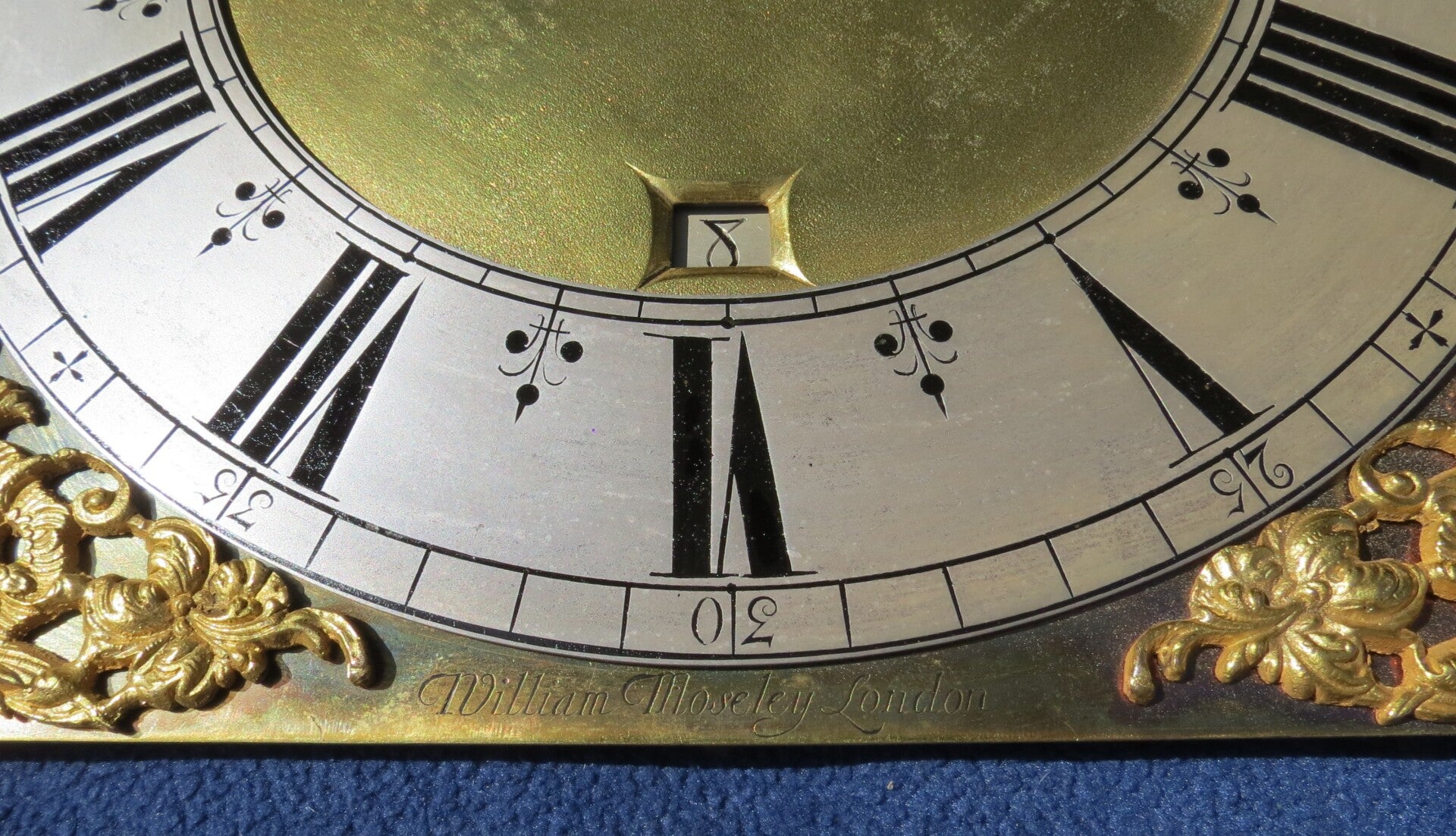
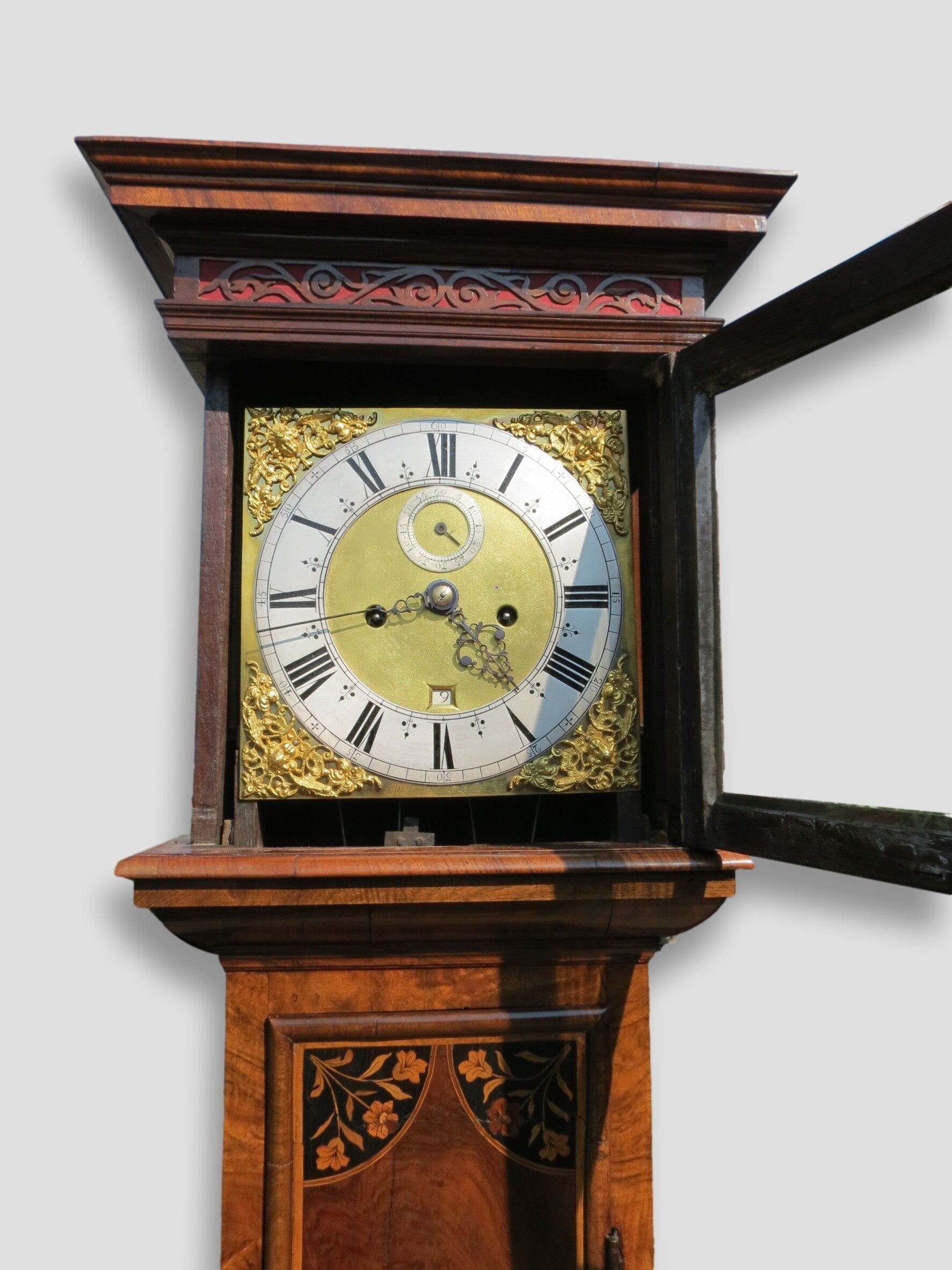
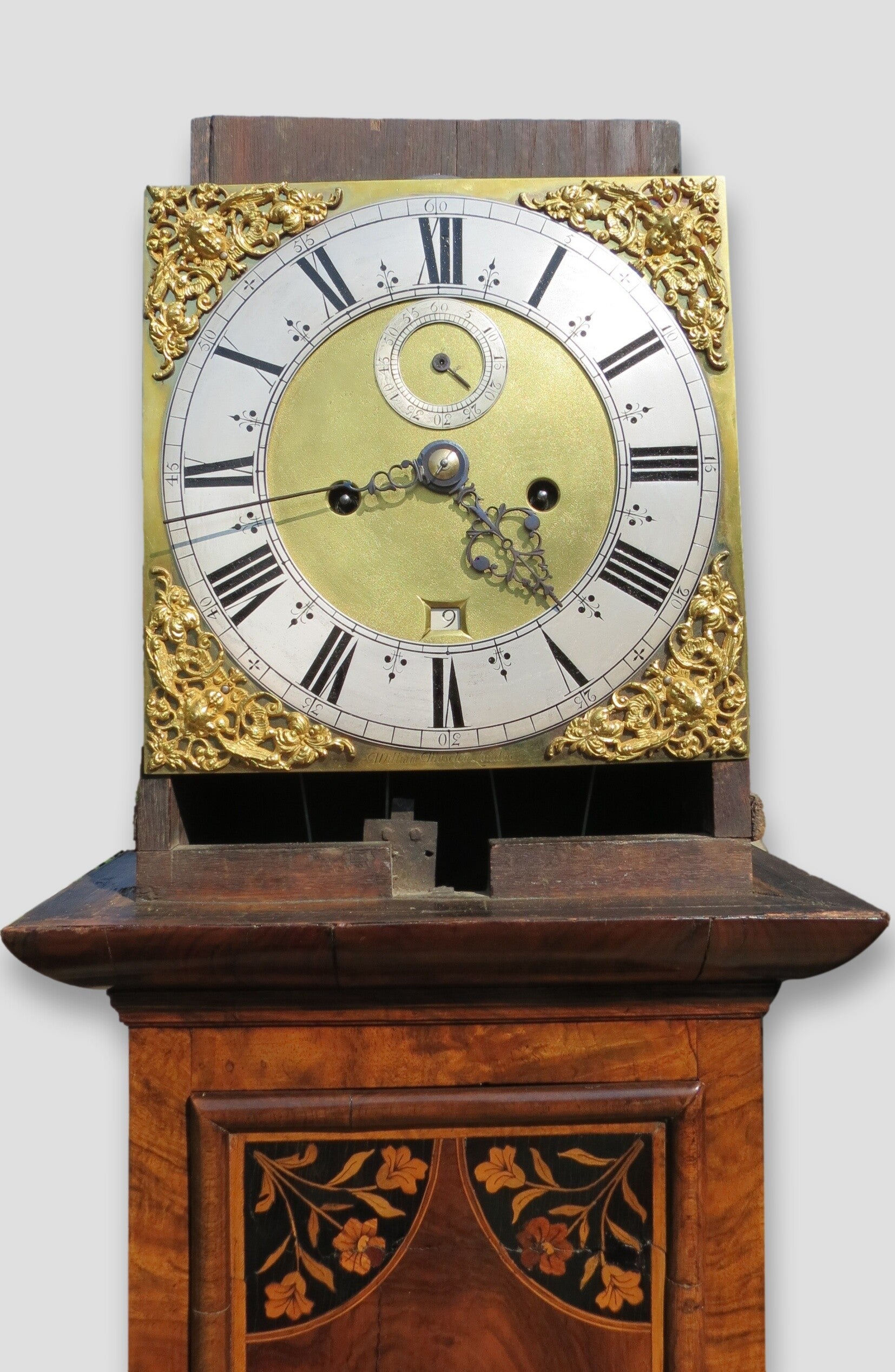
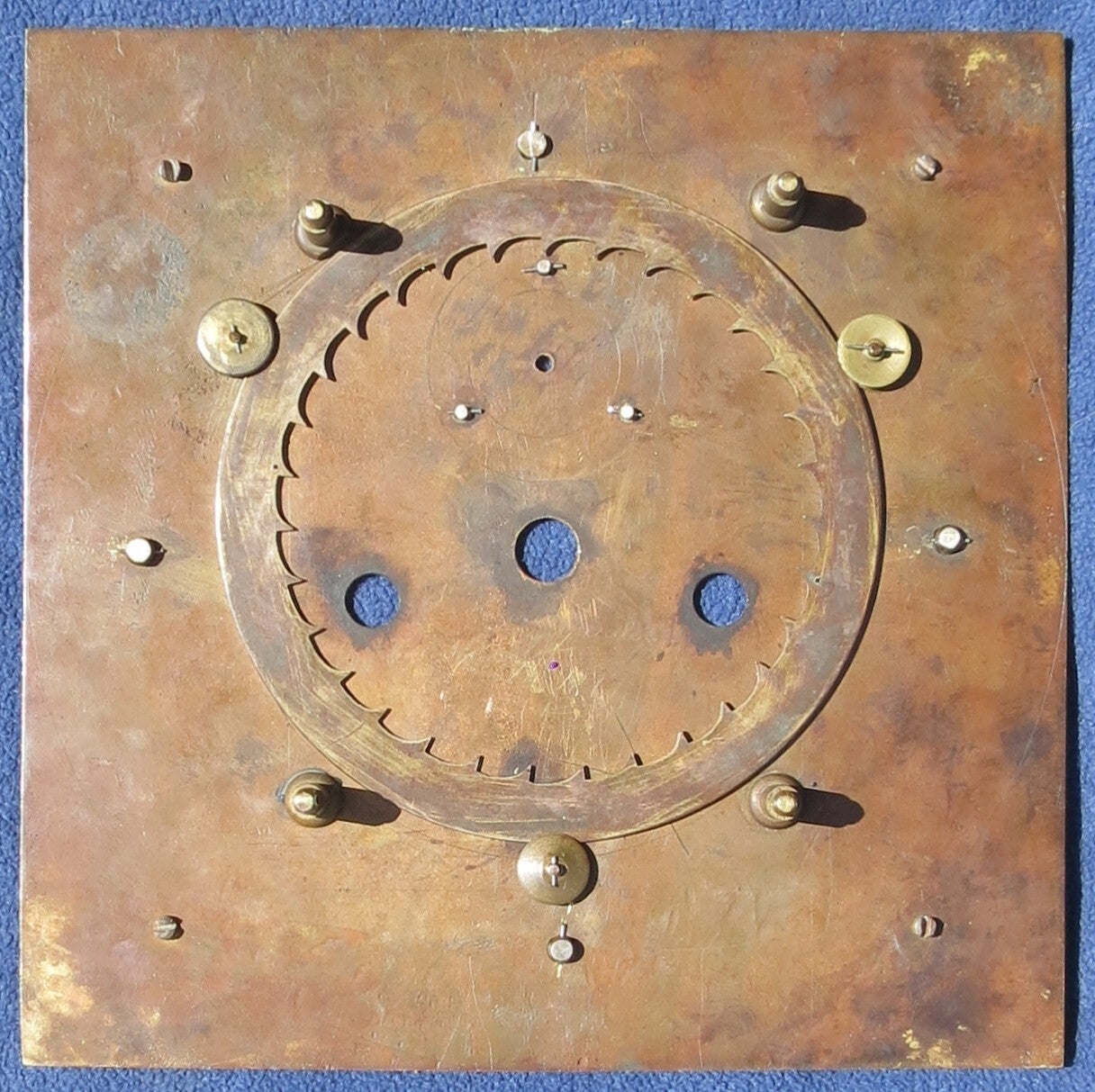
The dial plate measures 10 3/16 inches square. There are various features which would generally be considered earlier in addition to the size, the maker's name on the dial plate, the minute numbers inside the minute ring, half hour makers and also half-quarters. Chapter rings were becoming a bit wider by this time, those from the 1670s were often very skinny. The spandrels are typical of those used on premium clocks from the mid 1680s through to around 1700. The dial plate appears to be gilded and I have been very careful with this, just given it a very gentle clean. There are some slight marks and unevenness that would be expected from age. The condition of silvering and waxed numerals to the chapter ring is good.
The movement
A very good, well made movement as you would expect for this period. 5 knopped and finned pillars all latched to the front plate. Nicely shaped cut-out for the anchor/ crutch. Some good brass/ dome wheel collets. Outside countwheel is usually an earlier feature on 8-day movements. All looks nice and original, obviously had some work as they all have. Just required some minor adjustment and all working well. The seatboard appears to be original which is rare, has some older repairs which I think in themselves are antique. Unusual in having a 'stay' to support the movement to the backboard.
The case
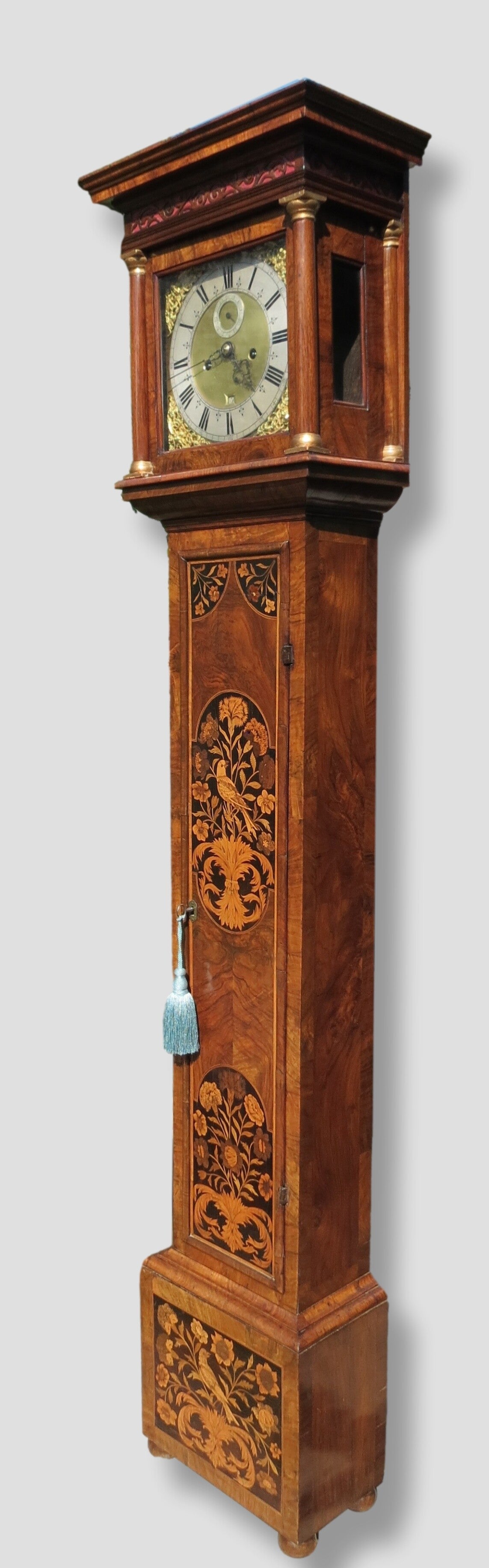
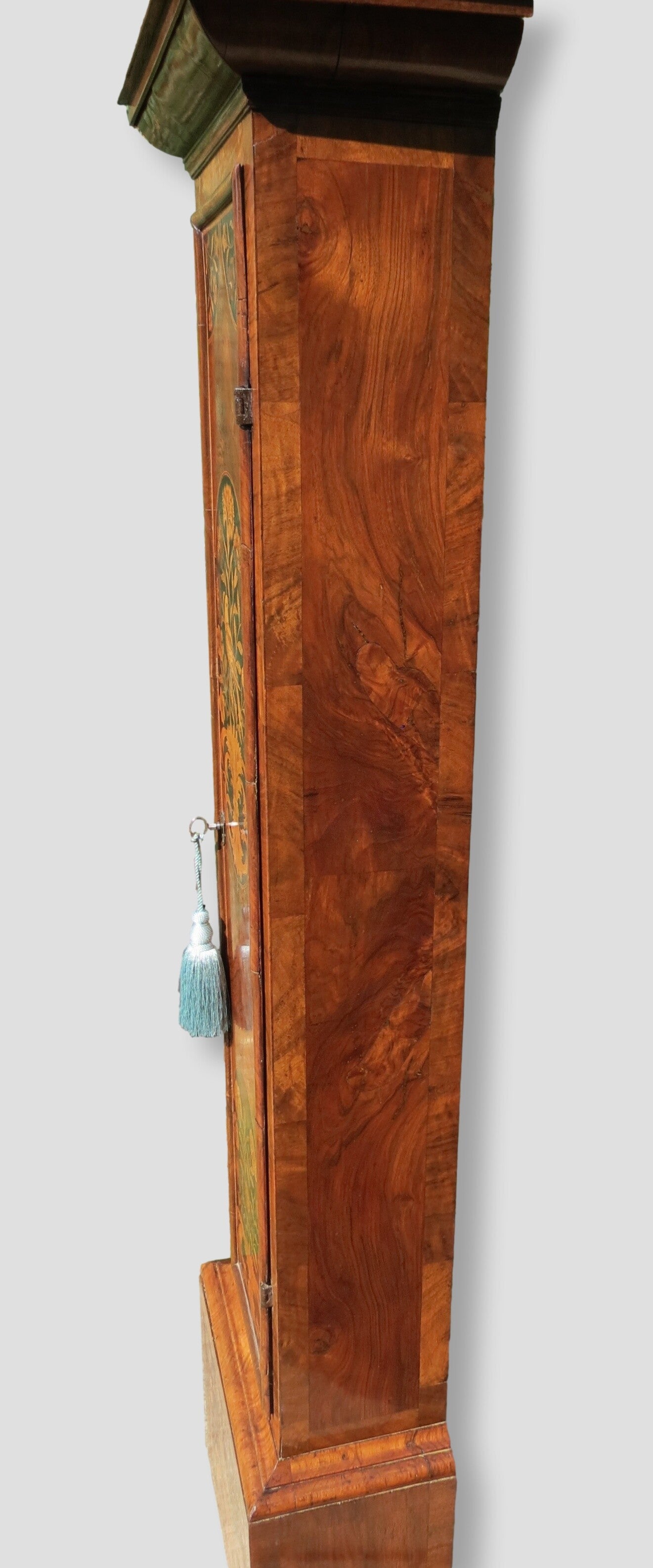
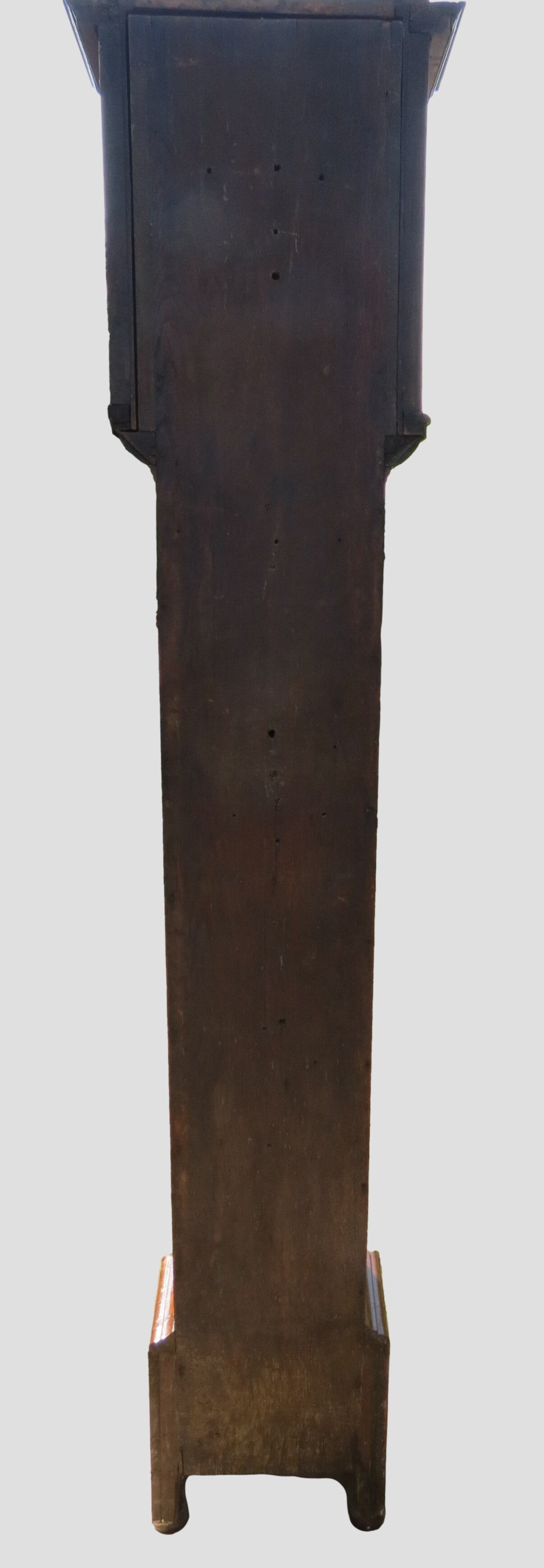
Quite small even for a 10 inch dial, the trunk width is a very slender 10 1/12 inches. Overall height around 78 inches.
Originally would have had a rising hood but converted a long time ago to slide forward. Rising hoods are quaint historical features but not really very practical... which is why most were converted, some I suspect have been converted back.
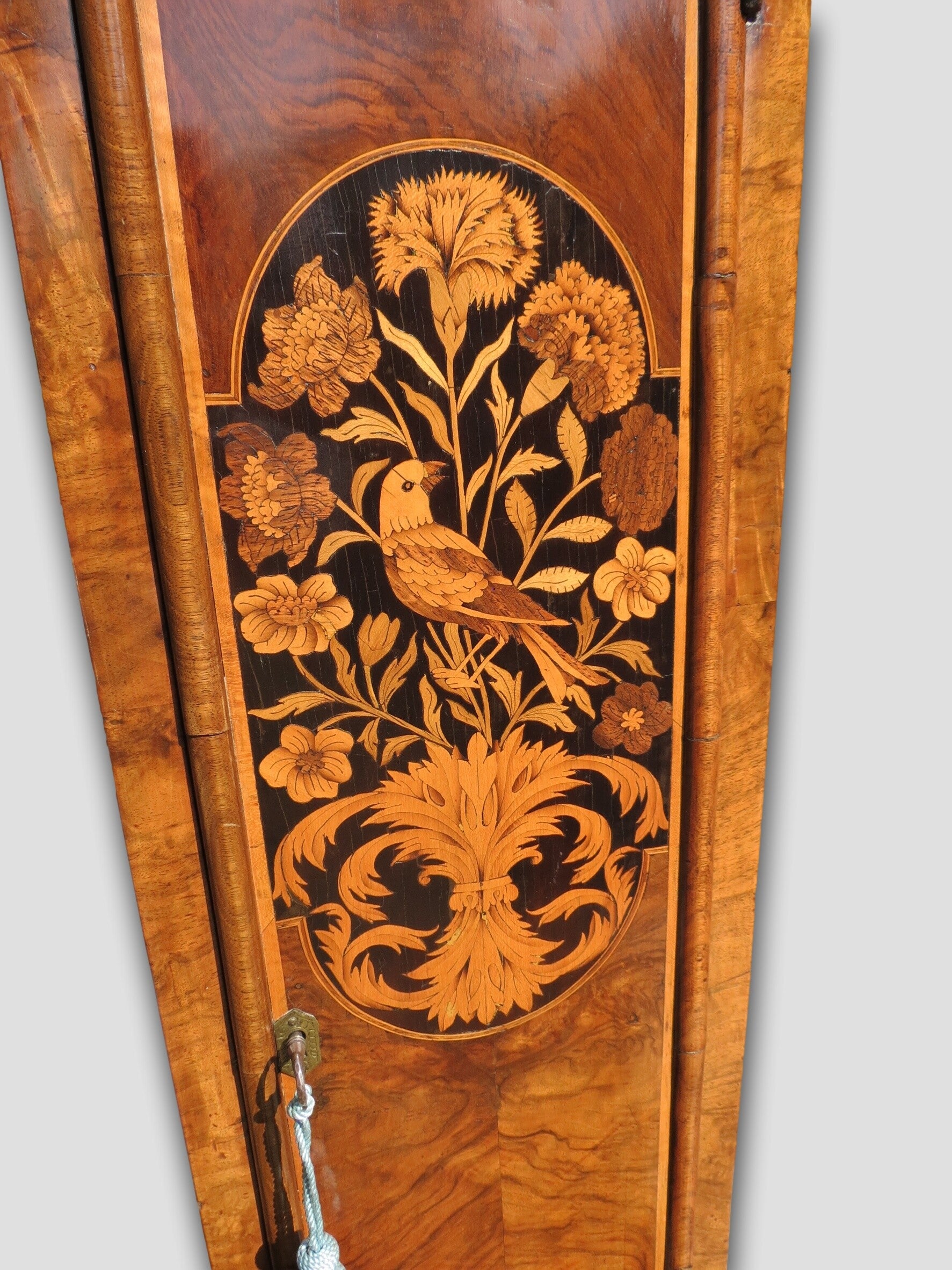
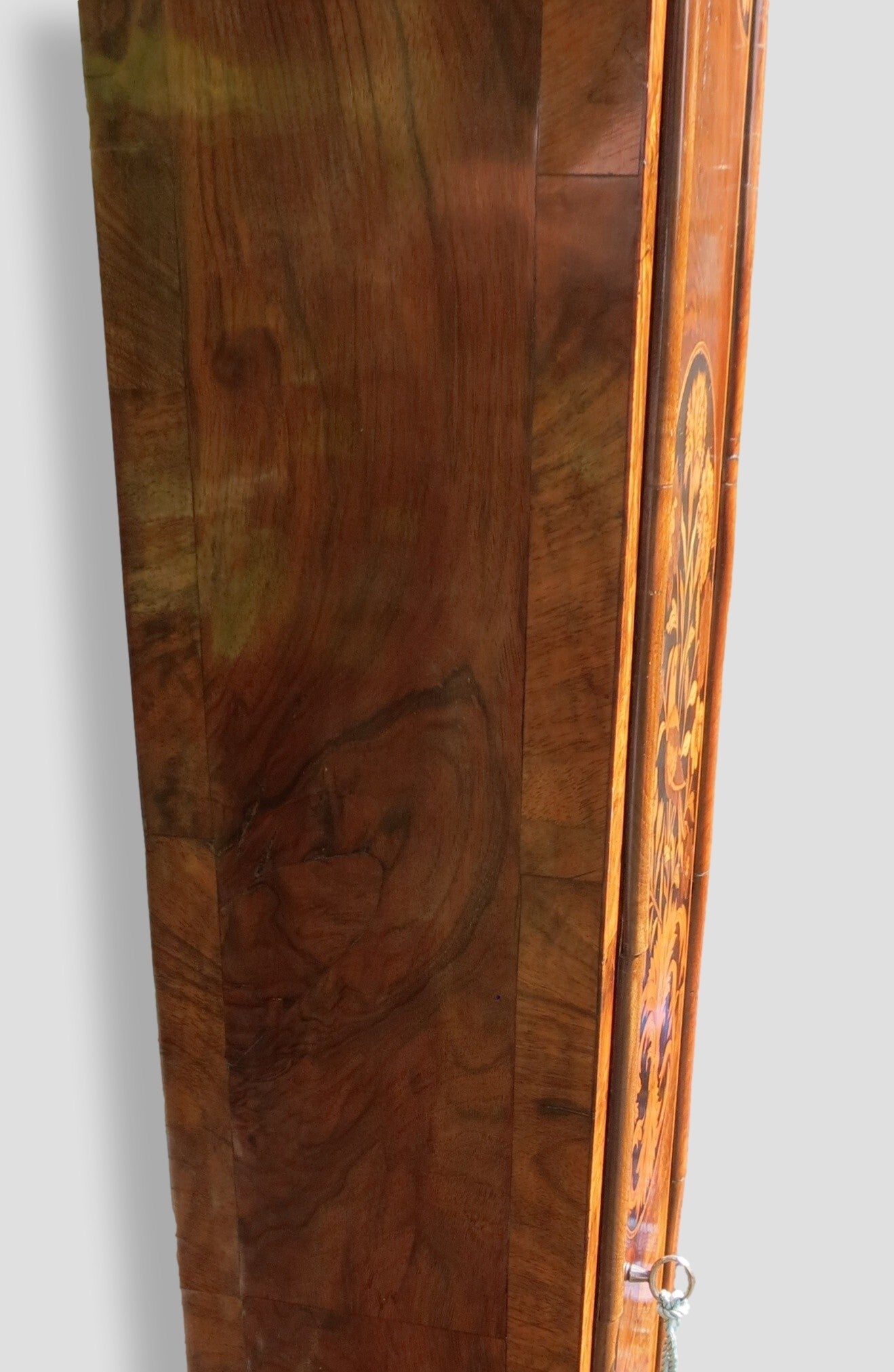
Quite small marquetry panels, the earlier style for marquetry cases. Beautifully portrayed birds in the centre trunk and base panels.
Excellent condition, I don't think they come nicer than this. Vibrant colours to the marquetry and a good polished appearance. Some slight trauma around the trunk door top where the wood moves over the years, it's always there on genuine marquetry cases, if it's really bad it can detract but this is good.
Working lock and key.
Hood has silk backed fretwork to front and sides.
Values
The paperwork shows that this was purchased for £3000 in 1970, equivalent now around £62,000. Insurance valuation at the same time was £7,000, now well over £100k. At that time the average UK house price was £4,500, you could buy a brand new Jaguar E-type for £2,500. Well just goes to show how times change. These genuine original golden age clocks are excellent value at the moment, a good time to buy I think.