

Robert Warr, London. Circa 1705. A fine month going longcase clock with 6 pillar movement, figured walnut case.
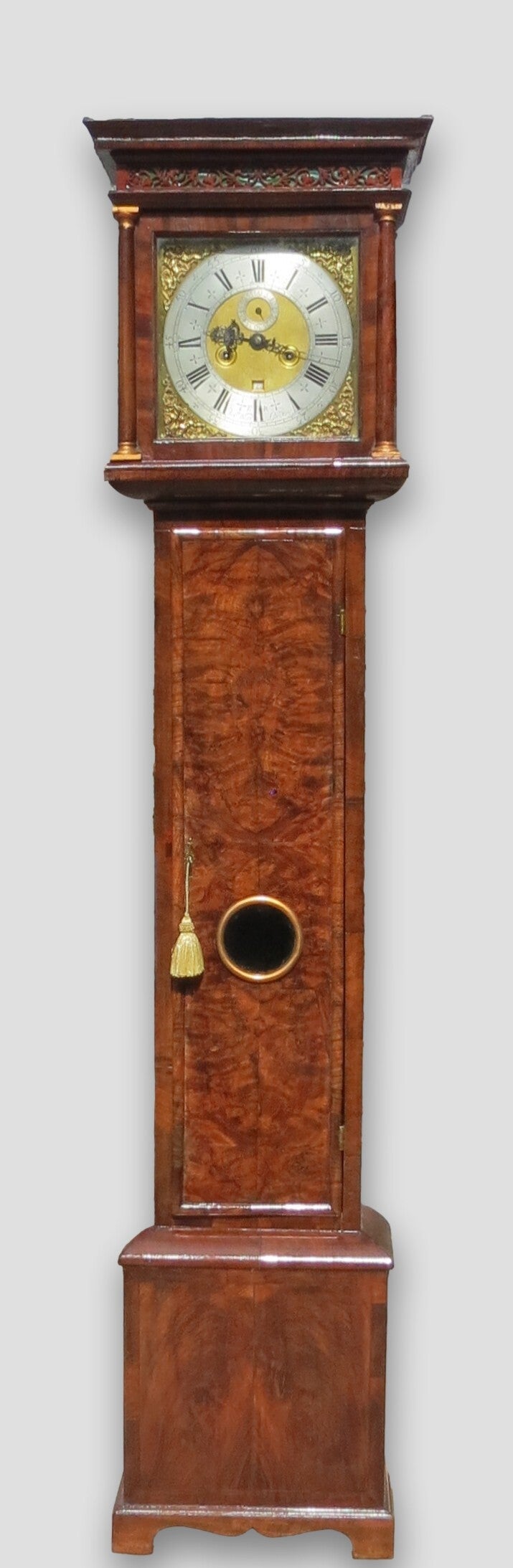
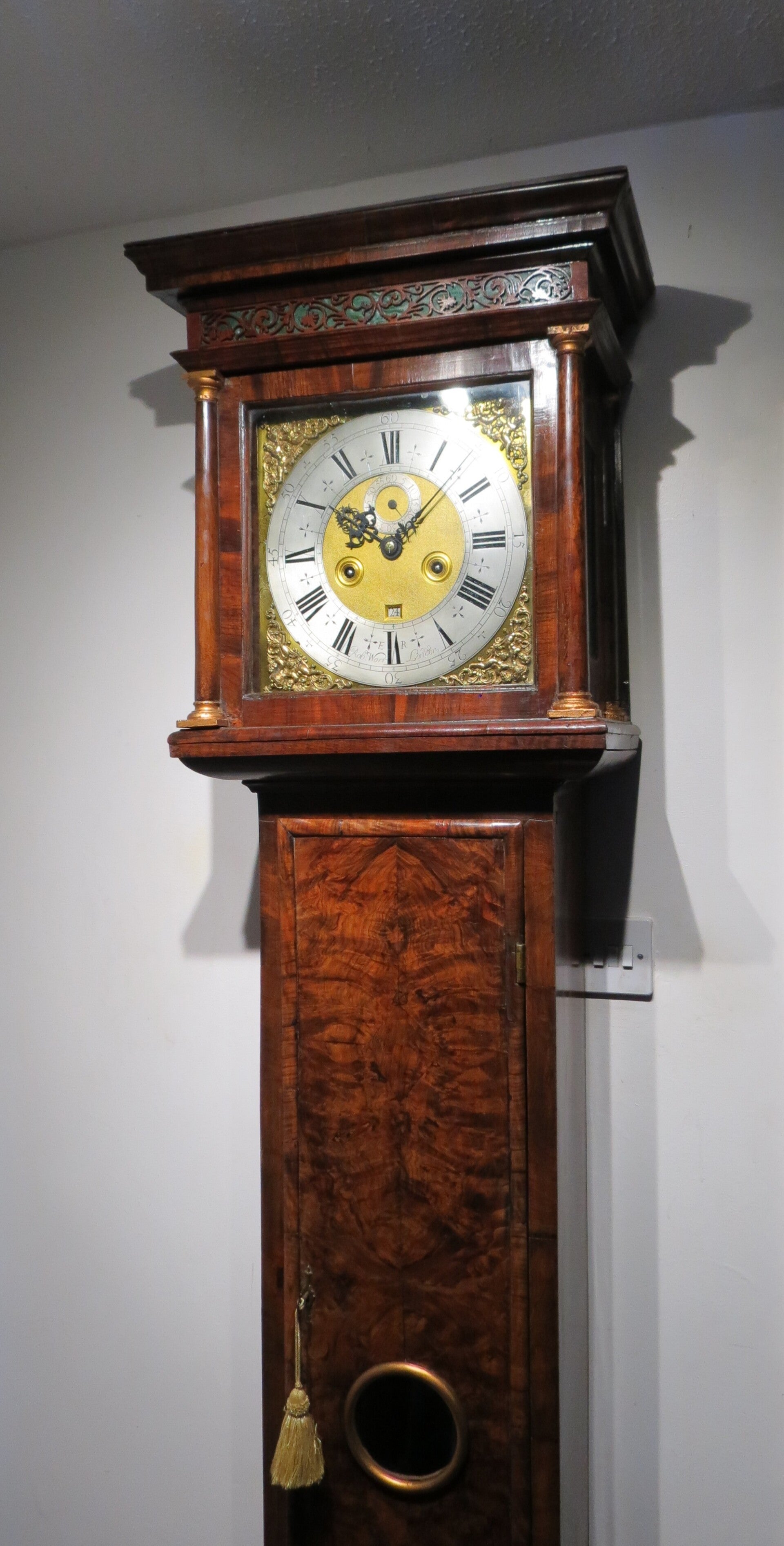
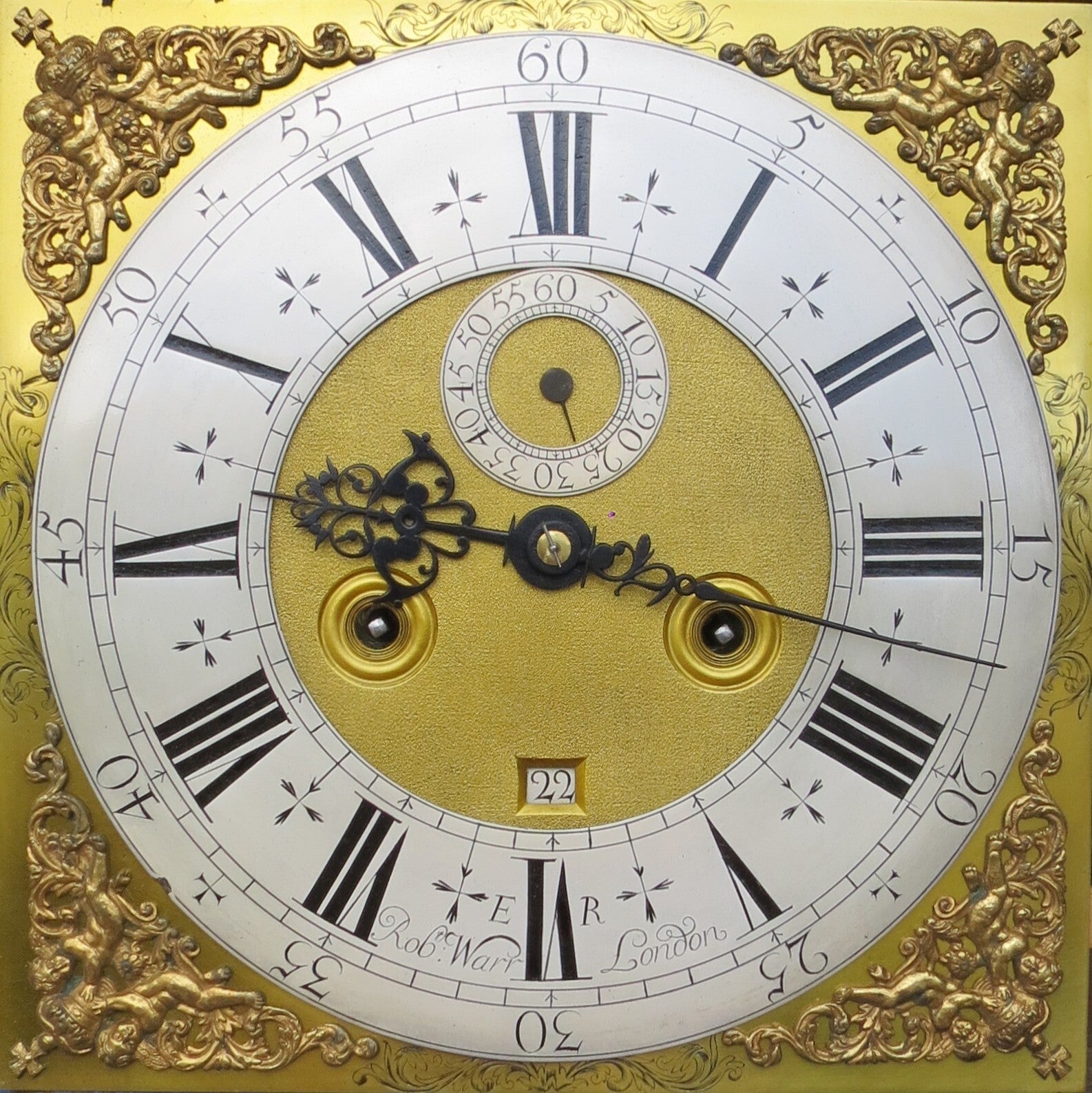
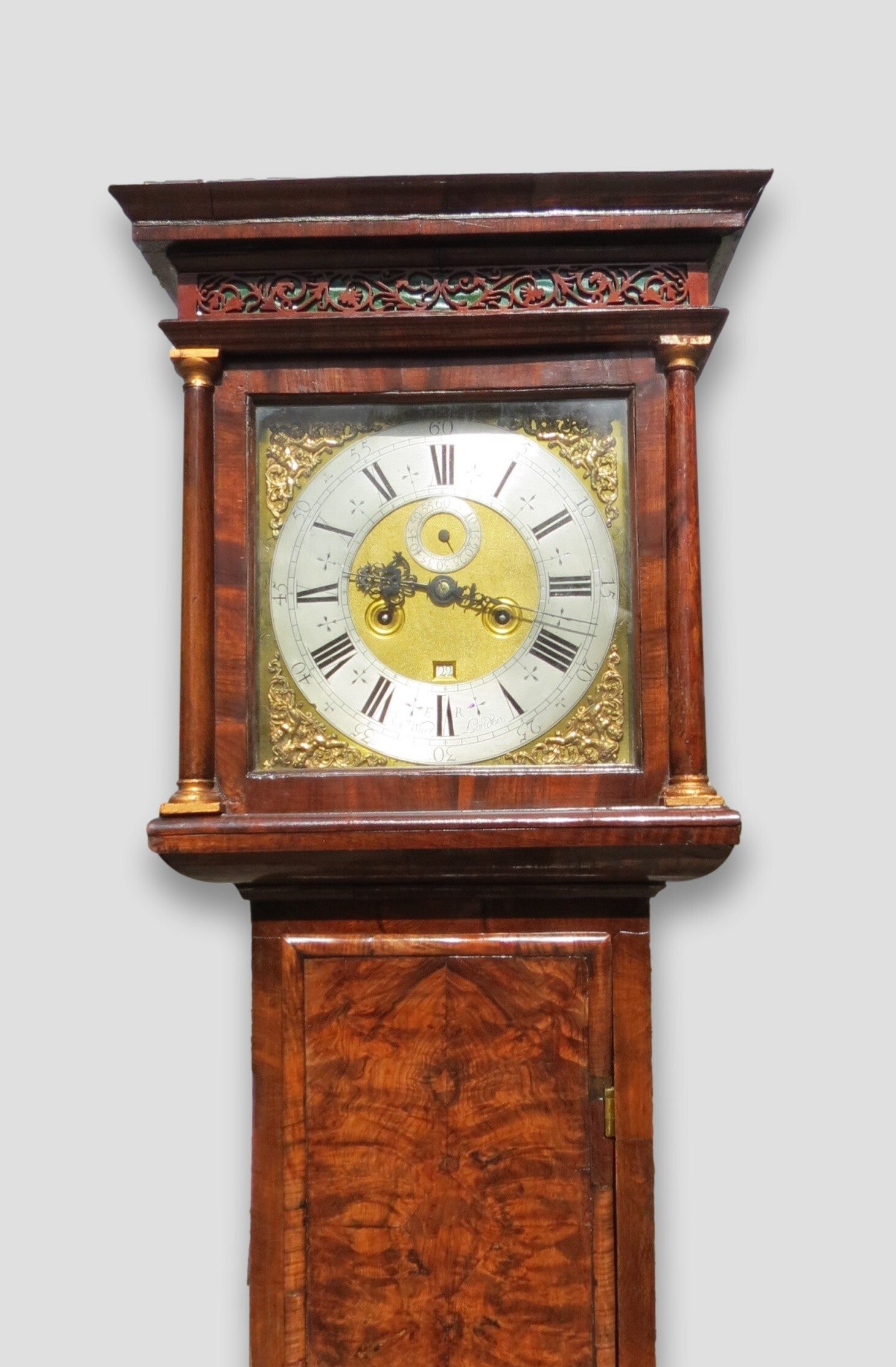
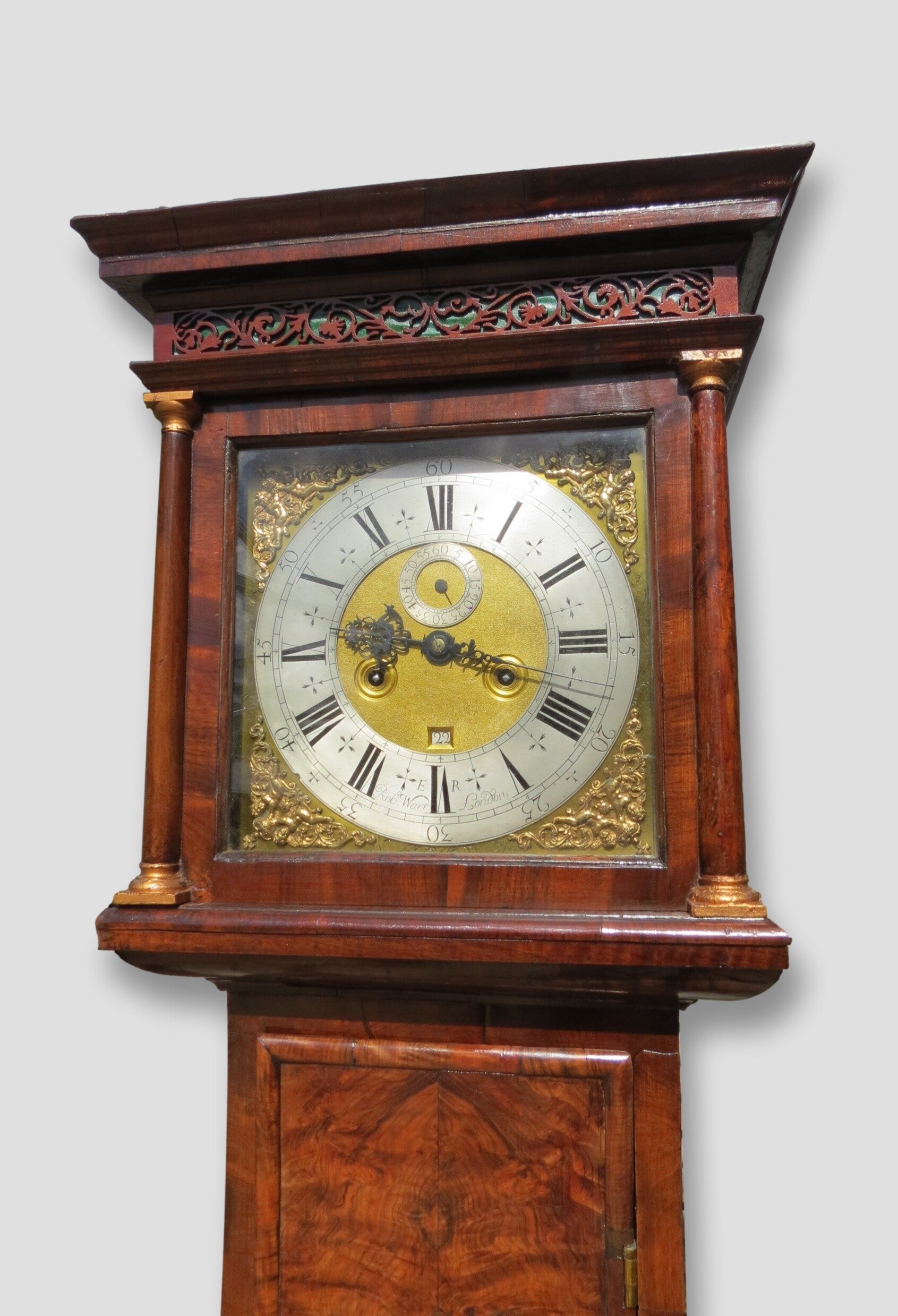
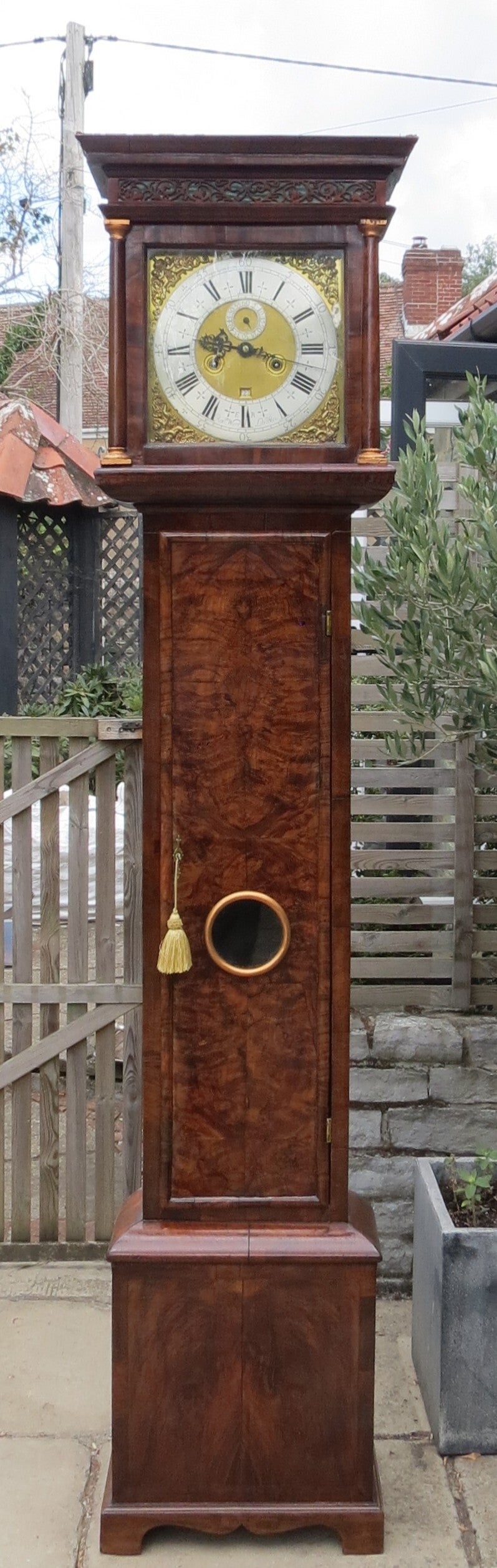
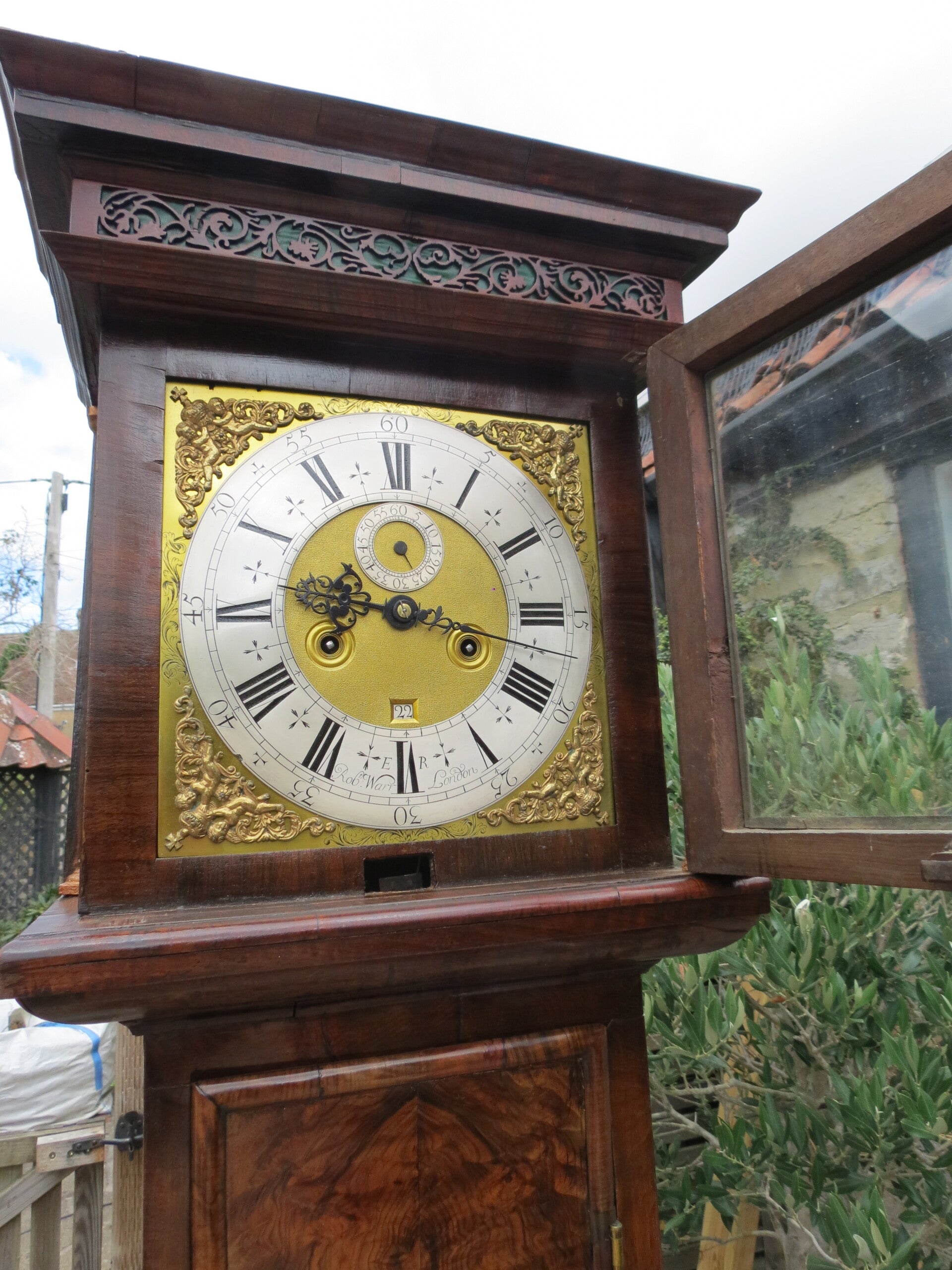
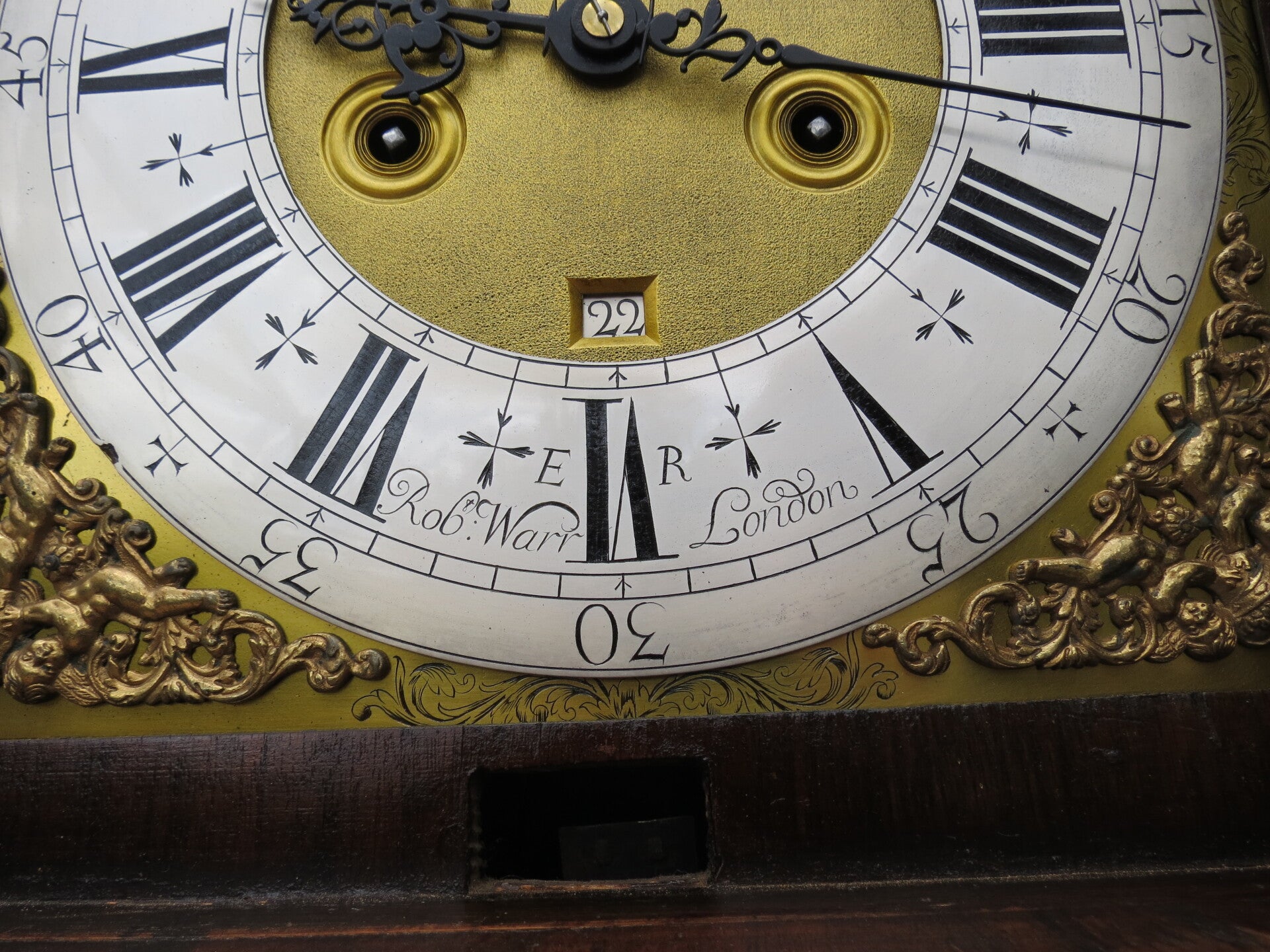
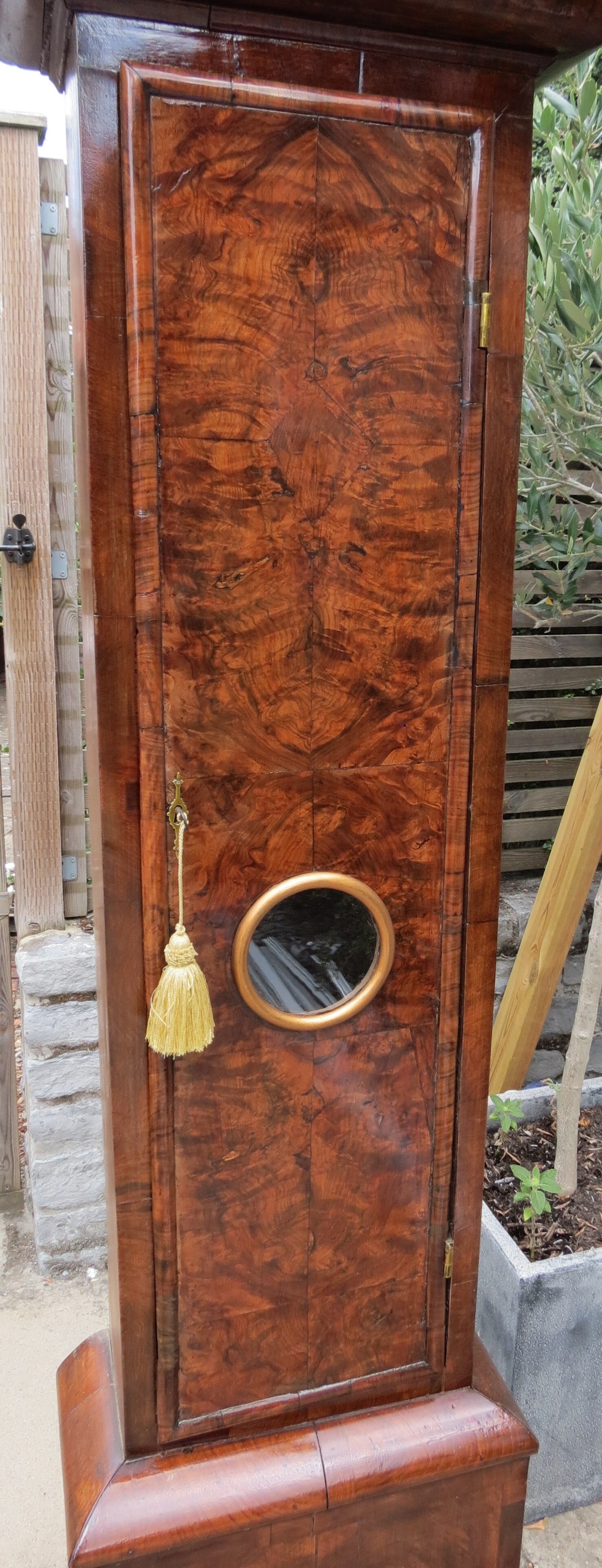
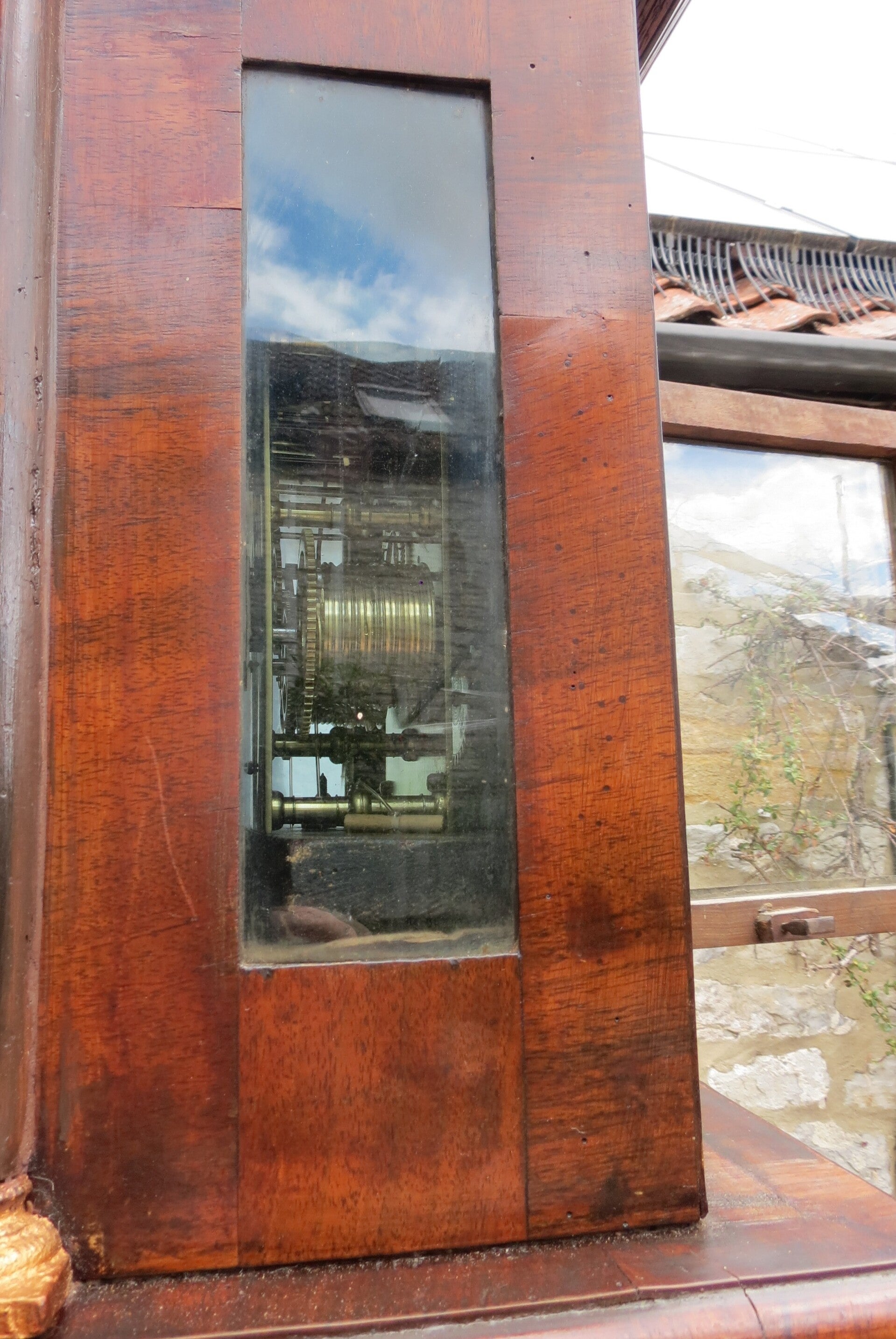
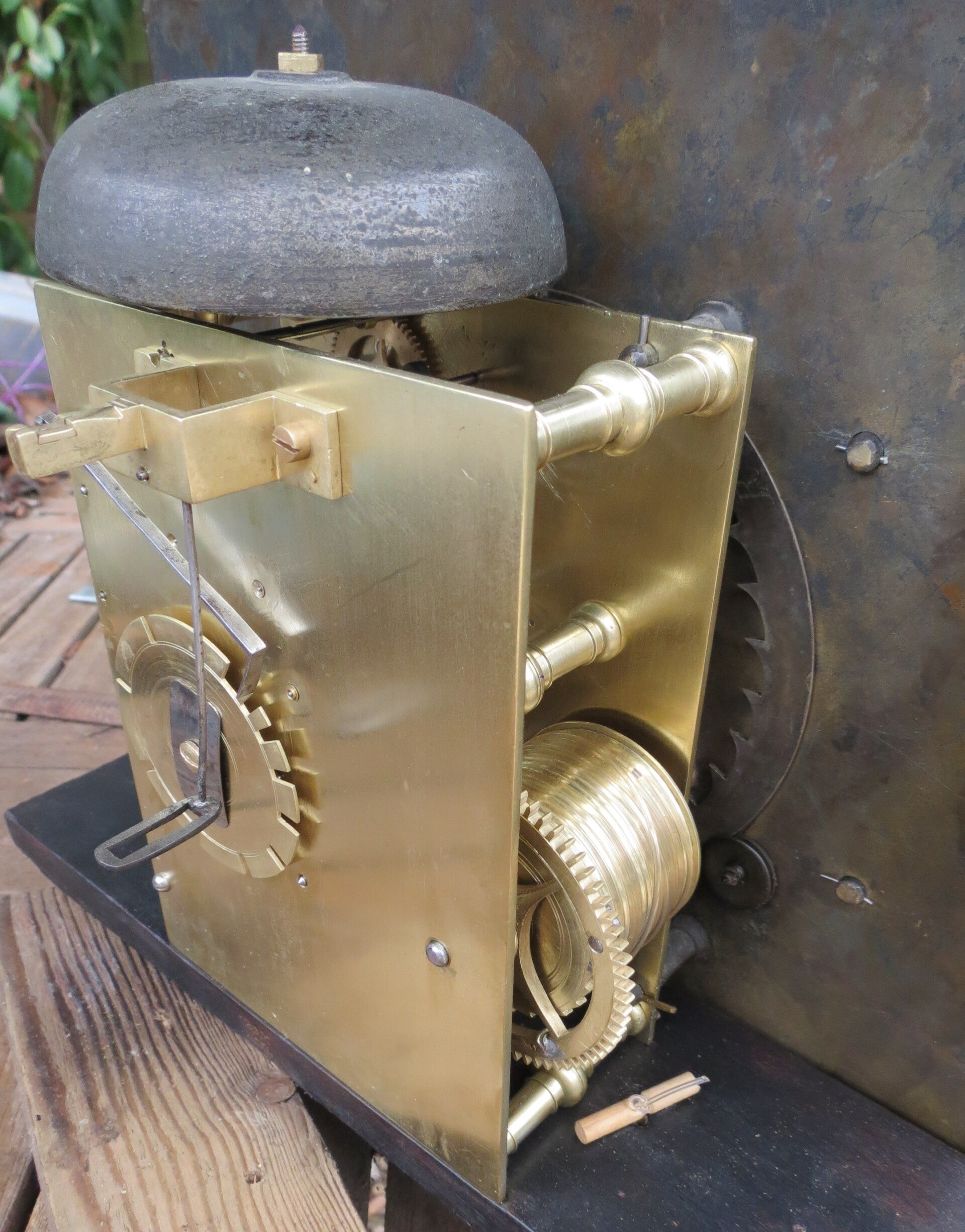
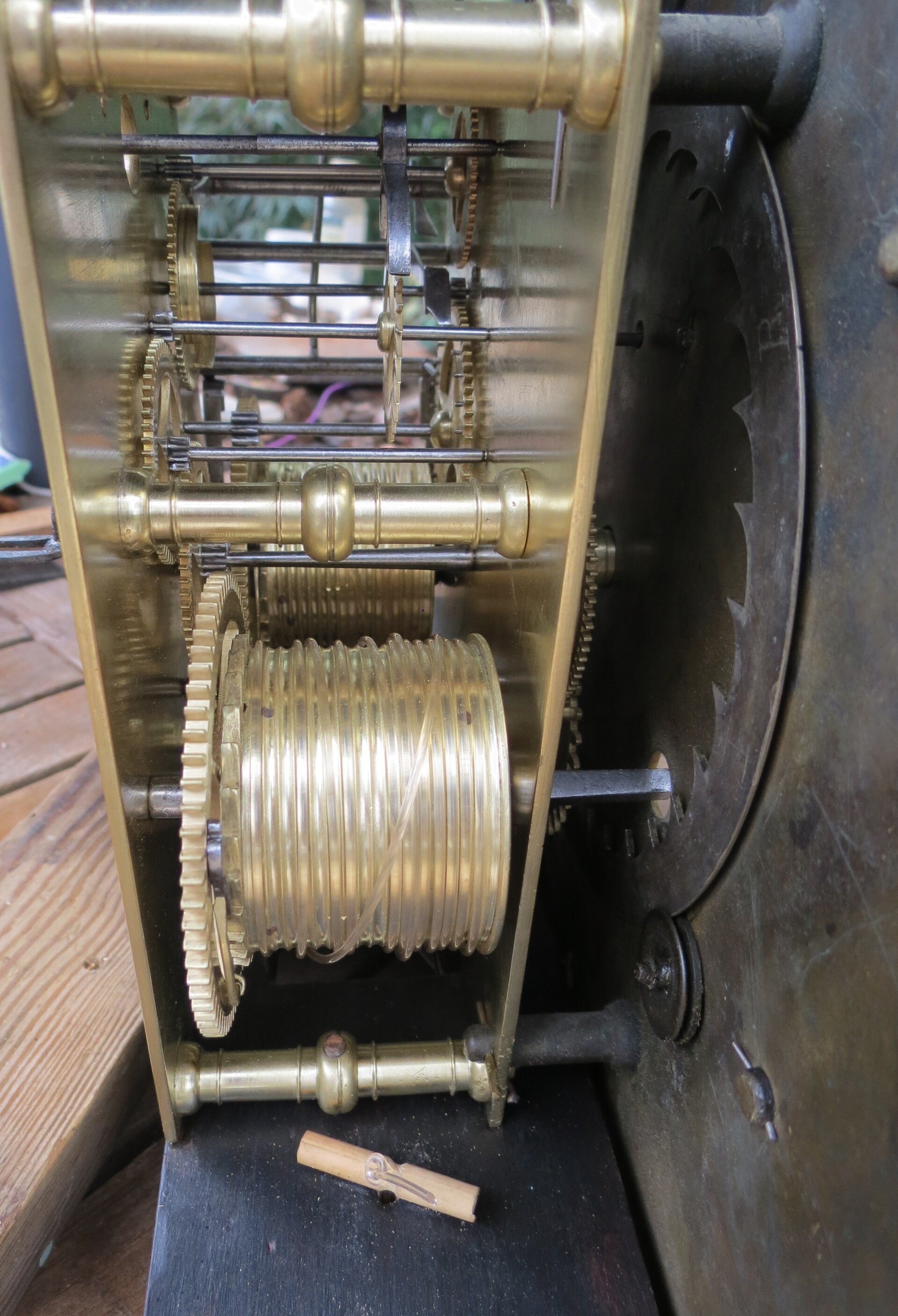
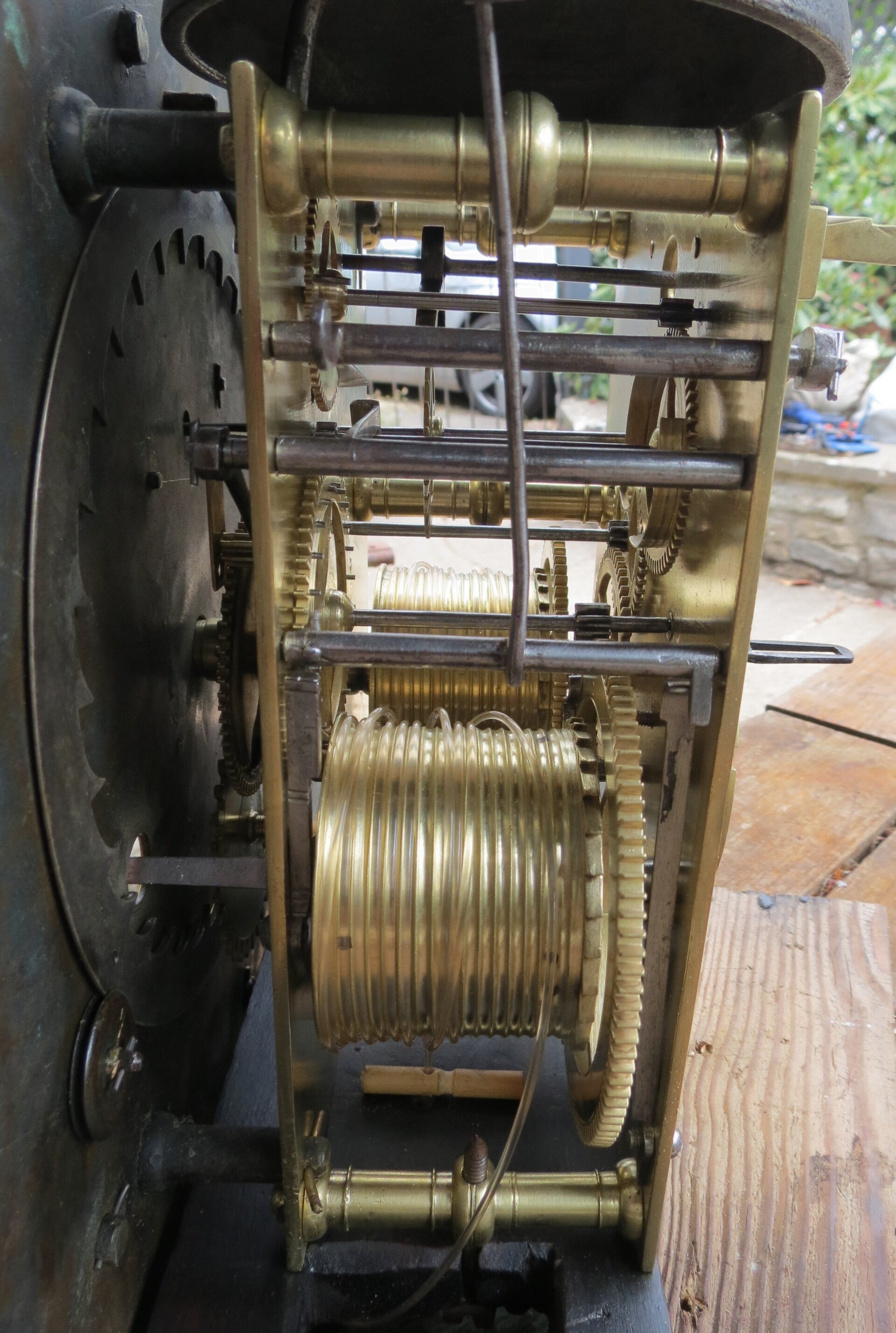
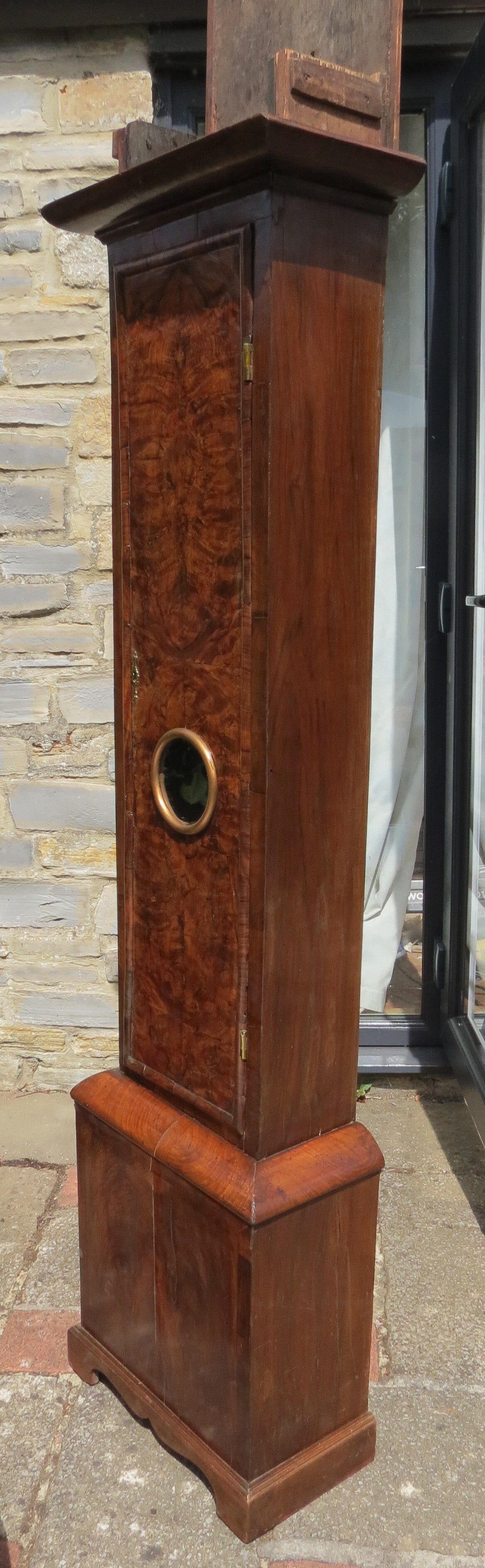
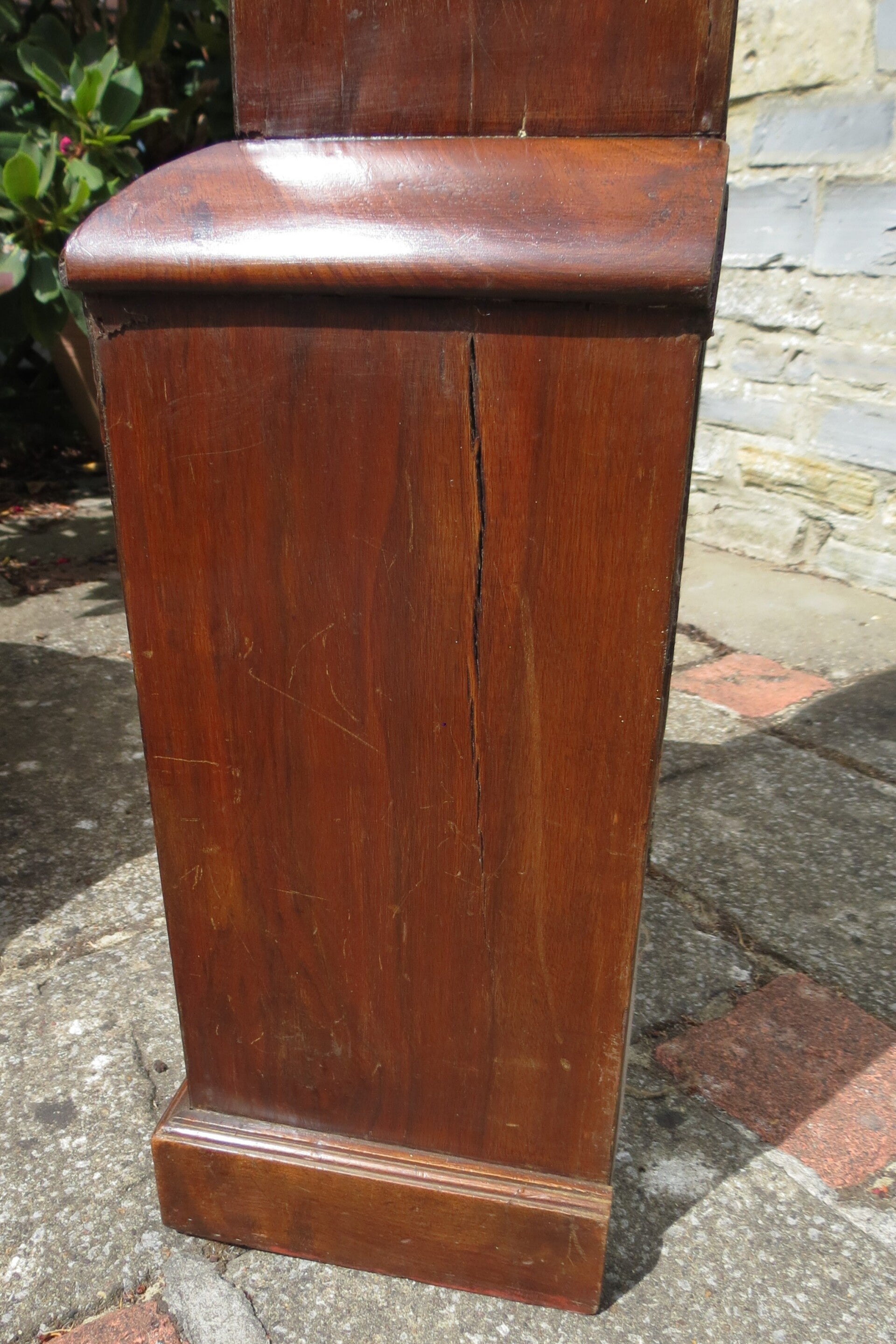
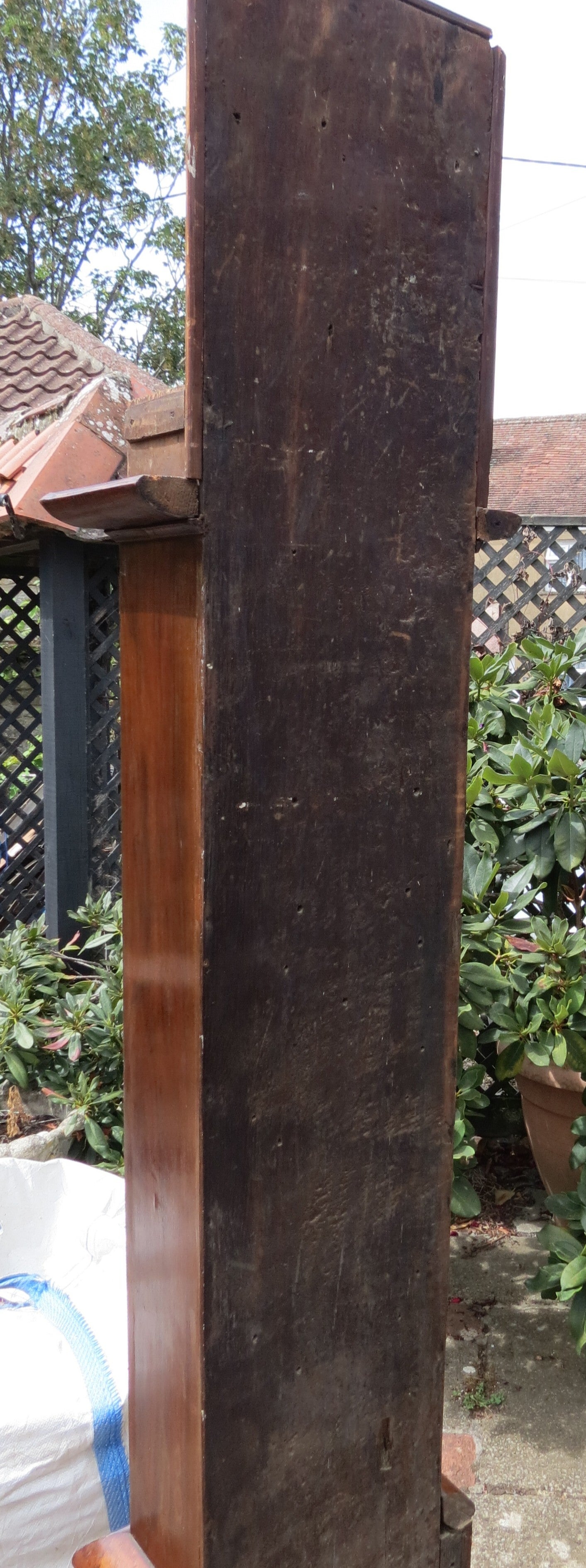
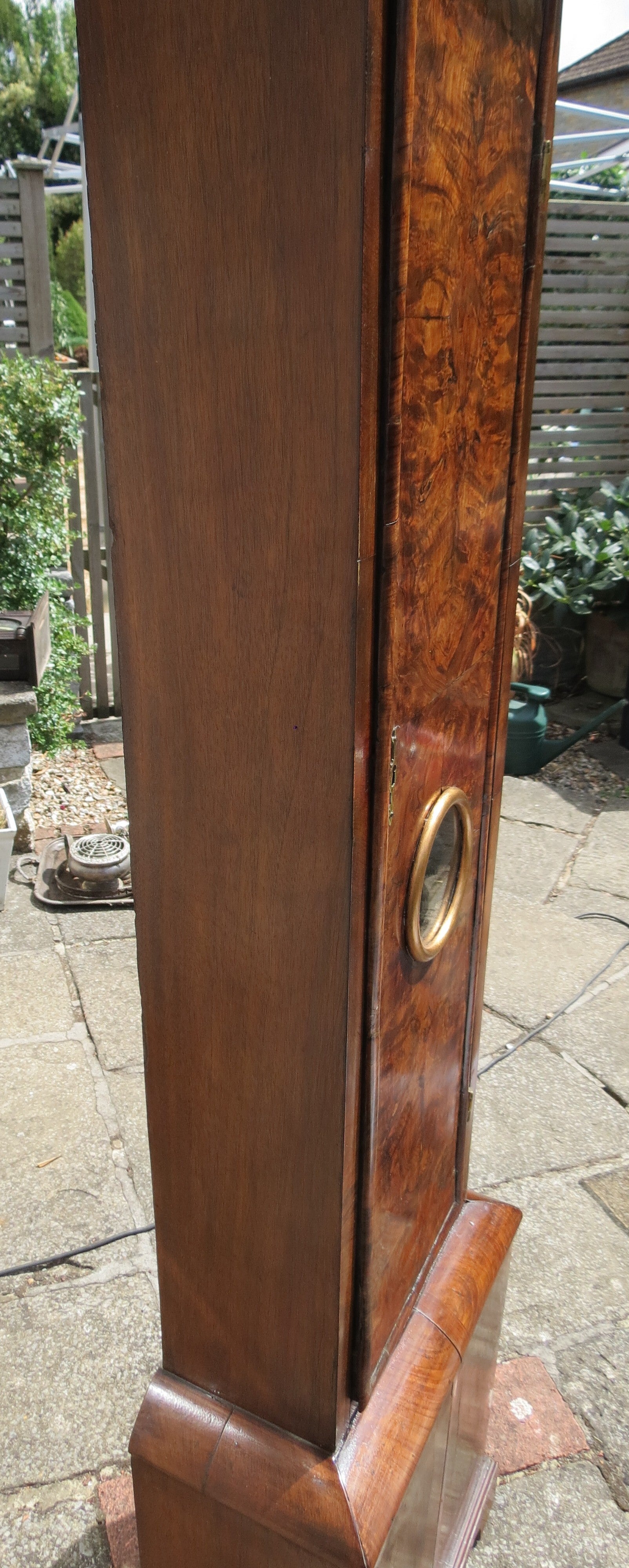
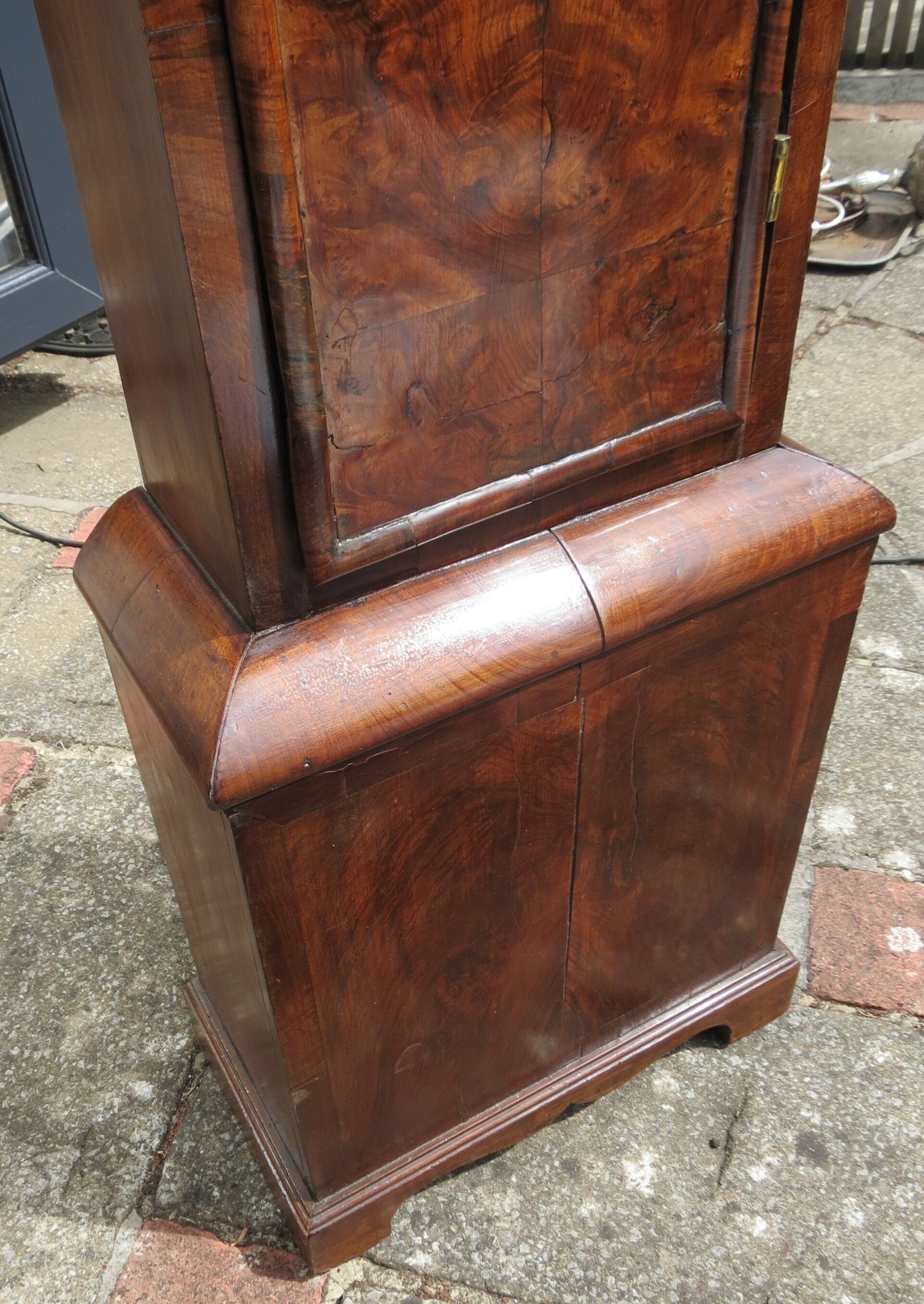
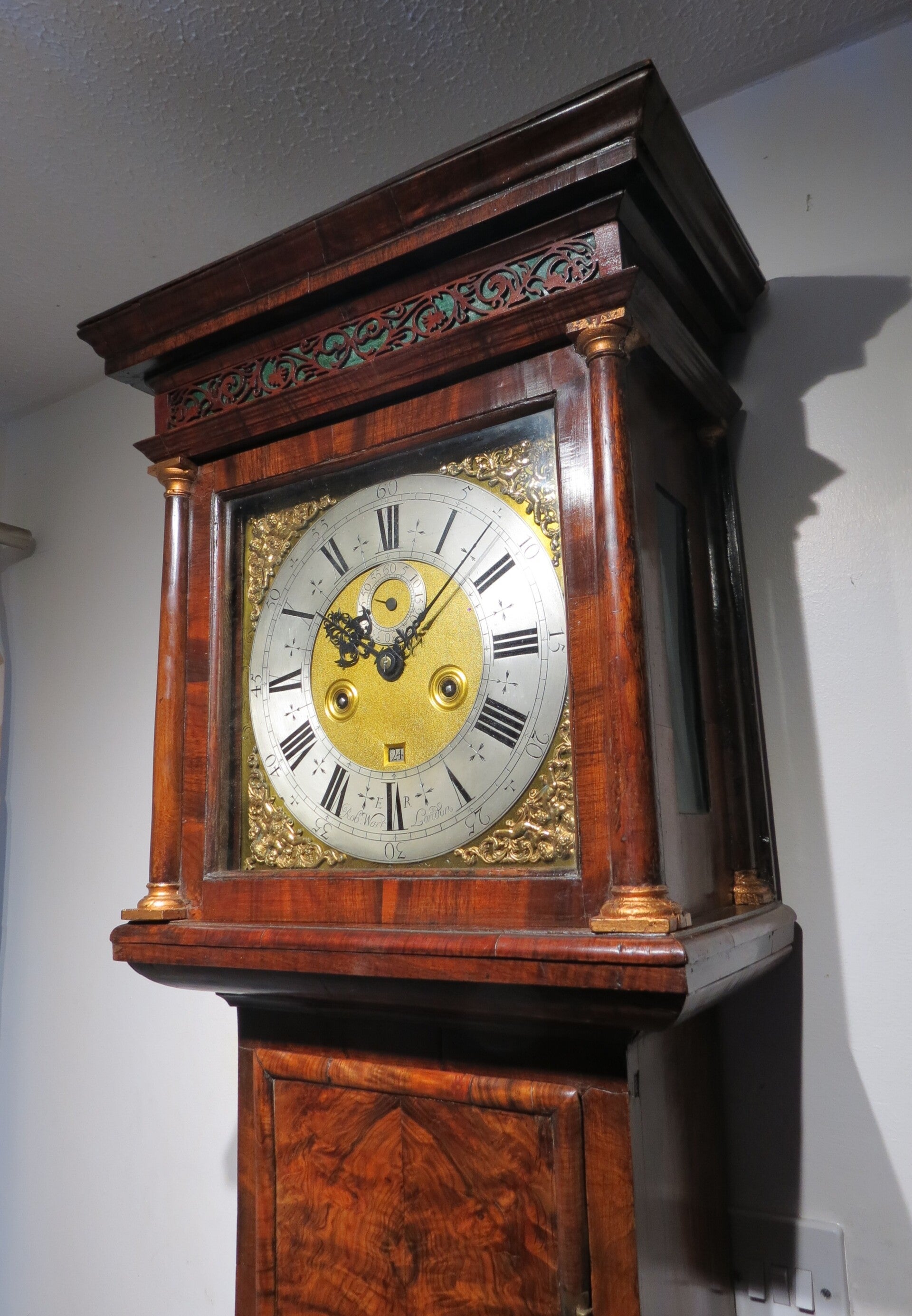
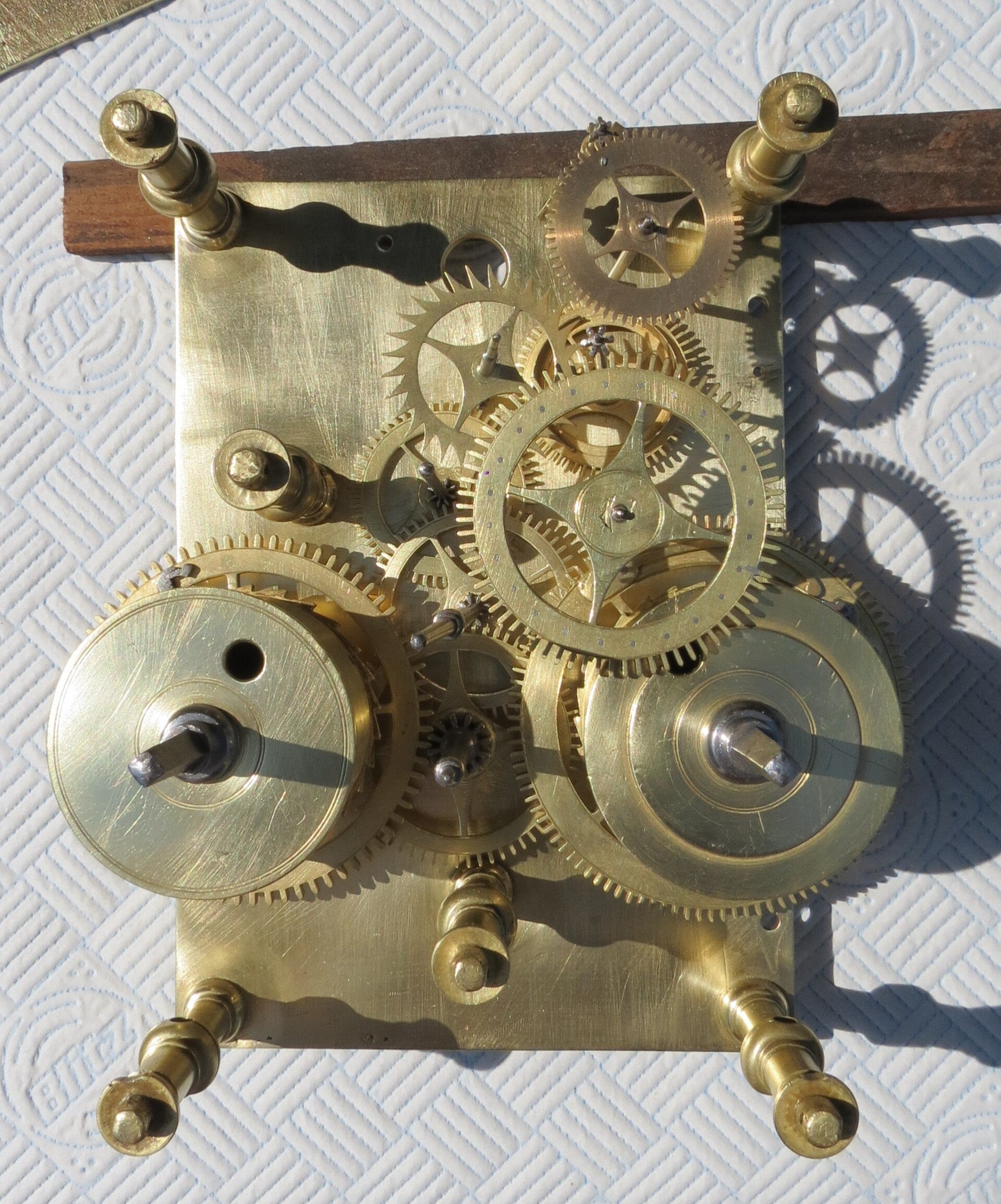
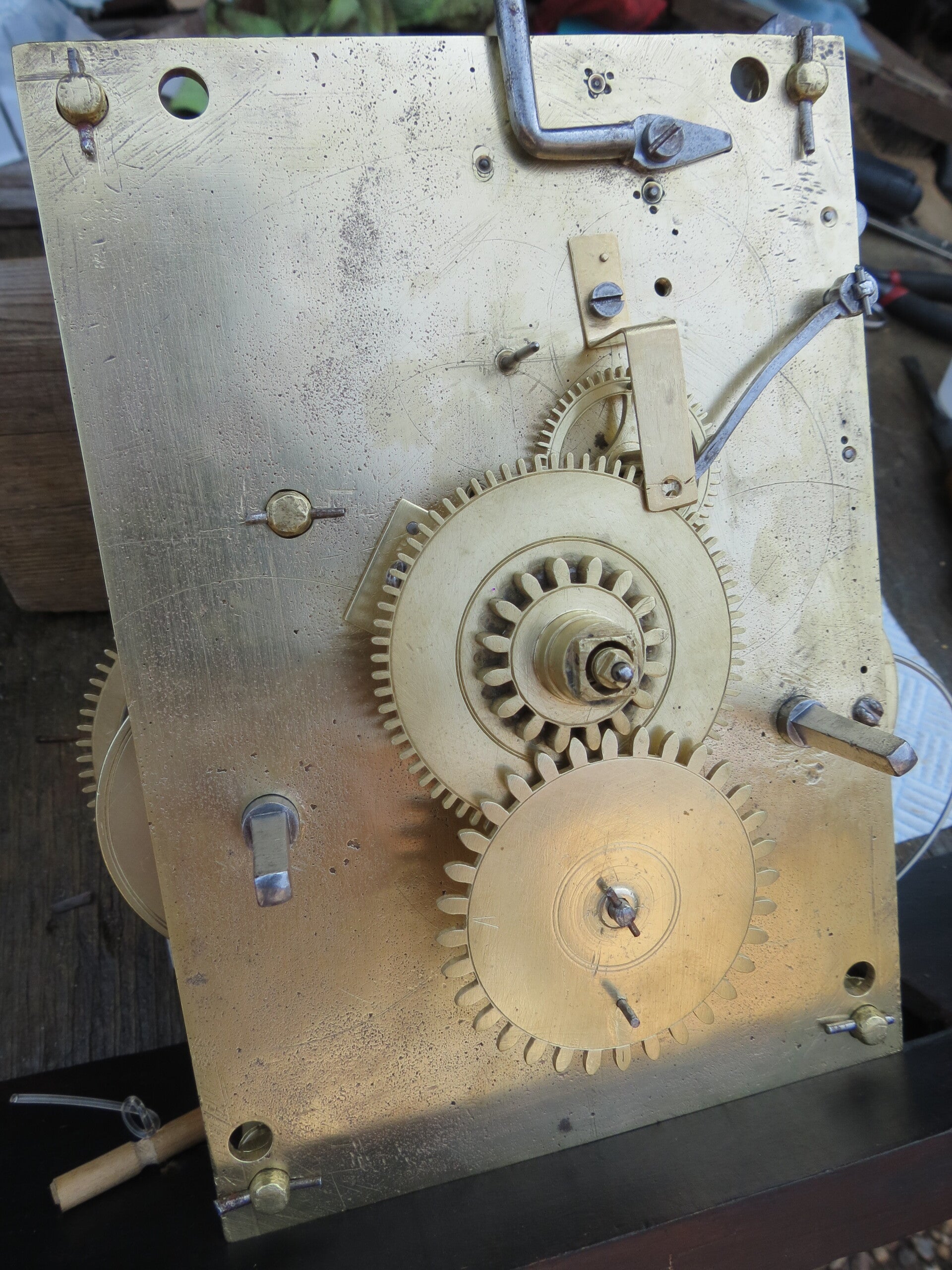
A fine antique month going longcase clock by Robert Warr, London. Circa 1700-1705. The 12 inch square dial with finely matted centre, silvered chapter ring, gilt spandrels. Finely pierced steel hands. The movement with 6 knopped and finned pillars, transposed trains (strike on right) in the Tompion/ Quare manner, both trains winding counter-clockwise. The walnut case with highly decorative burr veneers to the long trunk door, 'D' mouldings to door surround, convex base and throat mouldings, silk-backed fretwork to hood front. The hood possibly originally rising but converted to slide forward. Original hood lock still intact. Original heavy month weights.
The clock is complete and fully working, movement has been properly cleaned and serviced.
The dial and movement are in excellent condition, the case is basically sound and has good colour and polish, numerous age-related defects, wood shrinkage/ movement etc, please study the pictures to assess condition. These original walnut cases are few and far between now, most of them are long gone and the movements put in later cases.
Overall height is just under 86 inches.
Further notes
Premium longcase clocks in London, early 1700s
The market for premium longcase clocks was mainly 8-day/ week running clocks, seen as very expensive status symbols as well as their obvious practical application. The next level up, far rarer, was for month going clocks. Instead of the great wheels rotating once every 12 hours (8-day running) they were geared to rotate once every 48 hours. With normal weight drop (16 turns) this gives a duration of 32 days. Some even longer duration clocks were made (3/6/12 months) but these were very specialised items and not really for the domestic market.
There are always exceptions but from around 1700 the dial size for 8-day and month going London clocks became generally standardised at 12 inches square. This fashion continued until around 1720 when arch dials dominated.
The cases made to house these clocks were also undergoing fashion changes. The early 1700s saw the end of the marquetry era, these had evolved from earlier 'floral' types to 'arabesque' and 'seaweed' designs. Lacquer/ Chinoiserie cases also started to become fashionable. Walnut was still the dominant fashion in English furniture so its use continued in clock cases until mahogany took over from around 1750. Some makers (notably Tompion) tended to prefer walnut cases, choice burr veneers can produce very beautiful pieces of furniture. Sadly these early walnut cases are not the most durable and many have been lost over the years.
Thoughts on attributing a date to the clock
The stylistic features definitely point to a date between 1700 and 1710. Further accuracy in dating becomes a little more difficult because there is the usual combination of earlier and later features. Robert Warr was freed of the Clockmaker's Company in 1701 so known to have been working through this period.
Dial size, spandrels, ringed winders, etc all support 1700 to 1710. Possibly closer to 1700 would be engraved patterning between the spandrels, convex base and throat mouldings on the case.
The movement
Whereas 8-day movements had become fairly standardised by this time, month movements can show more variation in the way they are set out and operate. This one is a very substantially built example with 6 pillars and transposed trains both of which wind counter-clockwise.
The majority of 8-day London clocks have 5-pillar movements, it would then seem natural that a month goer with the extra wheel-work should have 6 pillars but not always the case. In my experience though the best month movements have 6 pillars.
Transposing the trains so that the strike is on the right is a model often used by Tompion/ Quare. Perhaps this was considered a more favourable layout with the extra wheel-work involved.
Both trains wind counter-clockwise, this is a necessity for the going train but not for the strike. It seems more elegant to have them both wind in the same direction though.
The strike is governed by an outside countwheel on the rear plate, this is the normal format for month going movements until rack strike became the norm a couple of decades later.
The movement is in very good condition, some older repairs as you would expect. Signs of older 'punched' repairs which have then been later re-bushed, you often find this in genuine old movements.
The case
Stunning burr figure to the long trunk door and a real 'glow' to the colour which I hope the pictures convey. The proportions are essentially similar to older, pre-1700 cases housing 10 or 11 inch dials but obviously up-scaled, the height then becoming a still manageable 86 inches. The trunk door retains a lenticle to see the pendulum swinging. The hood has detailed silk-backed fretwork above the dial, something you tend to see on the best quality clocks.
The hood door retains its original bolt and 'hoop' so that it can be secured to stop anyone tampering.
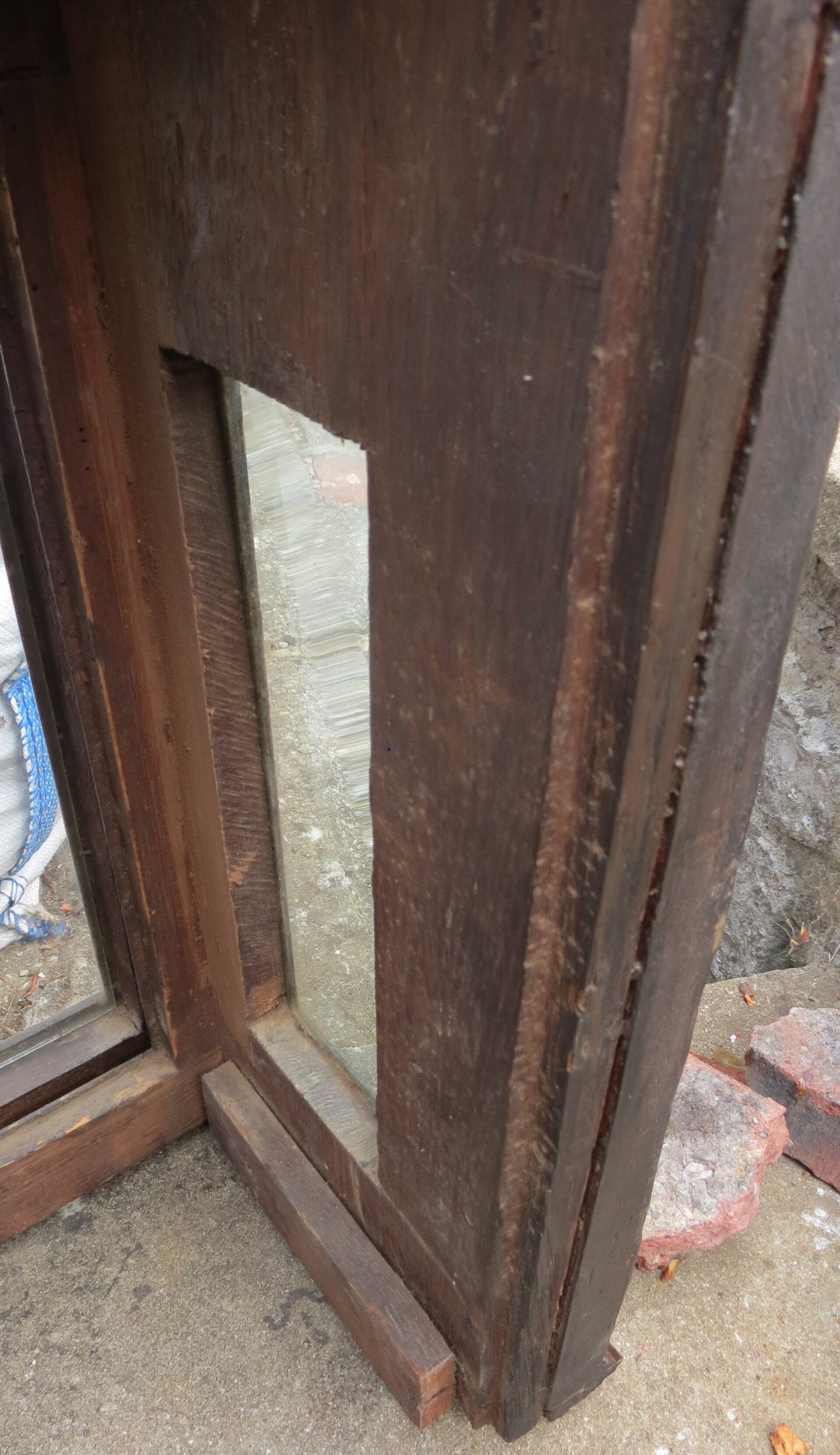
There is a pronounced 'skirt' under the lower hood moulding which is unusual and may indicate the hood was originally made to rise, there are also channels to the rear which may support this. Conversely there is a 'mask' for the dial (a rising hood would not have had this but could have been added later), also the clock seems a little tall for a rising hood to be practical.
Age takes its toll! The old wood has moved around a bit which you can see in the fit of the trunk door, the lower section has moved out a bit and and a slight inward bow, top to bottom, in general. The door still closes and locks correctly though. Cross grain mouldings are historically correct but over time internal stresses make them split, crack and bow outward a bit, this gives the characteristic appearance of genuine old walnut cases. The base wood has also moved a bit where the walnut veneer is joined at the centre, also a split to the side. Numerous scuffs and marks in general. Still a very attractive case though.