

Joseph Jackeman London Bridge. Circa 1705. A fine month going longcase clock in beautifully patinated figured walnut case.
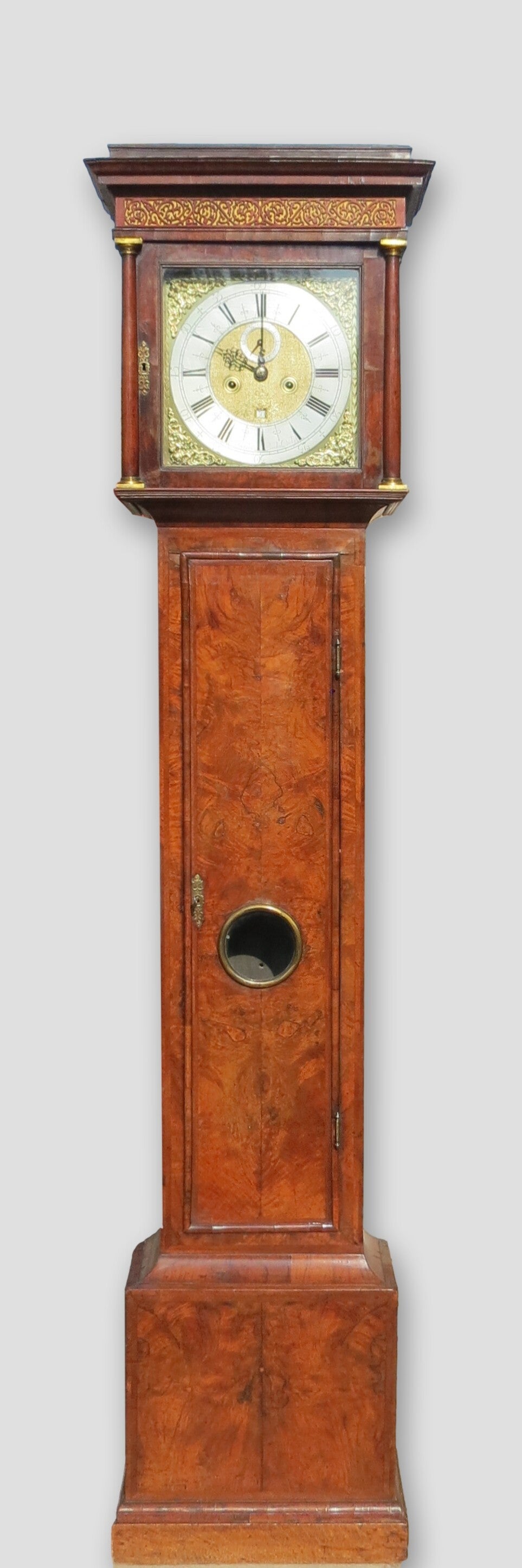
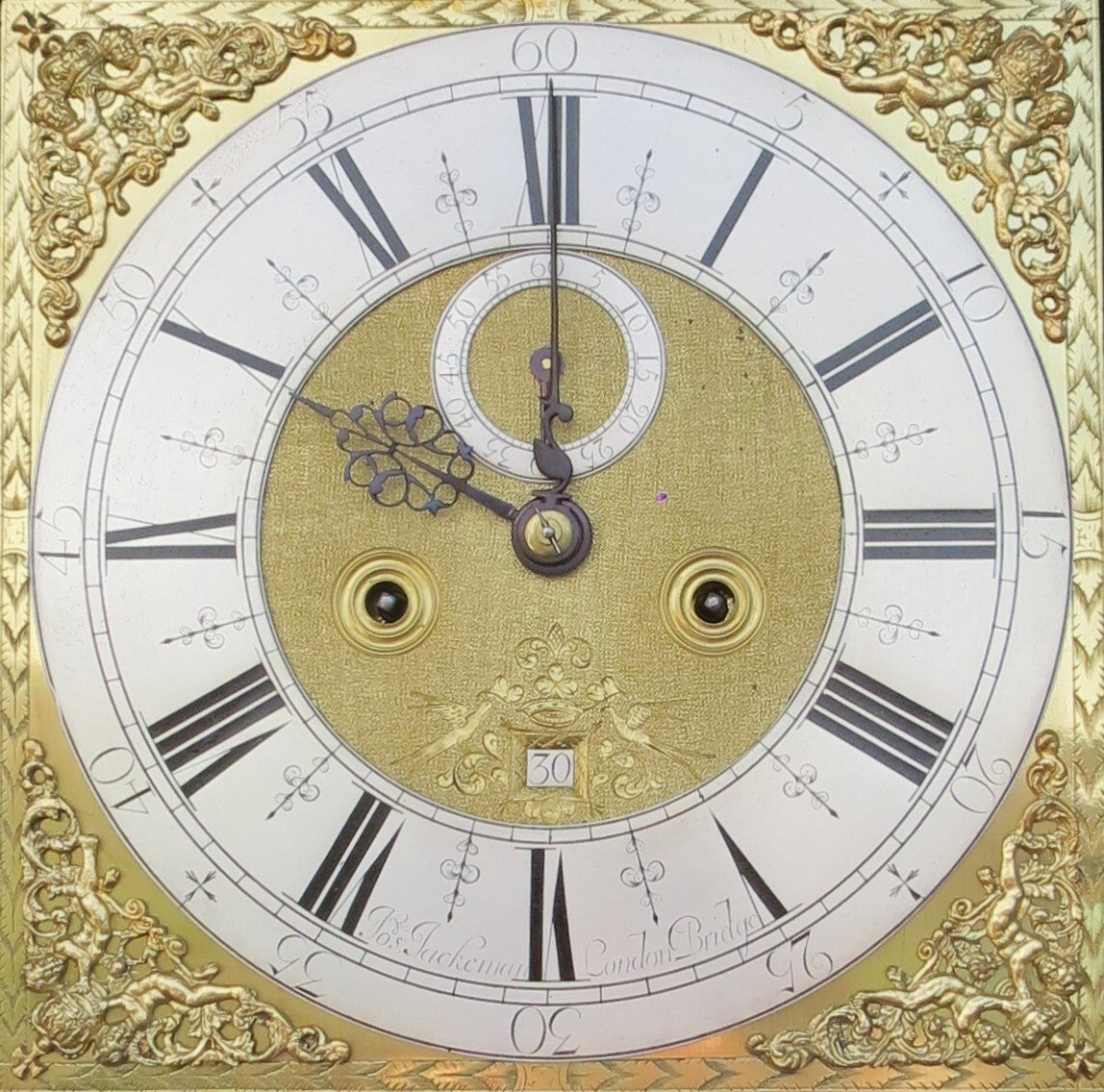
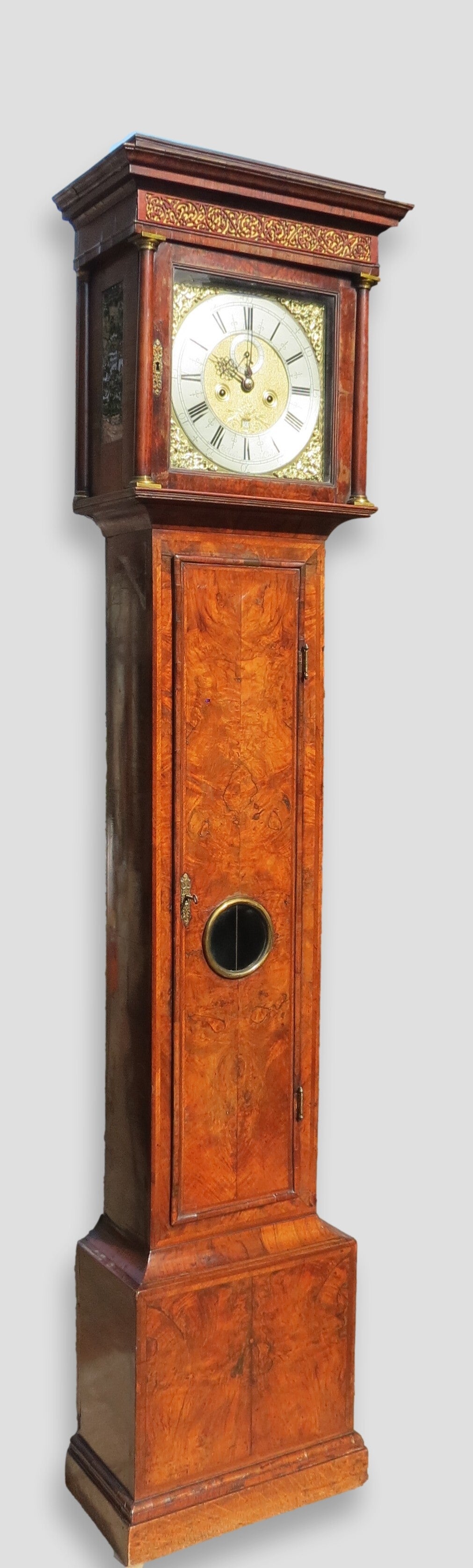
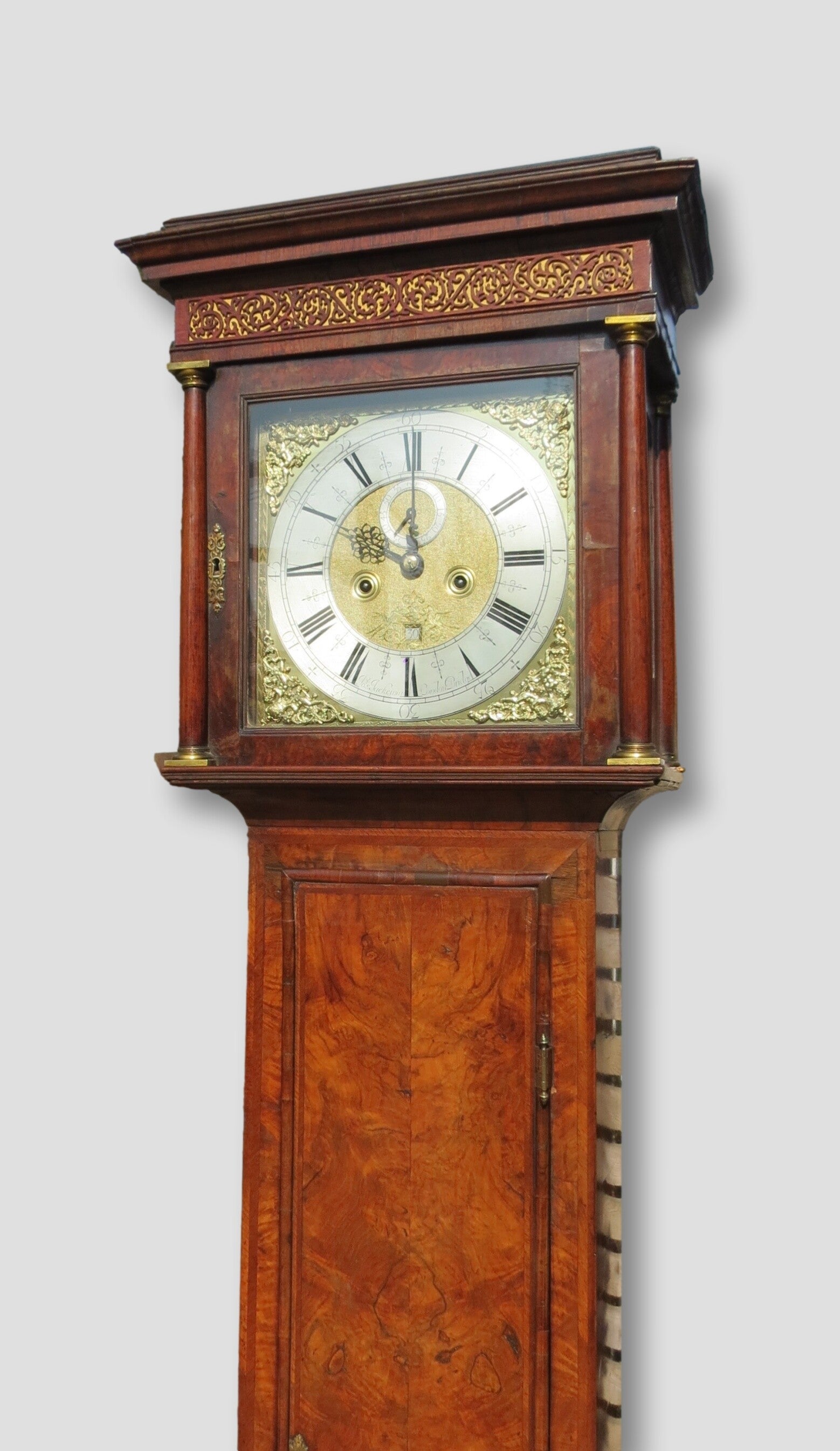
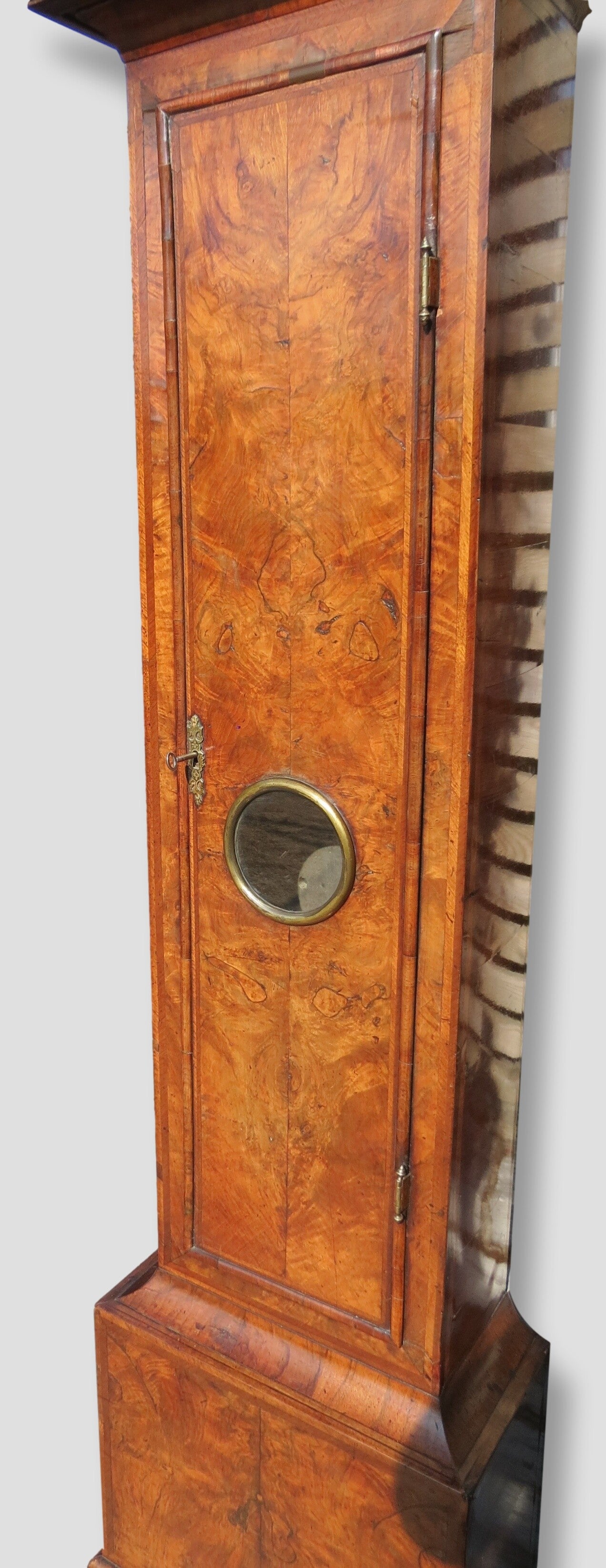
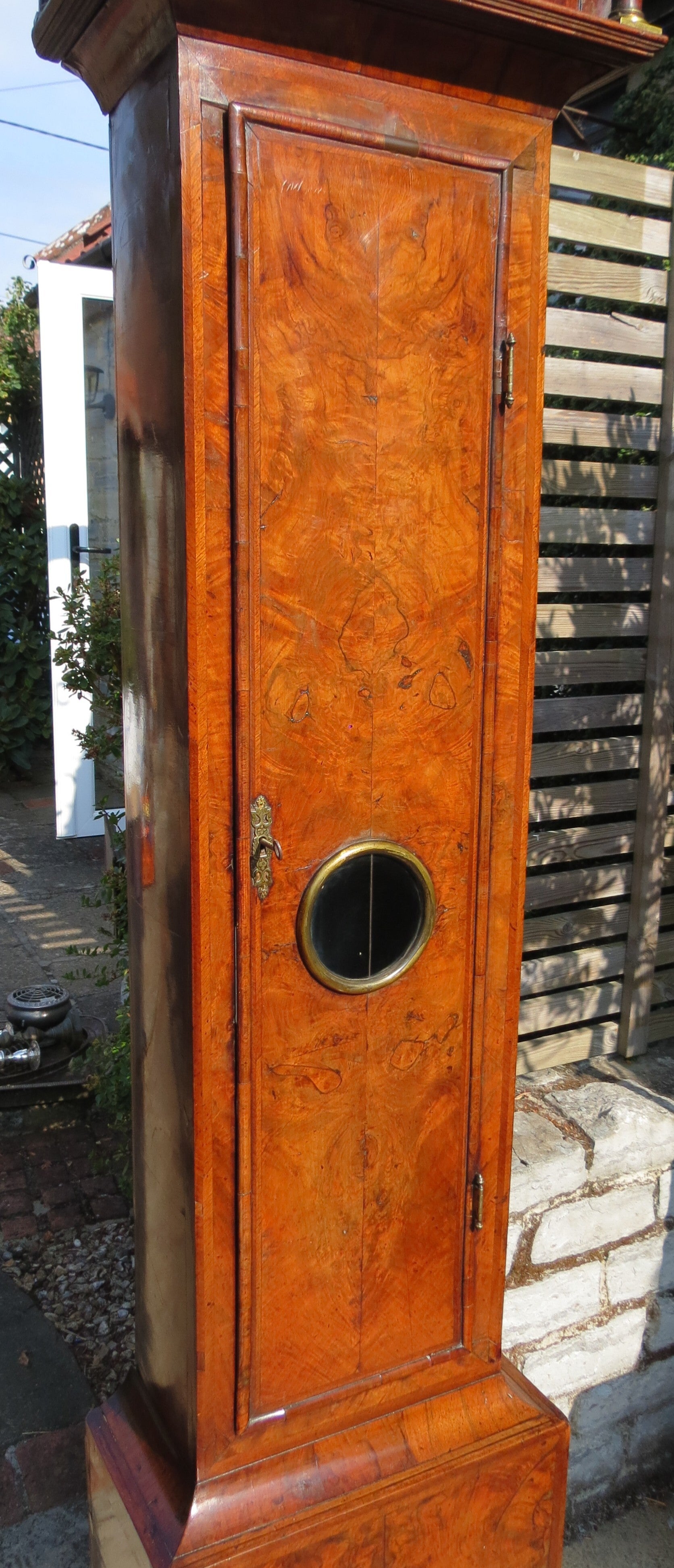
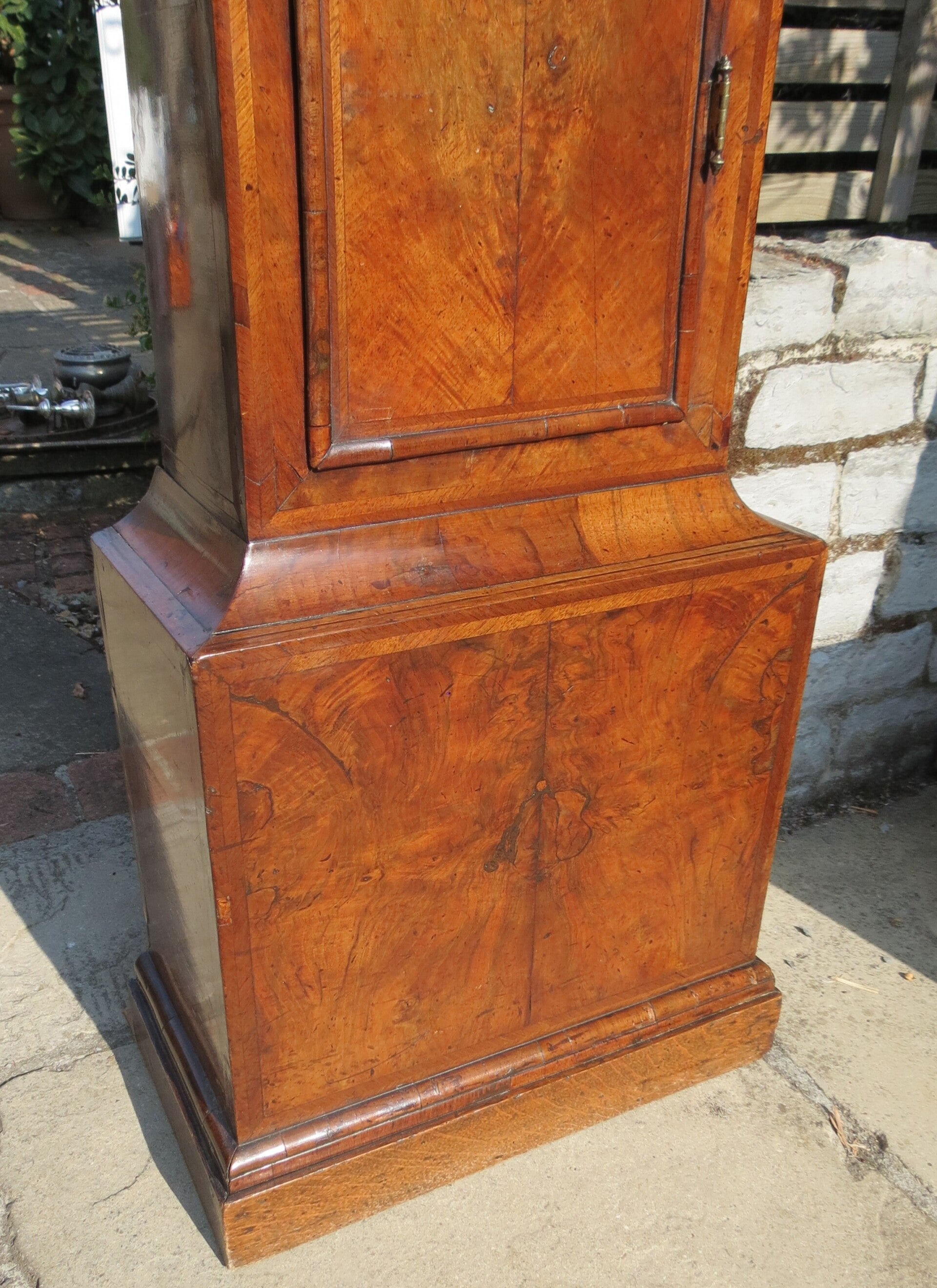
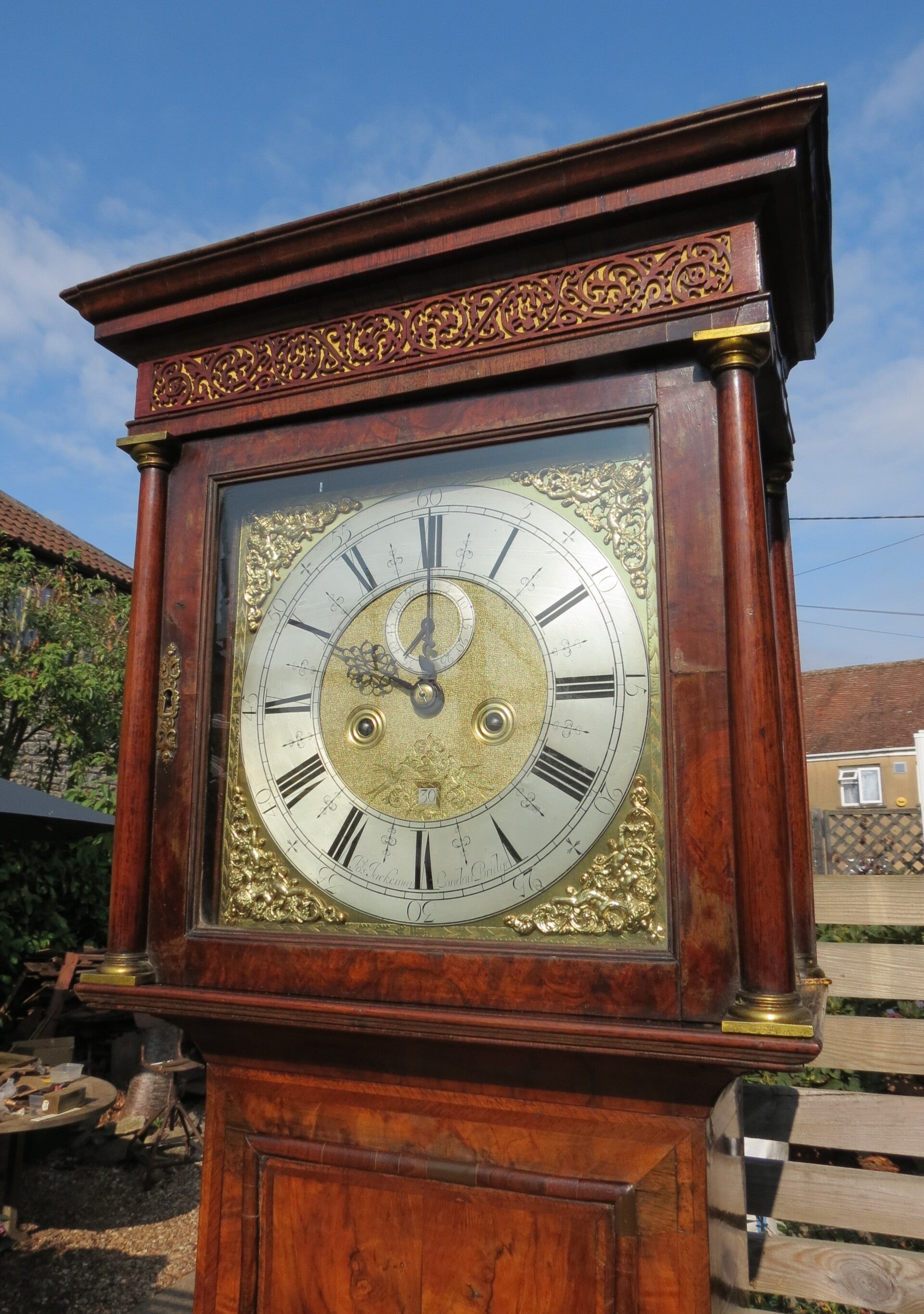
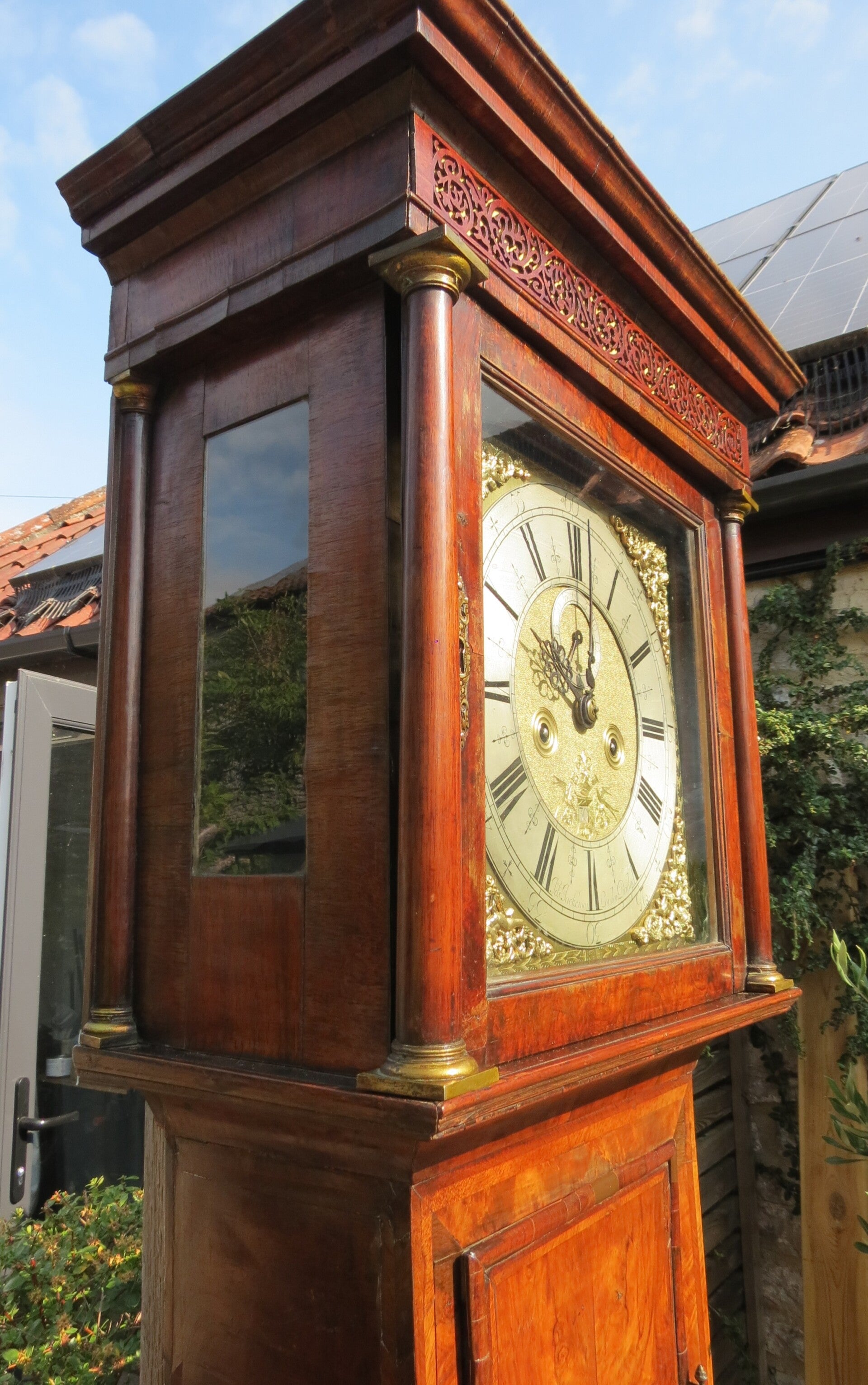
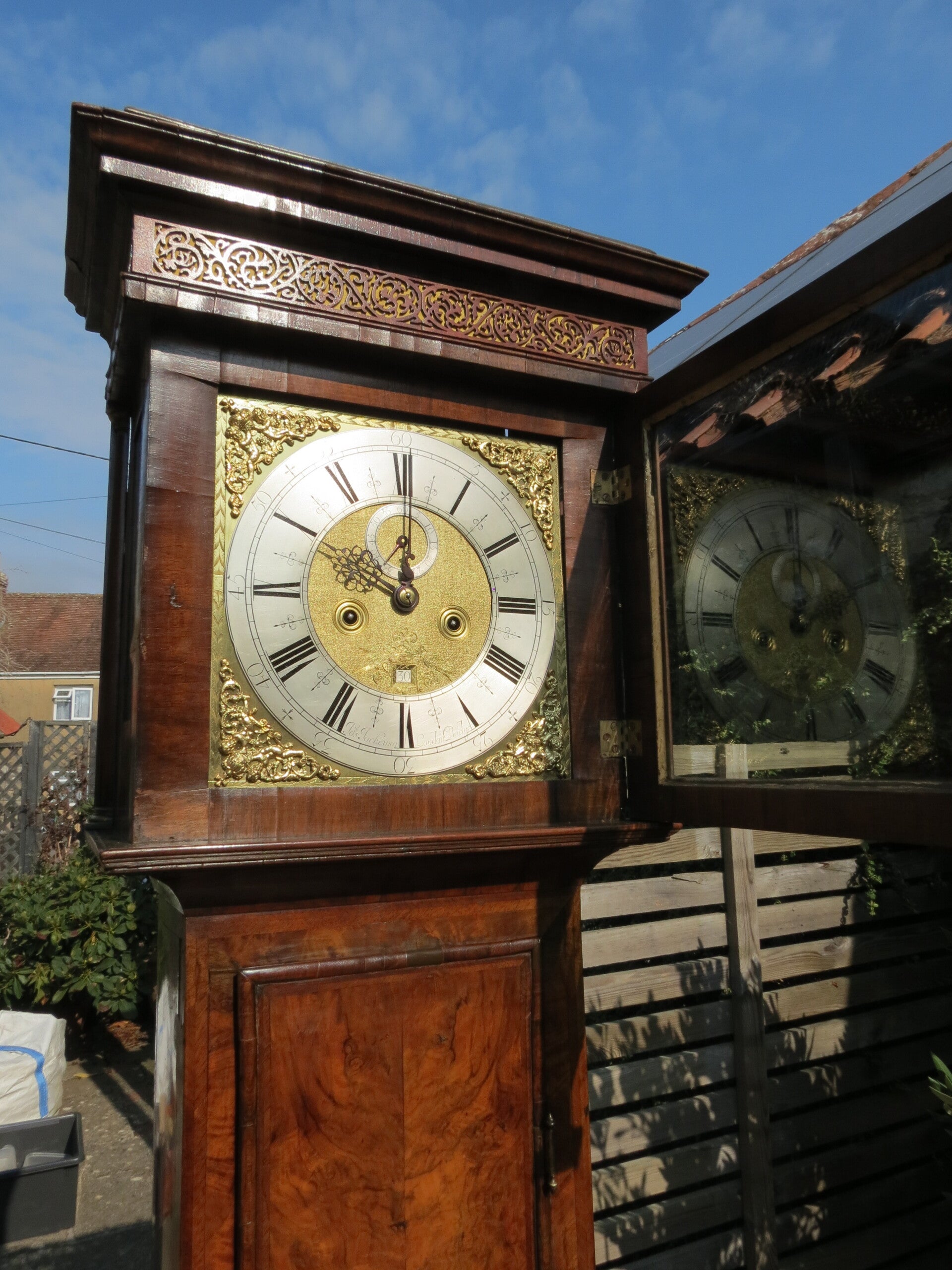
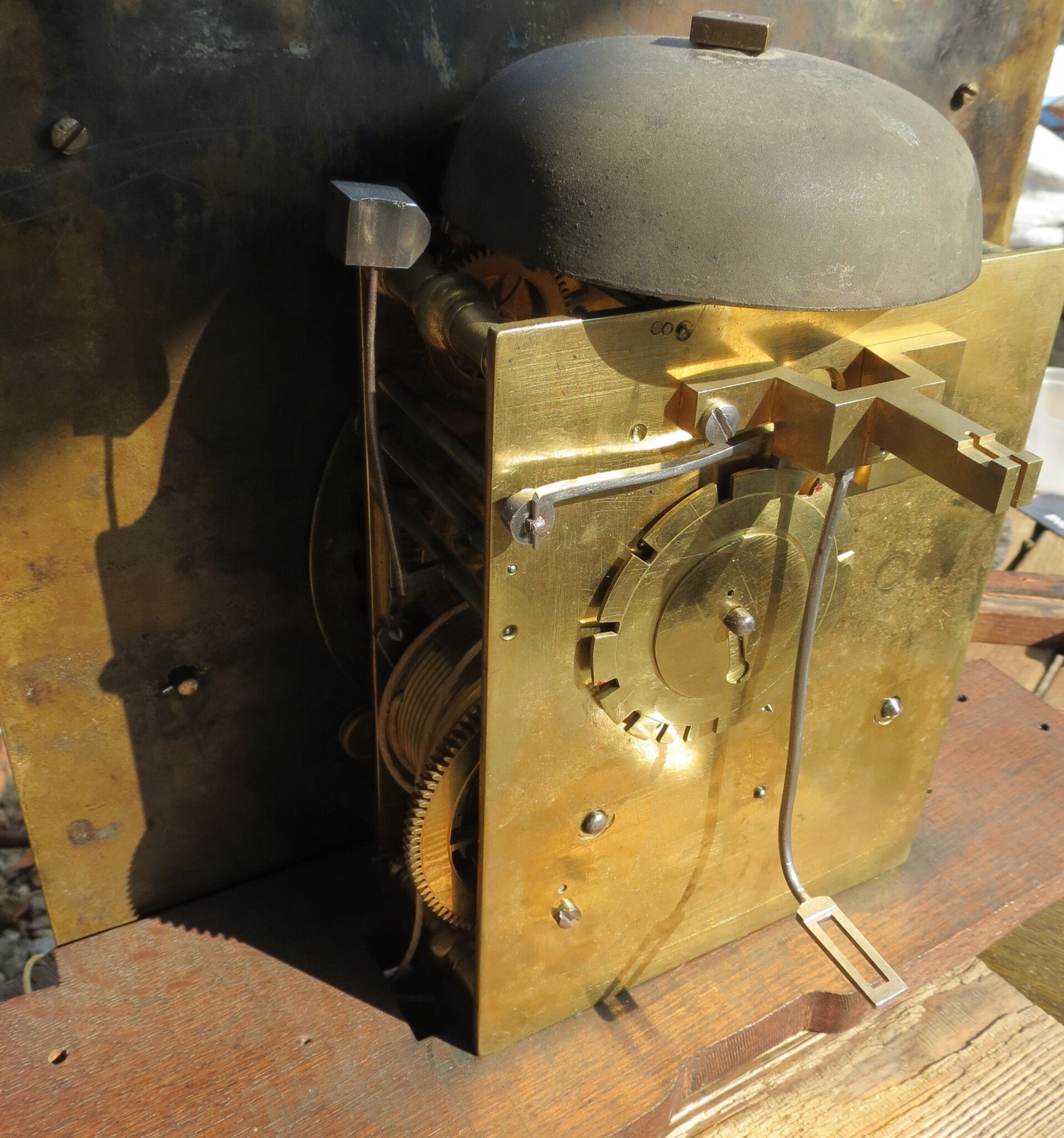
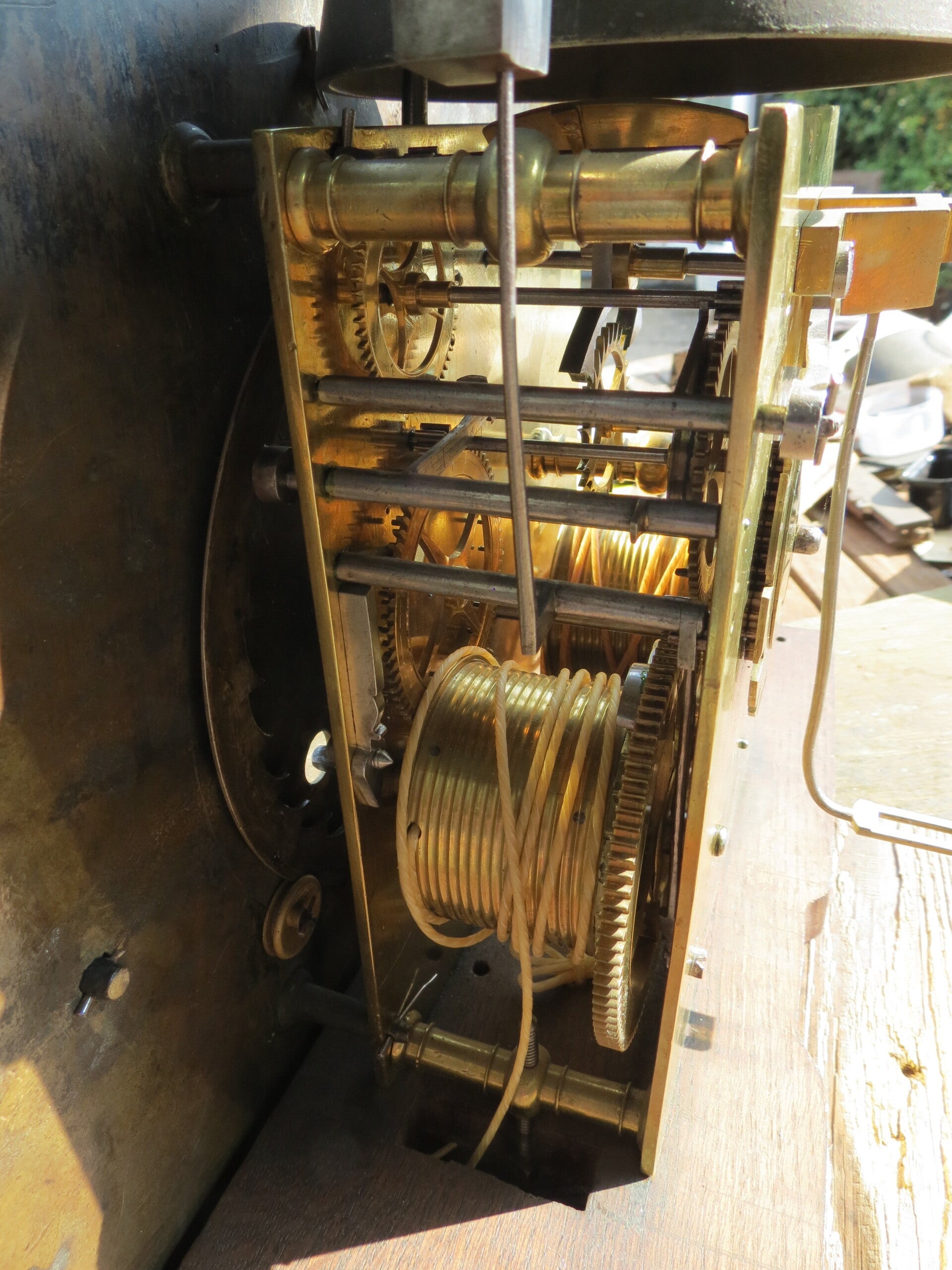
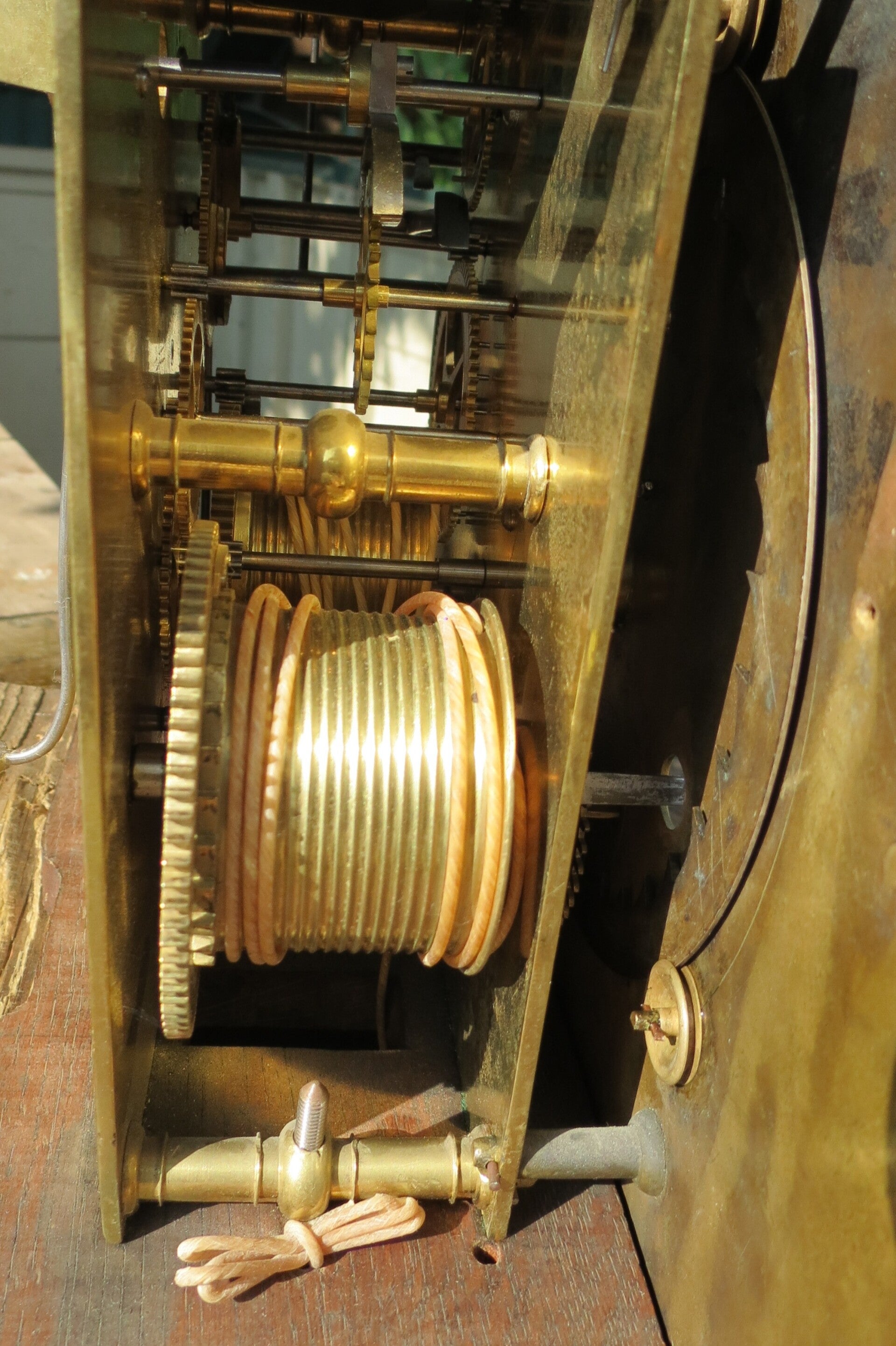
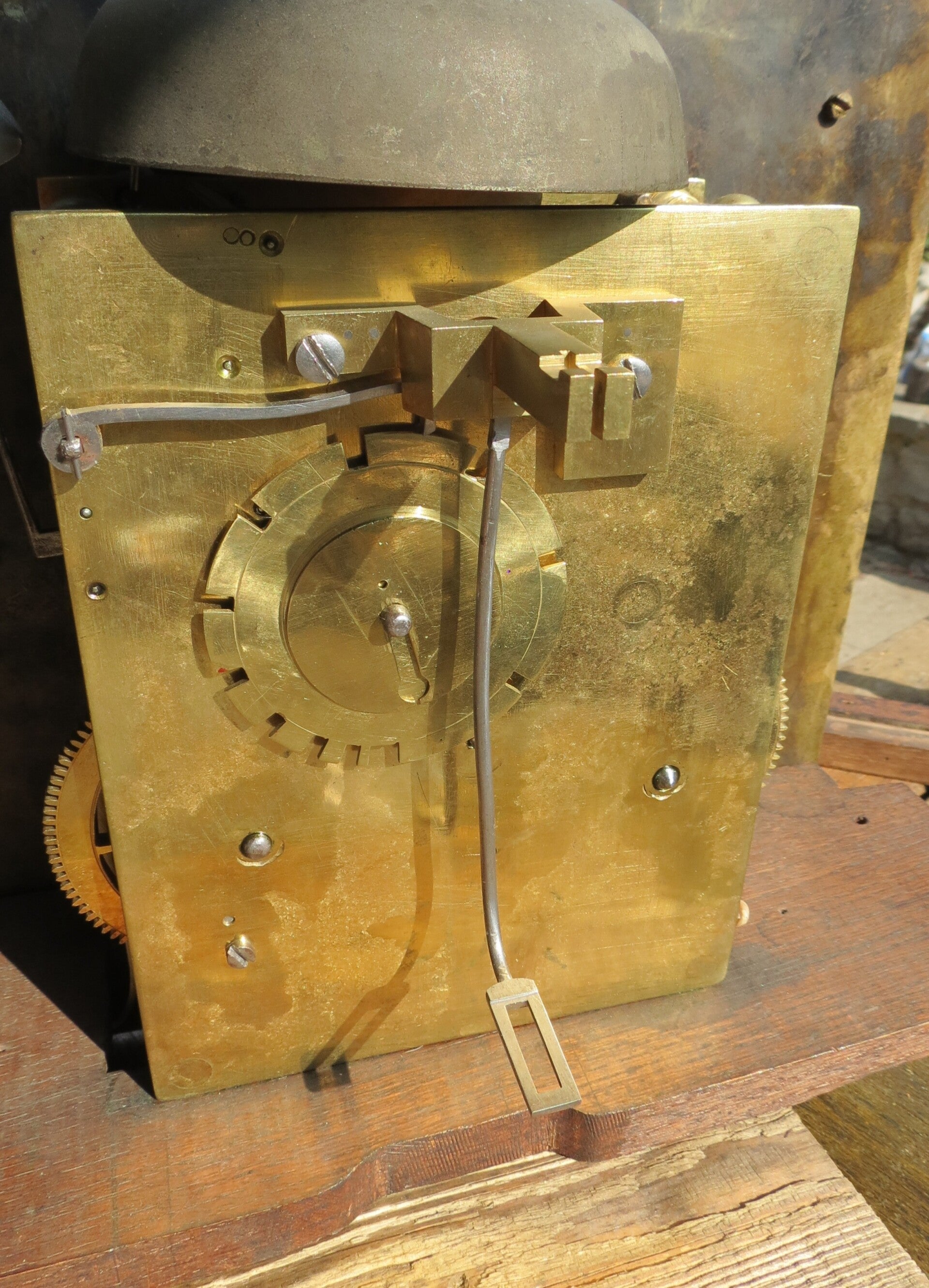
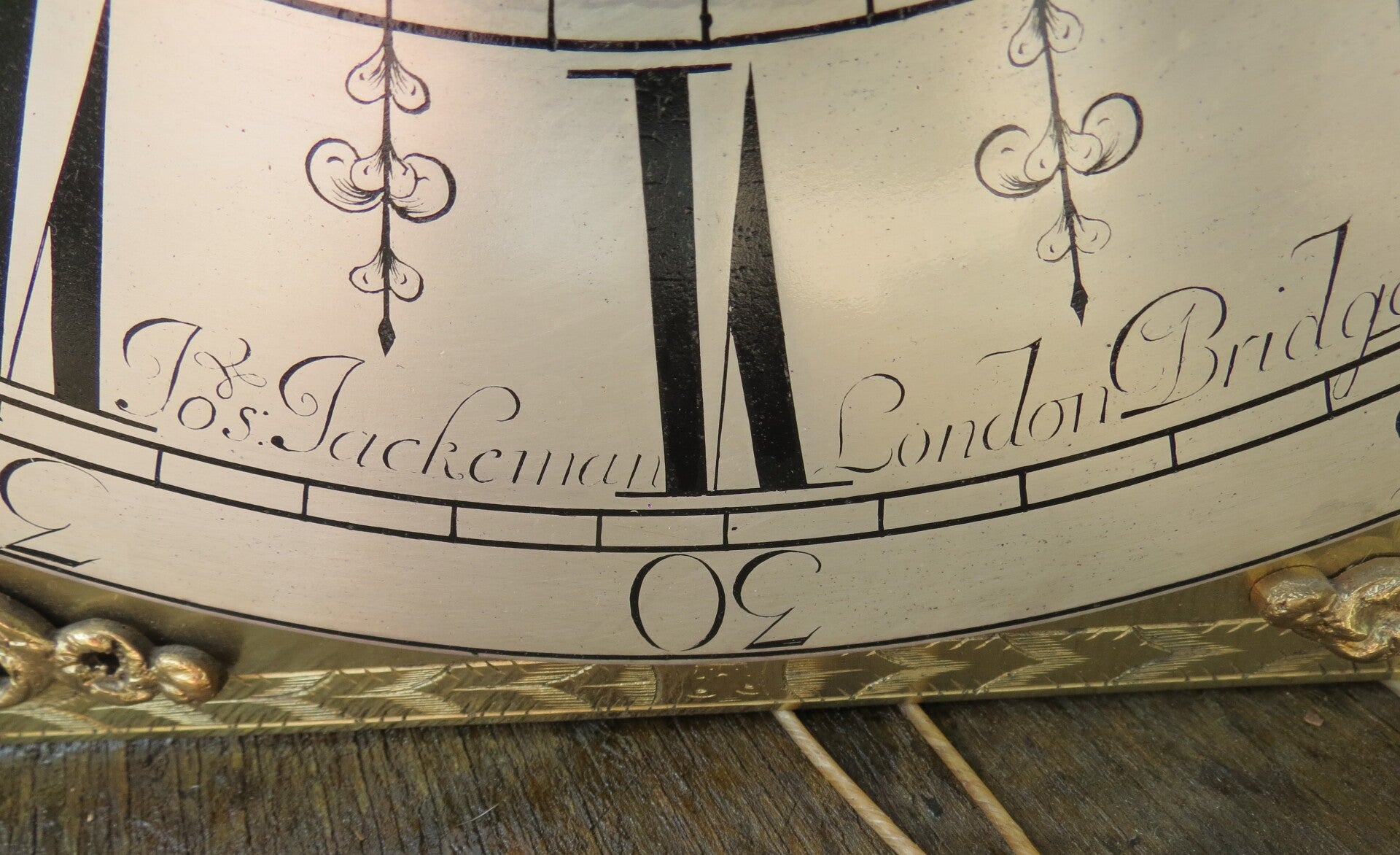
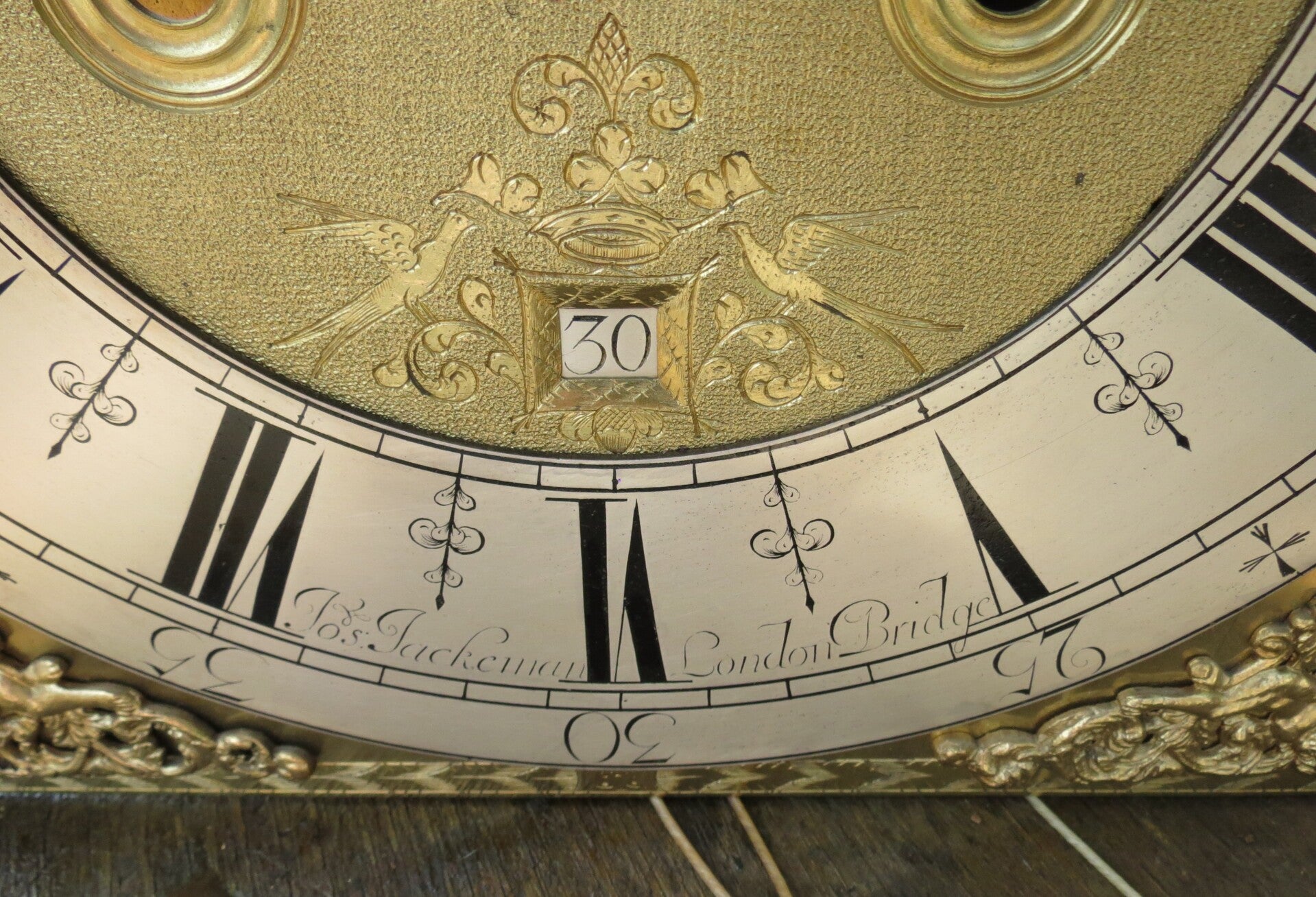

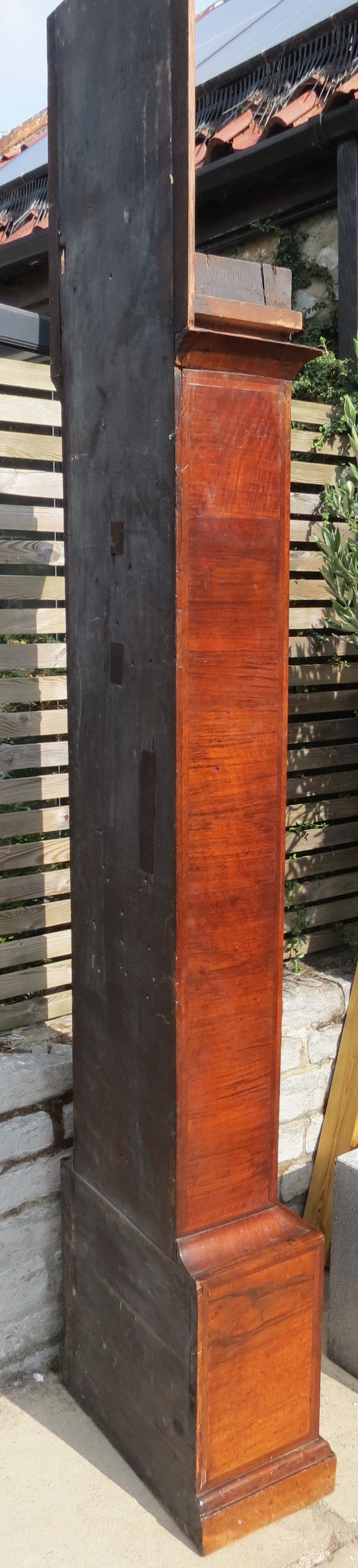
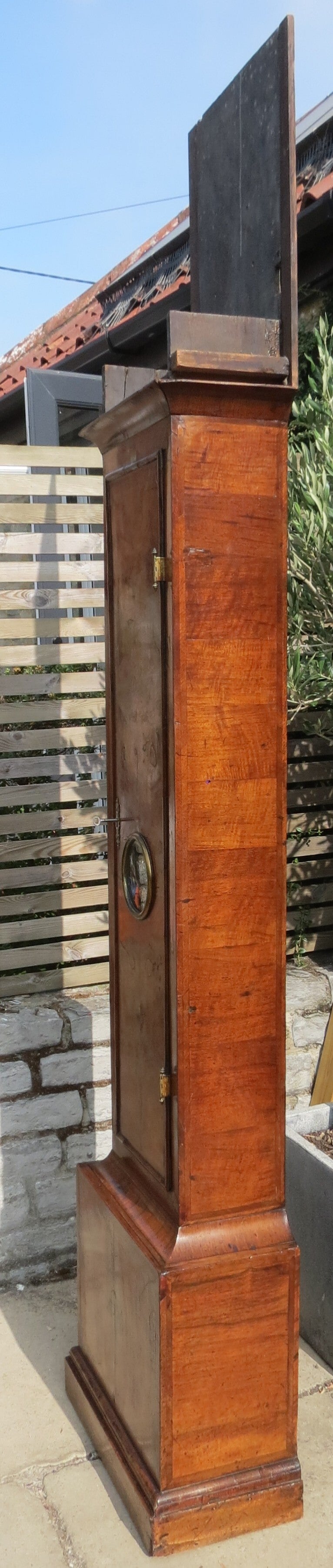
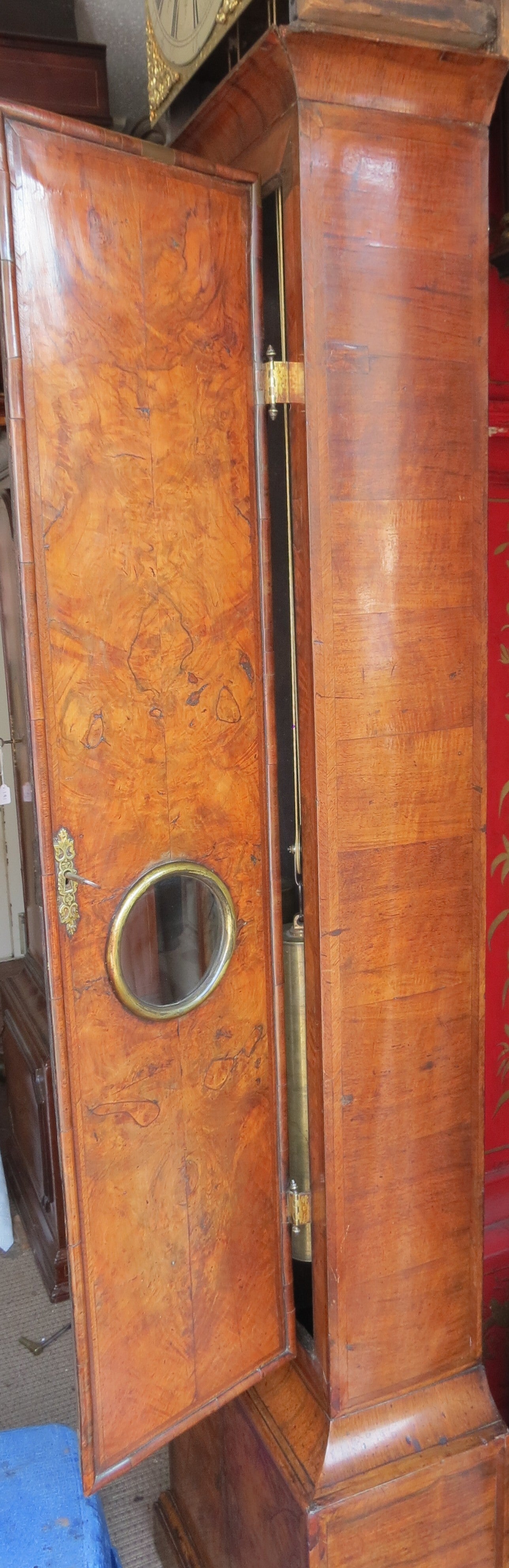
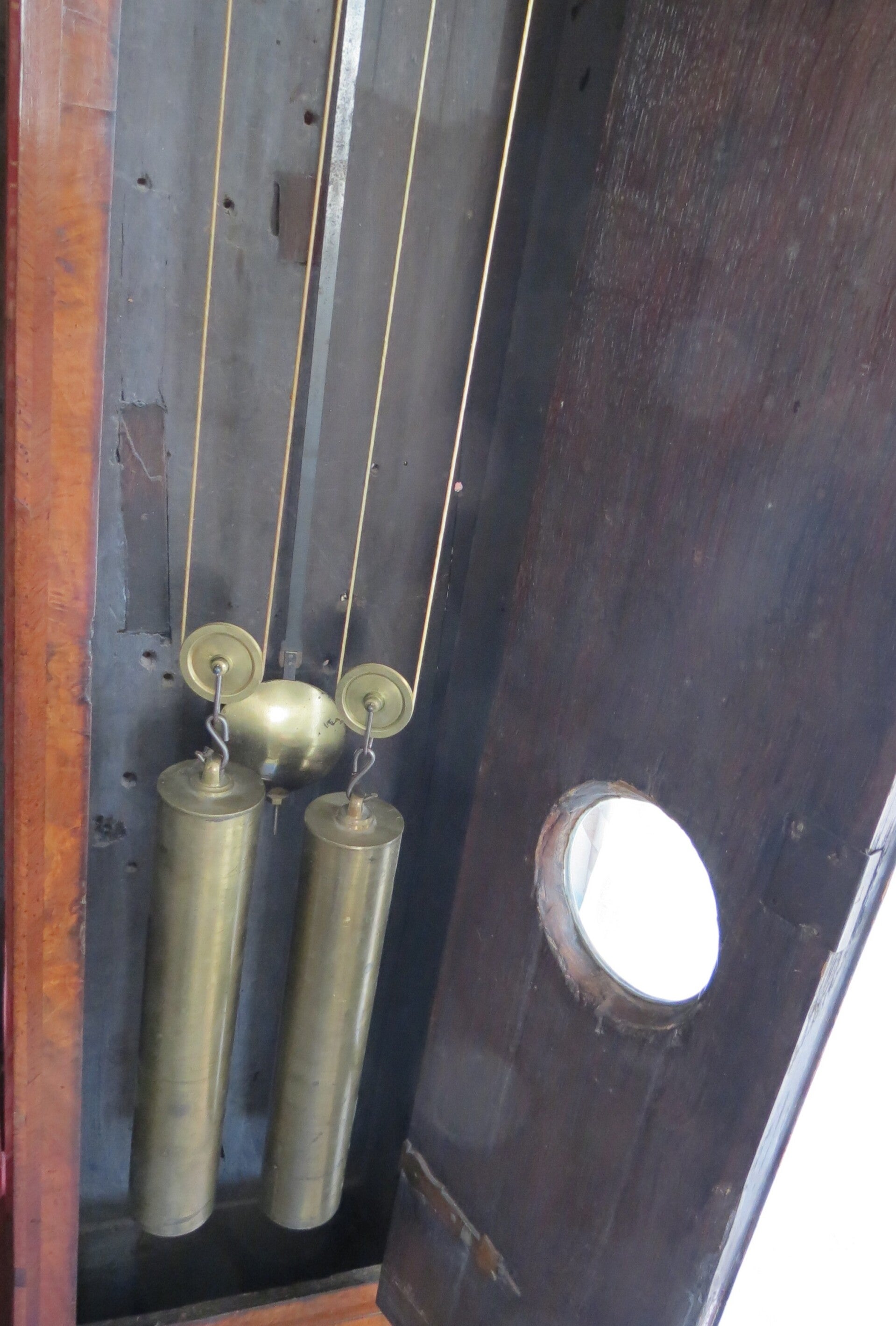
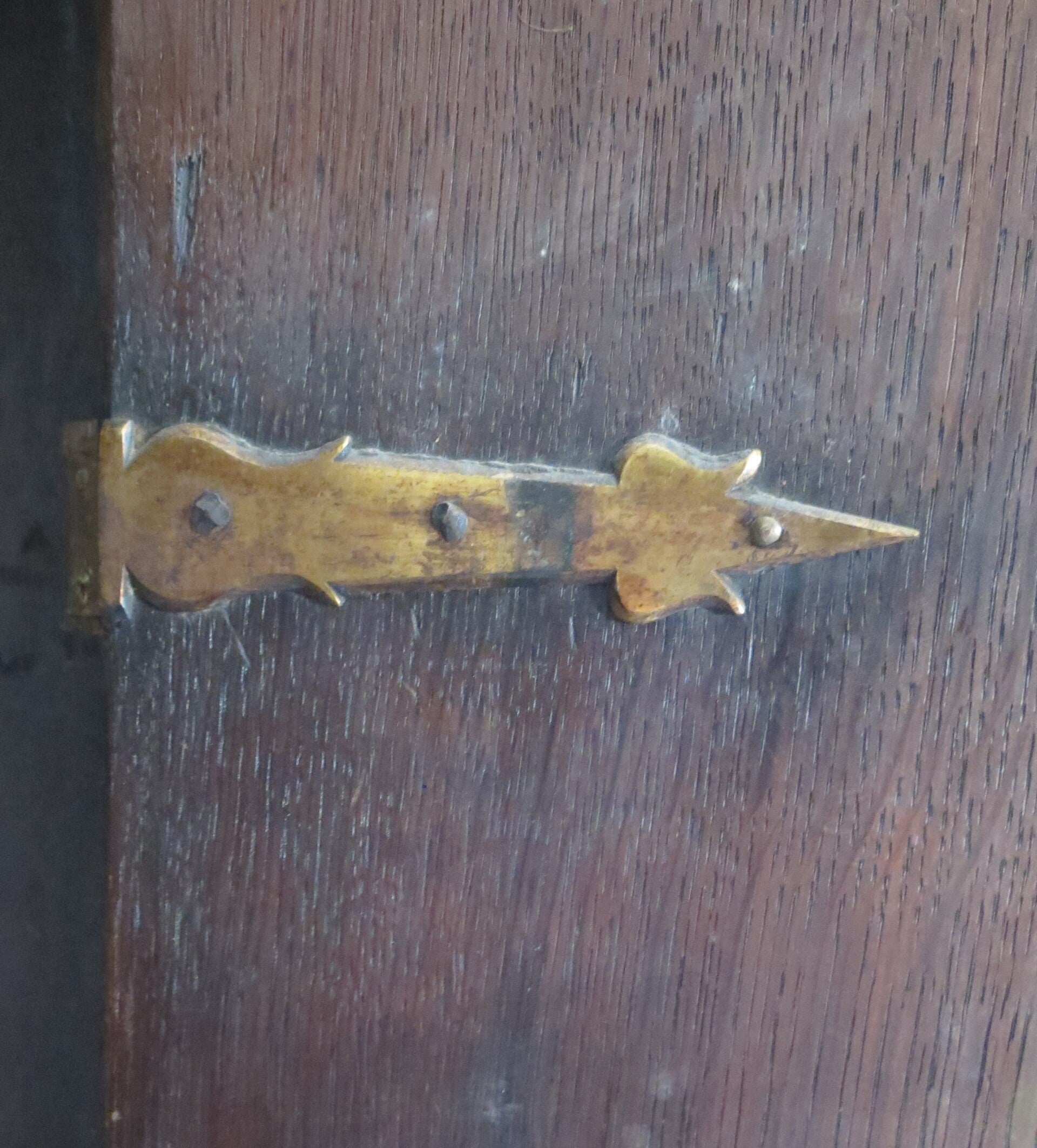
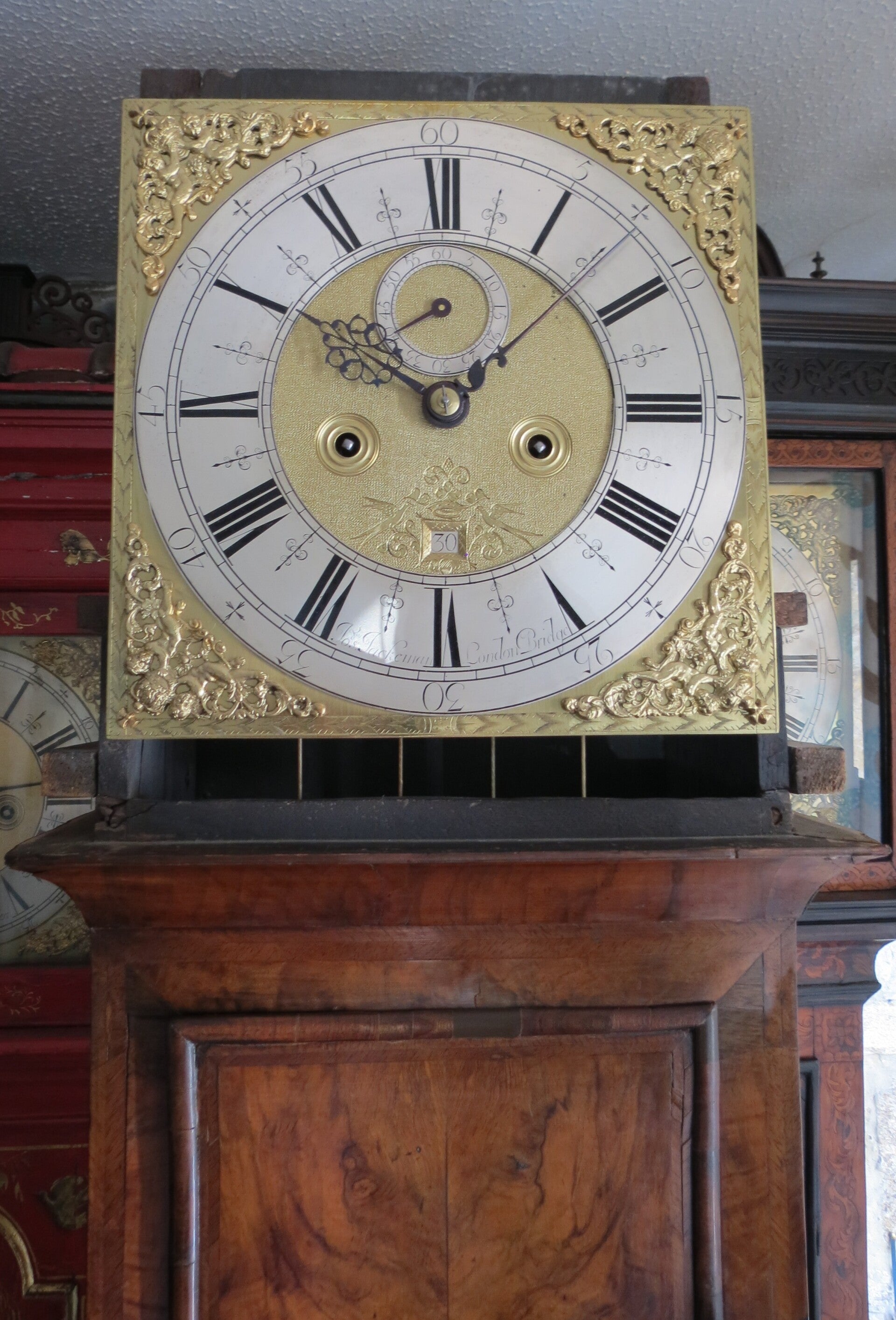
Joseph Jackeman London Bridge. A fine, month going longcase clock dating to around 1705. The 12 inch dial with finely matted centre, ringed winders, silvered chapter ring with half-hour markers, inner hour calibration, 'half-quarters', gilt corner spandrels, subsidiary seconds and date aperture. Finely pierced and blued steel hands. The month going movement with 5 knopped and finned pillars, transposed trains, outside countwheel, striking the hours on a bell. The 'long door' (44") figured walnut case of excellent colour and patination, 'd' moulding to trunk door, lenticle to trunk door, silk backed fret above dial, glass side windows, original glass to hood, Large brass-faced weights and brass-faced pendulum, winder, door key.
Overall height is 88 inches.
The clock is complete and fully working. The movement has been comprehensively overhauled within the last 20 years and I have given it a basic oil service and checkover.
Condition is very good for an antique clock of this age, the case has the usual age-related patination and wood movement, it has not been over-restored and retains real character, excellent 'lighter' walnut colour.
Joseph Jackeman (snr) is listed working from 1682 to 1716. An excellent maker with clocks and watches in famous collections. This has typical style for the period between 1700 and 1710.
Further notes
The golden age
The 'golden age' of English clockmaking refers to a period of around 50 years from c.1670, a proliferation of good and great clockmakers working in London, governed by the high standards of the Clockmaker's Company and producing many enduring horological works of art. This period is generally felt to have ended around 1720 by which time most of the top makers had stopped working, clockmaking had spread to the provinces so the historical focus moves away from London, there were still excellent makers working in London after this date but the intensity of the golden age would never re-occur.
Month clocks
These were normally the highest specification longcase clocks for the domestic market, All longcase clocks at the time were expensive luxury items. The most basic were 30 hour (one day) duration derived from lantern clocks, 8-day, week running clocks were more expensive/ luxurious and housed in more elaborate cases, walnut/ marquetry/ lacquer, month clocks are much rarer and would have been very expensive. Longer duration clocks of 3/6/12 months were occasionally made by a few makers but not really for the normal domestic market.
A month going movement requires an extra arbour in the going train, therefore the winding is counter-clockwise. The strike train however often had the same wheel count as an 8-day clock, an extra arbour would have resulted in more friction and more driving weight required. The month gearing for the strike train is provided mainly by extra pins on the hammer wheel and slightly higher gearing overall. The winding on the strike train could be either clockwise or counter-clockwise as the maker saw fit.
Month going movements tend to be more finely made because any unnecessary friction could compromise their reliable running. Even so they require significantly heavier weights than 8-day clocks, normally around 25lb each. It is advantageous to have a winder with longer stem to help overcome the extra torque when winding. With the extra weight involved the condition of the lines is more critical, traditional gut can be a bit risky as the breaking strain is unpredictable, a better choice these days can be synthetic gut which will have a uniformly higher breaking strain.
Many London makers of London month clocks seemed to use the Tompion/ Quare model where the trains are transposed from the normal 8-day model and the strike train is on the right. Perhaps this is due to a more favourable layout of the extra wheelwork between the plates.
The best makers from the golden age period seemed to offer month duration longcase clocks although in much smaller numbers than 8-day clocks. Following the golden age month clocks seem to be less commonly made which is strange considering their obvious practical advantage of less frequent winding.
London bridge
For the period this clock was made now referred to as 'old London bridge', a medieval stone structure crossing the river Thames and renowned as 'a wonder of the world' at the time. Arched stone spans and a road crossing densely populated with buildings and shops. There is a famous painting by Dutch artist Claude de Jong (1630) showing the bridge and buildings, more akin to 'game of thrones' perhaps than any modern bridge structure in London. This bridge had existed since around 1200 so was already outdated at the beginning of the 18th century. By around 1750 plans were undertaken to remove some of the buildings to make the road wider, by the 1830s a new bridge was built and the old medieval structure completely demolished. The current 'London bridge' is a more modern structure opened in 1973.
Some clockmakers had premises amongst the old buildings on the bridge, Joseph Jackeman famously being one of these. It would be fascinating to time-travel and see the old London bridge and Jackeman's shop there.