

A very rare vintage astronomical regulator with gravity escapement.
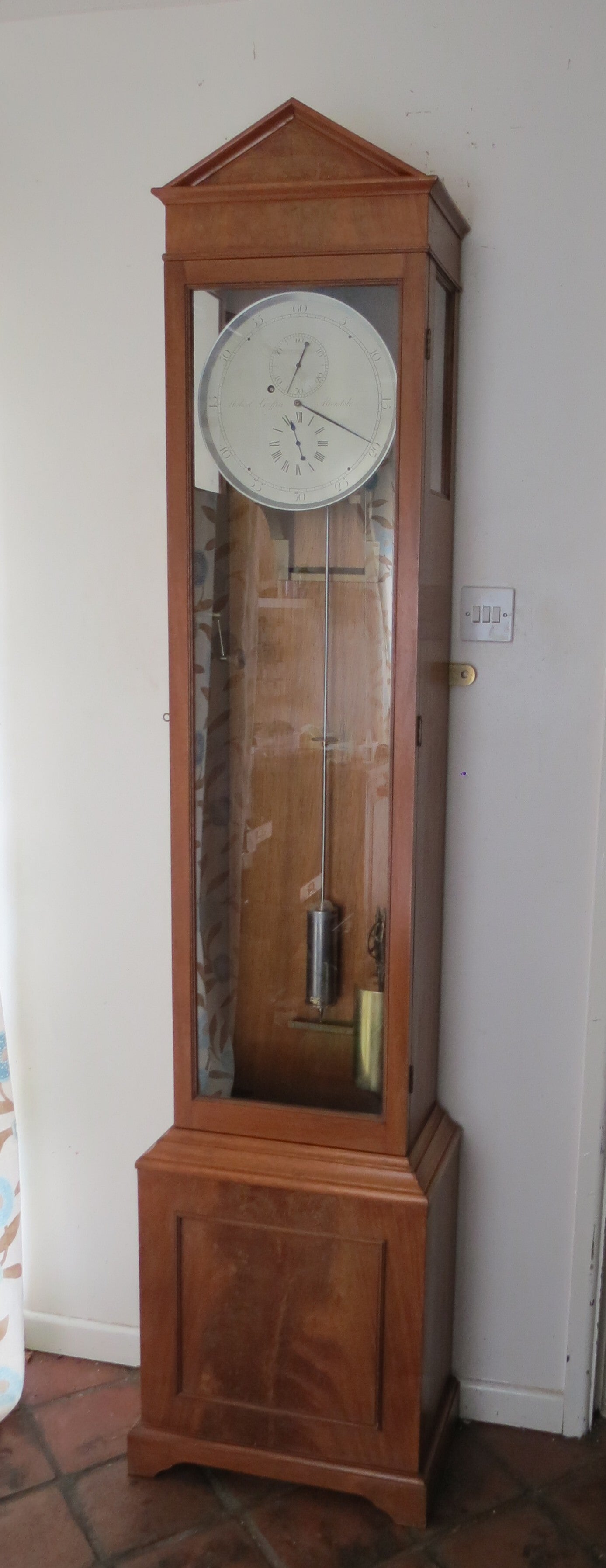
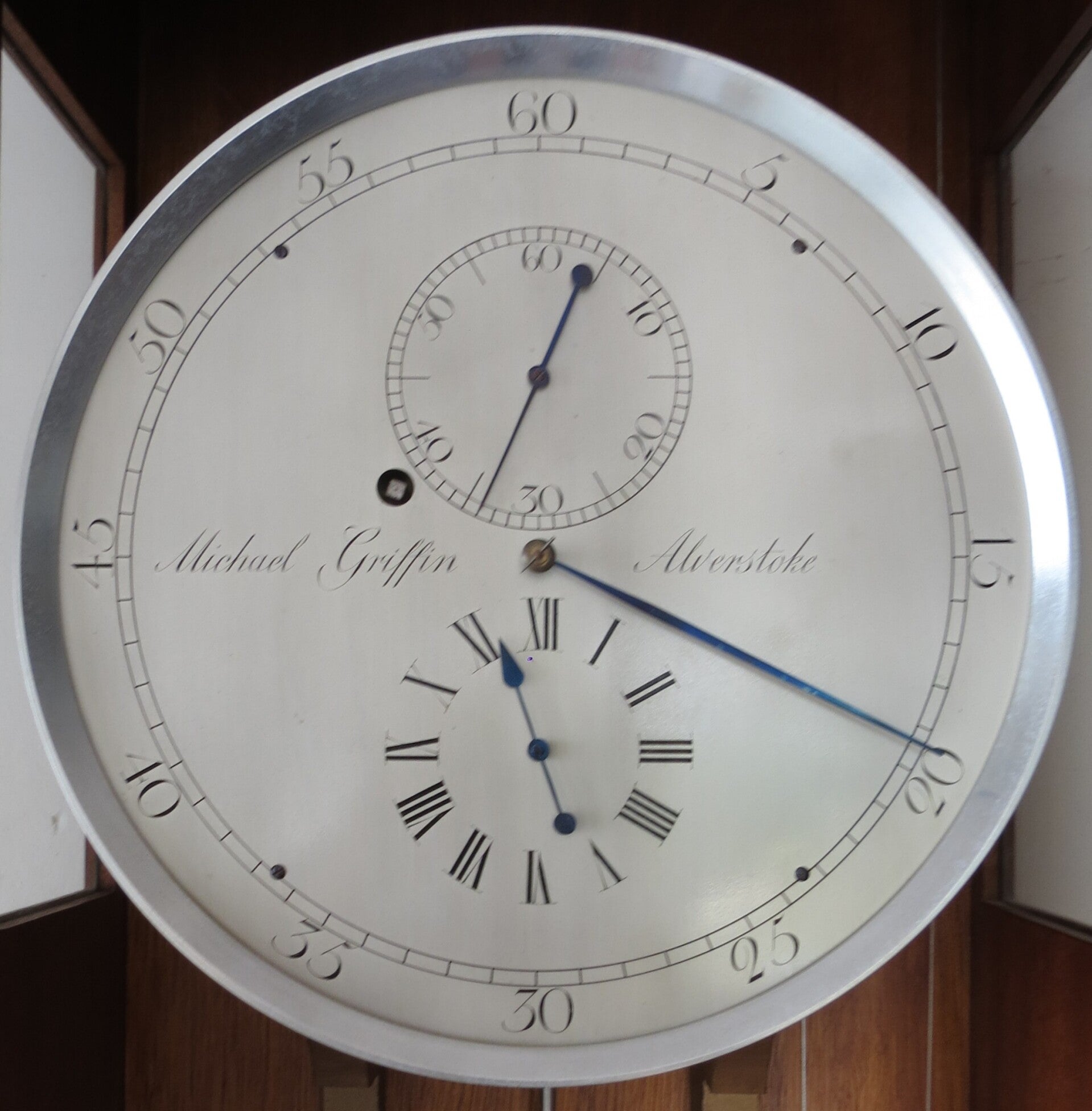
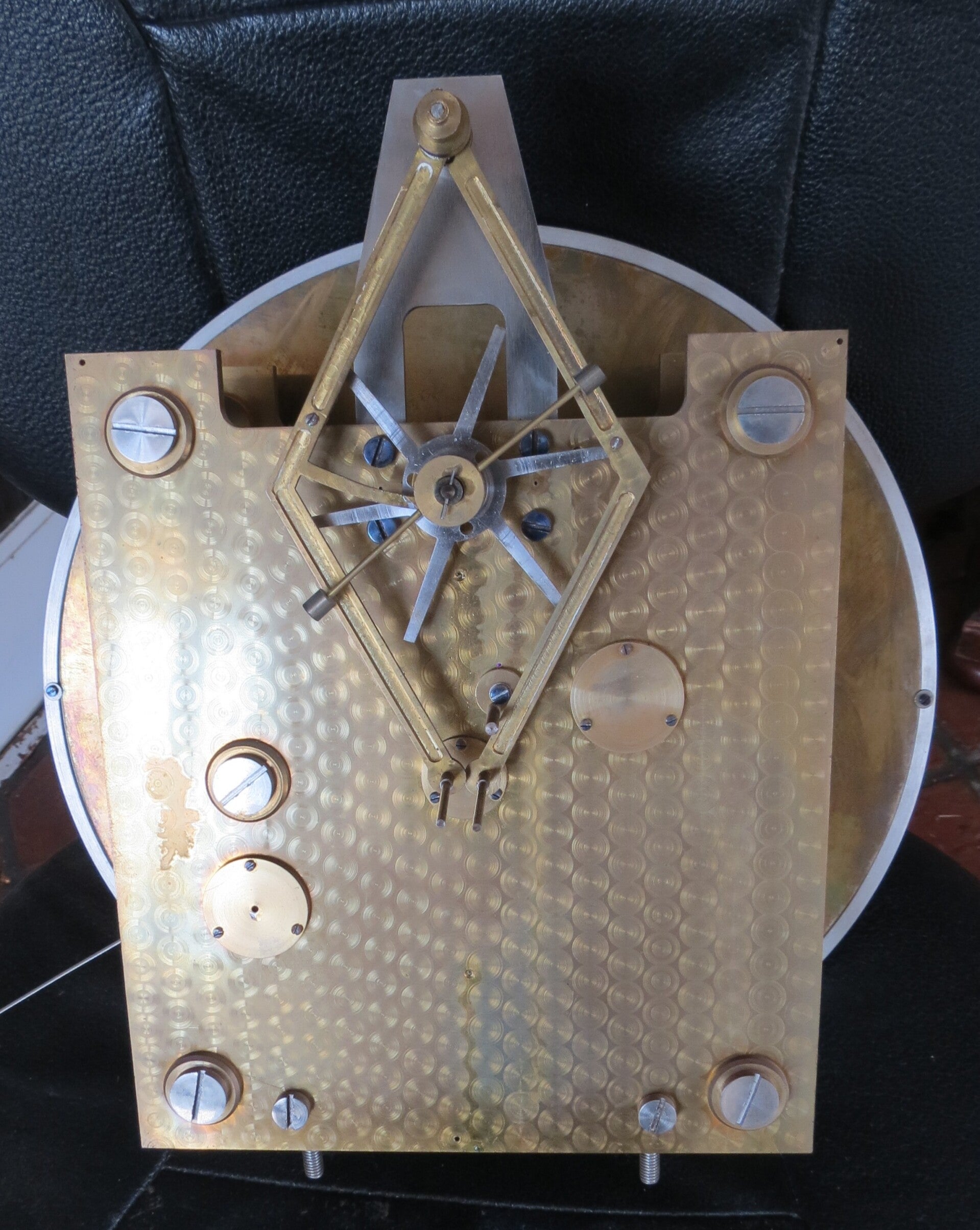
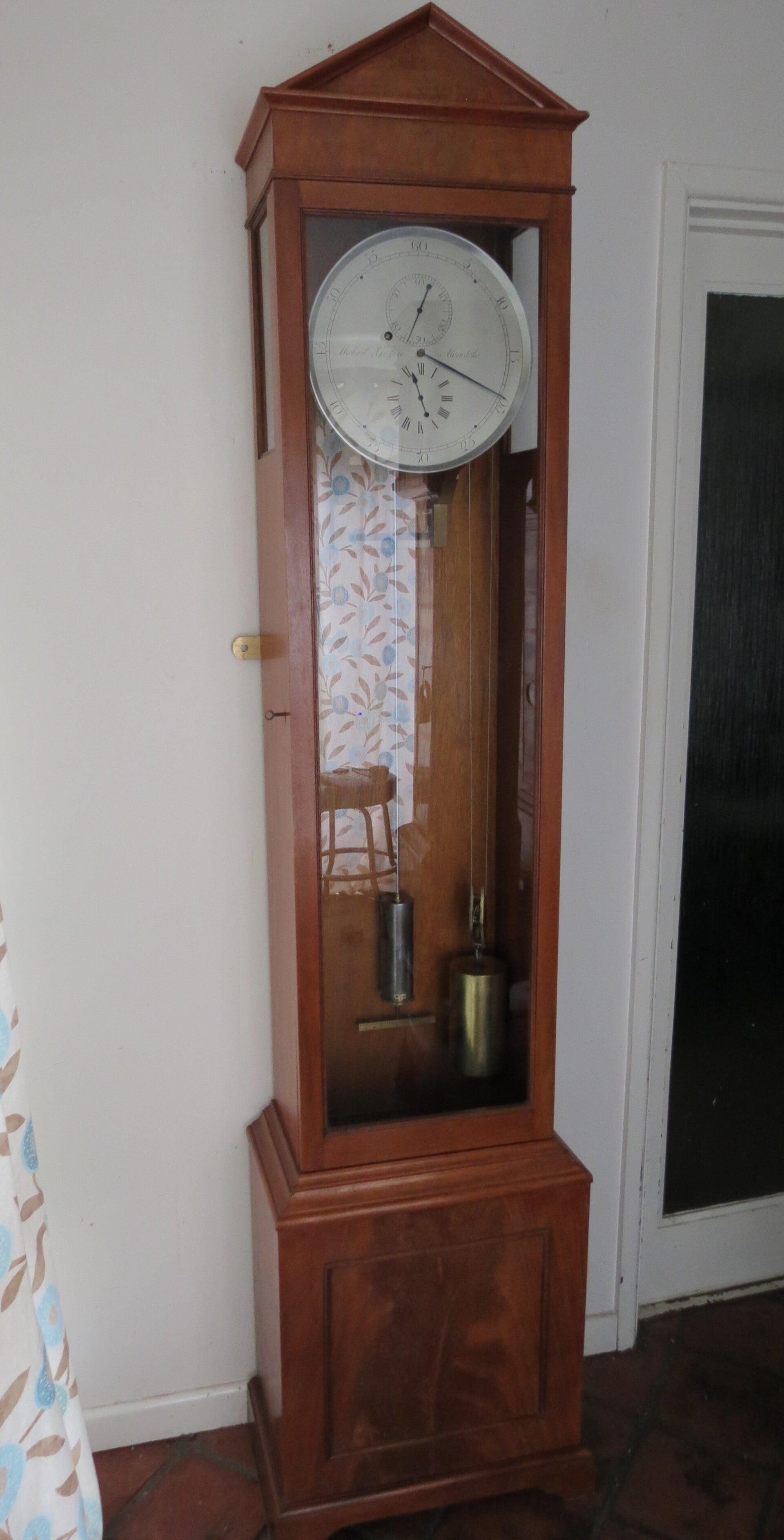
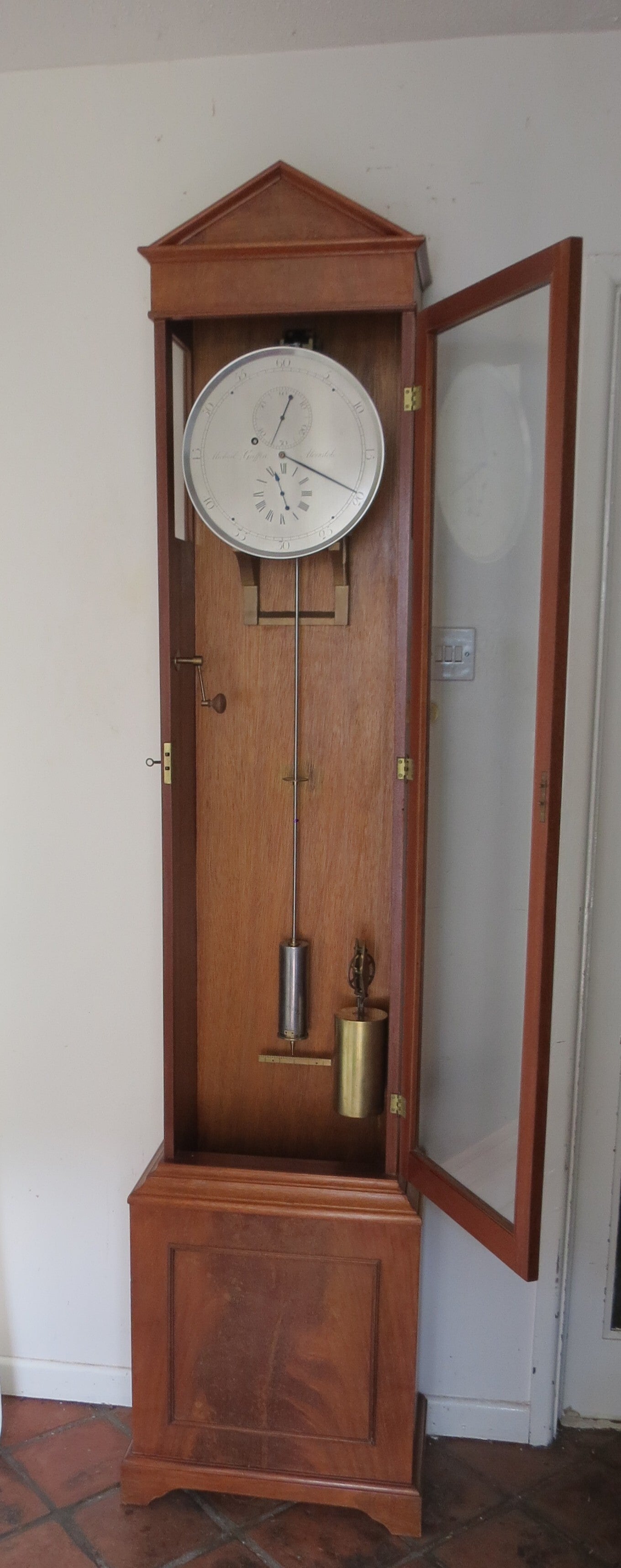
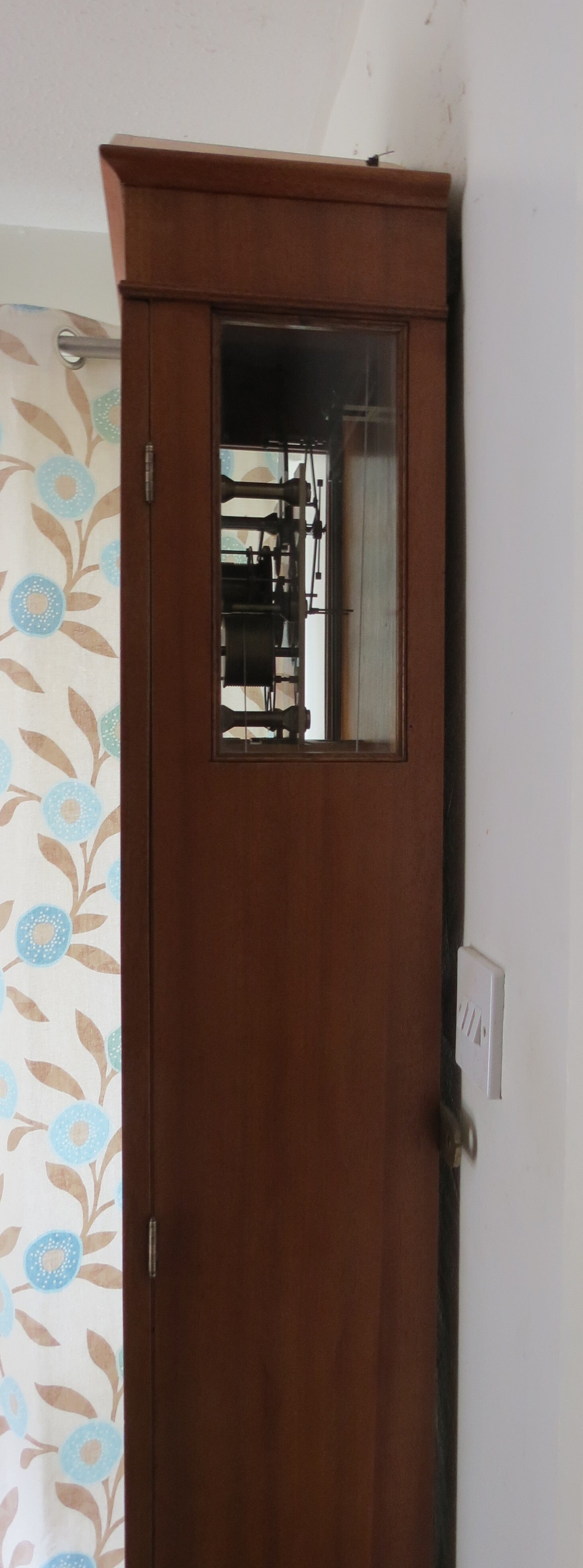
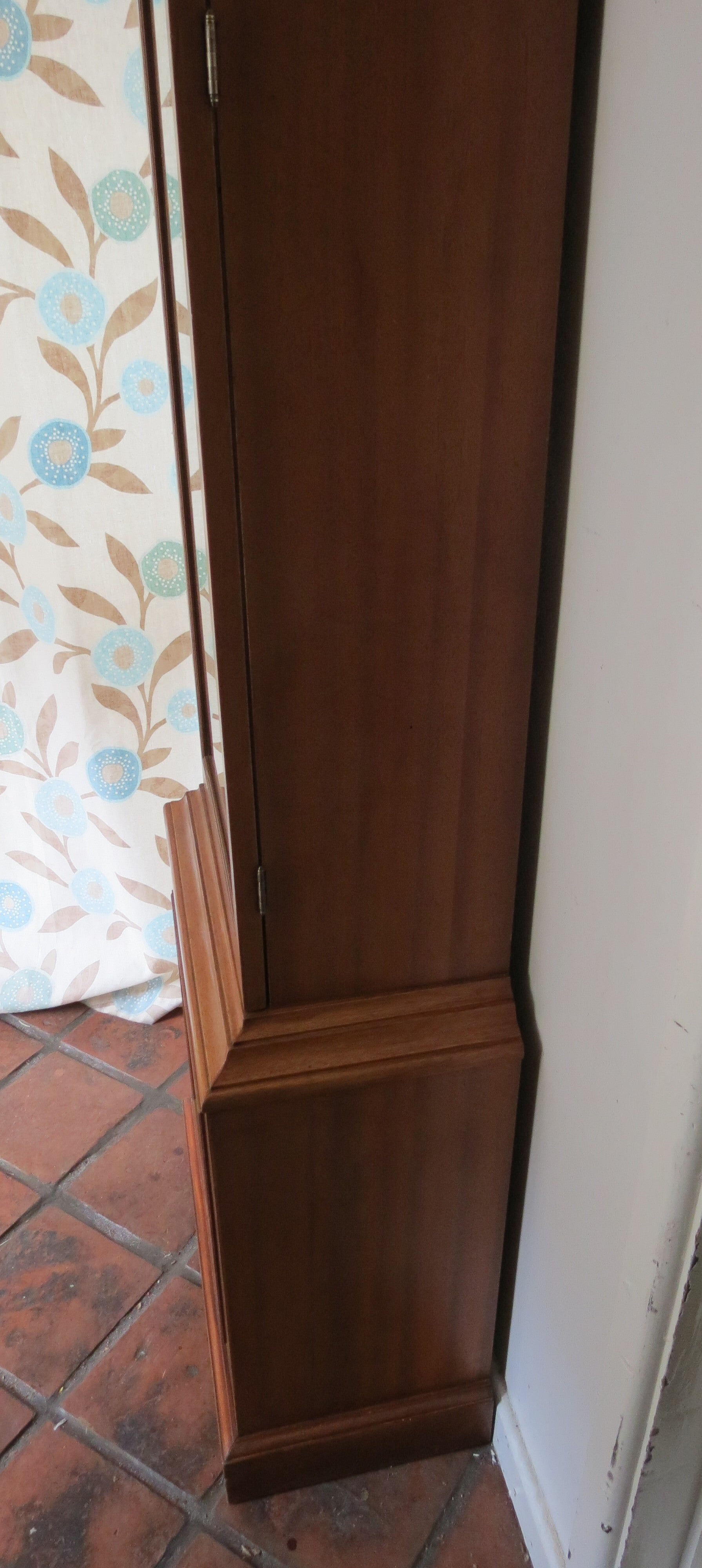
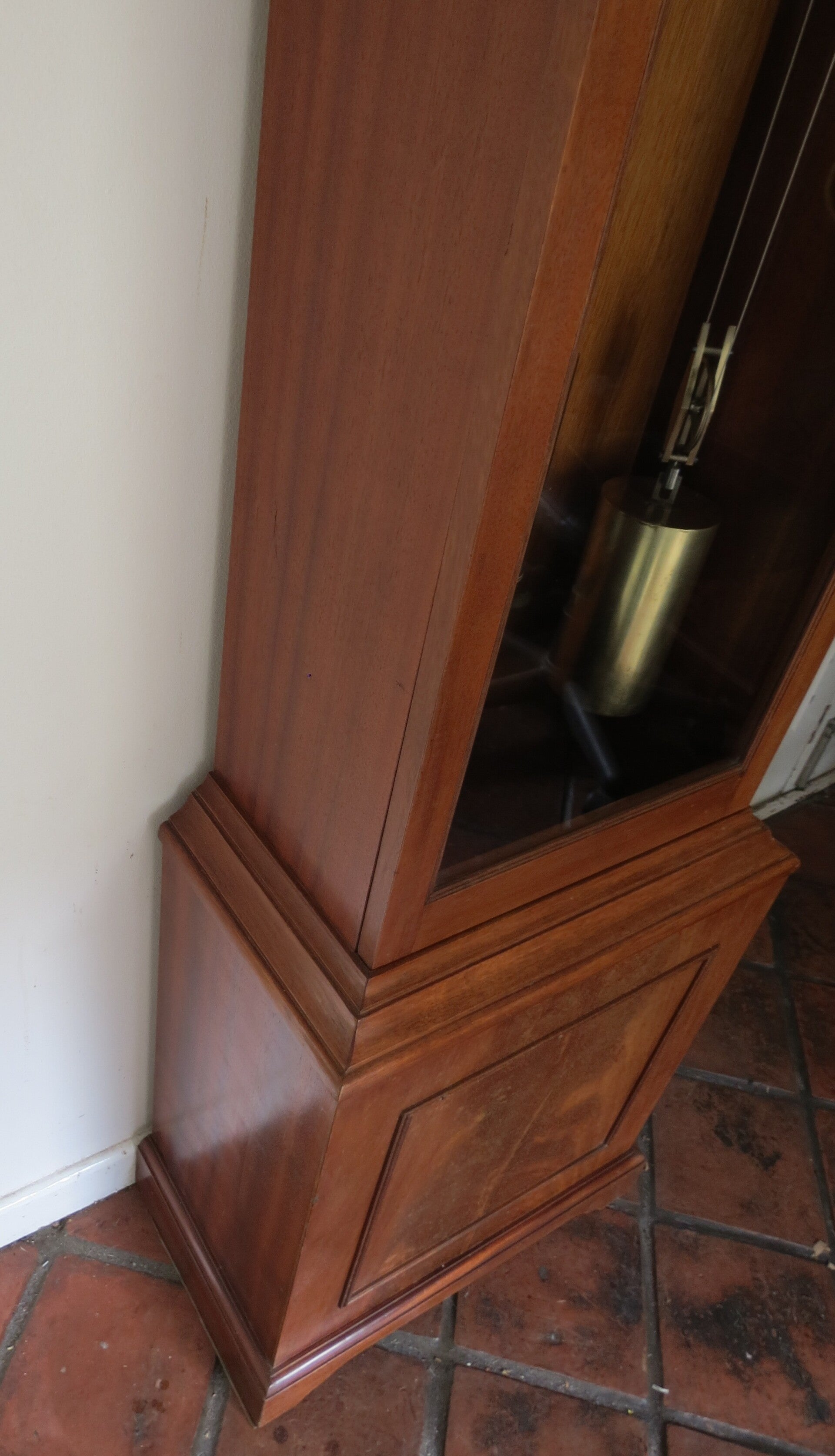
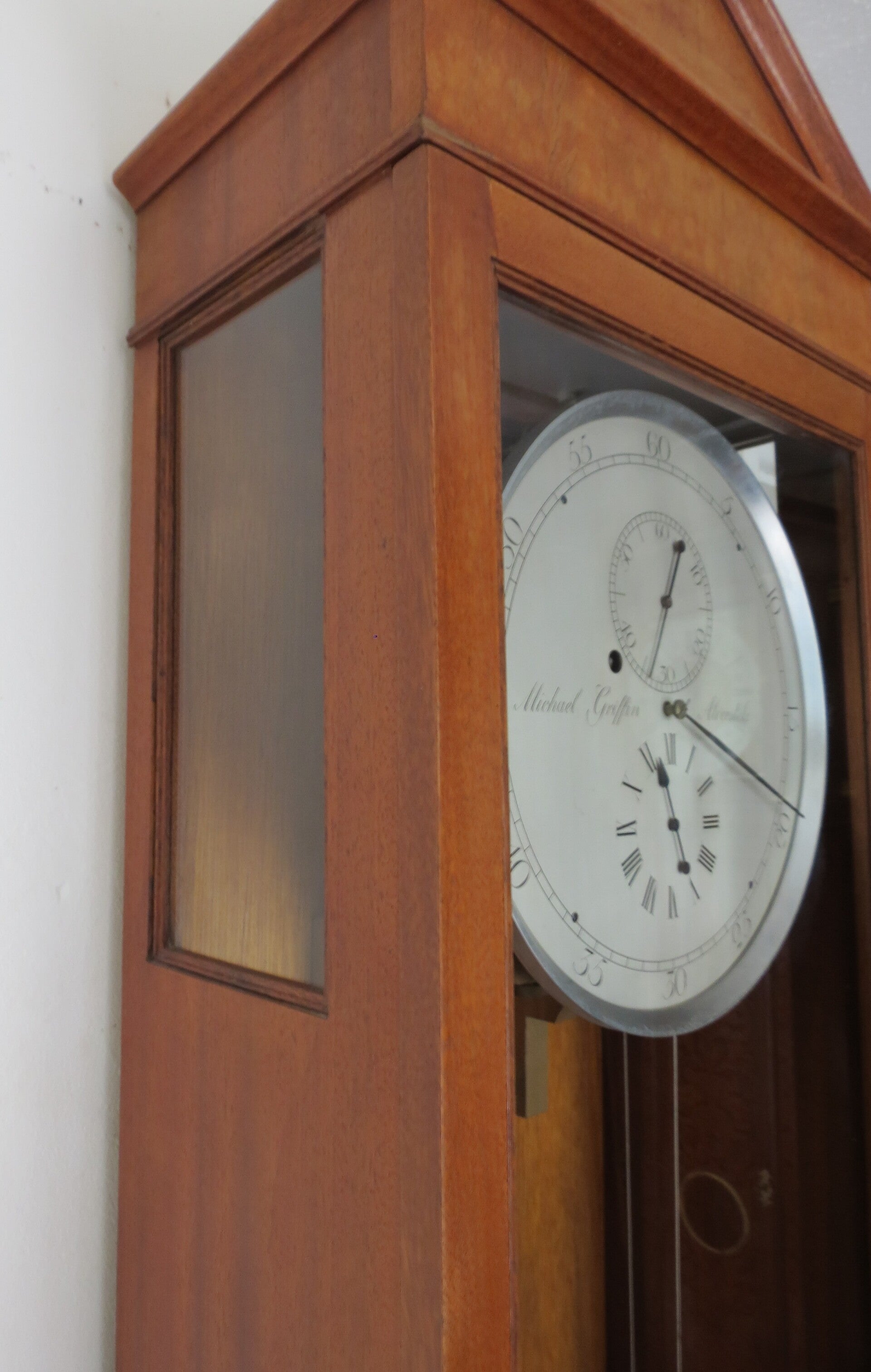
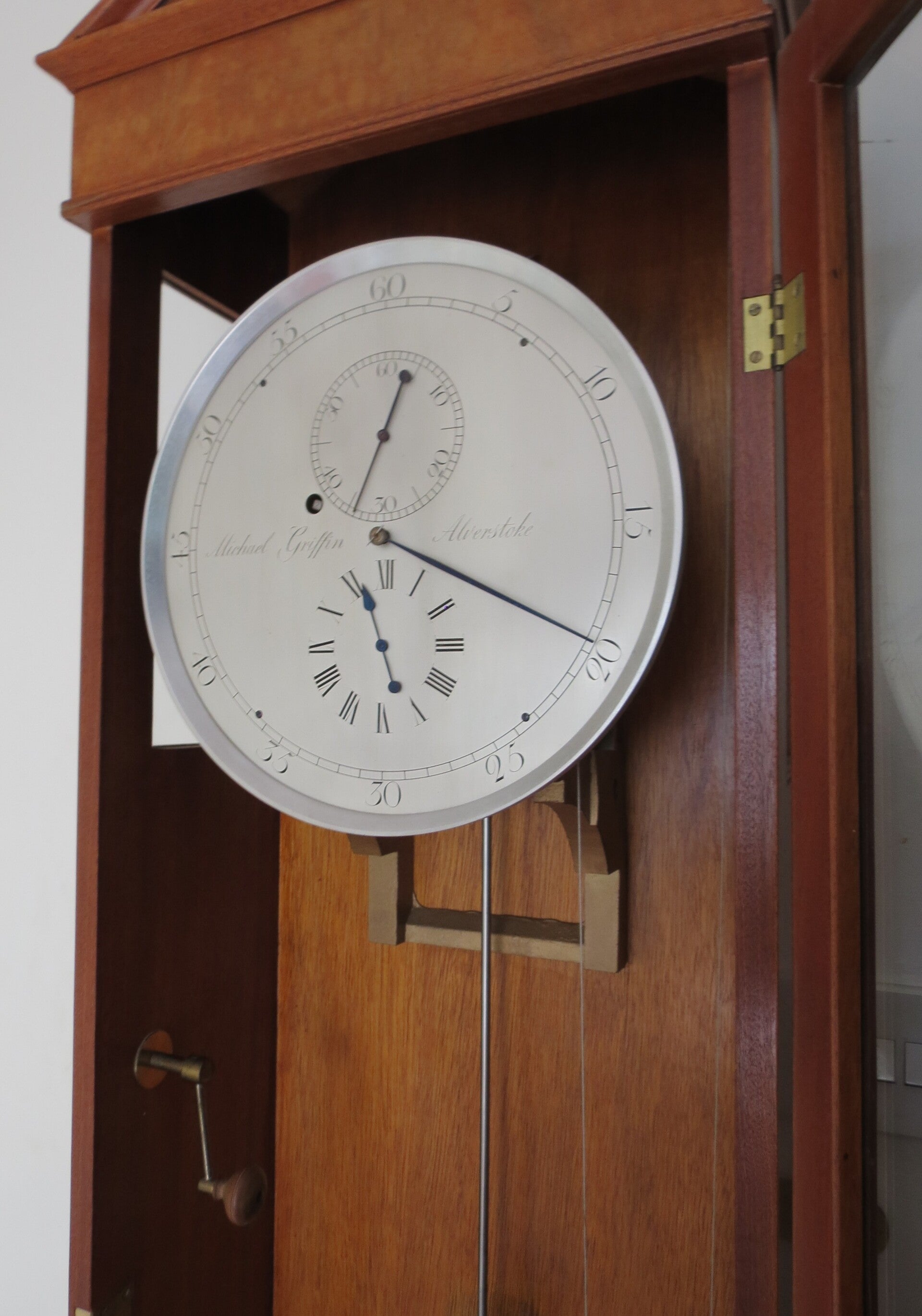
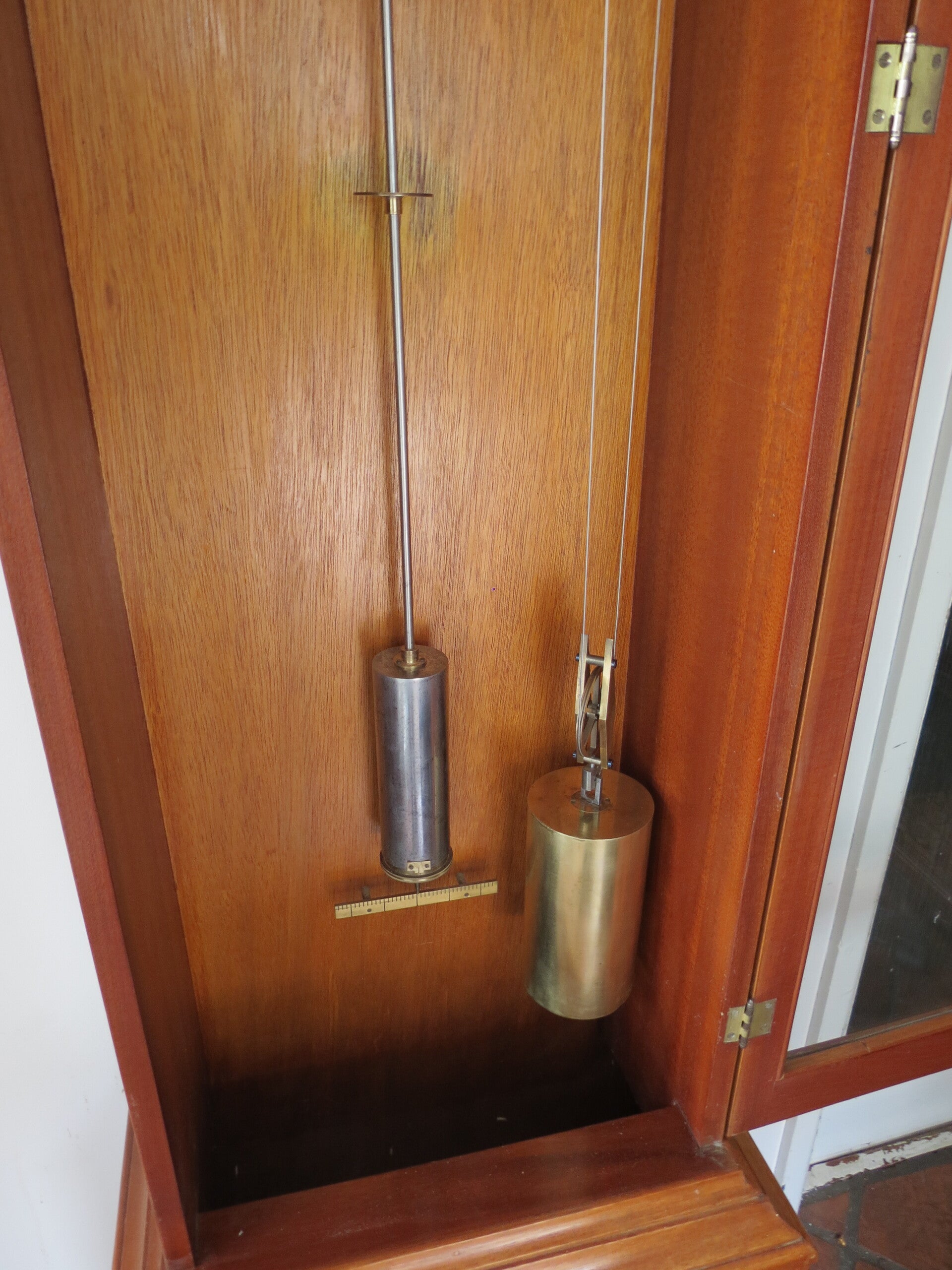
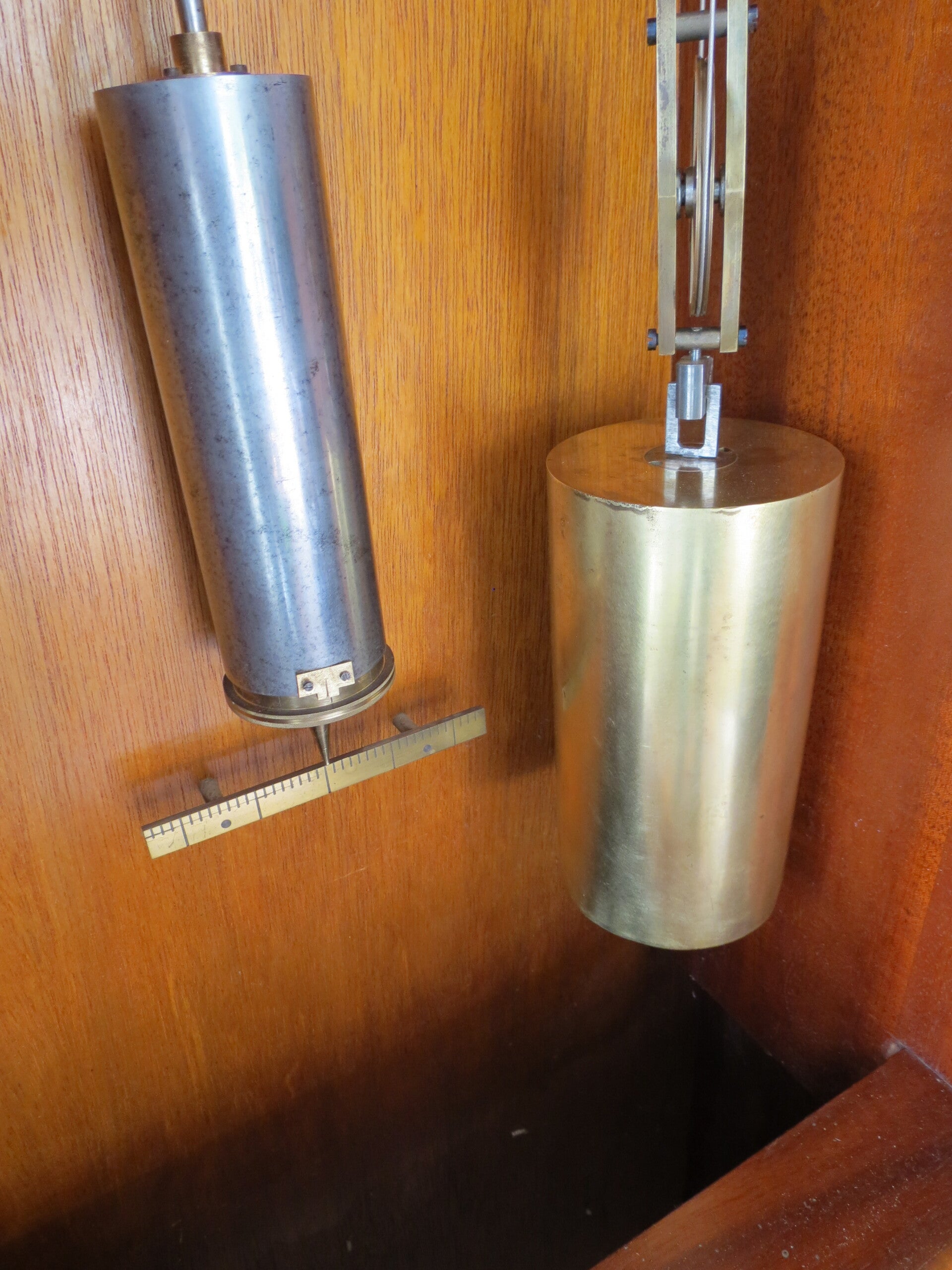
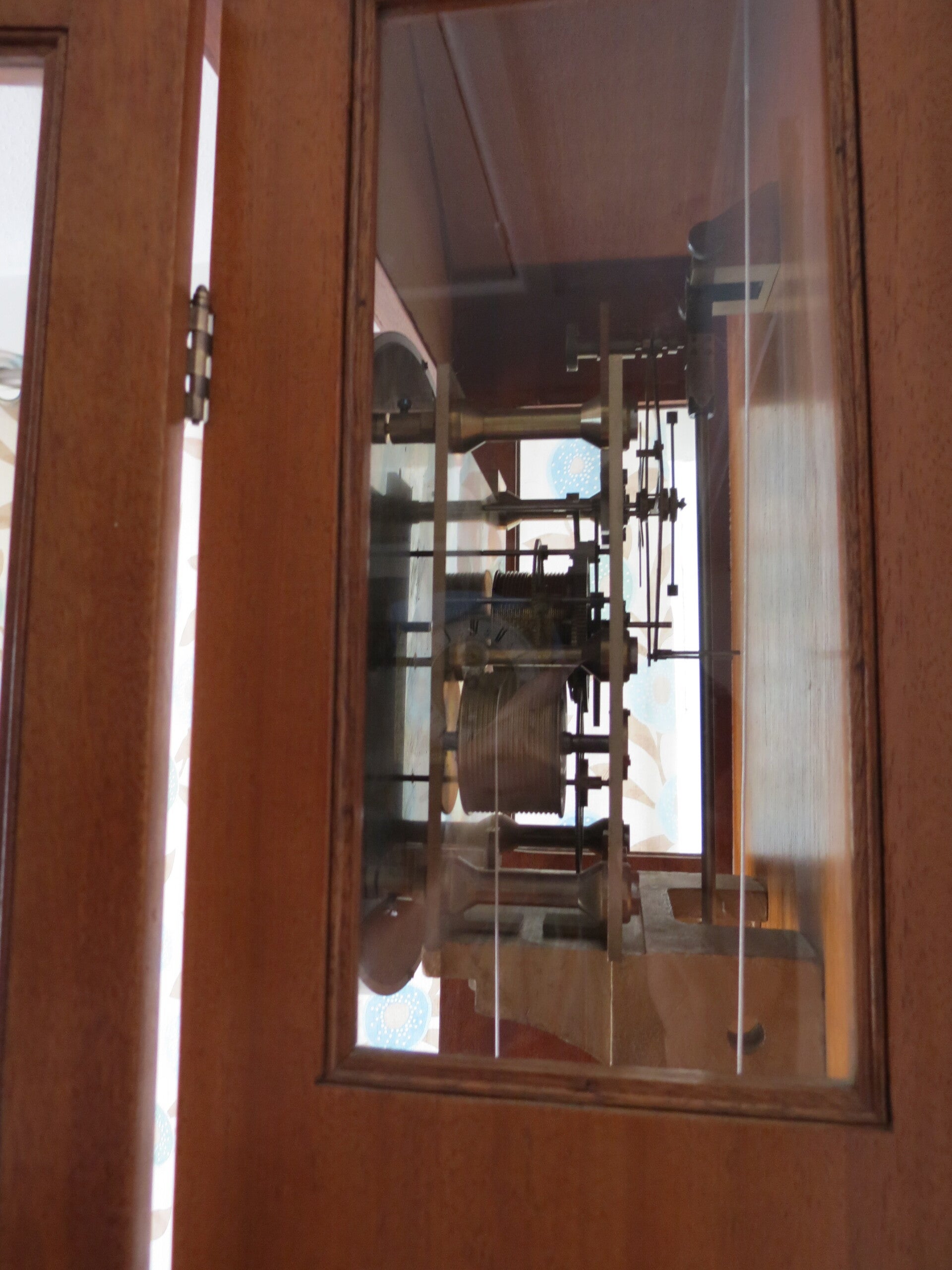
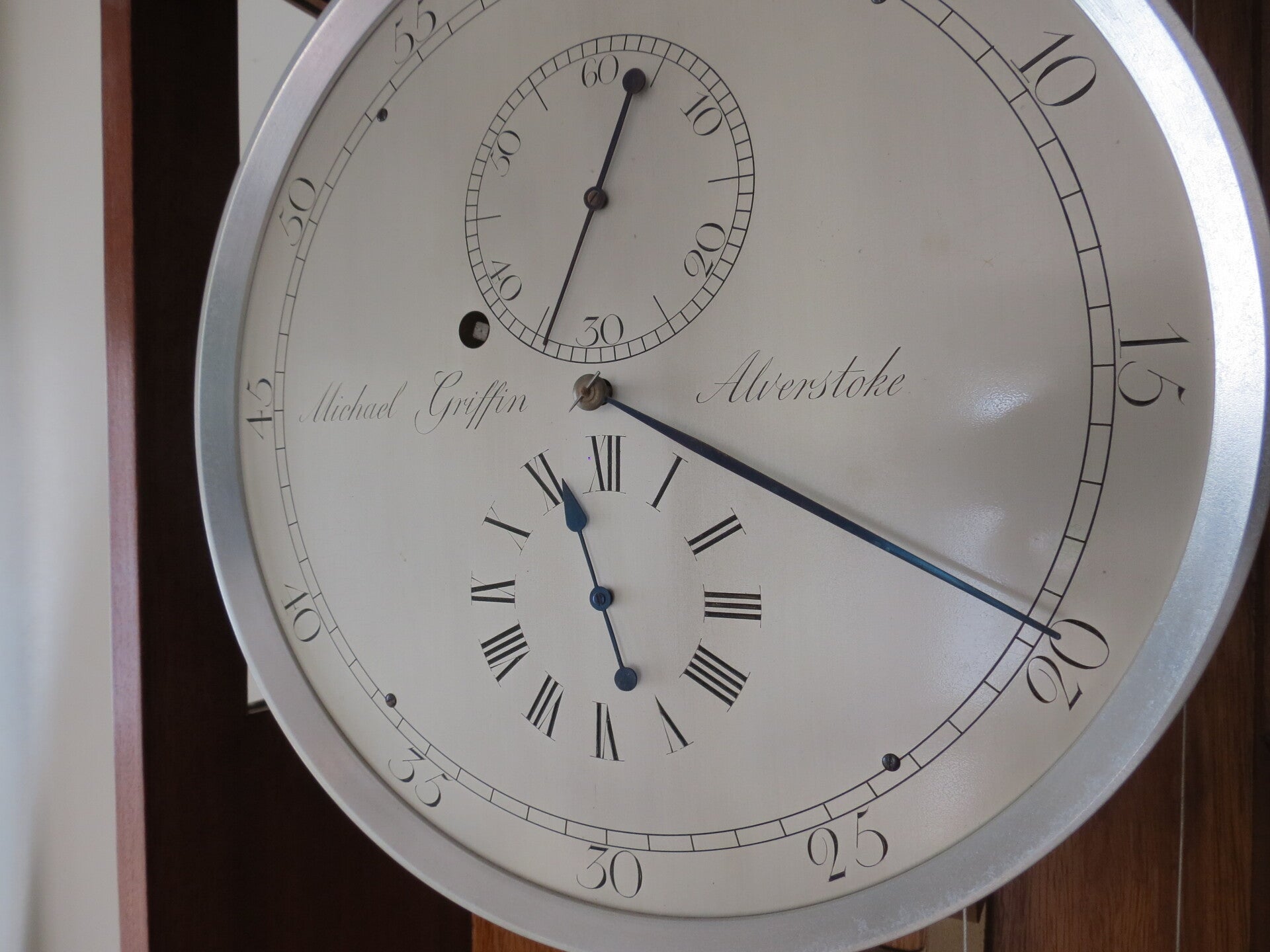
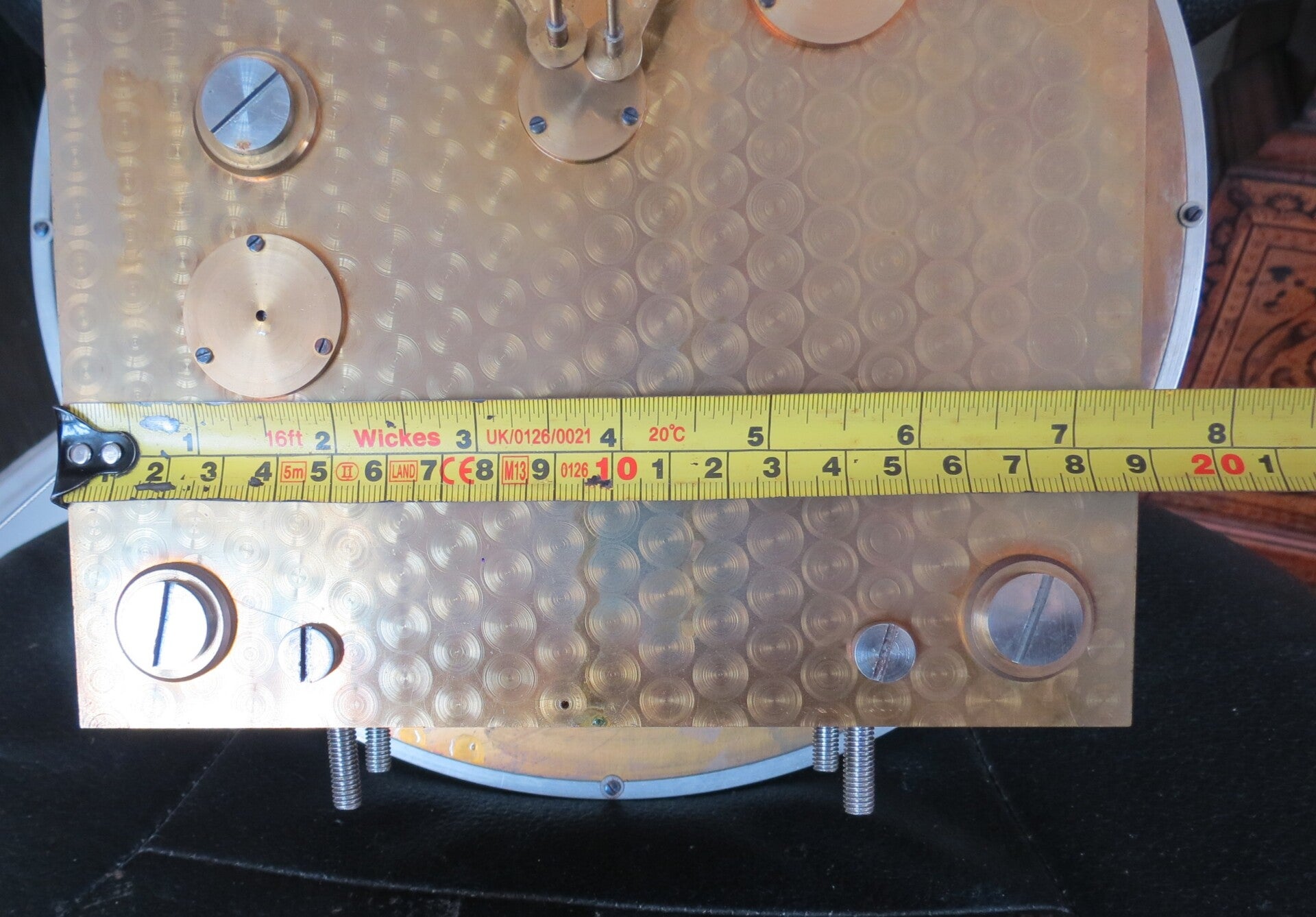
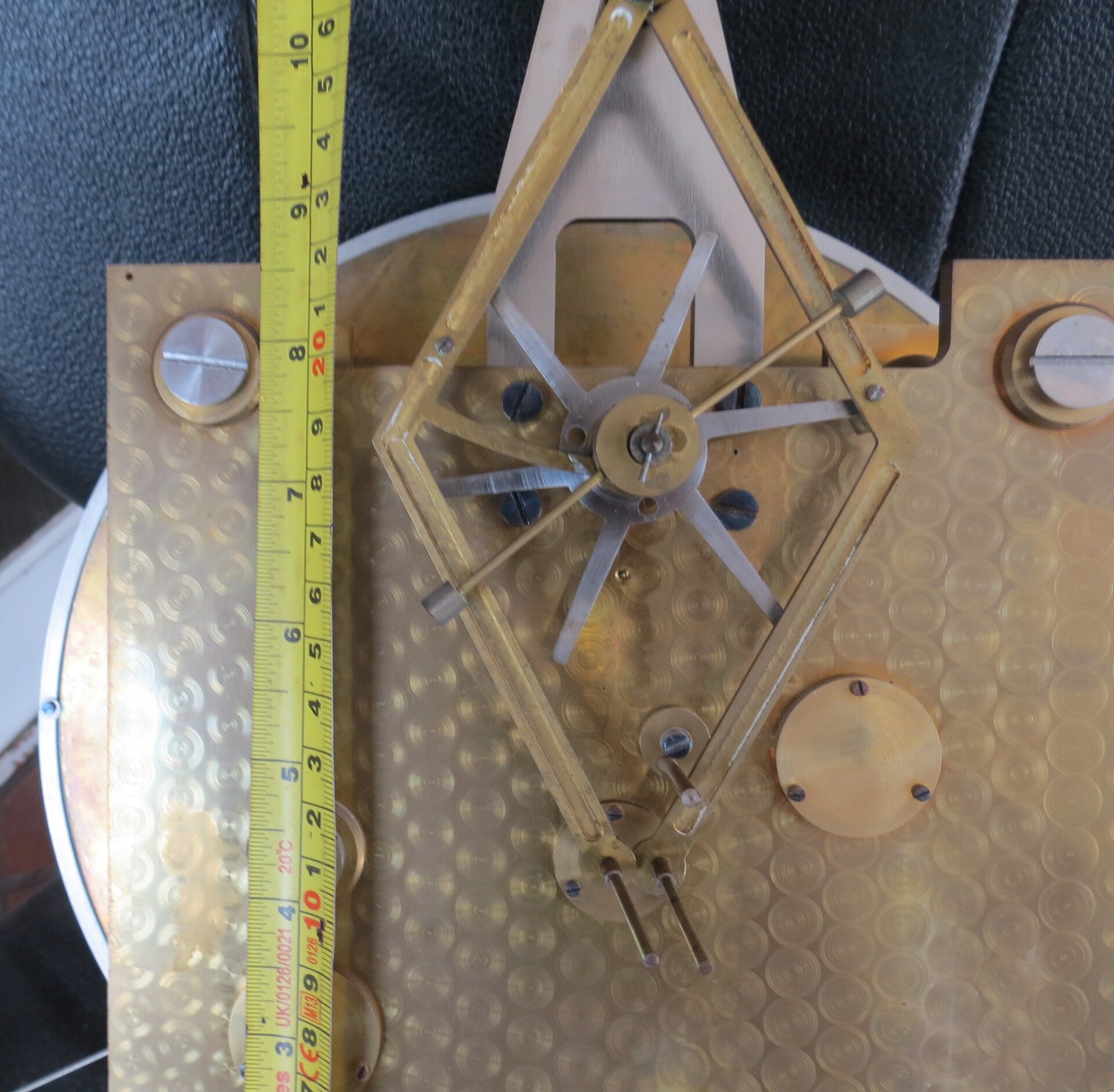
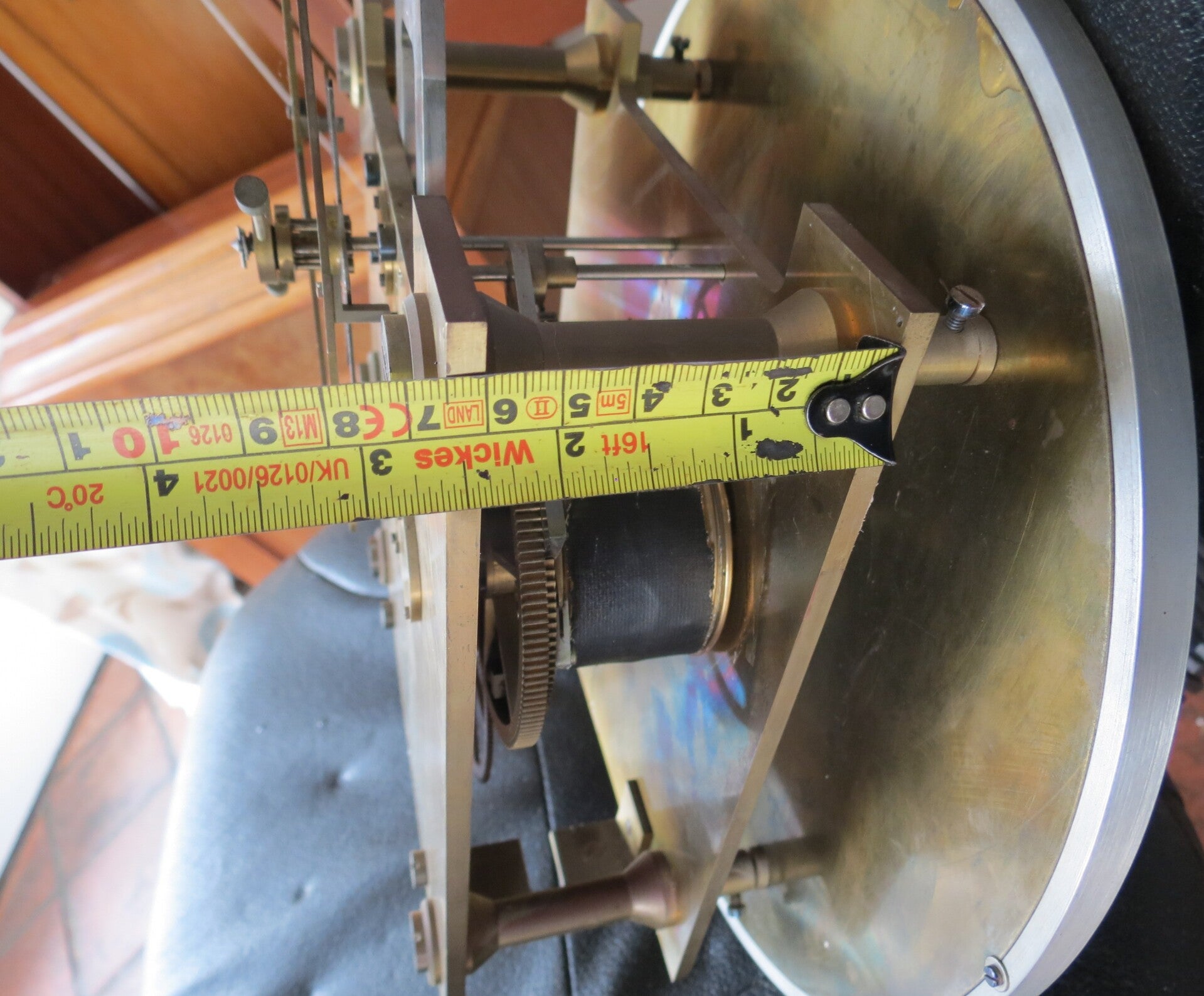
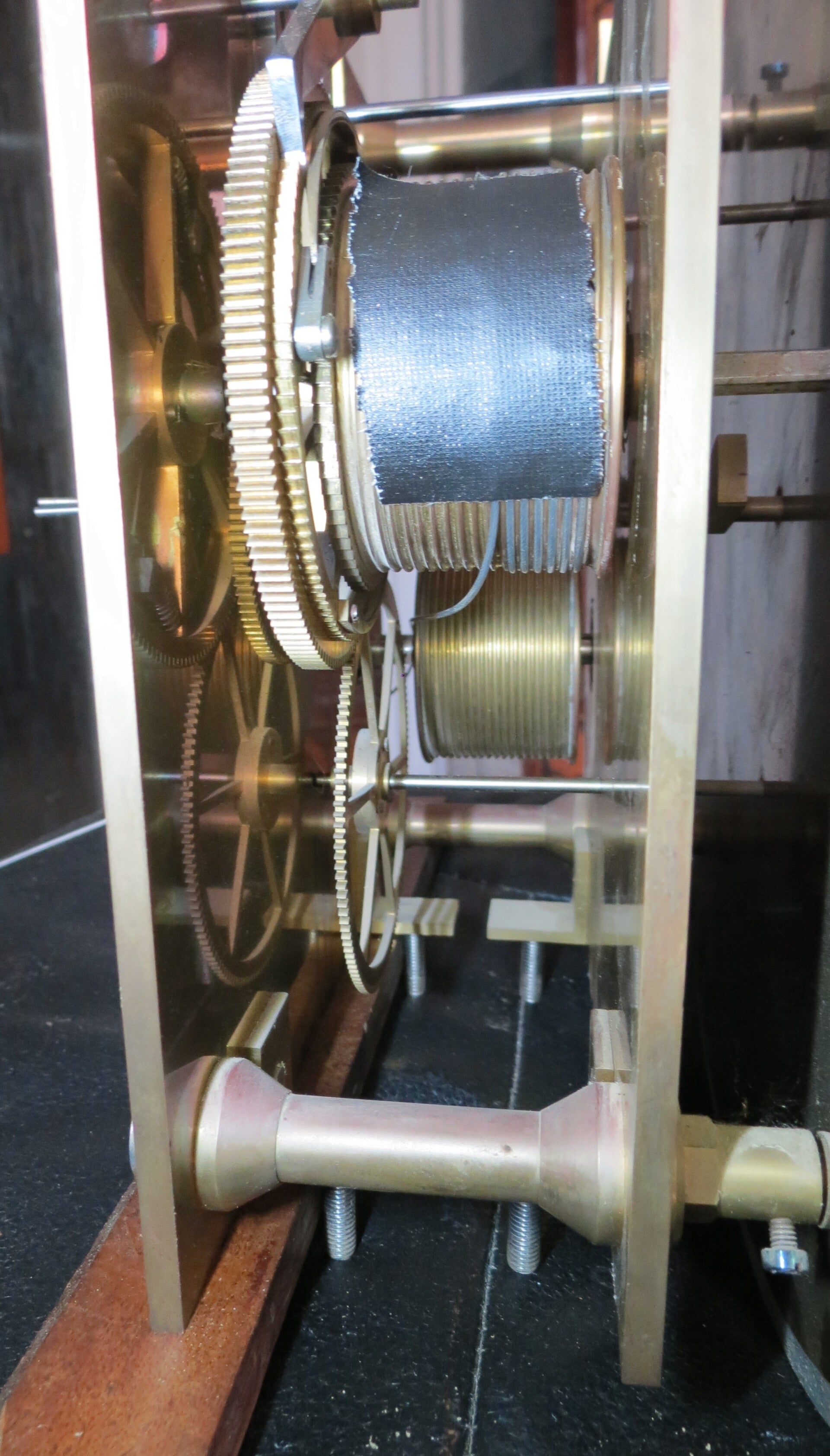
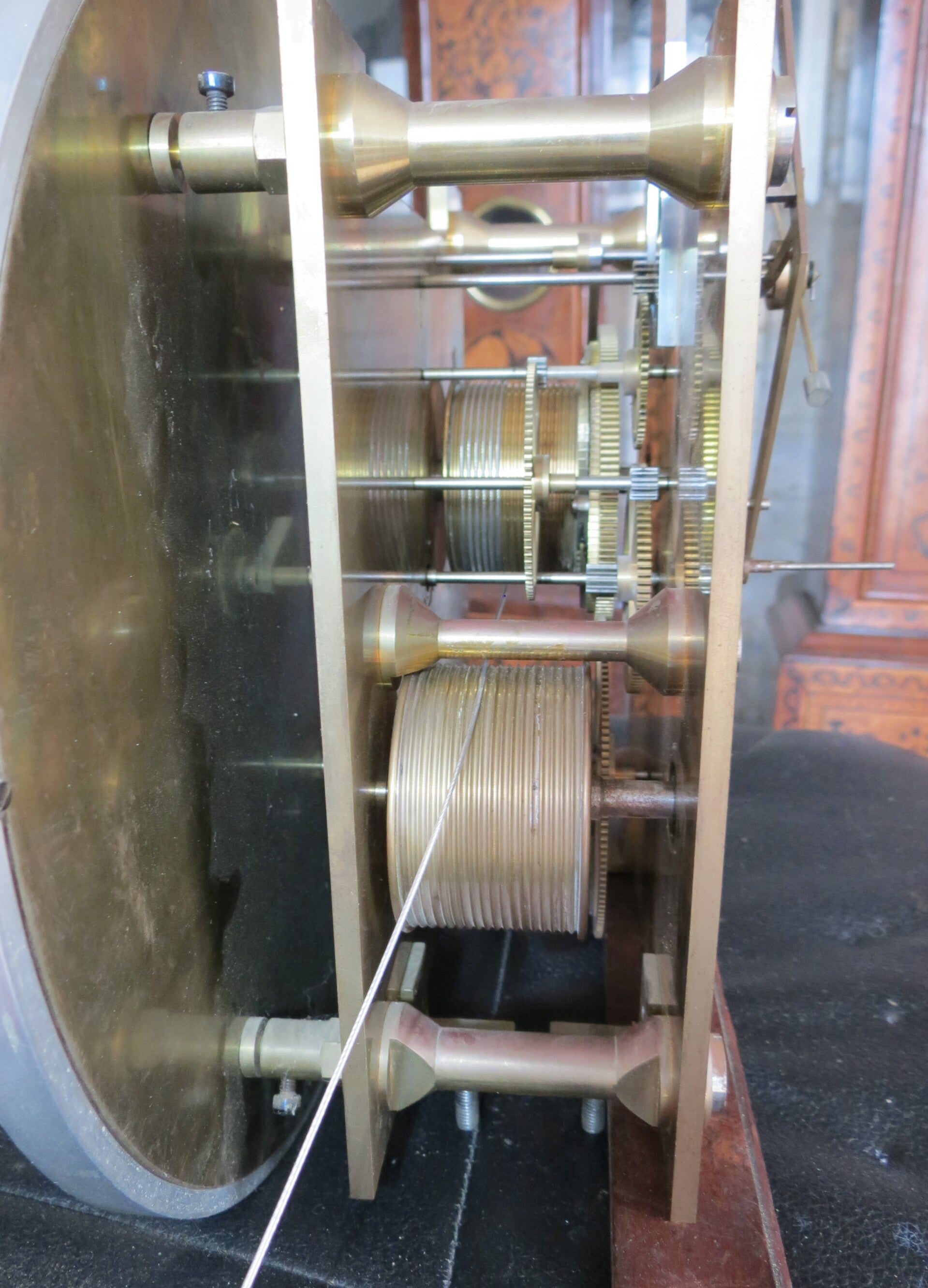
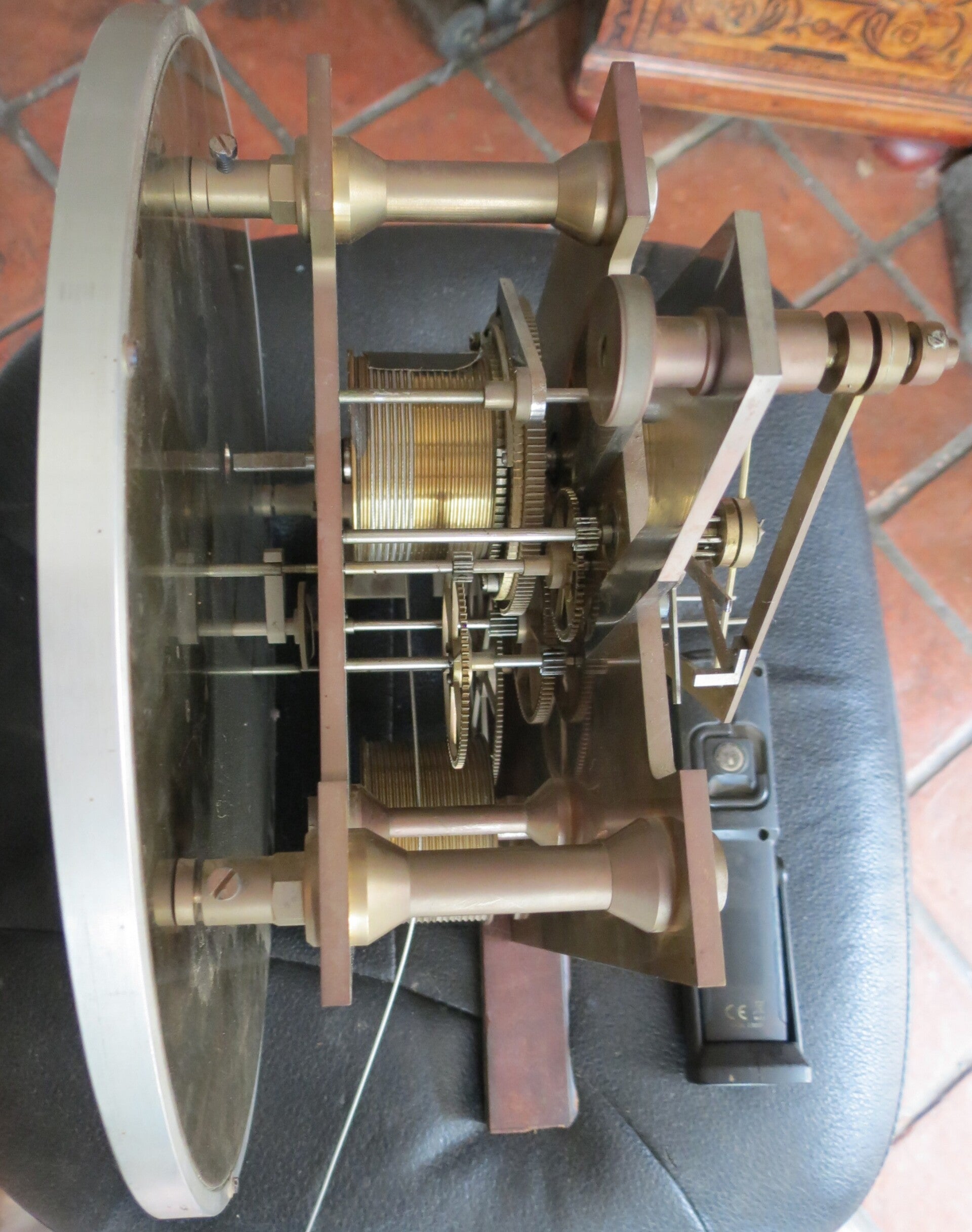
A very rare 'astronomical' regulator longcase clock by Michael Griffin, Alverstoke. Gravity escapement, maintaining power, split hands/ arbours on dial for seconds/ minutes/ hours. Heavily built 5-pillar, 8-day movement with 5mm plates. Substantial pendulum fixed to back of case with platform to rod for fine tuning. Heavy brass-cased weight. Bespoke mahogany case with large glazed trunk door, side viewing windows, lock to side.
The clock is complete and fully working.
The quality of construction is to the highest standards.
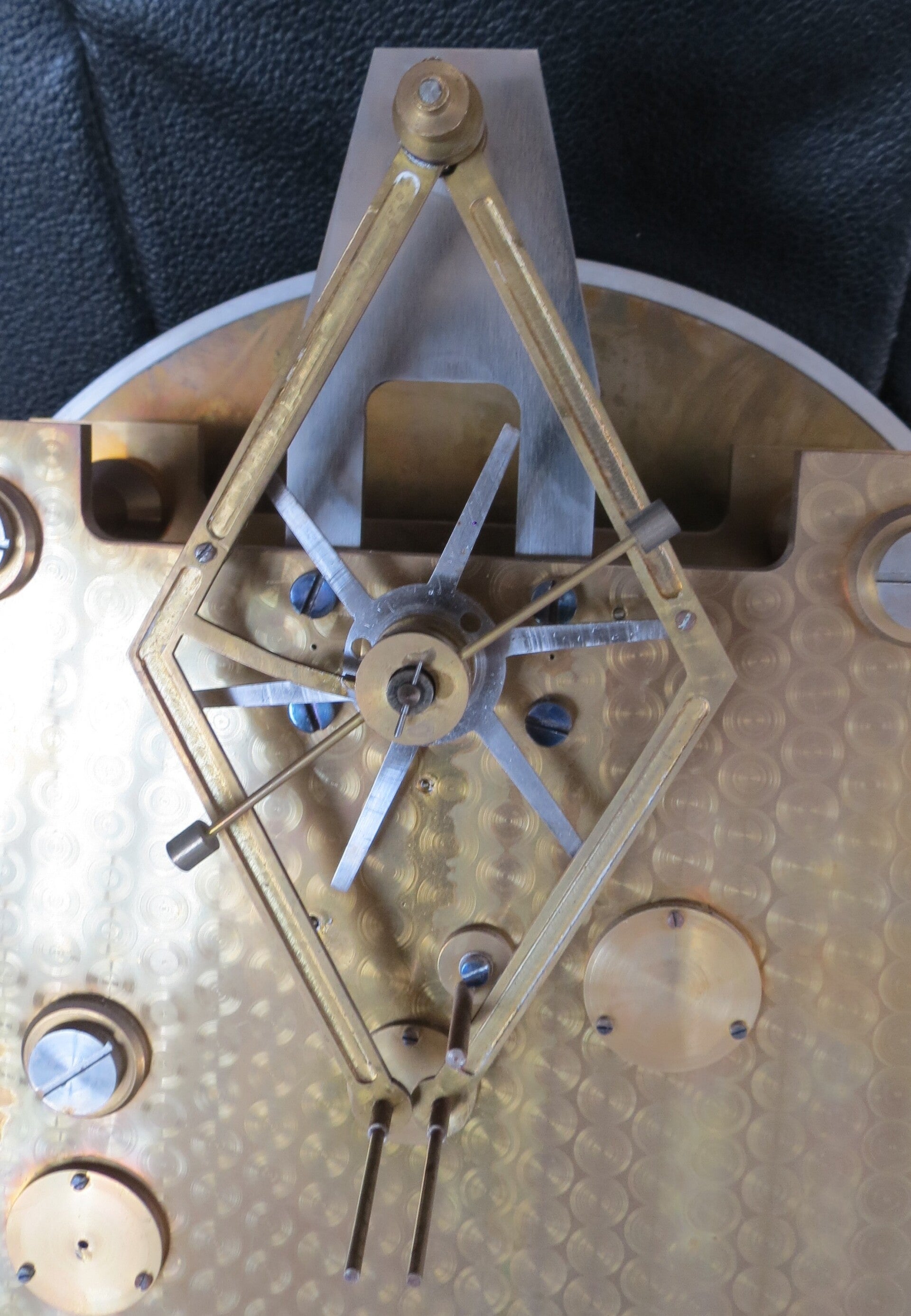
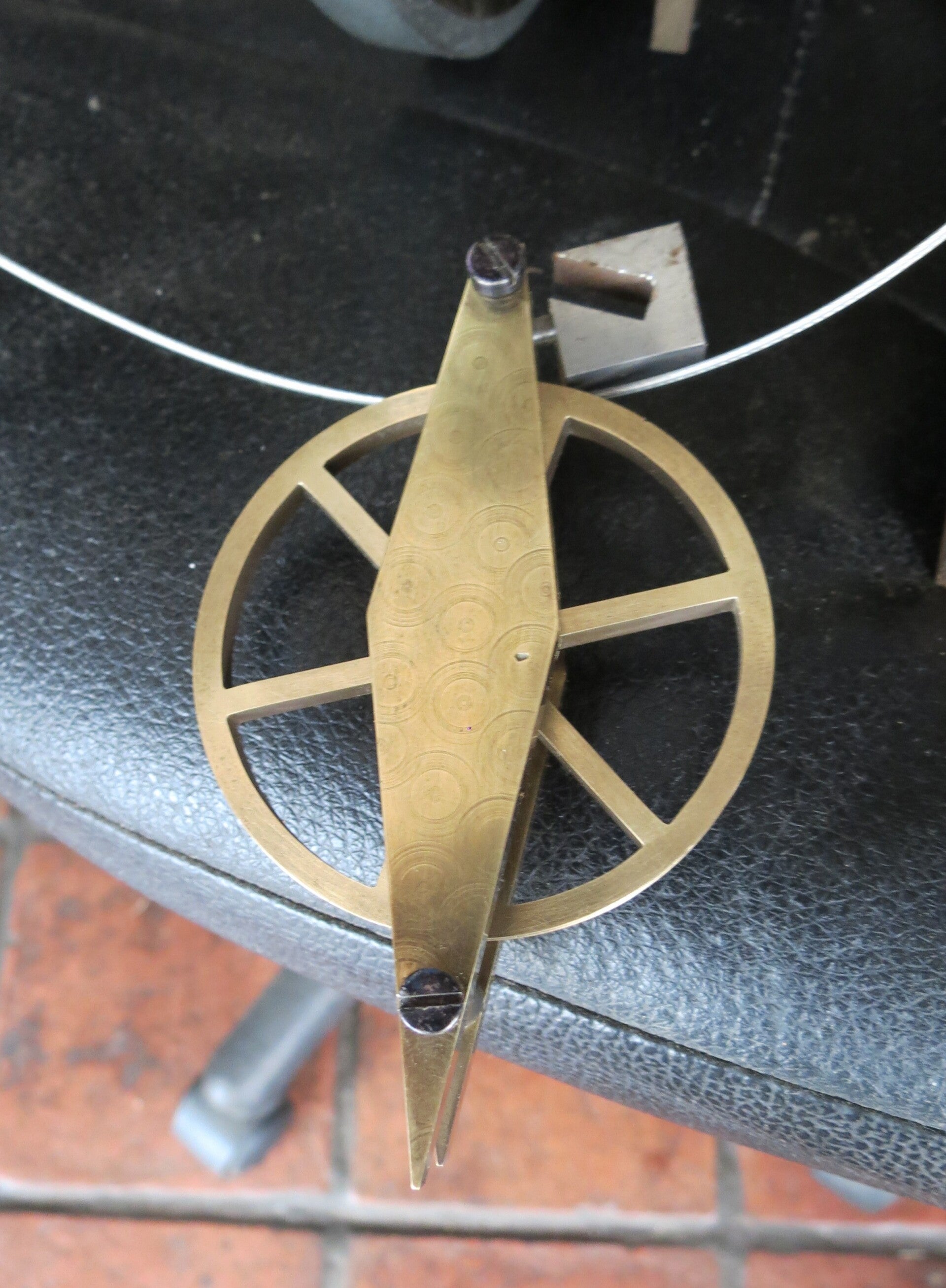
The gravity escapement is a particularly rare feature. Traditional escapements, even very accurate dead-beat types, impulse the pendulum directly from the mechanical movement, this inevitably introduces timing errors to some degree. A gravity escapement impulses the pendulum from arms falling on to it from gravitational force, because gravity is a constant force at any given location greater accuracy can be achieved.
This type of '6-legged' gravity escapement (or double 3 legged) was firstly, and very famously used for the Westminster clock (normally known as Big Ben although technically this is the name of the bell). It was designed by Edmund Beckett Denison (later Lord Grimthorpe) in 1851, the brief being to isolate the escapement from the significant wind forces etc imposed on the hands which would otherwise be transmitted back through the movement and adversely affect timekeeping.
This regulator uses a later modification of that escapement which is more suitable for smaller domestic clocks. This later design was pioneered by the famous London clockmakers Thwaites & Reed.
The accuracy that can be achieved from this type of escapement with careful set-up is as accurate as any mechanical clocks can be, only surpassed by quartz referenced timekeeping.
In practice the gravity escapement has a very distinctive, strong tick as the gravity arms fall on to the pendulum. While normal regulation is carried out by adjustment at the bottom of the pendulum note also that the pendulum rod has a small 'tray' similar to Big Ben where small weights can be placed to fine-tune the timekeeping by slightly raising the centre of gravity.
The original maker and owner of this clock was Michael Griffin of Alverstoke. Following his death the clock went into storage where it remained for a few decades. I recently acquired the clock direct from his family. It was complete and basically sound but required a degree of cleaning and re-commissioning as you would expect. This has now been done and the clock runs reliably and correctly. Ultimate fine tuning would need to be done once the clock is installed but it has been running very accurately here.
The dial is set out in typical 'astronomical' style with separate calibrations for seconds, minutes and hours. The seconds dial is often most important on a regulator clock so is prominent and centrally placed. The dial is engraved and silvered in traditional manner.
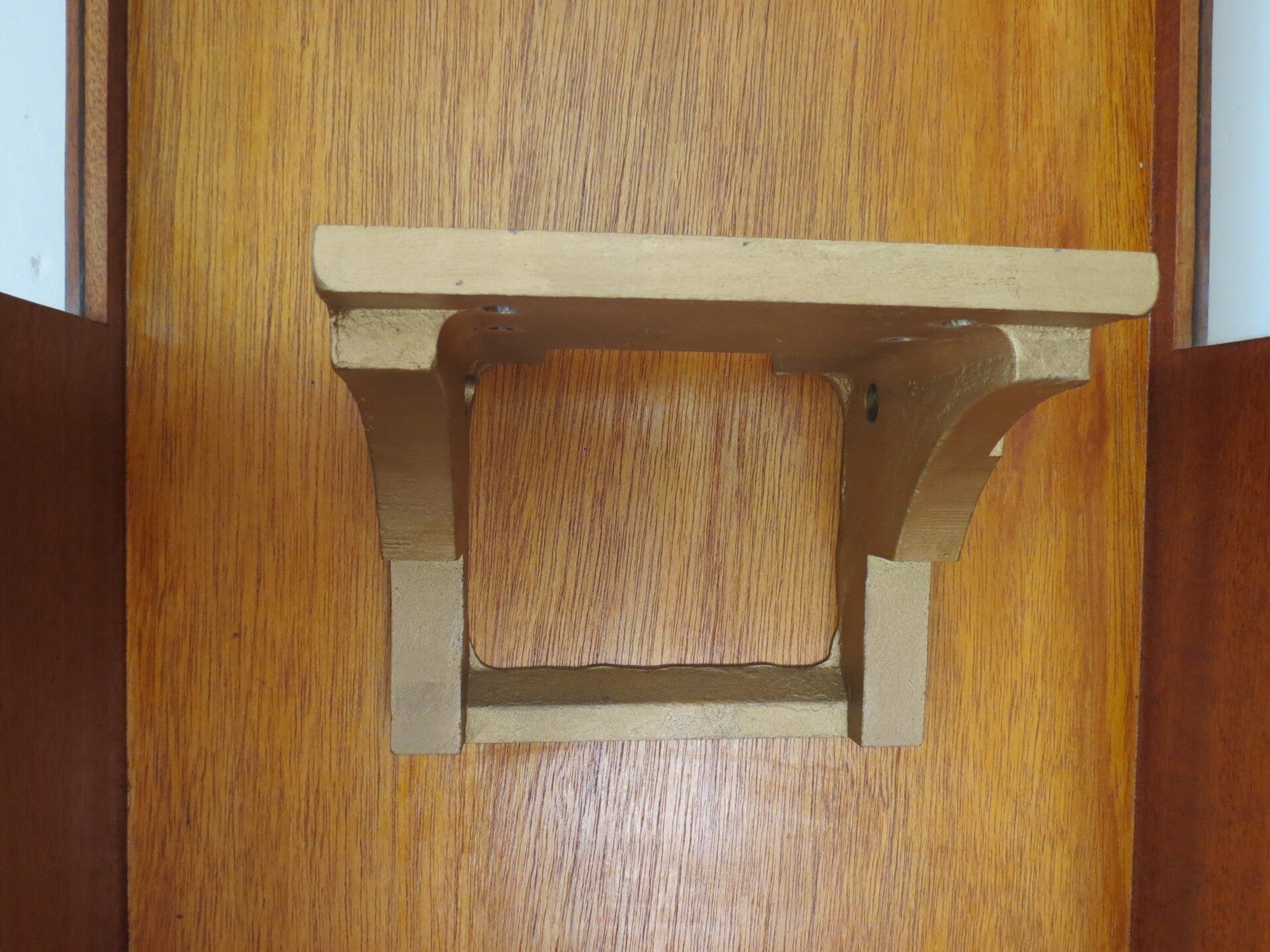
The movement is very substantial as you would expect. 5mm plates joined by 5 large pillars. The maintaining power is working correctly, keeping the clock running while winding. There is a secondary barrel which serves as an idler transferring the cable drop for the weight to the right of the movement. The movement is mounted on a very substantial steel bracket fixed to the back of the case.
The case is typical for the period, substantially made from solid mahogany with large glass window to the front and side viewing windows. It has large metal brackets at the sides so ideally would be secured to the wall for rigidity. The case is in very good condition, just a few minor marks if you look closely. Overall case height is 83 inches.