

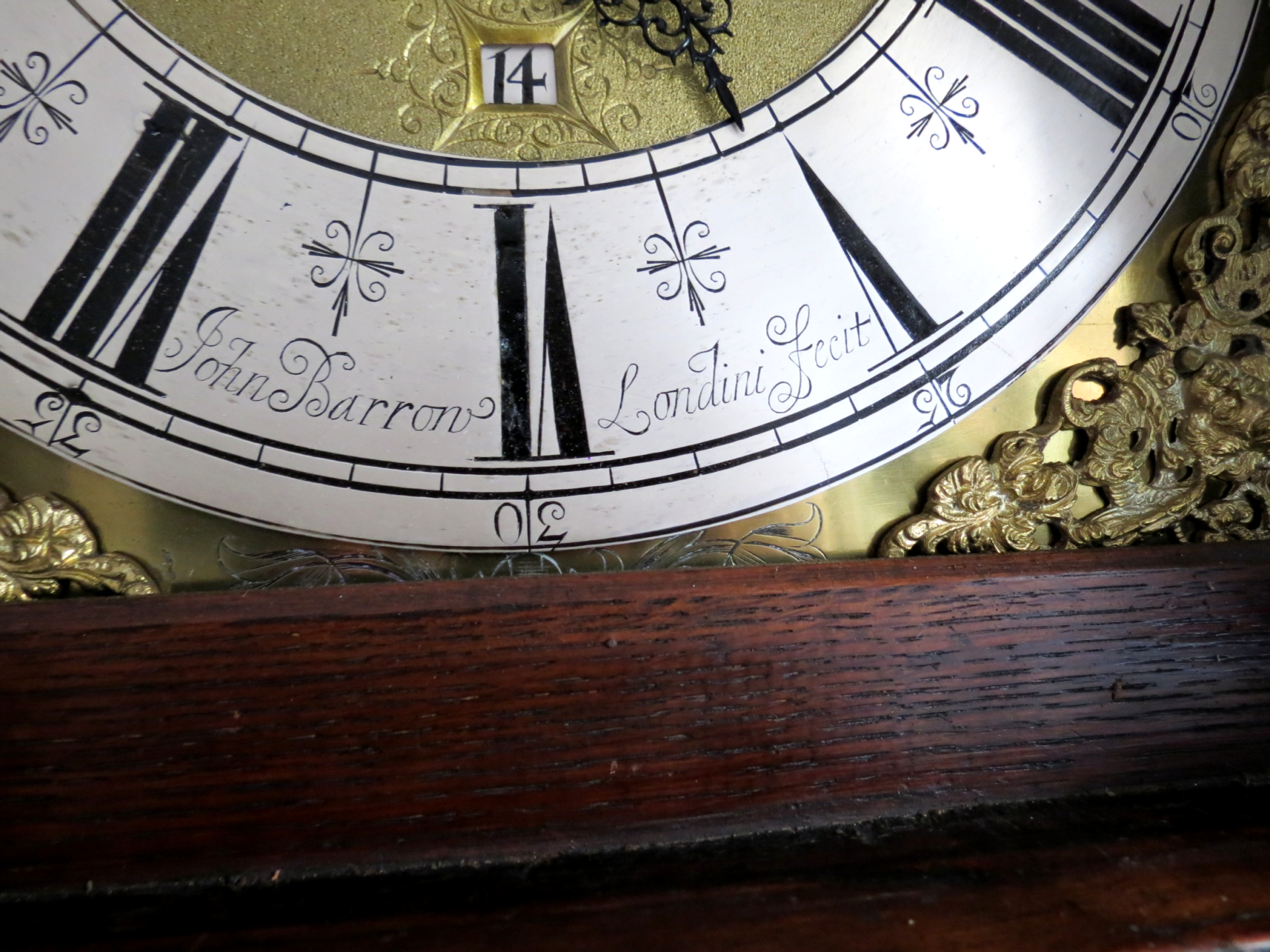
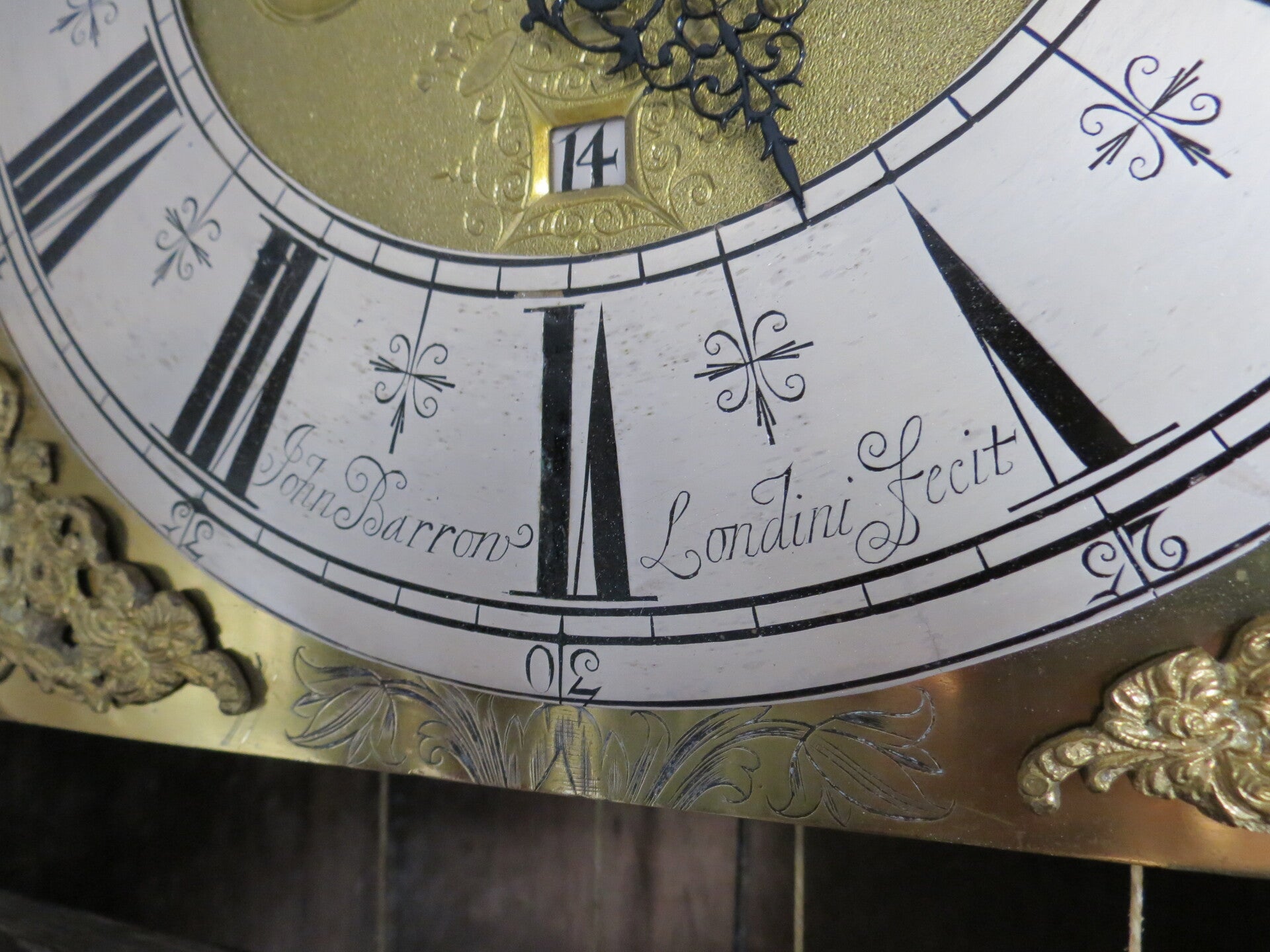
John Barrow Londini Fecit. Circa 1695. A good walnut and floral marquetry 8-day longcase clock, 11 inch dial.
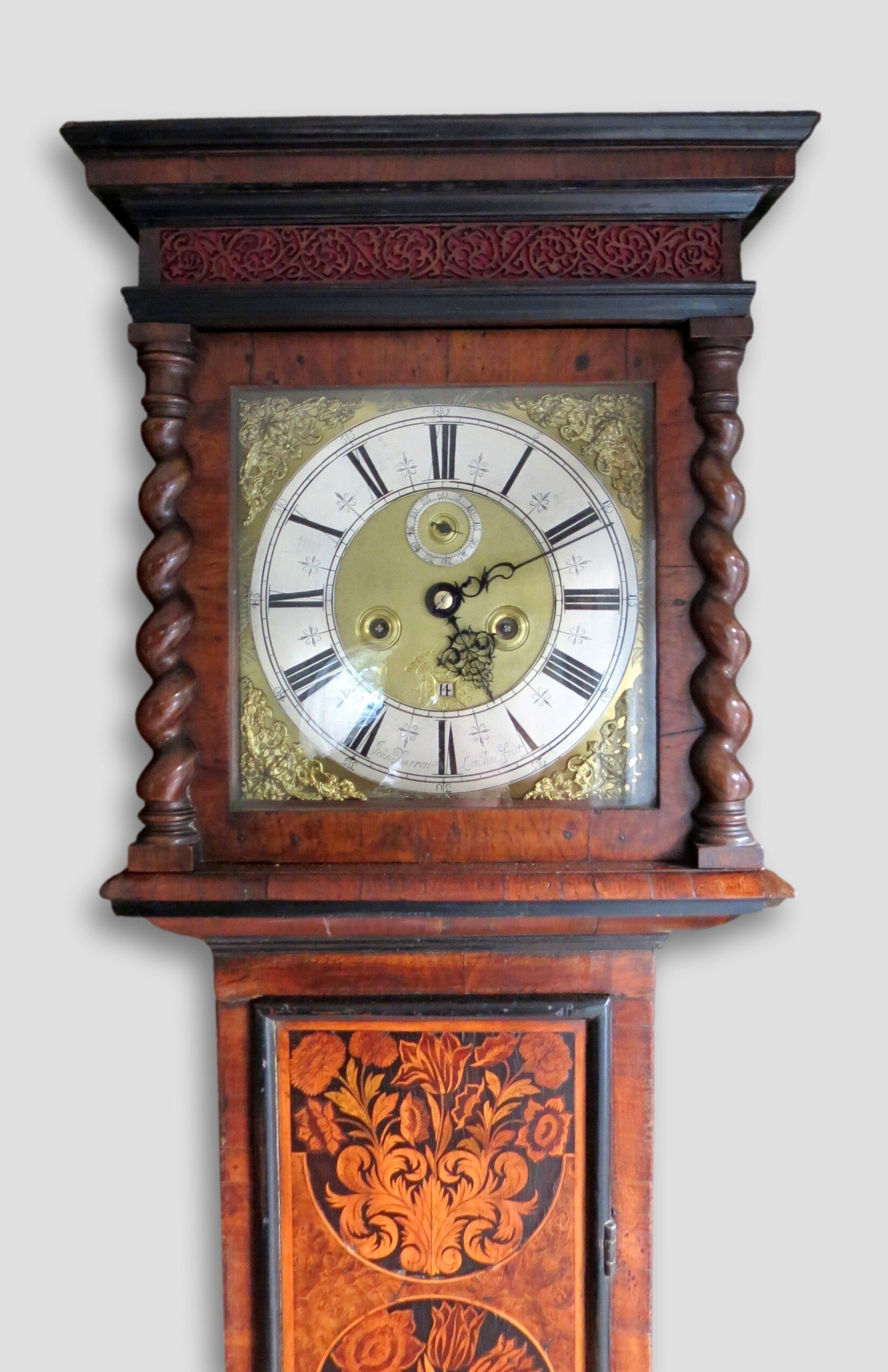
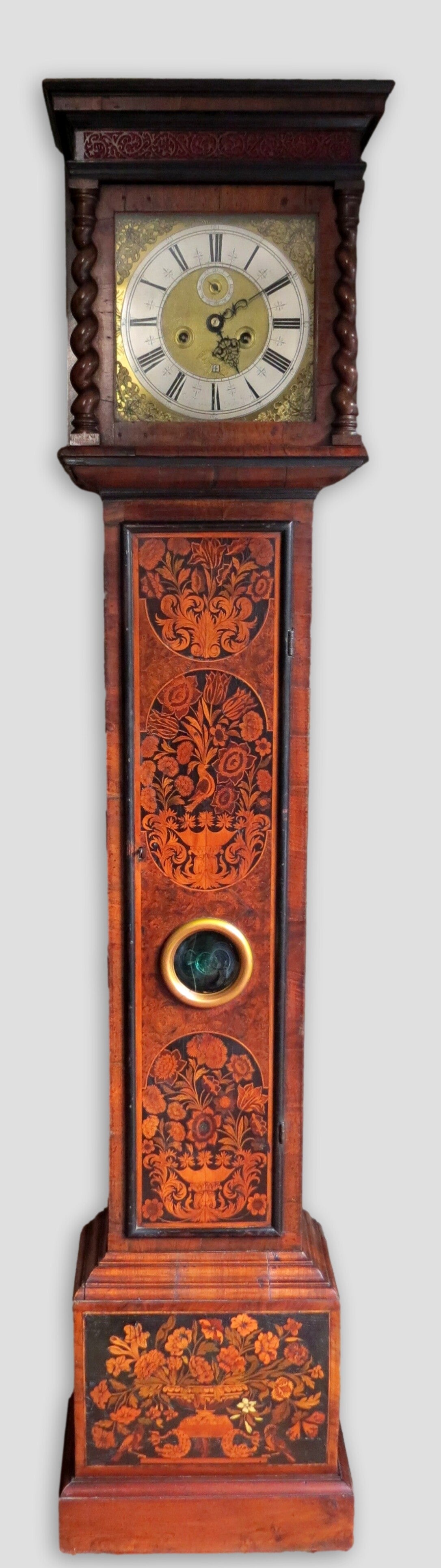
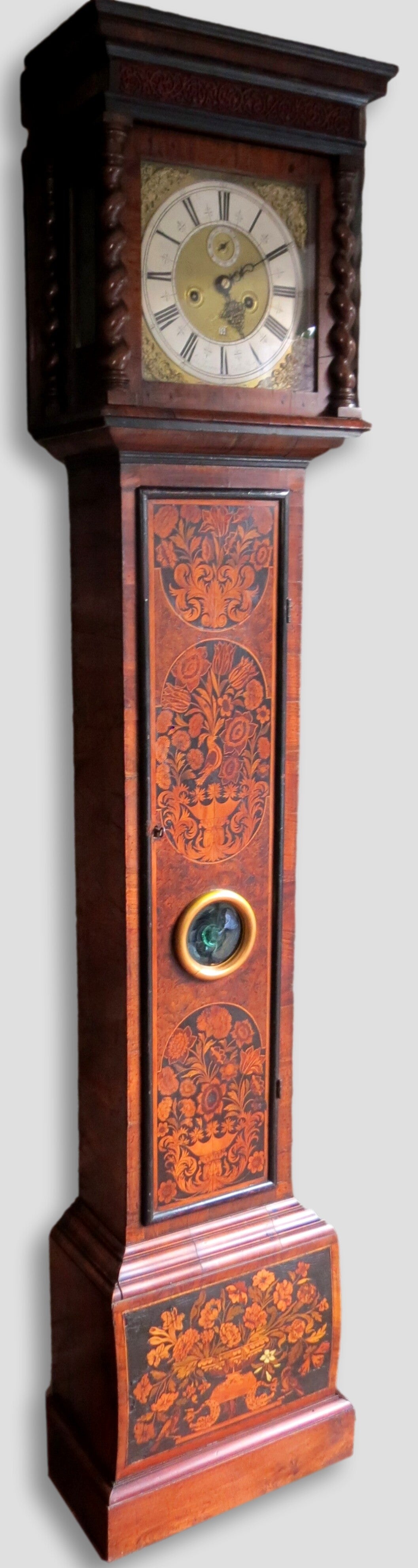
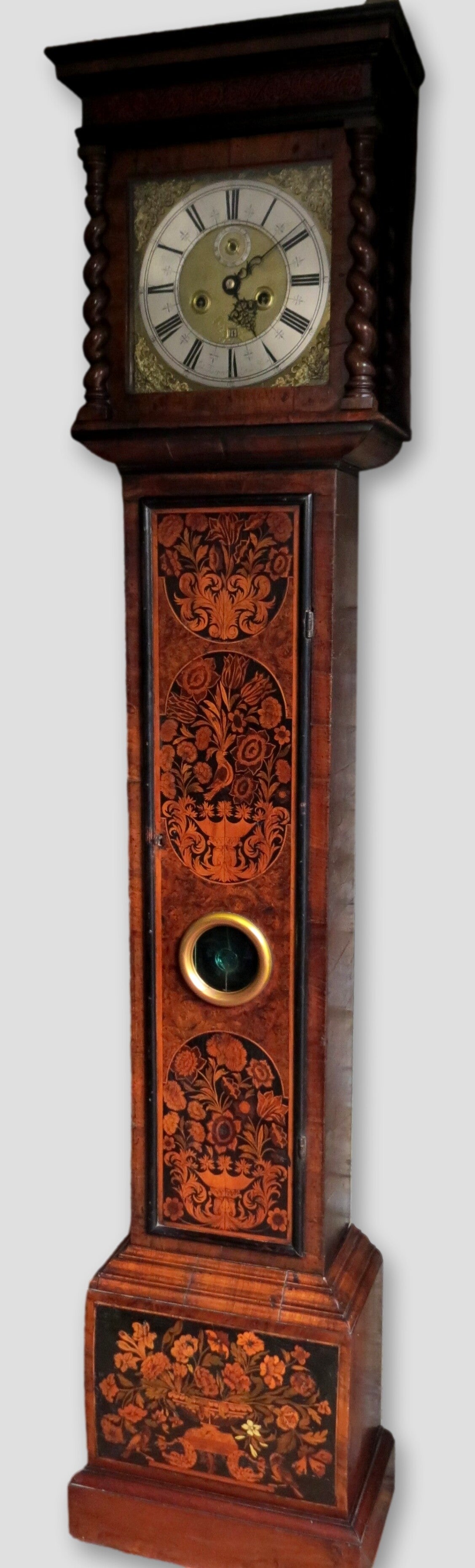
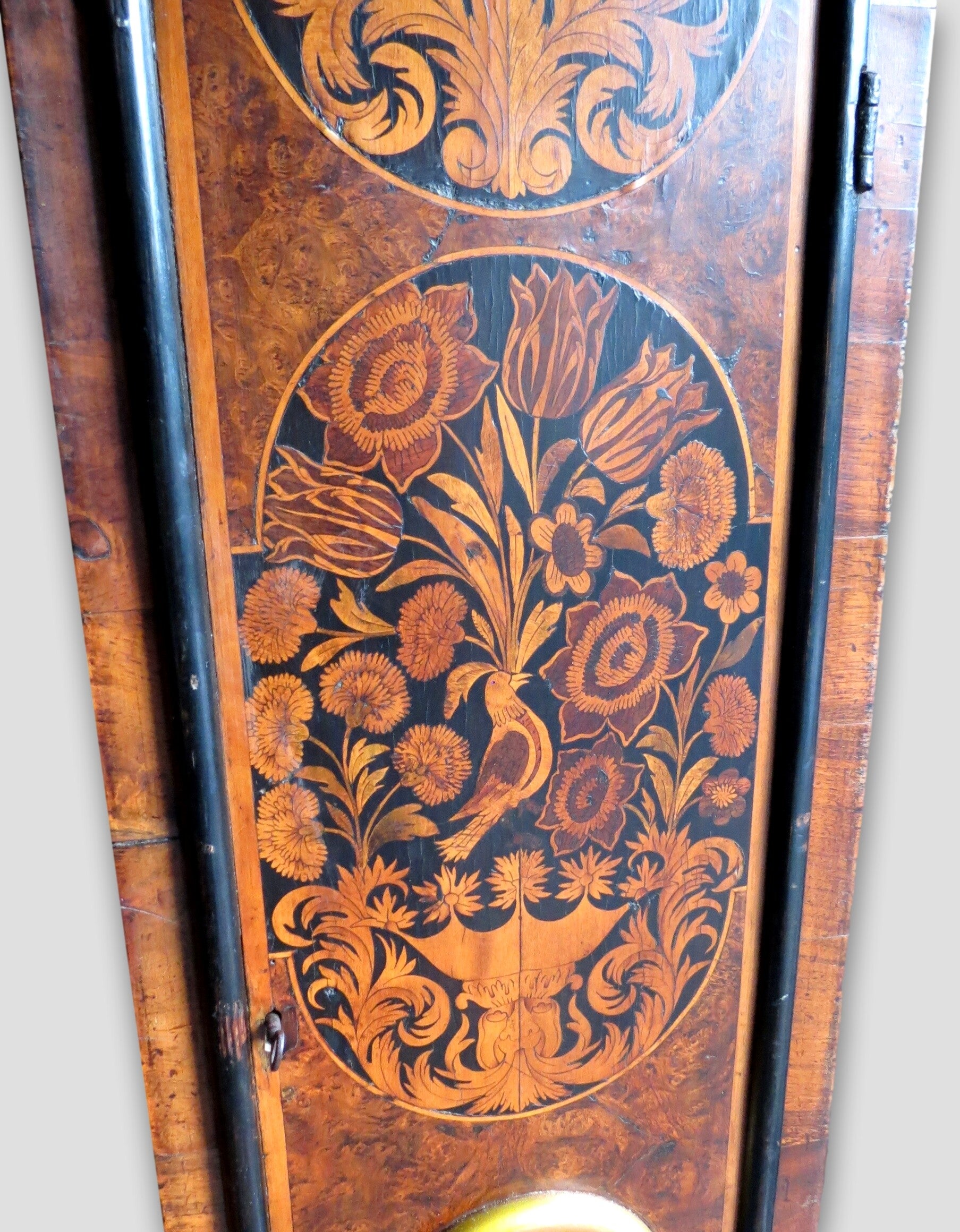
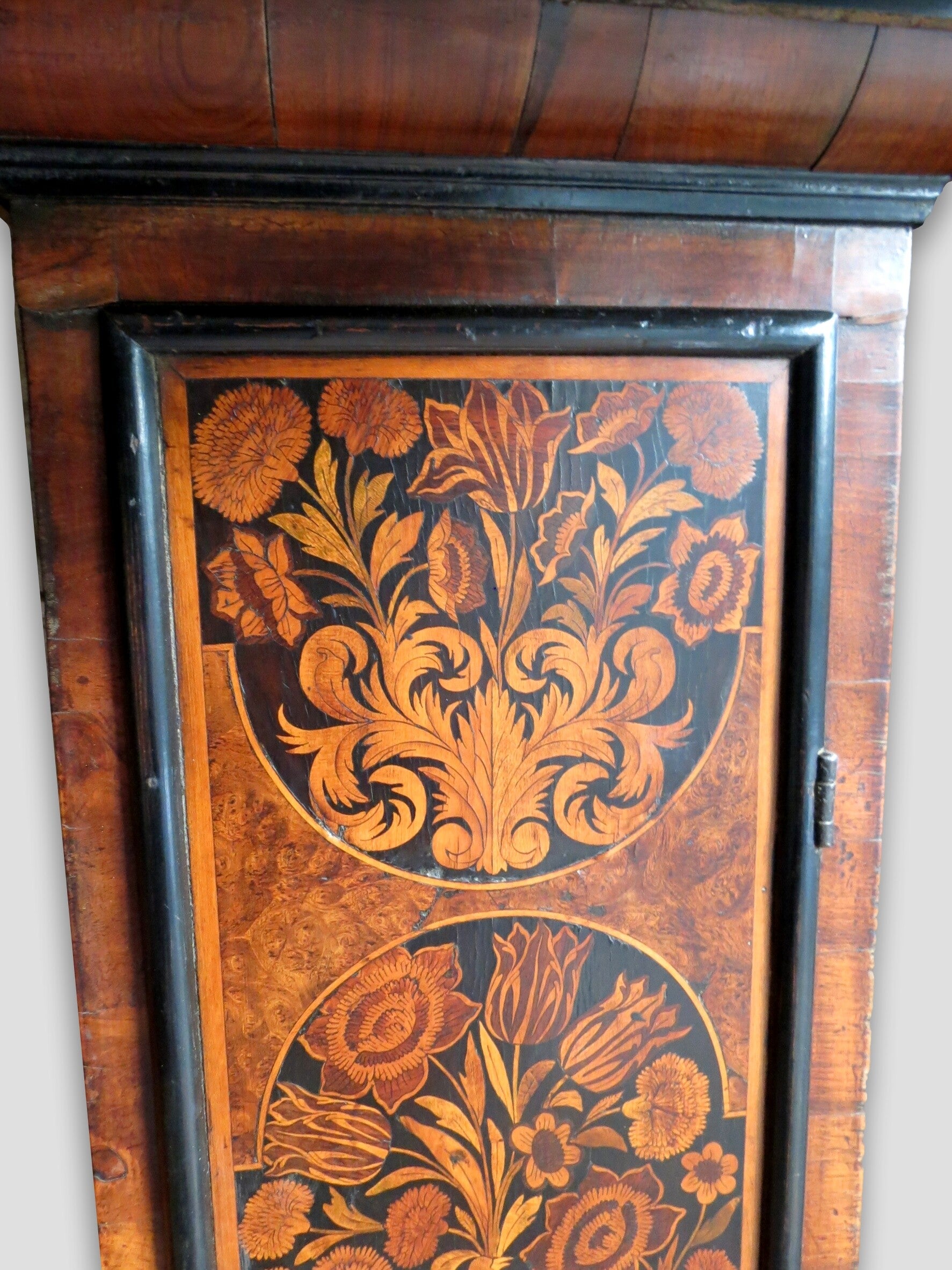
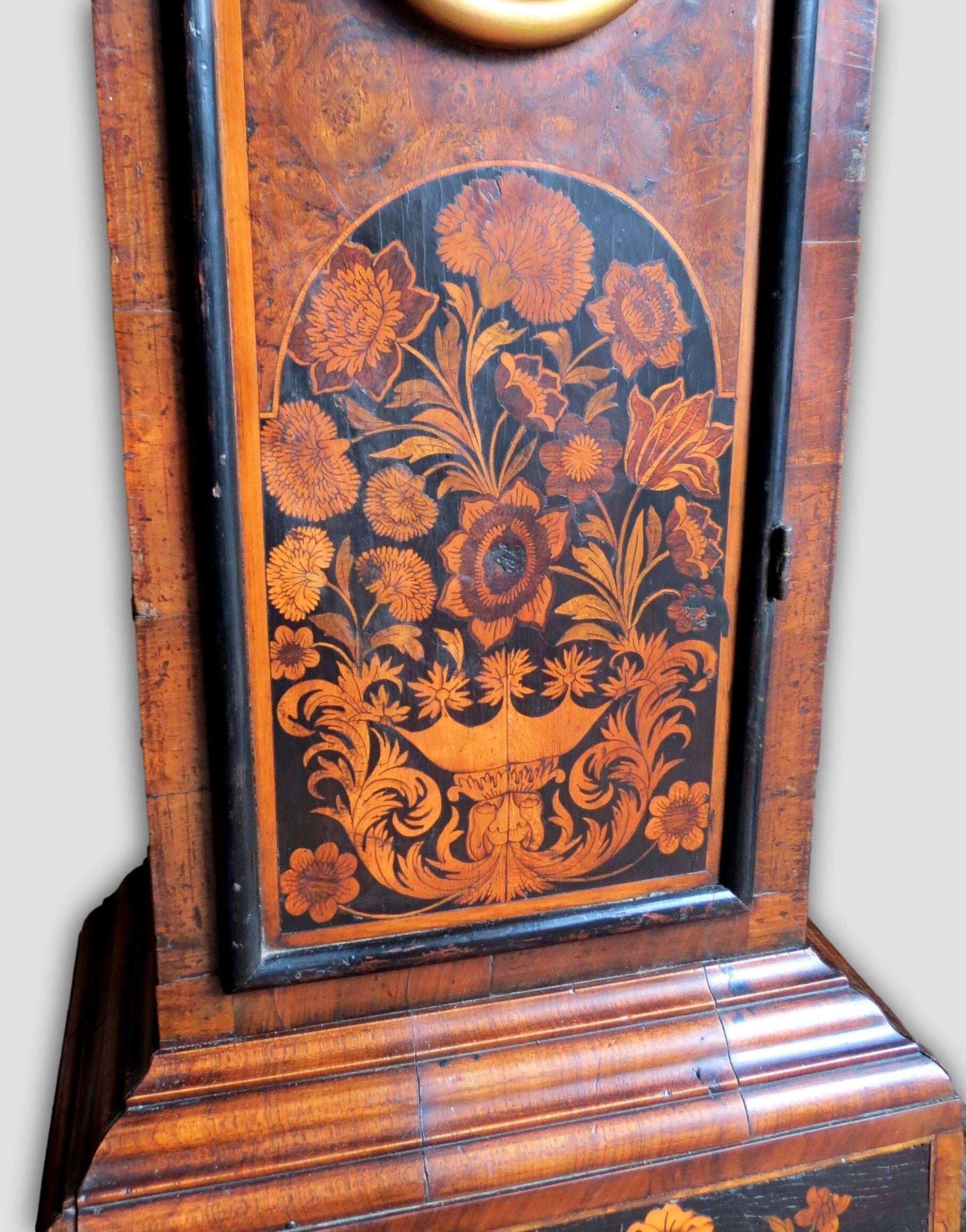
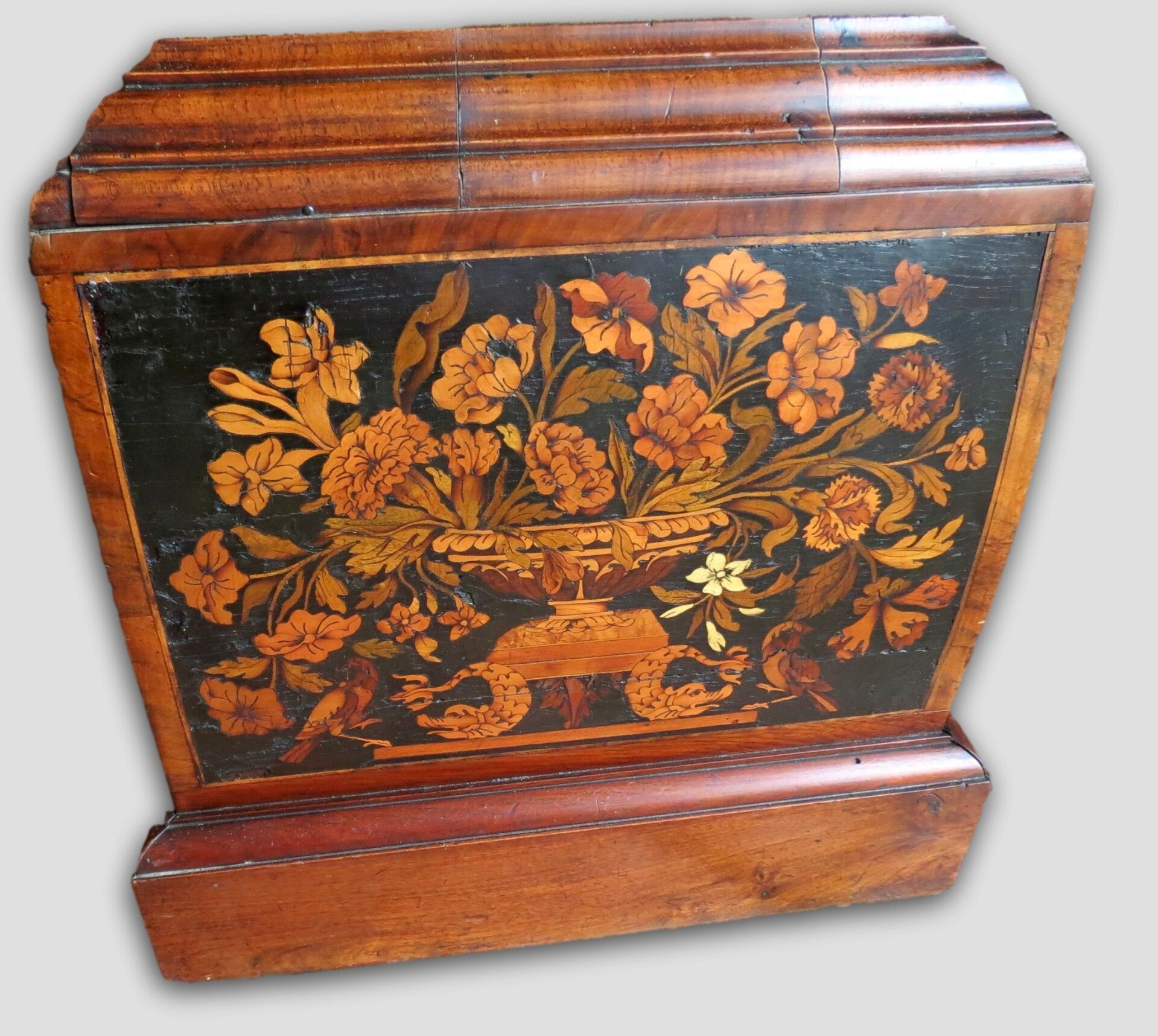
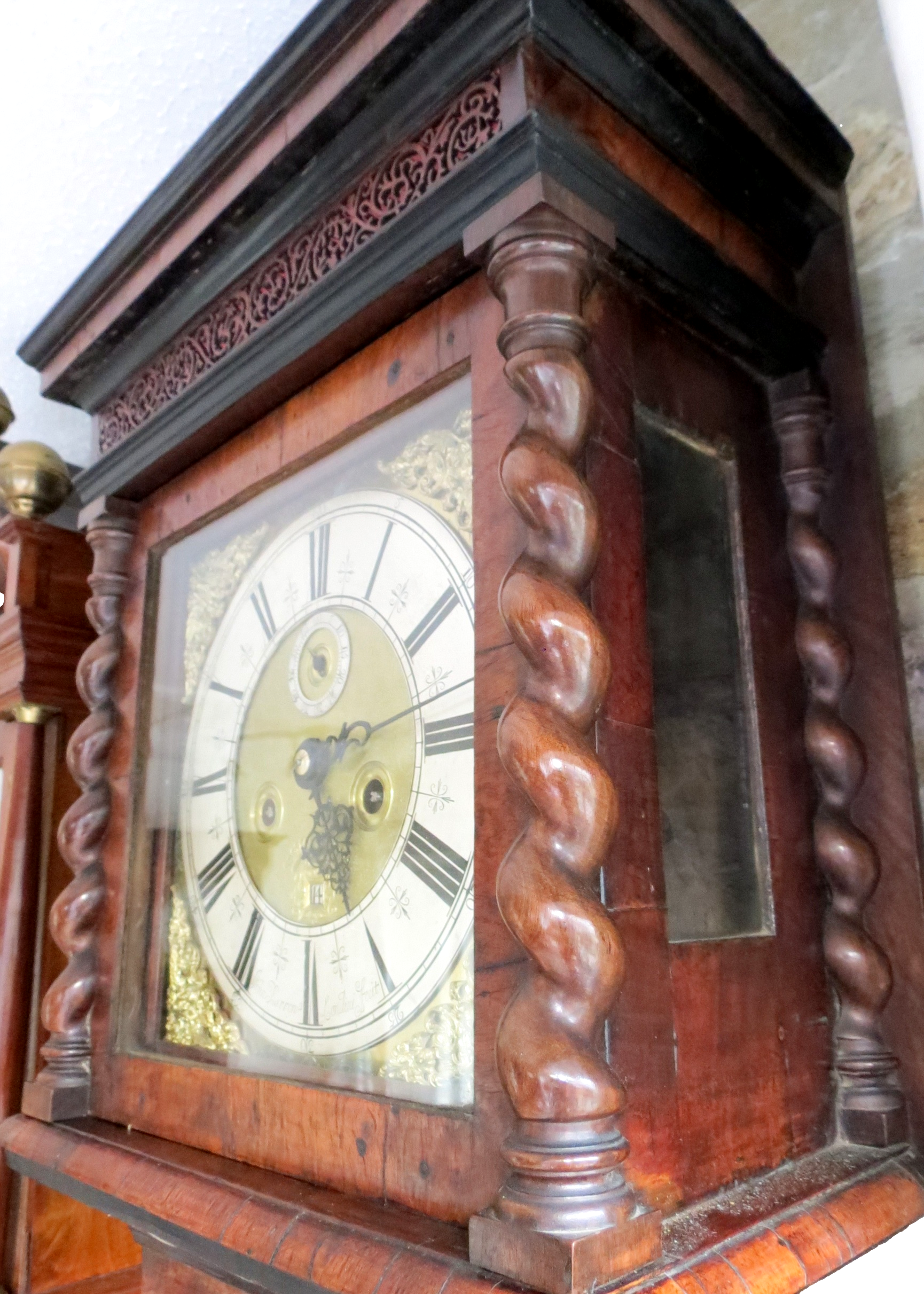
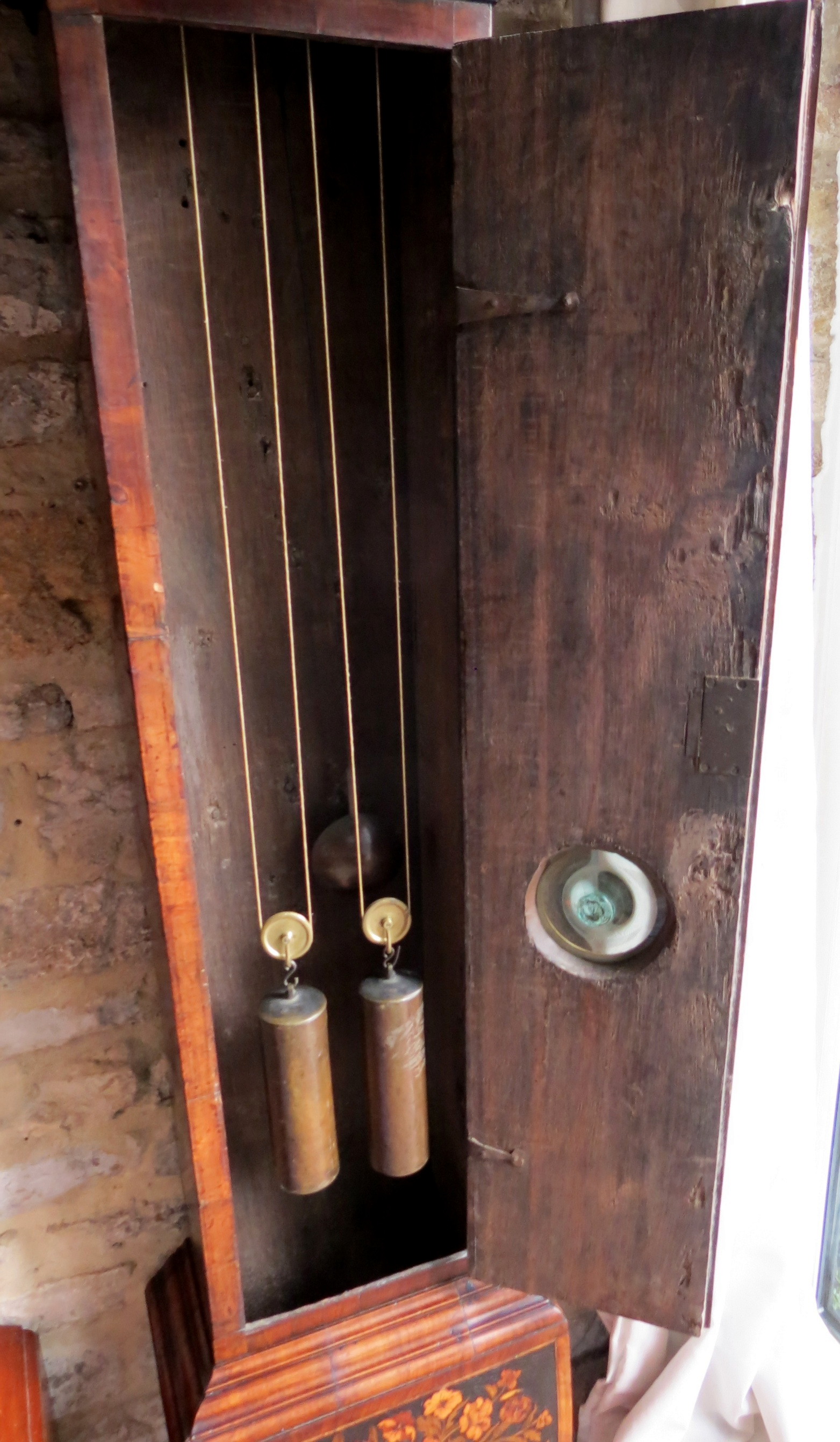
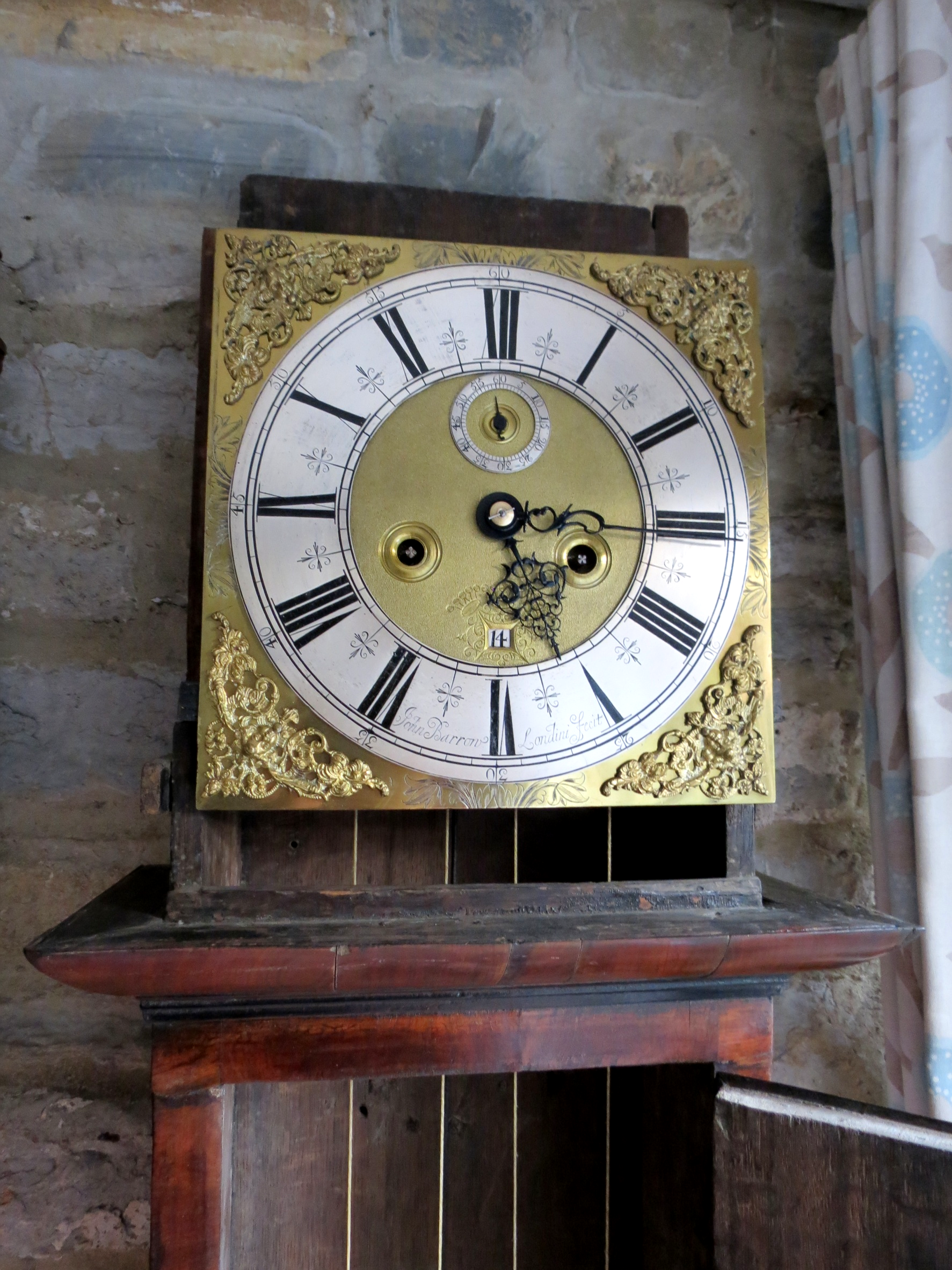
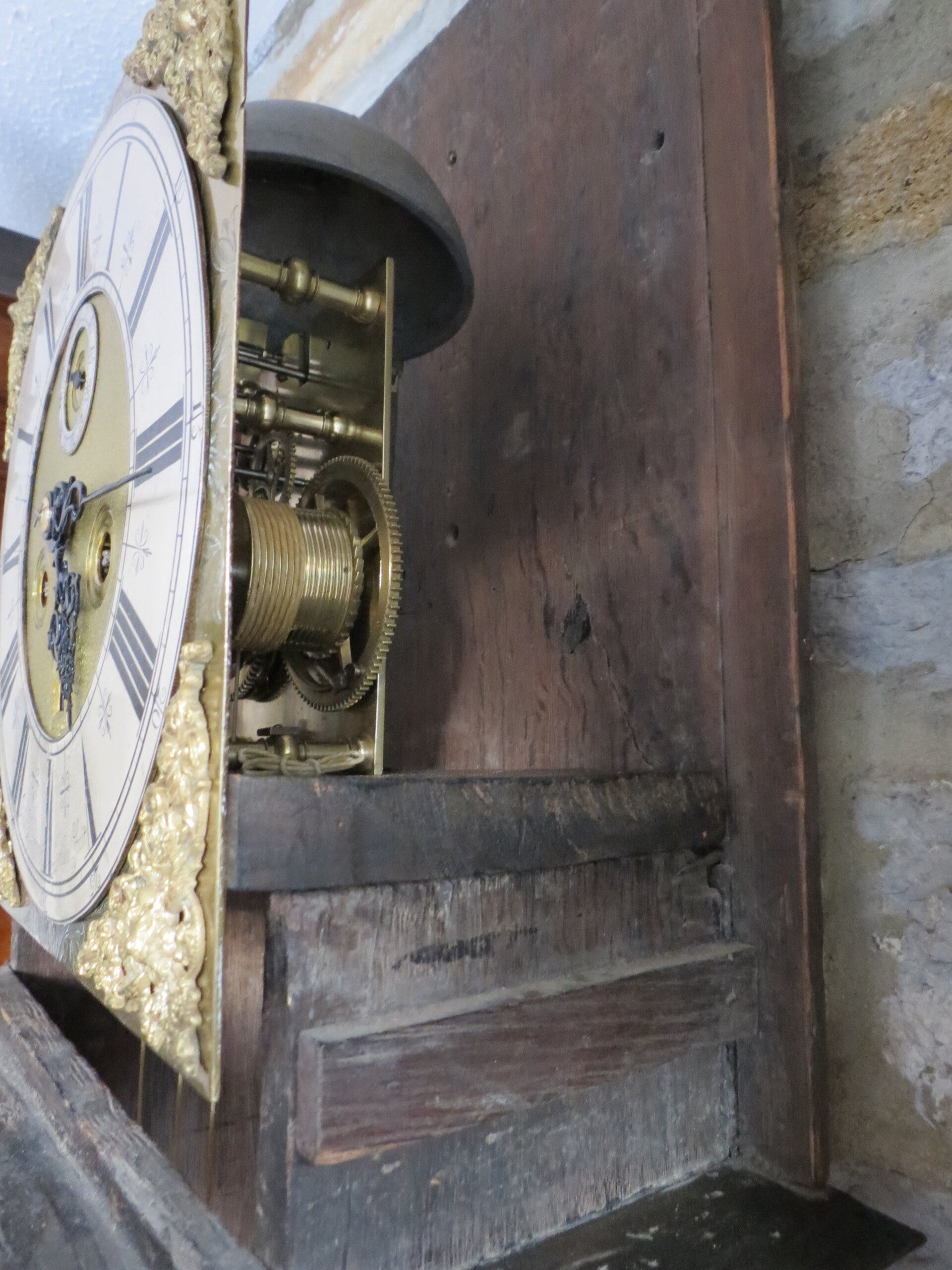
A good walnut and floral marquetry 8-day longcase clock, John Barrow London, dating to around 1695. A nice example, the case not over-restored and exhibiting a good aged patina.
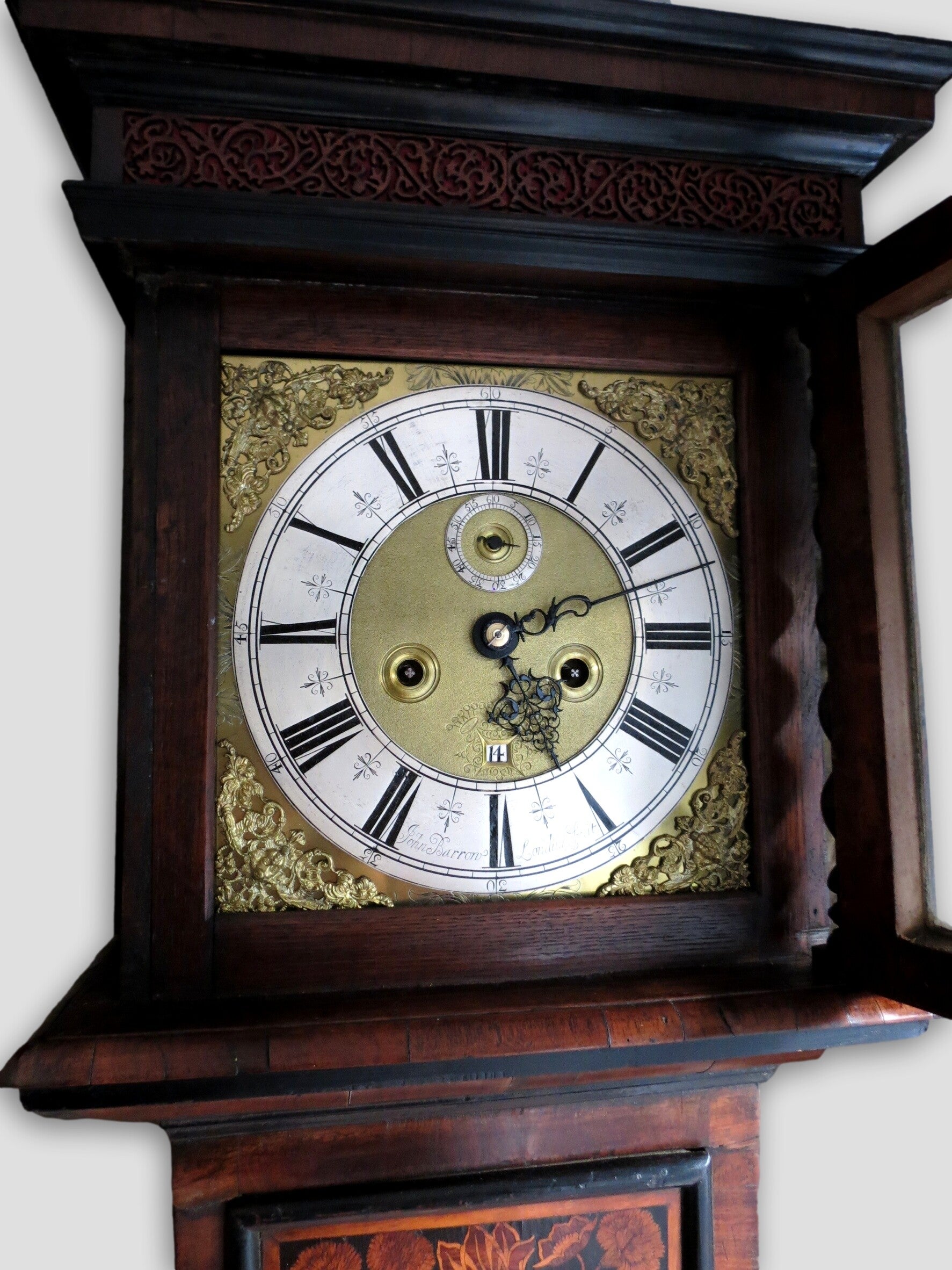
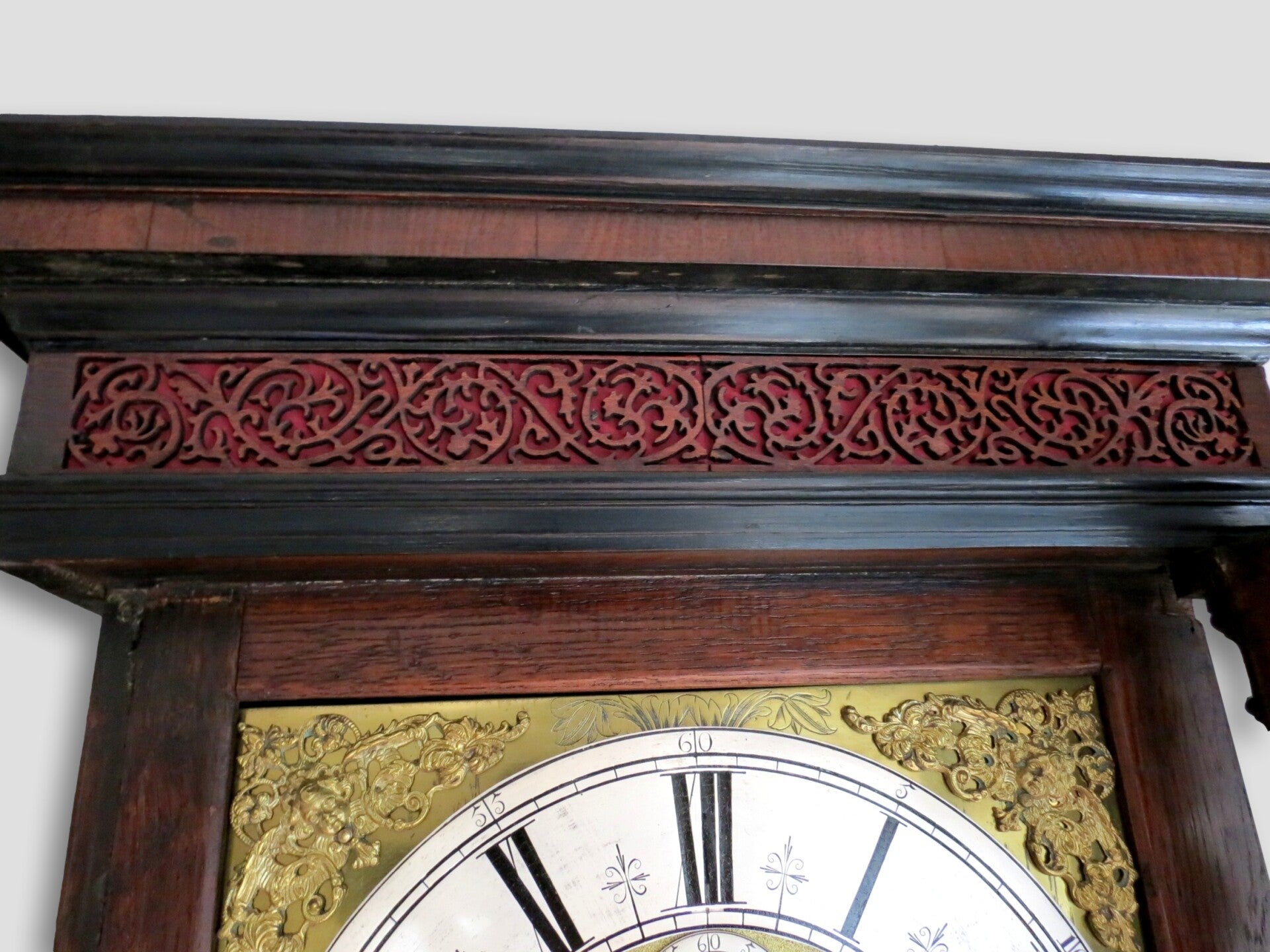
The dial is typical for the period, 11 inches square as was most commonly used between 1690 and 1700 for top quality London clocks. The minutes numbers are small and outside of the minute calibration. The corner spandrels again typical for the 1690s. A nice touch to have the engraved decoration between the spandrels, tends to be on the best quality dials. The makers name is engraved on the chapter ring, a development from the (normally) earlier practice of being on the dial plate at the bottom.
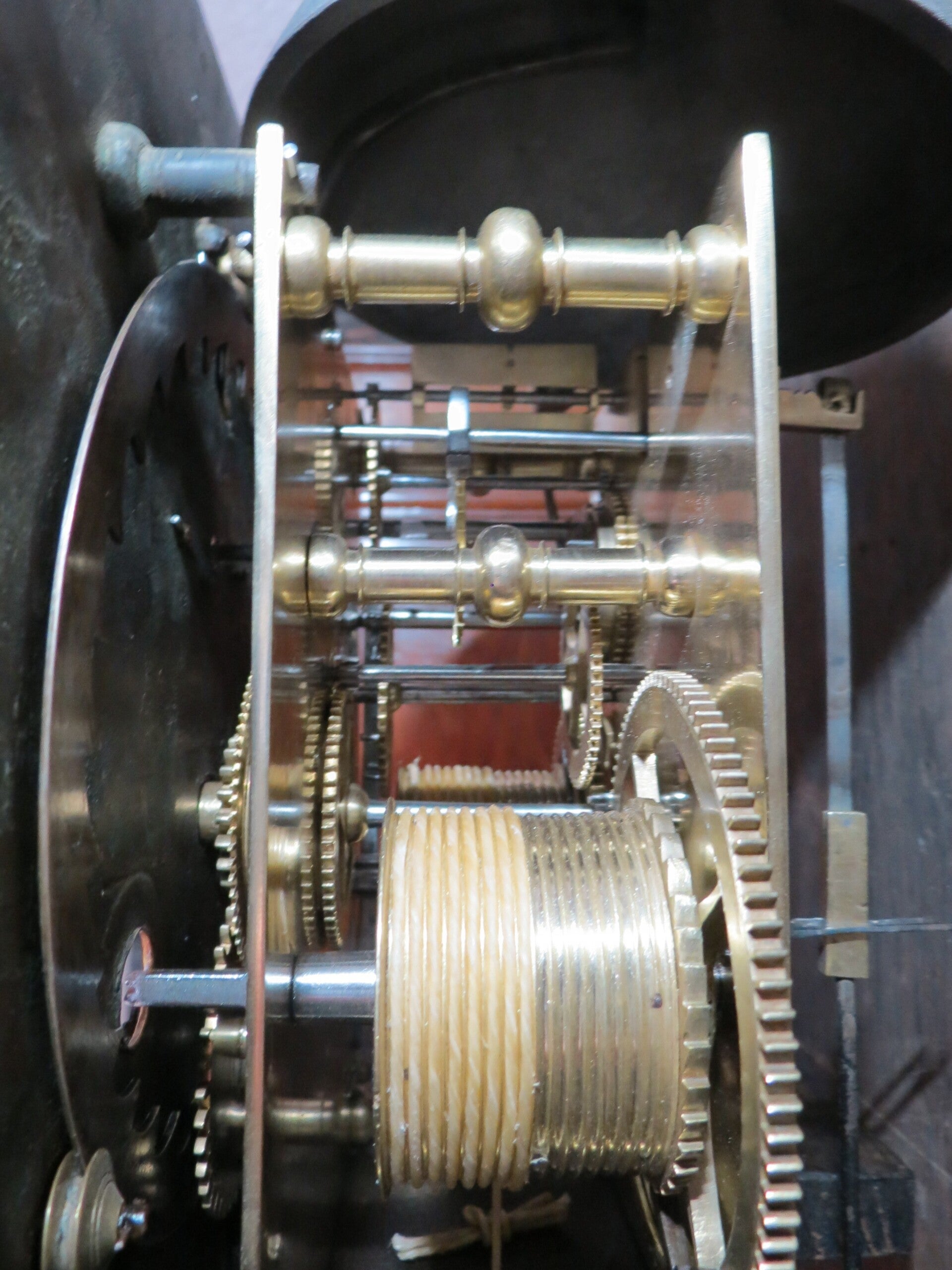
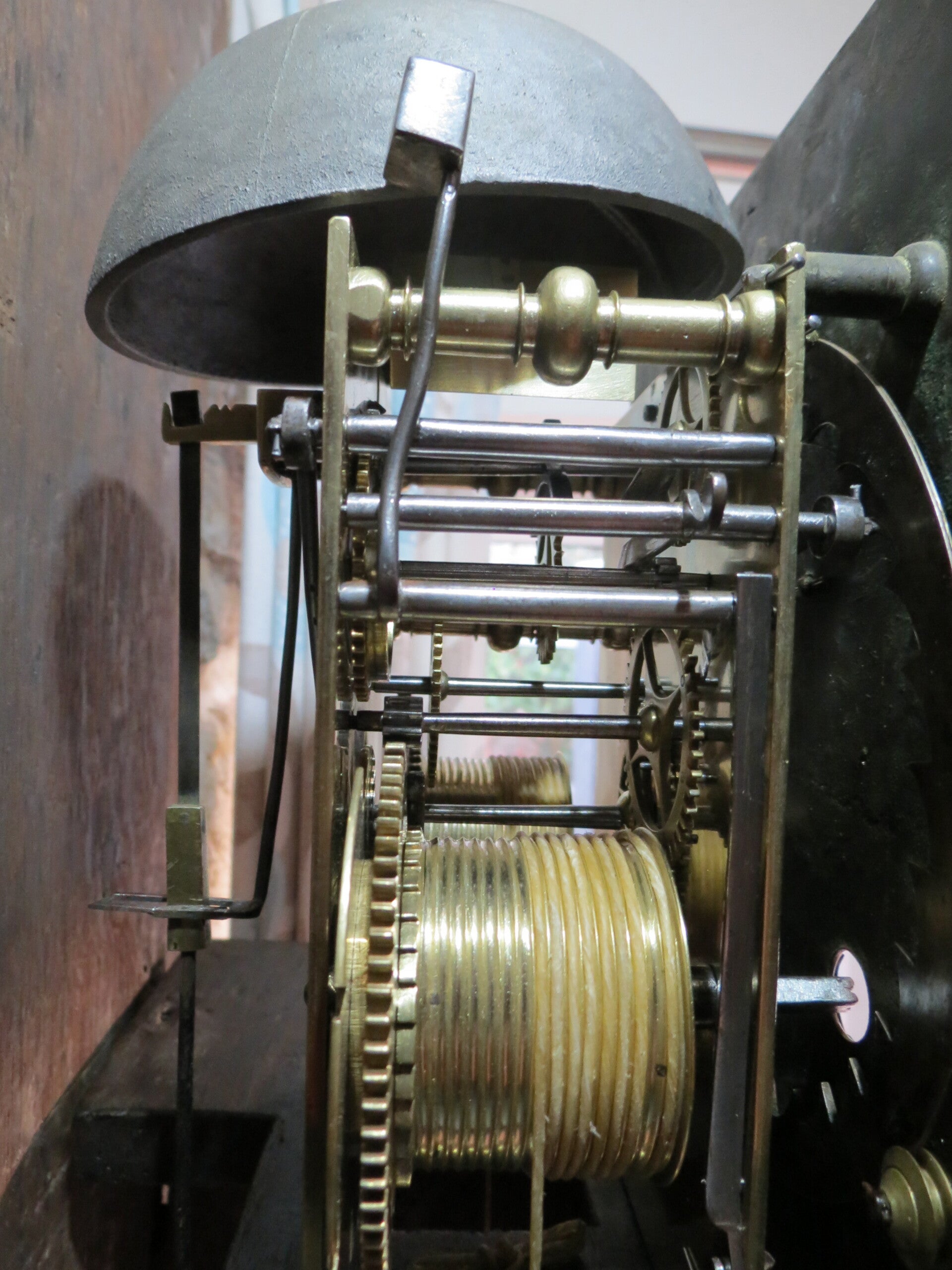
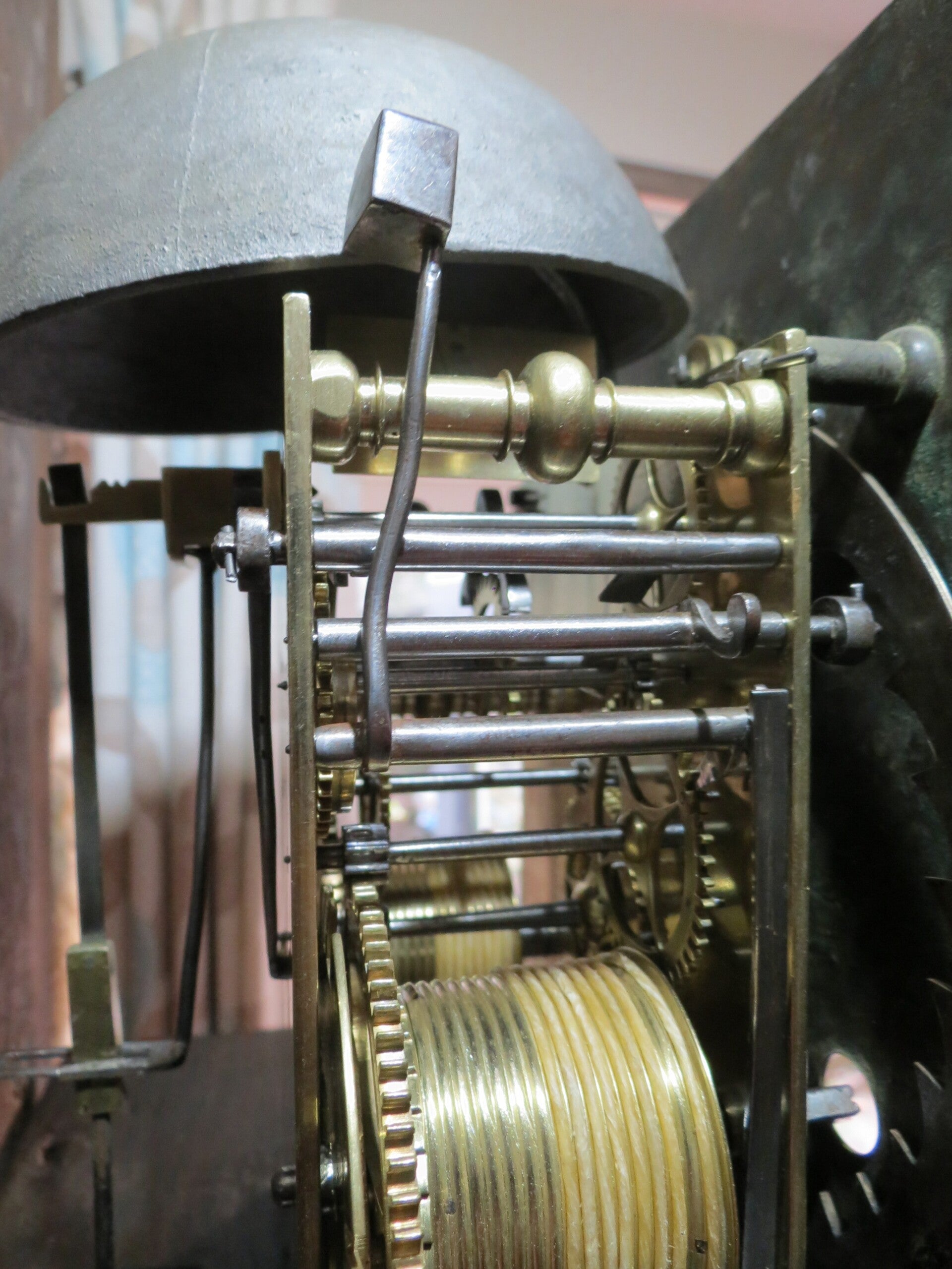
The movement is typical of the best quality work from this period. 5 knopped and finned pillars, inside countwheel but with outside lever, The wheel work appears original with nice brass-domed collets, some evidence of re-bushing as you would expect.
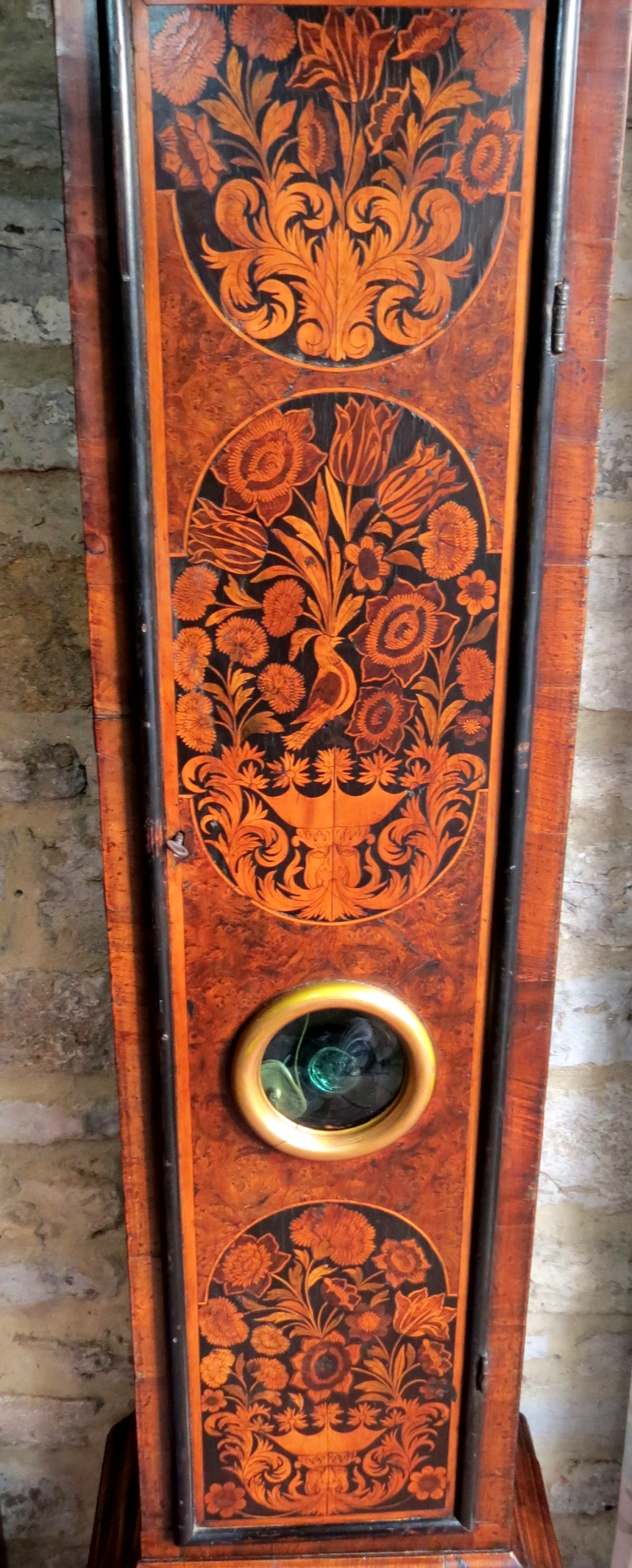
The case has marquetry set out in panels, normally an earlier form than 'all over' marquetry decoration. This form of floral marquetry was the peak of fashion during the mid-1690s, the ever popular and iconic 'William & Mary' look. The marquetry designs are very well done, good definition and variety of colour, a bird in the centre door panel, also two right at the bottom on the base. The base is unusual in being vertically bowed out, perhaps a speciality of the case-maker or a customer choice. The base/ plinth is possibly a later addition, a very common alteration from the original bun feet which offered no protection to the base. The marquetry panels are in very good condition, the base has a little more deterioration of you look closely. The sides of the case seem to have suffered a little more over the years with splits and marks to the veneer, I really don't mind this as it shows the considerable age of the clock.
Overall height is just under 84 inches, perhaps a little taller than the average William & Mary clock but the longer trunk gives it a very elegant look.
The clock is complete and fully working. The movement has been properly cleaned and inspected.
John Barrow was one of the top 'golden age' makers working in London during the later 17th century and into the 18th century. He was apprenticed to Francis Ireland in 1671 and became a freeman of the Clockmaker's Company in 1681, working until around 1719. Later in his careere he became master of the Clockmaker's Company. Some very fine clocks exist by him in prestigious collections around the world.